
14 min 43 sec
Available in: English
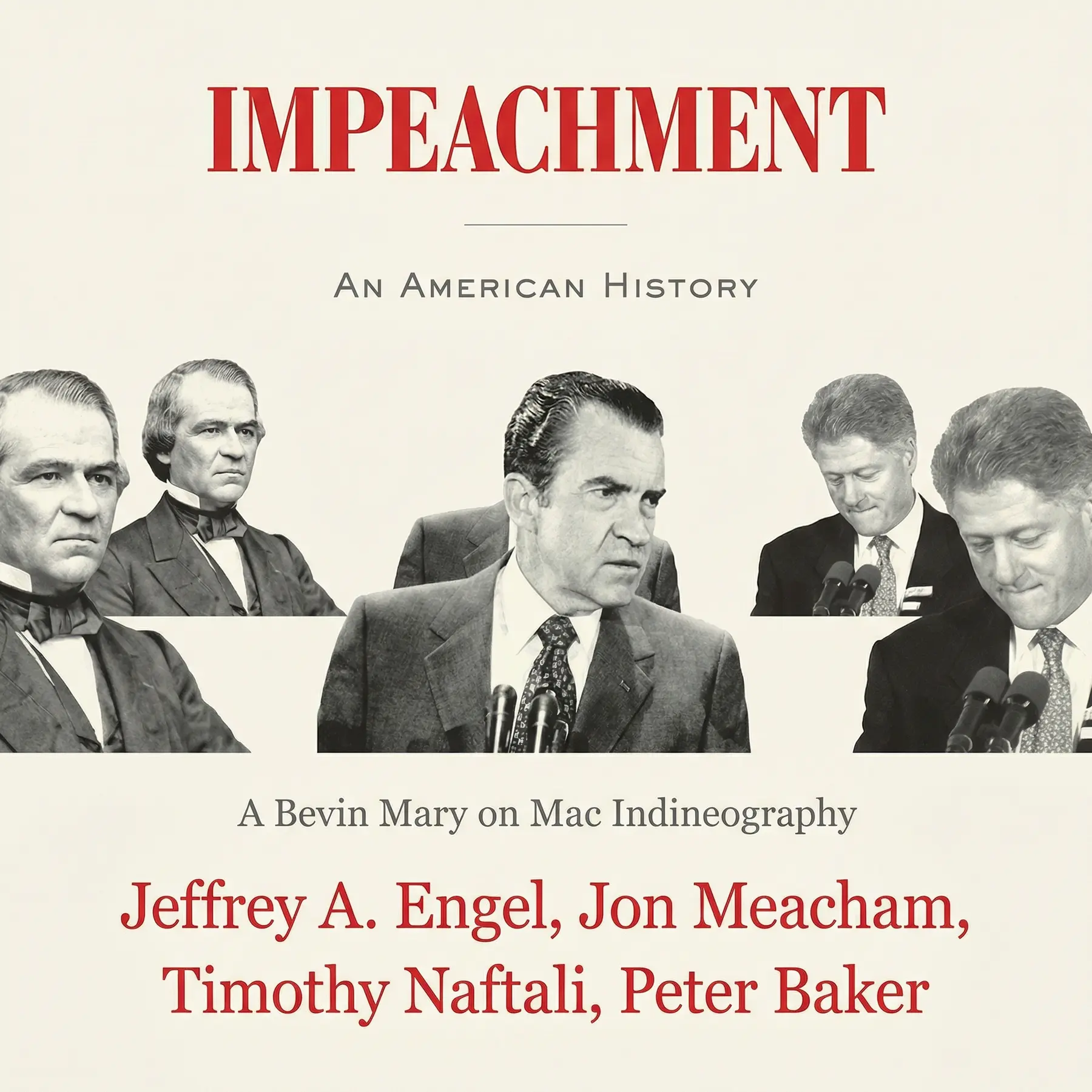
Impeachment: An American History
Explains how America's founders designed impeachment as a deliberately vague brake on presidential power, and what the Johnson, Nixon and Clinton crises reveal about evidence, partisanship and the lawmakers who keep the system standing.
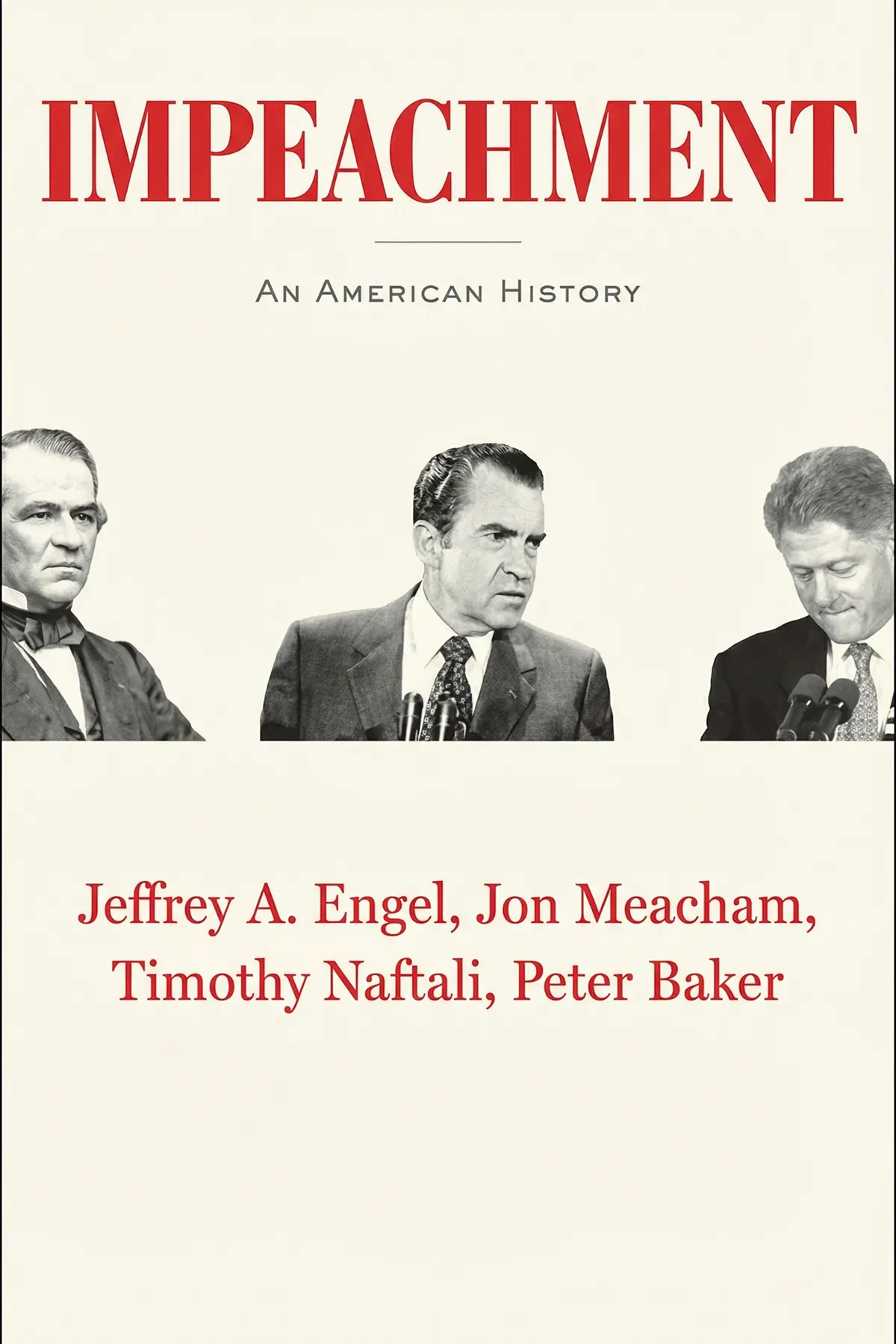
Table of Content
1. Introduction
1 min 08 sec
Most people know impeachment as a burst of angry news coverage, and few could say what it actually requires. Yet the rule at the center of it was left vague on purpose. In Impeachment: An American History, historians Jeffrey A. Engel, Jon Meacham and Timothy Naftali and journalist Peter Baker show that the Framers wrote the phrase high crimes and misdemeanors loosely, leaving future Congresses to decide what it means in the middle of a crisis.
Before Donald Trump, only three presidents went through that process: Andrew Johnson, Richard Nixon and Bill Clinton. Johnson and Clinton were impeached. Nixon resigned first. Each case changed how American government works.
One argument runs through all three stories. Impeachment grows out of bitter partisan fights and makes them worse, and the system has survived only because some lawmakers chose the Constitution over their own side. Follow the three crises and the next impeachment headline becomes something you can read with a historian’s eye, and explain clearly to a friend.
2. Learn how the presidency got a brake from day one
2 min 01 sec
A young country that had just thrown off a king found itself drifting back toward wanting one. The founders’ fix created the presidency, and in the same moment it created the tool for ending one.
3. Read high crimes and misdemeanors as intended
2 min 02 sec
The phrase that decides whether a president keeps the job was chosen to be blurry. Scholars still fight over it, and the Framers left out something even bigger: most of the rules for using it.
4. Dislike alone is not grounds for removal
2 min 09 sec
He was volatile, bitter and openly racist, and Congress tried again and again to throw him out. The way lawmakers finally caught him became a warning that still shapes every impeachment fight.
5. Evidence and a fair process brought Nixon down
2 min 19 sec
For almost two years, most Americans did not want their president removed. Then his own recordings, and a committee even his allies called fair, turned the country in a matter of months.
6. Shame without a strong case can backfire
2 min 04 sec
His approval ratings went up while the most private details of his life were printed for everyone to read. The party that tried to remove him misjudged the country, yet the case still rewrote the rules.
7. Learn how steady senators have saved the system so far
1 min 53 sec
Seven senators once voted against their own party and never held office again. Their choice, and others like it, explains how American democracy has survived three impeachment crises, and why the authors are uneasy about a fourth.
8. Conclusion
1 min 07 sec
Impeachment, as these four authors tell it, is a sentence the Framers left half written. They supplied a loose standard and a bare outline. Every Congress that reached for it had to finish the sentence in the heat of a crisis, often while despising the person on trial. The surprising thing is not that the process is messy. It is that it has worked at all, and the authors give the credit to a small number of people who accepted a personal cost so the system would hold, like the seven senators who never held office again.
That gives you a way to read the next impeachment fight. Ask whether the charge points to clear harm to the public or only to dislike and embarrassment. Watch whether the process is one the other side can respect, the test Peter Rodino’s committee passed. And notice who is willing to break with their own camp, because history suggests those few people decide the outcome.
The Framers built a brake on power and left the driving to everyone who came after. Each time it has held, someone chose the Constitution over their side.
About this book
What is this book about?
Impeachment shows up in the news as noise and outrage, and few people could say what it actually requires. Historians Jeffrey A. Engel, Jon Meacham and Timothy Naftali, with journalist Peter Baker, go back to the start. After the war that won independence from Britain, the new country needed a strong executive to end the disorder, and it feared that executive just as much. The founders' answer was a removal process built on a phrase, high crimes and misdemeanors, that they left open on purpose. The authors then follow the three presidents who faced that process before Donald Trump. Andrew Johnson was impeached mostly because Congress loathed him. Richard Nixon resigned once his own tapes and a committee both parties trusted made the case undeniable. Bill Clinton was impeached over a sex scandal that the public refused to treat like Watergate. Each crisis changed the rules, especially the limits of executive privilege. What links them is partisanship. Every impeachment has come out of bitter division and deepened it. Readers come to see why the outcome has depended each time on a few lawmakers willing to cross their own side, and why the authors doubt that this can be counted on forever.
Book Information
Who it's for
Political news followers
Readers who follow politics but find impeachment news confusing and want the history behind it.
American government students
Students of American government looking for clear cases on presidential power and Congress.
Leaders handling bitter disputes
Leaders who handle bitter disputes and want to see how fairness survives partisan pressure.
About the Author
Jeffrey A. Engel
Jeffrey A. Engel founded the Center for Presidential History at Southern Methodist University. Jon Meacham is a presidential biographer whose American Lion won the 2009 Pulitzer Prize for biography, and he holds a chair in the American presidency at Vanderbilt. Timothy Naftali directed the Richard Nixon Presidential Library and Museum from 2007 to 2011. Peter Baker has covered four presidents for the Washington Post and the New York Times, including Bill Clinton's impeachment trial.
Ratings & Reviews
Ratings at a glance
What people think
Listeners find the text informative and well-composed, with one review highlighting its clear explanations of debates. They appreciate the historical precision, with one listener noting the thorough background provided on impeachment history. Listeners find the content engaging, with one mentioning how much they enjoyed reading the historical facts.
Top reviews
Dome
After hearing so much noise about current events, I wanted a clear-headed look at the history of removing a president. This collection of essays by heavyweights like Meacham and Naftali is exactly that. It isn't just a dry legal text; it’s a narrative that explains how impeachment has always been a deeply political tool rather than just a legal one. I was particularly fascinated by Jon Meacham’s breakdown of Andrew Johnson’s trial. He paints a picture of a man who was essentially impeached for being the wrong person at the wrong time during Reconstruction. The book clarifies the often-confusing 'high crimes and misdemeanors' standard, showing it was intentionally left vague by the Founders. While written in 2018, its lessons about the balance of power between the House and Senate remain incredibly relevant. If you want to understand the 67-vote threshold and why it’s so hard to actually remove someone from office, start here. It is informative, well-researched, and accessible for a layperson.
Show moreFrida
Ever wonder why the Constitution is so vague about what actually constitutes a 'high crime'? This book tackles that question head-on. Jeffrey Engel and his co-authors provide a masterclass in constitutional intent versus political reality. The most striking takeaway for me was that impeachment is whatever a majority of the House says it is at a given moment. The historical accuracy here is top-notch, especially regarding the Tenure of Office Act and the trap set for Andrew Johnson. I also loved the detail about Judge John Sirica and the Watergate grand jury—it adds a human element to the legal proceedings. The authors write with a sense of urgency, yet they remain grounded in facts rather than partisan fury. They remind us that the system was designed to be difficult to navigate, requiring 67 Senators to agree on removal. It’s a brilliant, concise overview that every voter should probably read to understand how our government functions under extreme pressure.
Show moreKofi
Wow. I didn't realize how much of a partisan weapon the impeachment of Andrew Johnson actually was until I read Jon Meacham’s essay in this collection. It’s fascinating to see how the Republicans of that era basically hunted him because he wouldn't honor the Reconstruction Act. This book is incredibly well-written and makes complex constitutional debates easy to follow. Each author brings a unique flavor to the table. Timothy Naftali’s deep dive into the Watergate era is particularly strong, highlighting the bipartisan momentum that eventually led to Nixon's downfall. It stands in stark contrast to the highly partisan atmosphere of the Clinton proceedings described by Peter Baker. The book manages to be both a history lesson and a warning about our current divisive politics. I highly recommend it to anyone who enjoys political analysis. It’s a brief but comprehensive look at a tool that was meant to be a last resort but is becoming increasingly common in our political vocabulary.
Show moreGrace
As someone who appreciates historical accuracy over political punditry, I found this collection of essays to be essential reading. The collaborative effort between Engel, Meacham, Naftali, and Baker provides a multi-dimensional view of the most serious constitutional crisis a president can face. The book excels at explaining the 'vague standard' of high crimes and misdemeanors, showing how it has been interpreted across different eras. I was particularly struck by the detail that Andrew Johnson was impeached before the articles were even written—talk about a rush to judgment! The authors succeed in making the reader feel the weight of these historical moments. They move beyond the headlines to show the behind-the-scenes maneuvering in the House and Senate. Even though I’m a bit of a history buff, I learned new things about the roles of Judge Sirica and the specific articles against Nixon. It’s a very informative and thought-provoking read that I’ve been recommending to all my friends.
Show moreDream
This book provides a remarkably clear-eyed perspective on a process that most of us only half-understand from cable news snippets. It’s important to note this was published in 2018, so it misses the two Trump impeachments, but that almost makes the historical analysis feel more objective. The authors do a great job explaining the mechanics: how the House Judiciary Committee acts as the gatekeeper before the whole House charges the President. I found the section on Richard Nixon particularly gripping. Timothy Naftali details how Nixon edited his own transcripts, which even he knew was obstruction of justice. To be fair, there are some slow passages, especially when the legal jargon gets thick. However, the breakdown of how the Senate requires a two-thirds majority for conviction is essential reading. It helps explain why acquittal is the most common outcome. Overall, a very solid primer on American constitutional history that doesn't feel like a textbook.
Show moreOat
Picked this up to prepare for the upcoming election cycle, and it was a surprisingly fast read despite the heavy subject matter. The book focuses on three main figures: Johnson, Nixon, and Clinton. I learned quite a bit about the nuances of the Nixon case—technically, he wasn't even impeached because he resigned before the full House could vote! The description of him being a trained attorney who knowingly obstructed justice by editing his own tapes was chilling. Peter Baker’s essay on Clinton compares the scandal to the O.J. Simpson trial in terms of its media impact, which was a very astute observation. Frankly, some of the transitions between authors are a bit jarring, and the 2018 copyright means it feels slightly dated given what has happened since. Still, the core information about the House Judiciary Committee's role and the 'partisan rationale' behind these proceedings is invaluable for anyone trying to cut through the political noise today.
Show moreSombat
The chapter on Richard Nixon by Timothy Naftali was easily the highlight of this collection for me. Seeing the timeline of how the House Judiciary Committee voted—rejecting some charges while passing others—really clarified how the process is supposed to work. This book is a great reminder that the system relies on evidence and constitutional steps, not just anger. I also appreciated the brief mention of Harry Truman and Douglas MacArthur; it provides great context for what does NOT constitute an impeachable offense. The writing is generally very engaging, though a few sections on the framing of the Constitution felt a bit repetitive. Personally, I think the authors did a great job of explaining that impeachment is a political process with a legal veneer. It’s an interesting read for anyone who wants to understand why we rarely see a president actually removed from office. The 67-vote requirement in the Senate is a high bar for a reason, and this book explains that logic perfectly.
Show moreHazel
Finally got around to reading this, and it’s a fantastic primer for anyone trying to navigate the murky waters of American constitutional law. The book does a wonderful job of demystifying the whole process, from the House Judiciary Committee’s initial votes to the final trial in the Senate. I especially liked how it highlighted that impeachment is a weapon of last resort intended to prevent tyranny. The authors are very clear about the facts: only three presidents have faced this level of jeopardy, and the results have always left the country changed. My favorite part was the analysis of how the 'rule-breaking' of Nixon differed from the 'murky middle' of the Clinton era. It’s a very informative read that manages to stay neutral while discussing some of the most heated moments in our history. The historical background is detailed without being overwhelming. Even with the 2018 cutoff, the principles described here are timeless and help explain why our current political climate is so volatile.
Show moreIvan
Look, I found this interesting but it definitely had some slow passages that dragged for me. This is actually the third book I’ve read on this subject recently, and while it's informative, it feels a bit uneven. The quality of the essays seems to decline as you move toward the modern era. Meacham on Andrew Johnson was a highlight, but Peter Baker’s section on Bill Clinton felt like a retread of things I’ve heard many times before. It’s a non-fiction hardback that attempts to bridge the gap between academic history and current events, but it doesn't always succeed. One thing I did appreciate was the clear explanation of how an impeached official is barred from future federal employment. That’s a detail often lost in modern discussions. It’s a decent resource for the 2020 election cycle, but I was hoping for a bit more cohesion between the four different authors' styles.
Show moreTakeshi
Not what I expected in terms of pacing, as the transition between the different authors felt a bit jarring at times. While the historical facts are certainly interesting to read, the book feels like four separate articles stitched together rather than a cohesive narrative. I also found the discussion of the 'future' of impeachment a bit frustrating since the book was written just before the 2019/2021 events. To be fair, the scholarship is excellent. Meacham and Naftali are experts for a reason, and their insights into Johnson and Nixon are top-notch. However, the section on Bill Clinton felt a bit light on new information. It covers the perjury and the 'witch hunt' aspects well enough, but it lacked the fresh perspective I found in the earlier chapters. If you're looking for a basic primer on the mechanics of the House charging and the Senate voting, this works, but it might feel a bit redundant if you've already read extensively on these presidents.
Show moreQuestions about this book
What is the main idea of Impeachment: An American History?
The authors argue that the Framers made impeachment deliberately vague and complicated, leaving Congress to define it during each crisis. Through the cases of Andrew Johnson, Richard Nixon and Bill Clinton, they show that impeachment grows out of fierce partisanship and deepens it. The system has survived because some lawmakers, especially senators, put the Constitution ahead of loyalty to their party.
What does high crimes and misdemeanors mean?
George Mason proposed the phrase so that a president could not be removed for simple incompetence or foolishness. It loosely means a serious offense against the American people as a whole, and scholars still argue over it. The authors note that a president need not commit a crime personally; making one possible, or failing to stop it, can be enough to be impeachable.
Why was Andrew Johnson acquitted?
The House impeached Johnson largely because Congress hated him, not for a clear legal offense. Its main charge rested on the Tenure of Office Act, passed as a trap after lawmakers learned he disliked his Secretary of War, Edwin Stanton. Other charges were petty, including complaints about his jokes. The Senate did not take the case seriously, and seven senators crossed party lines to acquit him.
Why did Nixon resign instead of being impeached?
A unanimous Supreme Court ruling forced Nixon to release his own recorded conversations, and public support collapsed. Between March and April 1974, the share of Americans favoring his removal rose from just over a third to more than half. The House Judiciary Committee under Peter Rodino had built a process both parties respected, and Nixon resigned in August before the House could impeach him.
What lessons does the book offer readers today?
The book suggests judging any impeachment by whether it rests on clear harm to the public rather than dislike or embarrassment. It shows that a process the other side trusts, like Rodino’s committee, makes a verdict hold. It also shows that a few people willing to break with their own side, such as the seven senators in Johnson’s trial, often decide the outcome.
Readers also enjoyed

A Promised Land
Barack Obama


A River in Darkness: One Man’s Escape from North Korea
Masaji Ishikawa

A Splendid Exchange: How Trade Shaped the World
William J. Bernstein

A Theory of Justice
John Rawls

A Spy Among Friends: Philby and the Great Betrayal
Ben Macintyre




A Year in the Life of William Shakespeare: 1599
James Shapiro
AUDIO SUMMARY AVAILABLE
Listen to Impeachment in 15 minutes
Get the key ideas from Impeachment by Jeffrey A. Engel, plus 5,000+ more nonfiction titles.
- 5,000+ titles
- Listen as much as you want
- 7-day free trial
- Cancel anytime









