

13 min 44 sec
Available in: English
I’m So Effing Tired: A Proven Plan to Beat Burnout, Boost Your Energy and Reclaim Your Life
By Amy Shah
Amy Shah explains why constant tiredness often comes from hormones, immunity and gut falling out of step. She sets out a two-week plan of food, fasting, rest and sleep to restore your energy.
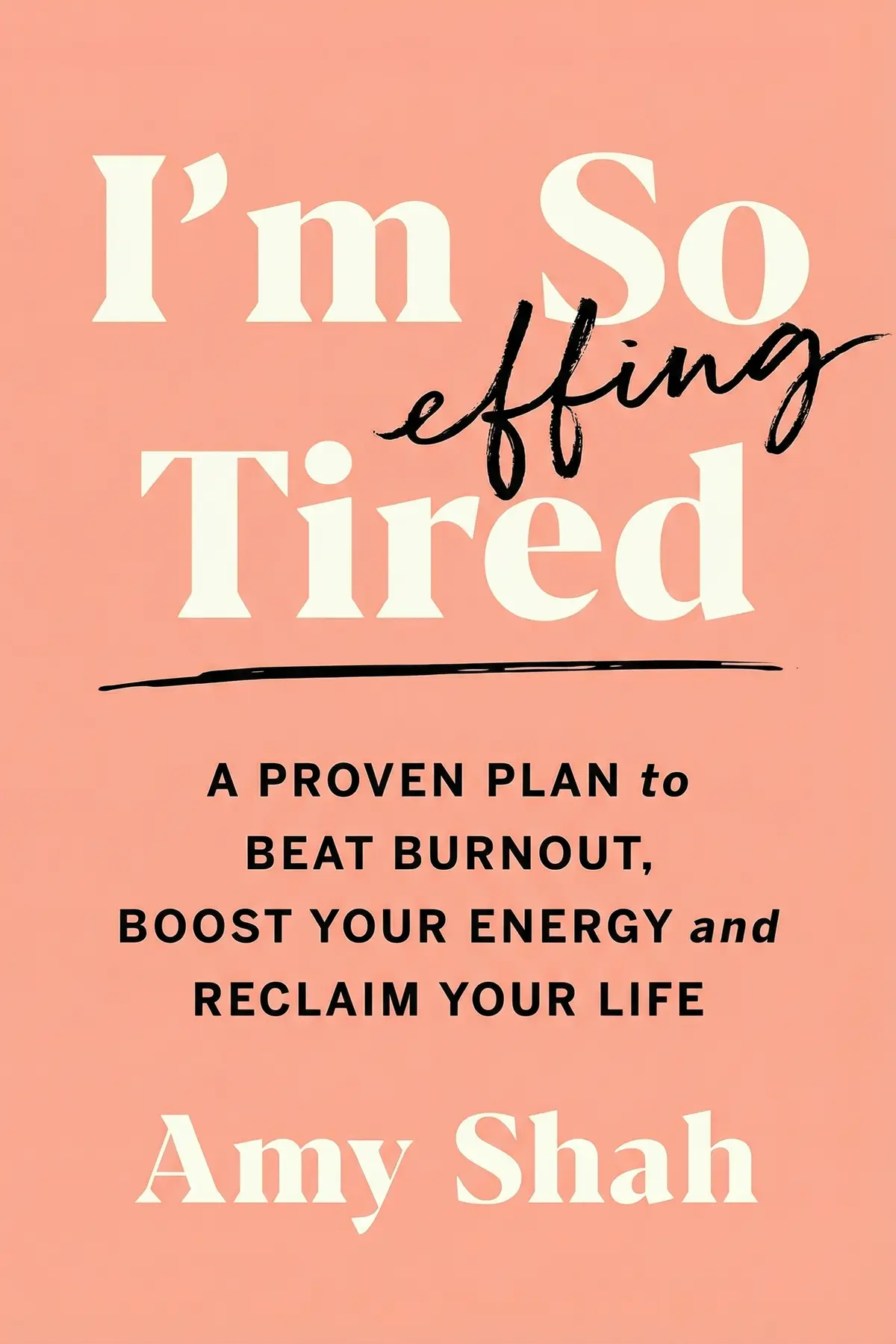
Table of Content
1. Introduction
1 min 00 sec
If you get through the day on coffee and still snap at colleagues by mid-afternoon, Amy Shah has an explanation that has nothing to do with being lazy or having a bad week. In I’m So Effing Tired, the physician and nutrition specialist argues that energy rests on three linked systems, namely hormones, immunity and the gut. She calls them the energy trifecta. When one slips, the others follow and energy crashes. The reverse also holds, so repairing one system helps the other two recover.
Shah turns that idea into a two-week program she calls the WTF plan, short for “why the eff am I so tired”. It covers what goes on your plate, when you eat it, how hard you train, how much stress you carry and how long you sleep. Each step comes with numbers you can try tomorrow morning, and with patients whose exhaustion turned out to have very ordinary causes.
2. Read your exhaustion as a signal, not a verdict
1 min 37 sec
Millions of people accept constant fatigue as the price of adult life. A doctor’s view of how three body systems talk to each other suggests that tiredness is telling you something specific, and that it can change.
3. Trace your afternoon slump back to dinner
1 min 39 sec
Waking at 3 a.m., craving sugar at work and feeling worse before a period look like three separate problems. One patient’s story shows how they can share a single cause, and why no lab test may find it.
4. Fill your plate with fiber and drop sugar
1 min 49 sec
A five-year trial with thousands of high-risk older adults found a striking gap between two groups eating differently. The diet behind it looks a lot like the one Shah prescribes for tired people.
5. Eat inside a window your body clock trusts
1 min 41 sec
Intermittent fasting is everywhere, but Shah adds a twist tied to the rhythm every cell already follows. Her own daily menu shows what a long overnight fast can look like in practice.
6. Swap punishing workouts for rest and walks
1 min 33 sec
A busy doctor did exactly what the magazines advised and trained before dawn six days a week. She ended up more exhausted than before, and the fix sounds almost too gentle to work.
7. Sleep and calm to boost your energy
1 min 43 sec
You can eat perfectly and fast with discipline and still feel flat. Shah points to one stress hormone that can undo the rest, and to a long commute she decided was not worth it.
8. Make the plan fit your life, then keep it
1 min 29 sec
Two weeks of better habits can feel like a cure, which is exactly when most people stop. Shah explains why the biggest changes come later, and how a party or a dinner out fits in.
9. Conclusion
1 min 13 sec
Shah’s book turns exhaustion into information. The afternoon crash, the 3:00 a.m. waking and the coffee that no longer works are signs that hormones, immunity and gut have drifted apart. Since no reliable test can measure that, your own energy is the clearest readout you have. In line with her view that medication should come after other approaches, Shah bets on ordinary habits to pull the three systems back together.
The plan asks for change on several fronts, but none of it is extreme. Begin with the clock: finish dinner earlier and stretch your overnight fast toward twelve hours on three days this week. Put more fiber on your plate, working toward 25 or 35 grams a day, and let fruit and nuts take care of sweetness. If hard training leaves you worse off, trade a session for a walk outside, as Sara did. And guard your sleep as firmly as any meeting, aiming for at least eight hours.
Sylvia and Sara were both worn out, and Sara was already pushing herself hard. In Shah’s view, easing that kind of tiredness means getting three systems back into balance with each other. Give it two weeks, then three months, and let your energy tell you whether it worked.
About this book
What is this book about?
Plenty of people wake up drained, live on coffee and still crash by mid-afternoon. Physician and nutrition specialist Amy Shah argues that this kind of fatigue is rarely a mystery. As she sees it, three linked systems drive energy: the hormones, the immune system and the gut. She calls them the energy trifecta. When one slips, the others follow. When one recovers, the others tend to recover too. From that idea she builds the WTF plan, a two-week program named for the question so many tired people ask. It combines a plant-heavy, high-fiber diet with little added sugar, circadian fasting timed to the body clock, exercise balanced with real recovery, less stress and longer sleep. Shah grounds each step in patient stories, her own routine and research such as the five-year PREDIMED diet trial. Readers get specific targets they can try right away, like 6 to 8 servings of vegetables a day, a first 12-hour overnight fast and at least eight hours of sleep. They also get a way to turn two good weeks into a flexible long-term habit.
Book Information
Who it's for
Professionals running on coffee
Professionals who wake up drained, live on coffee and crash every afternoon.
Women with period slumps
Women whose energy, sleep and cravings get worse around their period.
Tired athletes and parents
Hard trainers and busy parents who are doing everything right and still feel exhausted.
About the Author
Amy Shah
Amy Shah is a medical doctor with two board certifications and a background in nutrition from Cornell University. She runs a wellness education platform and appears often in national media and as a speaker. Her approach puts nutrition, exercise and everyday habits first, with medication only after other approaches have been tried. She also wrote I'm So Effing Hungry, and her book Hormone Havoc has been listed for pre-sale.
Ratings & Reviews
Ratings at a glance
What people think
Listeners find the book educational and simple to grasp, with one review noting it is grounded in research. They value its readability, with one pointing out its medically based lifestyle upgrade approach, and many report it transformed their habits and boosted their health, especially through circadian fasting. The recipes get positive feedback, and listeners consider the book practical, with one mentioning its value as a reference.
Top reviews
Wacharapol
Not gonna lie, I was skeptical about another 'wellness' book by a celebrity doctor, but this one actually delivers on its promises. I’ve read a lot of self-help, but the way Shah explains the energy trifecta made things click for me in a new way. The recipes are great, and the 'WTF' plan is easy to follow once you get the hang of it. My skin has cleared up, and I finally have the energy to exercise without feeling like I’m going to collapse afterward. It’s a life-changing resource for anyone who feels like their body is failing them. Highly recommended for the reference section alone!
Show moreJoshua
The title really spoke to me because, like every other woman I know, I am indeed effing tired. This book offers some decent advice, but it’s mostly stuff you’ve probably heard before if you’ve ever Googled 'how to have more energy.' Basically, stop eating sugar, get more fiber, and try to manage your stress. I appreciated the sections on how over-exercising can actually hurt your progress, as that’s a rare take in these kinds of books. However, the plan itself—the 'WTF' or Whole Toxins Food plan—seems a bit complicated to maintain long-term. It’s a nice enough reference to have on the shelf.
Show moreElla
This book arrived at exactly the right moment for me while I was struggling with massive cortisol issues. What I liked most was that it wasn't just a 'take this pill' solution. Dr. Shah focuses on lifestyle changes that actually make sense, like circadian intermittent fasting and prioritizing fiber. The recipes included, like the almond-vanilla chia seed pudding and the chai latte, are actually delicious and make the transition easier. To be fair, some of the advice—like 'stress less'—is easier said than done, but having all these tools in one place is very helpful. It’s a medically-based lifestyle upgrade that feels mostly achievable.
Show morePrae
Finally, a medical doctor who looks at the whole picture instead of just writing a prescription for every symptom. I really appreciated how Dr. Shah bridges the gap between traditional Western medicine and functional concepts. She shares many case studies from her own practice, which helped me see myself in the pages. The focus on how our hormones and gut health interact to cause fatigue was a huge eye-opener for me. The writing is very conversational and easy to digest, though she does push her own supplements a bit much. Overall, it’s a solid resource for any woman feeling chronically drained.
Show moreBrooklyn
Ever wonder why you’re dragging through the day despite sleeping eight hours and drinking all the coffee? This book explains exactly why that happens. Dr. Shah breaks down the science of 'autophagy' and how fasting can help reset your system in a way that’s actually manageable. I’ve been following her fiber-focused approach for three weeks now and the difference in my energy levels is night and day. Truth is, the '8 cups of veggies' rule sounded daunting at first, but it’s actually made a huge impact on my digestion. This isn't just a diet; it's a total health overhaul that is actually backed by medical knowledge.
Show morePranee
Dr. Amy Shah provides a remarkably clear roadmap for women struggling with that 'wired but tired' feeling. I found the section on 'adrenal fatigue' particularly helpful, as it’s a term that gets thrown around a lot without much explanation. The book is very well-organized, and I love that she includes specific tests to ask your doctor for. Personally, the circadian fasting tips have been a game-changer for my sleep quality. It’s rare to find a health book that is this easy to read while still being informative and grounded in research. If you’re tired of being told you’re 'just stressed,' read this book.
Show moreJoseph
As a registered dietitian, I was sincerely disappointed by the lack of current research in these pages. While Dr. Shah is a physician, it's clear that medical training doesn't always equal nutrition expertise. She makes several claims about GMOs and artificial sweeteners that just aren't backed by solid science. The 'energy trifecta' concept is interesting enough, but the book is incredibly repetitive, constantly teasing the 'WTF' plan without getting to the point. Look, the advice to sleep more and eat fiber isn't revolutionary. It's standard wellness-industry fluff packaged with a catchy title. I’d suggest looking elsewhere for evidence-based nutrition.
Show moreThitima
After hearing Dr. Shah on a podcast, I was curious about her 'energy trifecta'—the gut, immune system, and hormones. The first half of the book is great at explaining the science behind why we feel so burnt out. I found the connection between gut health and mood particularly enlightening. However, once you get to the actual plan, it starts to feel like a standard diet book. It’s a lot of intermittent fasting talk and very specific food rules that might be hard for a busy mom to follow. It’s an okay read if you’re new to the world of hormone health, but it feels a bit repetitive in the middle.
Show moreOlivia
Wait, is every health problem just caused by sugar and parabens? This book really reeks of privilege and gives off major GOOP vibes. The author keeps coming back to this 'rock bottom' story about spinning her car out in traffic, which felt a little dramatic compared to what most people deal with daily. Not everyone has the budget for all-organic, non-GMO, glass-bottled everything or the time for complicated 'circadian' fasting. It’s written in an approachable style, sure, but the advice feels highly unrealistic for anyone without a doctor’s salary. I felt worse about my 'normal' life after reading this than I did before.
Show moreJonathan
I picked this up hoping for a life management guide, but it’s just another diet book in disguise. Frankly, the marketing is a bit misleading. I expected advice on burnout and schedule management, but instead, I got told to fast for 16 hours and eat eight cups of vegetables a day. Truth is, it felt like reading a manual for an eating disorder flare-up. To be fair, she mentions some Eastern philosophy, but the constant focus on 'no sugar, no dairy, no nothing' makes the plan feel completely inaccessible for a normal person. If you're looking for permission to rest, look elsewhere. This is about restriction.
Show moreQuestions about this book
What is the main idea of I'm So Effing Tired by Amy Shah?
Shah argues that energy depends on three connected systems: hormones, the immune system and the gut, which she calls the energy trifecta. When they fall out of balance, energy crashes, and fixing one tends to help the others. Her two-week WTF plan restores that balance with a plant-based, high-fiber diet, circadian fasting, exercise with proper recovery, lower stress and more sleep.
What is circadian fasting in the WTF plan?
It is Shah’s version of intermittent fasting, timed to the body’s natural rhythm, and it forms the base of her plan. She suggests starting with a 12-hour overnight fast on three days a week that are not back to back, then slowly working toward 15 to 18 hours. She argues fasting resets the body clock, partly by giving the gut a daily rest.
What should I eat to have more energy according to Amy Shah?
Shah recommends 6 to 8 servings of vegetables a day and as much fiber as possible, aiming for 25 grams for women and 35 for men. Good sources include broccoli, sweet potatoes, leeks, legumes and kale stems. Keep dairy, meat and processed sugar to about 10 to 15 percent of your food, and take sweetness from fruit and nuts.
Can too much exercise make you tired?
Yes, according to Shah. Her patient Sara did CrossFit six days a week from 4:30 a.m. and ended up exhausted. Muscles get stronger during recovery, so skipping rest wastes the benefit and can cause injury. Shah’s plan limits intense workouts to three a week, adds 8,000 to 12,000 daily steps, and favors gentle options like easy yoga during long fasts.
How long should I follow the WTF plan?
Shah treats the first two weeks as the start, not the finish. She recommends continuing for three months, checking your energy, and repeating if you feel better. The plan can bend around parties and dinners out by shifting your fasting window an hour. She notes that the larger changes from long-term fasting, such as lower cholesterol and blood pressure, take time to show.
Featured in
Readers also enjoyed


AUDIO SUMMARY AVAILABLE
Listen to I’m So Effing Tired in 15 minutes
Get the key ideas from I’m So Effing Tired by Amy Shah, plus 5,000+ more nonfiction titles.
- 5,000+ titles
- Listen as much as you want
- 7-day free trial
- Cancel anytime









