

11 min 22 sec
Available in: English
I Respectfully Disagree: How to Have Difficult Conversations in a Divided World
Shows how to disagree with someone without damaging the relationship: give respect first, spot the old experiences that make you defensive, and practice five habits that turn tense arguments into chances to learn.
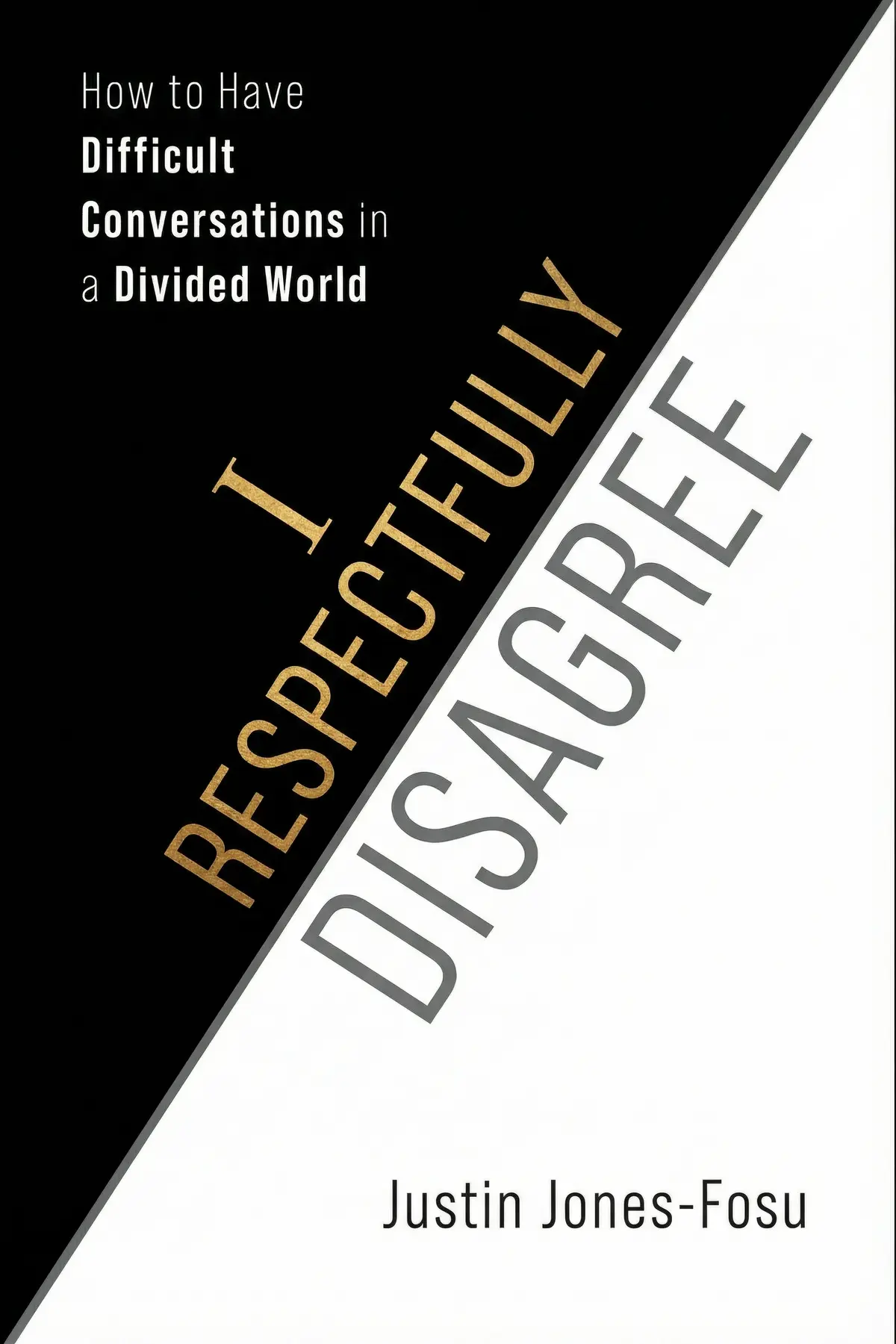
Table of Content
1. Introduction
1 min 09 sec
If arguments with a colleague, a relative or a friend tend to end in silence or a slammed door, the usual escape line is part of the problem. In I Respectfully Disagree, speaker and researcher Justin Jones-Fosu argues that saying let’s agree to disagree is usually a surrender: it closes the talk without understanding, persuasion or respect. His alternative is respectful disagreement, which keeps both your view and the relationship.
The stakes he starts from are high. A Pew Research Center study found that many Americans now see people across the political line as lazy, immoral and closed-minded, and Jones-Fosu sees the same split growing around the world. His throughline is simple. Respect is something you give first, not something others must earn, and from there five habits can turn a clash into a chance to learn.
Along the way you get a method for spotting the old experiences that put you in fight mode, a three-word question that keeps people talking, and a better way to phrase the question you most want to ask.
2. Give respect before anyone has earned it
1 min 47 sec
A phrase most of us use to keep the peace may be doing the opposite. Jones-Fosu argues it ends conversations too early, and he offers a different starting point that changes the tone before the first word.
3. Find the old wound behind your fight mode
1 min 49 sec
Some people freeze when challenged and others charge straight in. Jones-Fosu traces his own defensiveness to a frightening childhood, and the way he finally let it go did not involve the person who hurt him.
4. Spot the belief that your view is the truth
1 min 54 sec
Almost everyone believes they see the world as it is, and that people who disagree must have something wrong with them. That belief is common, and a simple mental habit can loosen its grip.
5. Trade the lecture for three words: tell me more
1 min 43 sec
A man trained in debate tactics treated every disagreement as a lesson, until his partner grew tired of being lectured. What he changed was small, and it reveals why the person with all the answers often understands the least.
6. Turn a debate you must win into shared work
1 min 47 sec
Most arguments are set up as contests with one winner and one loser. Jones-Fosu borrows an image from a drum circle, and a single reworded question about tattoos, to show what changes when nobody is trying to dominate.
7. Conclusion
1 min 13 sec
Jones-Fosu’s book comes down to one decision you make before you speak: whether the person in front of you deserves respect regardless of what they believe. Golden respect says yes, by default. The pillars are ways of acting on that decision under pressure. You question how sure you are, you listen to learn, you ask for more, you look for the gray, and you choose words that keep everyone playing in the same circle.
You keep your own view throughout. What you drop is the assumption that the other person is flawed for holding theirs. That is why his own story carries so much weight. His fight mode grew out of a stepbrother’s abuse, and it eased only when he forgave, to free himself.
The practice can start small. Name the life disagreement marker behind the argument that always gets to you. In the next clash, swap one challenge for a tell-me-more question, and turn a why-on-earth question into a what-inspired-you one. When the talk turns rough, say so plainly, and give the other person the same respect you hope to get.
Agreeing to disagree ends a conversation. Agreeing to respect is how a better one begins.
About this book
What is this book about?
Many hard conversations end the same way. Someone says let's agree to disagree, the talk stops, and nothing is understood or resolved. Justin Jones-Fosu argues that this familiar truce is really a way of giving up, and that a divided world needs a better habit. He points to a Pew Research Center study in which many Americans described people on the other side of politics as lazy, immoral and closed-minded, and he sees the same split spreading globally. His alternative is respectful disagreement. You keep your own view, but you protect the relationship by treating respect as a gift you give first, which he calls golden respect. He then asks readers to look inward, at the past experiences that make them freeze or fight, and at the common belief that they alone see the world clearly. The practical core is a model of five pillars: challenge your perspective, be the student, cultivate your curiosity, seek the gray and agree to respect. Readers get concrete tools for each, from reframing quick judgments to asking tell me more and rewording a loaded question so it invites a story.
Book Information
Who it's for
Professionals in combative meetings
Professionals whose meetings or team debates keep turning into contests someone has to win.
Pulling away after arguments
People who avoid family or friends after arguments about politics, religion or values.
Thrown by pushback
Anyone who notices they freeze or go on the attack the moment someone pushes back.
About the Author
Justin Jones-Fosu
Justin Jones-Fosu is a speaker, researcher and author who once worked as a human resources professional. He founded Work. Meaningful., a research and training firm, and the Work Meaningful Foundation, which supports students in Ghana through schools, technology labs and clean water projects. He led the writing of the national study Meaningful Work in America, holds an MBA and carries the Certified Speaking Professional designation.
Ratings & Reviews
Ratings at a glance
What people think
Listeners find this work both enlightening and accessible, serving as a manual for handling conflict and building authentic relationships. Its hands-on methodology is well-regarded; one listener remarks that it supplies concrete tools for the everyday, while another notes the value of its five-pillar framework for challenging dialogues. The guide earns praise for its empathetic spirit and relatable anecdotes.
Top reviews
Vipawan
Picked this up because our social climate feels so toxic lately, and I was genuinely surprised by how much I needed the "Golden Respect" concept. Unlike the transactional respect we usually talk about, Jones-Fosu argues for a version that is rooted in our own internal convictions. It is an absolute game-changer for navigating holiday dinners or heated office meetings where you feel your patience thinning. To be fair, I was worried it would be another fluff-filled self-help book, but the five-pillar framework provides a solid backbone for the entire read. The stories about his own upbringing make the advice feel grounded rather than preachy. Truth is, we often treat disagreements like wars to be won, but this book shifts the goalpost toward understanding. It’s a timely and compassionate guide that I’ll be recommending to my entire team at work.
Show moreSupaporn
The chapter on “Golden Respect” completely changed my perspective on what it means to acknowledge someone's humanity during a fight. Jones-Fosu argues that respect shouldn't be something earned through good behavior, but rather a standard we hold ourselves to regardless of the other person's actions. This reframing is incredibly powerful because it puts the control back in your hands during a heated disagreement. I also loved the specific technique of saying "Thank you, because..." to show genuine appreciation for a different perspective. It’s a simple shift, but it has already made my conversations with my partner much more productive and less defensive. Not gonna lie, I teared up a bit reading some of the personal stories included here. This book is a rare blend of heart and practical strategy that is desperately needed in 2024. Highly recommended for everyone.
Show moreChanon
Finally got around to reading this, and the "Tortoise Principle" is exactly what my communication style needed to hear. In our world of instant gratification, we often expect our relationships to improve overnight after one conversation. This book reminds us that meaningful change is slow and requires constant, small adjustments over a long period. The writing style is very conversational and engaging, making it a quick read that stays with you long after you close the cover. I found the section on "disrespectful agreement" particularly convicting because I often choose silence just to keep the peace. Jones-Fosu explains why that's actually a cop-out that prevents true understanding from ever happening. It is a challenging book that pushes you to be more authentic while remaining deeply kind. Every family should have a copy of this on their shelf.
Show moreAhmed
Justin Jones-Fosu has written a guide that feels incredibly timely for our current polarized world. The way he breaks down complex interpersonal dynamics into the five-pillar framework makes the content very digestible for the average reader. Personally, I found the chapter on power dynamics and the story of Jonathan to be the most impactful section of the book. It serves as a stark reminder of how authority can accidentally stifle the very innovation it tries to foster by silencing dissent. While some of the advice feels a bit basic if you have already studied mediation, the author’s warm style carries the message forward effectively. The book focuses on actionable tools rather than just abstract theories, which I deeply appreciated. It’s a solid resource for anyone trying to bridge divides without losing their own sense of authenticity.
Show moreDimitri
Ever wonder why workplace disagreements feel like such a minefield these days? This book tackles that head-on by exploring how we can disagree respectfully without sacrificing our professional relationships or our personal values. The story of Jonathan, the leader who mistook dissent for a lack of respect, really resonated with my own experiences in corporate America. It highlights the dangerous ego traps that many of us fall into when we are in positions of power. Jones-Fosu’s five-pillar framework is easy to remember and even easier to apply to daily interactions. To be fair, some of the analogies are a bit cheesy, but the underlying message is too important to ignore. It’s an insightful read that provides tangible tools for making meaningful connections in a world that seems determined to keep us apart. Definitely worth the time.
Show moreMingkwan
To be fair, I went into this expecting a dry academic text, but I was pleasantly surprised by the warmth and compassion of the writing. The five-pillar framework is a great way to structure the messy reality of human disagreement into something manageable. I especially appreciated how the author used relatable anecdotes from his own life to illustrate how these principles work in practice. The focus on empathy and perspective-taking is central, but it’s backed up by actual tactics you can use in the moment. My only minor gripe is that some sections feel a little bit like they are repeating the same thesis in different words. However, the message is so vital for our current social climate that a little repetition might actually be necessary for it to sink in. It’s an excellent guide for navigating tough conversations with grace and confidence.
Show moreKavya
After hearing about the BIBA win, I decided to see if the advice actually held up in real-life scenarios. I’ve since tried the "Golden Respect" approach during a particularly tense meeting at work, and the results were actually quite impressive. By focusing on my own internal standards of respect, I stayed calm while others were losing their cool, which changed the entire energy of the room. The book is filled with these kinds of practical, tangible tools that you can start using almost immediately. I think the five pillars offer a great roadmap for anyone who feels overwhelmed by the polarization we see on the news every day. While the writing can be a bit repetitive in the middle chapters, the core message is incredibly valuable. It’s a heartfelt and actionable guide that helps us see disagreements as opportunities rather than barriers.
Show moreNarong
As someone who works in conflict resolution, I found most of these concepts to be fairly foundational and perhaps a bit overly simplified. That being said, the Tortoise Principle is a refreshing take on how we approach changing our long-term communication habits. It emphasizes that small, consistent efforts are far more valuable than trying to fix a relationship with one grand, sweeping gesture. The writing is accessible and the tone is very encouraging, which makes it a great entry point for people who find confrontation terrifying. I did feel that some of the anecdotes were a bit sanitized to fit the narrative, though they still served their purpose. It’s a decent 3.5-star book that offers a few tactical nuggets of wisdom even if the overall framework isn't revolutionary. It is probably best suited for those just starting their journey into better communication.
Show moreOn
Look, the intention behind this book is clearly noble, but the execution left me wanting much more from the author. I felt like I was reading a 200-page version of a concept that could have been summarized in a lengthy blog post or a single podcast episode. The central points are repeated constantly, which makes the middle section of the book feel like it's dragging through repetitive mud. Frankly, if you’ve read any basic books on active listening or empathy, you might find yourself skimming large portions of this text. While the "Golden Respect" idea is a nice sentiment, it doesn’t quite justify the repetitive nature of the chapters that follow. It isn't a horrible read, but it definitely feels like it was stretched thin to meet a specific word count for publication.
Show moreWittaya
Not what I expected based on the high praise I saw online. While the author seems like a wonderful and genuine person, the content of the book felt very surface-level to me. It felt like a collection of inspirational blog posts rather than a deep dive into the psychology of disagreement. Frankly, I was hoping for more rigorous strategies for dealing with truly difficult or toxic people, rather than just general advice on being nicer. The framework is okay, but it lacks the depth I was looking for in a professional development book. If you are already someone who values empathy, you probably won't find many new insights here. It’s a fine book for a beginner, but for me, it just felt repetitive and a bit too simplistic for the complexities of today's world.
Show moreQuestions about this book
What is the main idea of I Respectfully Disagree?
Justin Jones-Fosu argues that agreeing to disagree usually just ends a conversation without understanding or respect. He proposes respectful disagreement instead: you keep your view but protect the relationship. It rests on golden respect, the idea that respect is a gift you give first instead of something people must earn, and on five habits that turn conflict into a chance to learn from each other.
What are the five pillars of respectful disagreement?
Jones-Fosu names five. Challenge your perspective by questioning your own views and quick judgments. Be the student by listening to learn. Cultivate your curiosity by asking for more before drawing conclusions. Seek the gray by moving past black and white thinking toward collaboration. Agree to respect by choosing a cooperative attitude, careful wording and honest acknowledgment of how the conversation is going.
What are life disagreement markers?
Life disagreement markers, or LDMs, are past experiences that shape how you handle conflict today, whether you avoid it or rush into it. Jones-Fosu traces his own defensive fight mode to childhood abuse by an older stepbrother, and says it began to change only when he forgave him. Identifying your markers, he argues, lets you change unhealthy patterns in how you disagree.
How can I apply I Respectfully Disagree in a tense conversation?
Decide beforehand that the other person gets your respect. During the talk, ask a tell-me-more question before making your case, and reframe any quick label you have given them. Word your questions so they invite a story, as in asking what inspired someone’s tattoo instead of why they would get one. If the conversation turns rough, say so openly.
Who should read I Respectfully Disagree?
It suits people who find disagreements damaging their relationships, at work or at home, and who want a way to stay honest without starting a war. Managers handling team conflict, people divided from relatives over politics or values, and anyone who tends to lecture or shut down when challenged will find concrete habits they can practice in their next conversation.
Readers also enjoyed









AUDIO SUMMARY AVAILABLE
Listen to I Respectfully Disagree in 15 minutes
Get the key ideas from I Respectfully Disagree by Justin Jones-Fosu, plus 5,000+ more nonfiction titles.
- 5,000+ titles
- Listen as much as you want
- 7-day free trial
- Cancel anytime









