
16 min 12 sec
Available in: English
 ไทย
EnglishไทยHumankind: A Hopeful History
Rutger Bregman argues that people are mostly decent and cooperative by nature, shows how news, fiction and flawed research taught us otherwise, and explains what changes when prisons, workplaces and societies start from trust.
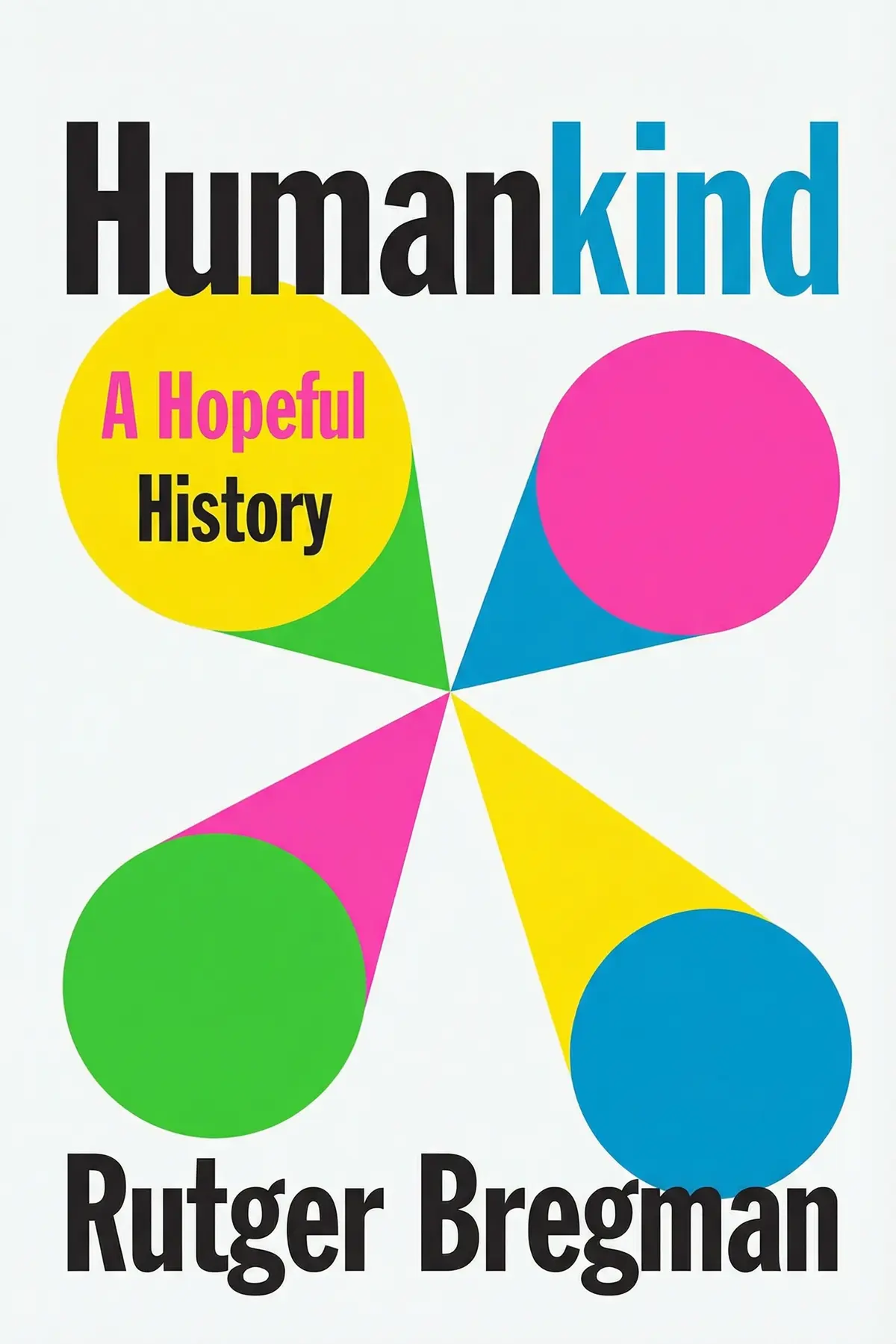
Table of Content
1. Introduction
1 min 02 sec
If you expect the worst from strangers, colleagues and the people in the headlines, historian Rutger Bregman thinks you have been misled. In Humankind, he starts with the London Blitz, where Britain built emergency psychiatric wards for the mass panic it expected, and the wards stayed empty. His argument is that the image of humans as selfish beasts, held in check only by laws and punishment, is a story we keep repeating against the evidence.
Drawing on history, archeology, psychology and criminology, he makes the case that people are friendly and cooperative by nature, and that hope is simply the more accurate view. The trail runs from bombed London and a real desert island to Stone Age caves, the trenches of 1914 and a Norwegian prison where guards carry no guns. It explains why the news darkens your view of people, where human violence actually began, and what changes when you build on trust.
2. Expect people to rise when disaster strikes
1 min 46 sec
Hitler sent hundreds of bombers to London expecting a terrified mob to finish the job for him. What the city did instead, and what 700 studies of disasters found, upends a fear most of us carry.
3. See how the news darkens your view of people
1 min 46 sec
After a hurricane, headlines described gangsters and murdered babies, and a governor drew grim lessons about human nature. The real story emerged later, along with a reason your daily news habit may be bending your judgment.
4. Test the dark stories against what really happened
1 min 46 sec
A celebrated novel and two famous studies taught generations that people turn savage without rules. A real group of castaways, and a closer look at the evidence, tell a very different story.
5. See cooperation written on your own face
1 min 43 sec
The walls of Stone Age caves are missing something you might expect to find there. Your own face and eyes hold further clues about what kind of animal evolution actually rewarded.
6. Trace conflict back to property and rank
1 min 45 sec
If our ancestors were peaceful, the violence in human history still needs an explanation. Archers in cave art and the first fortifications point to the moment things changed, and to the forces behind it.
7. Learn how loyalty can lead good people into harm
1 min 46 sec
Outnumbered German soldiers in 1944 kept fighting long after defeat was certain, and Allied experts thought they knew why. The real motive was more ordinary, and far more unsettling, than brainwashing.
8. What war reveals about our refusal to kill
1 min 51 sec
A battalion of 300 failed to take a small island, and its commander set out to learn why. His answer, and a strange Christmas in the trenches of 1914, reveal what armies struggle against.
9. Treat people as responsible and watch them change
1 min 38 sec
In one Norwegian prison, inmates cook their own meals and barbecue with guards who carry no guns. It sounds absurd until the director asks a single question and the reoffending numbers come in.
10. Conclusion
1 min 09 sec
Humankind hands you a different mirror. For centuries, generals, governors and prison builders have worked from a picture of people as brutes kept in line by fear, and in Bregman’s account that picture keeps failing its own tests. Where violence did take hold, he traces it to things we built, property and rank, and to a loyalty that zooms in on a few faces and forgets the rest.
What lifts the book above comfort is that our view of people tends to come true. Treat prisoners as dangerous animals and six in ten come back. Treat them as adults who can cook, make music and share a barbecue with unarmed guards, and far fewer do.
The habits that follow are modest. Notice how much of your picture of humanity comes from the news, and weigh it against what you see in your own street and office. When something goes wrong, assume most people will help, and give them a way to. And the next time you weigh how far to trust someone, remember the six castaways who kept one fire alive for more than a year, after agreeing at the start not to fight.
About this book
What is this book about?
Most of us carry a bleak picture of human nature: strip away laws and police, and people will lie, steal and fight. Historian Rutger Bregman argues that this picture is a story, repeated for centuries, that the evidence does not support. He gathers that evidence from many fields. Londoners grew calmer and kinder under the Blitz. Research on hundreds of disasters shows crime falling afterward. Six real castaways kept the peace for 15 months. Stone Age cave paintings show hunting but no war, and our soft faces and visible eye whites suggest a species shaped by friendliness. Violence, in Bregman's account, arrived with settled life, property and rulers, and even soldiers in battle have shown a deep reluctance to kill. Readers learn why the news leaves them more pessimistic than the facts warrant, how loyalty to a close group can fuel terrible acts, and why a Norwegian prison that treats inmates as responsible adults sees far less reoffending than harsh systems elsewhere. The promise is a more hopeful view of people that is also a more accurate one, and a practical case for building institutions on trust.
Book Information
Who it's for
Doubting grim headlines
Readers worn down by daily news who suspect people are better than the headlines suggest.
Leading teams and classrooms
Managers, teachers and team leads deciding how much to trust the people they work with.
Students of human behavior
Students of history, psychology or criminology who want a sharp challenge to the view that humans are selfish by nature.
About the Author
Rutger Bregman
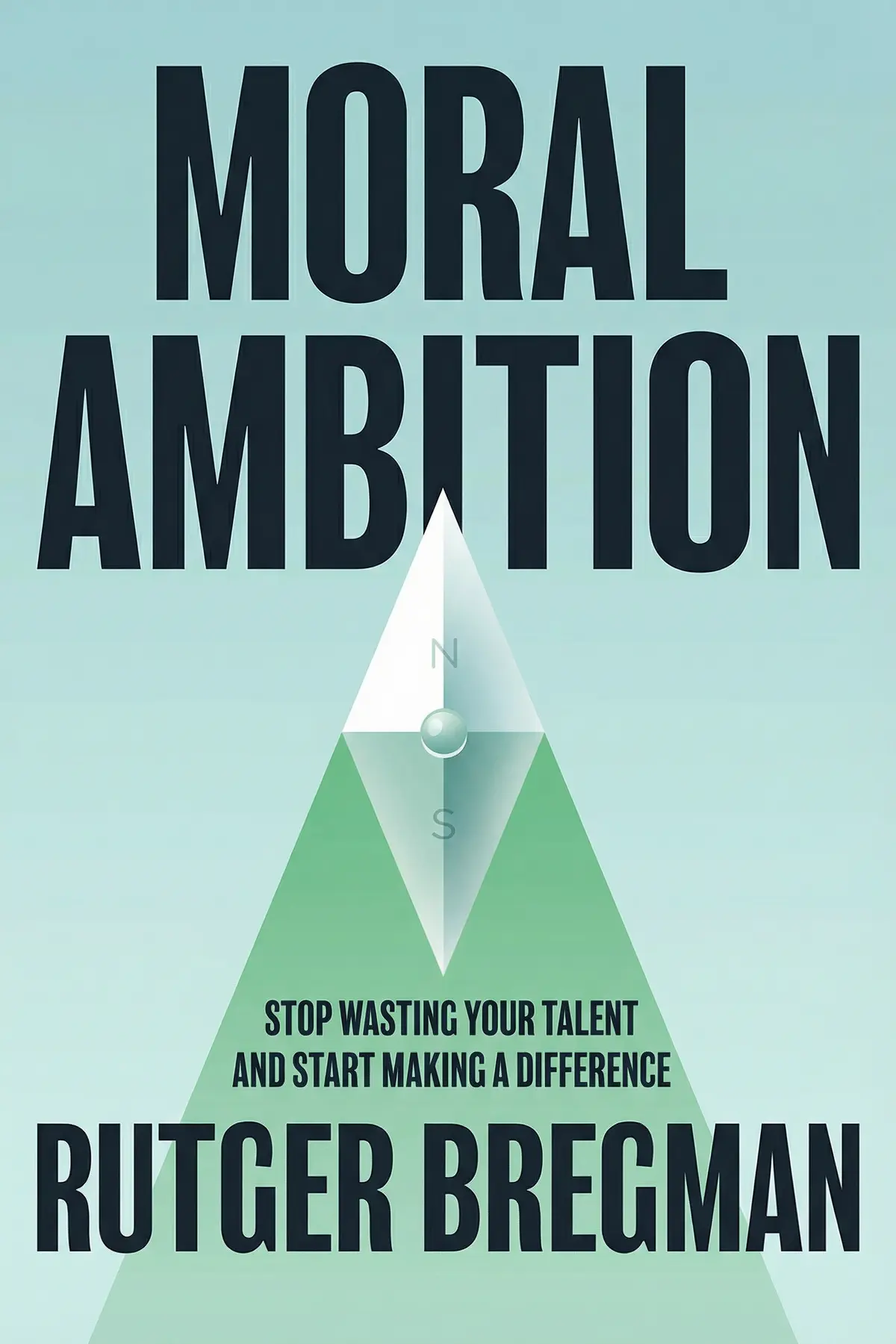
Rutger Bregman is a Dutch historian and author, born in 1988 in Westerschouwen in the Netherlands. Humankind and his book Utopia for Realists, which argued for universal basic income, open borders and a 15-hour working week, both became Sunday Times and New York Times bestsellers. At the World Economic Forum in Davos in 2019, he challenged billionaires over tax avoidance, and TED curator Chris Anderson named his talk on poverty and cash among the top ten of 2017. In 2024 he co-founded the School for Moral Ambition, a non-profit inspired by his 2025 book Moral Ambition that helps people move into work with a positive impact.
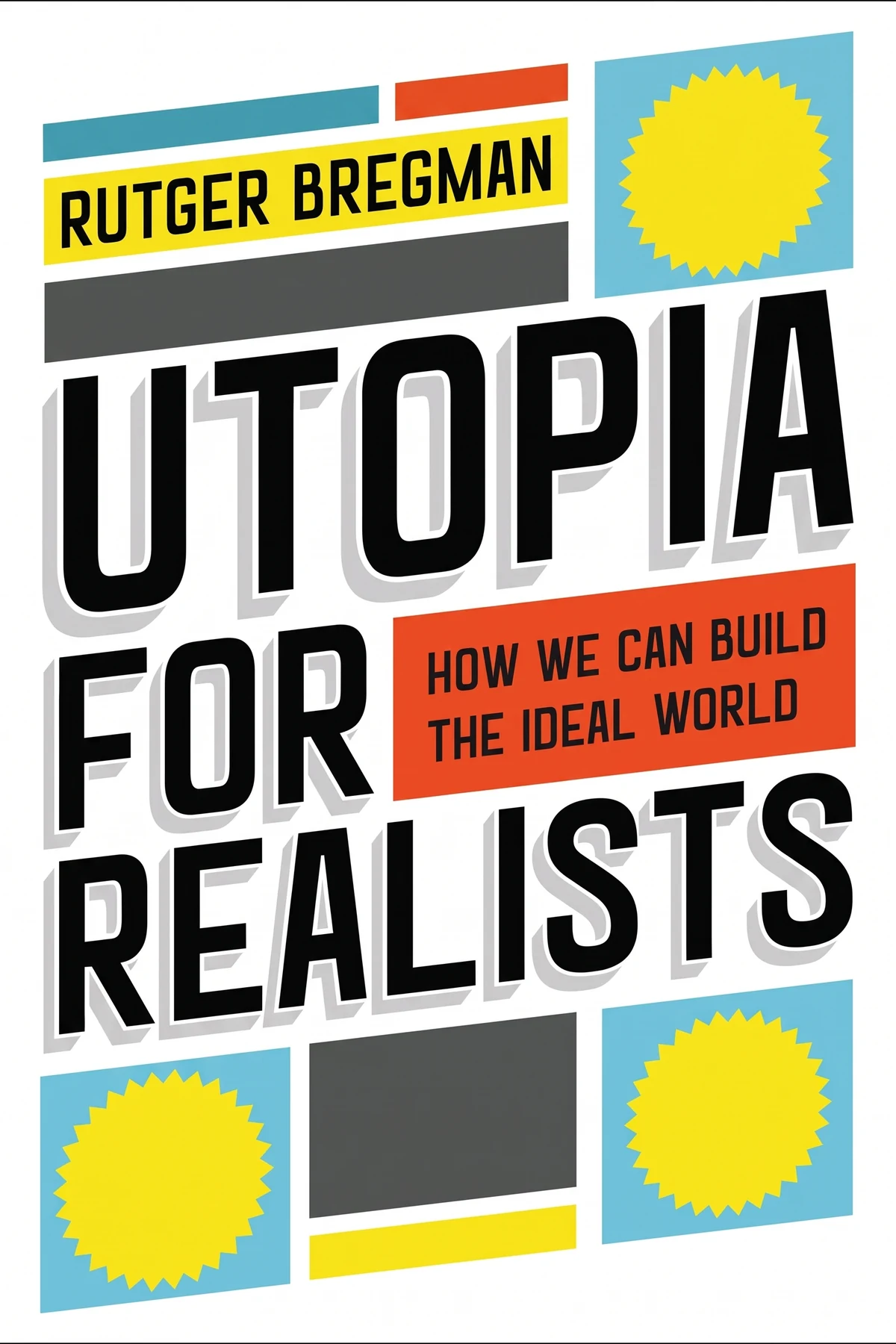
Utopia for Realists: How We Can Build the Ideal World
Rutger Bregman
Ratings & Reviews
Ratings at a glance
What people think
Listeners find this work remarkably accessible and persuasive, featuring thoroughly documented material that offers an optimistic outlook on humanity's essence. The prose is captivating, and listeners value the deep reflections it triggers, with one listener noting that it prompted a reassessment of their life. Listeners have differing views on the book’s reliability.
Top reviews
Tanawan
Wow, this was exactly the breath of fresh air I needed in such a cynical world. We are constantly bombarded with news about how selfish and cruel humans are, so reading about the real-life Lord of the Flies was a revelation. Bregman shows that when actual schoolboys were stranded on an island, they collaborated and survived rather than turning into savages. It’s a compelling argument that our systems—not our souls—are what often bring out the worst in us. The writing style is incredibly engaging and fast-paced, making complex sociological concepts feel like a gripping story. I finished this feeling significantly more hopeful about our collective future and more inclined to trust the strangers I meet on the street. It’s one of those rare books that genuinely changes your outlook on life. Seriously, everyone should read this to counteract the negativity of the 24-hour news cycle.
Show moreFah
After years of feeling burnt out by the state of the world, this book felt like a healing experience. It’s not just a collection of nice stories; it’s a systematic dismantling of the idea that we are born evil. Finding out that the infamous Kitty Genovese story or the Stanford Prison Experiment were largely misrepresented was mind-blowing to me. It makes you realize how much our media and education systems rely on fear to maintain control. Bregman’s writing is lively and accessible, stripping away the jargon to reveal a very simple, radical truth: trust breeds trust. Since finishing it, I’ve been trying to approach my daily interactions with less suspicion and more openness. It’s rare to find a book that offers both a scholarly critique and a practical blueprint for a better society. If you've ever felt like humanity is a lost cause, please give this a chance to change your mind.
Show morePannipa
What a fascinating journey through the hidden history of human kindness. I’ve read Harari and Pinker, but Bregman offers a much more optimistic and, frankly, more relatable perspective on where we come from. The way he weaves together archaeology, psychology, and history is masterful without ever feeling dry. I loved the chapters on the "No Man's Land" Christmas truce and the actual behavior of people during the Blitz. It turns out that when things go wrong, we don't turn on each other; we actually step up to help. The book is incredibly well-researched, yet it reads like a thriller. It’s thought-provoking and challenges almost everything you think you know about human nature. Some might call it naive, but I think it’s a necessary correction to the doom-and-gloom narratives that dominate our culture. A truly compelling read that I couldn't put down until the very last page.
Show morePrim
Finally got around to reading this, and it lived up to all the hype. The world needs this book right now more than ever. Bregman doesn't just say "be nice"; he provides a historical framework for why cooperation is actually our greatest evolutionary strength. It completely flipped my understanding of the "survival of the fittest" concept. It turns out the "fittest" were often the most friendly and cooperative, not the most aggressive. The book is filled with such well-researched content that it’s hard to ignore the hopeful conclusions. I particularly liked the examples of modern systems, like the Norwegian prison model, that actually work by treating people with dignity. It makes you realize that so much of our society is built on a false, cynical premise. This isn't just a book to read; it's a book to act upon. Highly recommended for anyone looking for a reason to believe in a better tomorrow.
Show moreMats
As someone who usually finds history books a bit of a slog, I was surprised by how much I enjoyed this. Rutger Bregman is a gifted storyteller who knows how to keep the reader hooked from the first page. He takes these legendary social experiments that we all learned about in school and turns them on their heads with fresh evidence. The writing is clear, witty, and deeply engaging. It’s one of those books where you find yourself constantly highlighting passages to share with friends. While some might find his optimism a bit much, I found it incredibly refreshing to see a writer defend humanity for once. It’s a very readable and compelling look at our species that provides a much-needed dose of positivity. It’s the kind of non-fiction that feels important without being self-important. I’ll definitely be looking into his other work after this.
Show moreGift
Picked this up after a friend wouldn't stop raving about it, and I can see why it’s caused such a stir. Bregman’s central thesis—that most people are decent—is backed by a fascinating re-evaluation of history and social science. I particularly enjoyed the sections on how hunter-gatherer societies were far more egalitarian than we usually assume. To be fair, the prose can be a bit over-the-top at times, using those ultra-short sentences and dramatic cliffhangers typical of modern non-fiction bestsellers. It sometimes feels more like a long-form magazine article than a dense historical tome, which helps the readability but might annoy serious scholars. Still, the core message about trust and cooperation is powerful and timely. It challenges the "veneer theory" that civilization is just a thin mask over our animalistic urges. Even if you don't agree with every single point, it provides plenty of food for thought regarding how we structure our schools and workplaces.
Show moreMo
Ever wonder why we’re so convinced that everyone else is out to get us? Bregman argues that the news is essentially a drug that distorts our perception of reality, focusing only on the exceptions rather than the rule of human decency. The insights into how we’ve been "sold" a negative view of ourselves are brilliant. However, I have to agree with some critics that the writing style is very informal—lots of rhetorical questions and punchy, one-sentence paragraphs that can get a bit repetitive. It's definitely designed for a wide audience, which is great for spreading the message, but it occasionally sacrifices nuance for the sake of a good story. That being said, the evidence regarding the innate friendliness of our species is quite convincing. It’s a solid 4-star read that will definitely spark some intense dinner-table debates.
Show moreSupaporn
Not what I expected, but in the best way possible. I thought this might be another dry history book like Sapiens, but it’s much more focused on the psychological and moral core of our species. Bregman argues that our natural inclination toward empathy and connection is what allowed us to survive where others didn't. The research into "natural" human behavior versus "civilized" violence is absolutely fascinating. Personally, I found the chapter on how we've been conditioned to be soldiers particularly moving. It’s a bold, thought-provoking book that makes you rethink almost every interaction you have. Even if you only agree with half of what he says, the questions he raises about how we organize society are crucial. It’s an accessible, beautifully written piece of non-fiction that manages to be both intellectually stimulating and emotionally resonant.
Show moreTen
While I desperately wanted to be convinced by Bregman’s optimism, I found the execution somewhat lacking in academic rigor. The book does a fantastic job of deconstructing famous psychological experiments like the Stanford Prison Experiment and the Milgram shocks, showing they weren't as "scientific" as we've been led to believe. However, the author often slides into cherry-picking his own evidence to fit a pre-determined narrative of inherent goodness. Truth is, human nature is likely far more messy and situational than this binary choice between Hobbes and Rousseau. It’s a very readable, journalistic piece of work that certainly makes you rethink the 'veneer theory' of civilization. Yet, I couldn't shake the feeling that he was hand-waving away the darkest chapters of our history to keep the tone light. If you enjoy pop-science that challenges the status quo, it’s worth a look, but take the sweeping conclusions with a healthy grain of salt.
Show moreAnchalee
Maybe I'm just a cynic, but this felt more like wishful thinking than a rigorous historical analysis. Bregman spends a lot of time debunking old studies, but his own replacements are often just as anecdotal and selective. He tries to explain away the Holocaust and other atrocities by blaming "the system" or "the leaders," but that feels like a massive cop-out. Are we really supposed to believe that individuals bear no responsibility for their actions as long as they were "trying to do good" in their own warped minds? The tone is incredibly informal and at times even patronizing, as if the author is explaining things to a child. Look, I want to believe people are mostly good, but this book didn't provide enough hard evidence to overcome the weight of human history. It's a nice sentiment for a coffee table book, but it lacks the depth required for such a monumental topic.
Show moreQuestions about this book
What is the main idea of Humankind by Rutger Bregman?
Bregman argues that humans are friendly and cooperative by nature, and that the common belief in a selfish, violent core is a story the evidence does not support. He draws on the London Blitz, disaster research, a real group of shipwrecked children, cave paintings and soldiers’ reluctance to kill. Violence, in his view, grew with settled life, property and rulers, and a more hopeful view of people is also the more accurate one.
What does Bregman mean by Homo puppy?
Homo puppy is Bregman’s name for humans as a self-domesticated species. Modern faces are softer, rounder and more childlike than those of our ancestors, much as dogs were selected for friendly looks and temperaments. Humans also show the whites of their eyes, which lets others follow their gaze and supports trust. Babies outperform chimpanzees and orangutans mainly in learning from others. These traits point, he argues, to survival of the friendliest.
Does Humankind argue that Lord of the Flies is wrong?
Bregman treats William Golding’s novel as fiction that shaped a pessimistic view of people. Looking for a real case, he found a 1966 account of six children marooned for 15 months on an isolated South Pacific island. They agreed not to quarrel, kept a fire burning for more than a year and remained friends after their rescue, the opposite of the novel’s slide into violence.
How does Humankind challenge Steven Pinker?
Pinker’s The Better Angels of Our Nature estimated from excavated skeletons that about 14 percent of prehistoric people died in war, against one percent today. Bregman argues the figure is wrong because 20 of the 21 excavations Pinker relied on date from after farming and settled life began. He also attacks Napoleon Chagnon’s depiction of the violent Yanomami, noting that during his fieldwork Chagnon handed the tribe axes and machetes.
How can I apply the ideas in Humankind?
Bregman’s examples suggest a few habits. Treat the news as a nocebo that exaggerates the bad, and wait for fuller accounts after a disaster. In a crisis, expect people to help and give them ways to do it. When you lead or teach, extend responsibility the way Norway’s Halden and Bastøy prisons do; Bastøy’s reoffending rate is 16 percent, against 60 percent in the United States.
Featured in
Readers also enjoyed



Alexander Hamilton
Ron Chernow


Alexander the Great
Philip Freeman

A Liberated Mind: How to Pivot Toward What Matters
Steven C. Hayes



A History of Iran: Empire of the Mind
Michael Axworthy
AUDIO SUMMARY AVAILABLE
Listen to Humankind in 15 minutes
Get the key ideas from Humankind by Rutger Bregman, plus 5,000+ more nonfiction titles.
- 5,000+ titles
- Listen as much as you want
- 7-day free trial
- Cancel anytime









