

13 min 13 sec
Available in: English
Hug Your Customers: STILL the Proven Way to Personalize Sales and Achieve Astounding Results
Shows how to turn scripted customer service into personal care that customers remember. It covers asking better questions, serving people in person, keeping teams close, using data well and protecting service when money runs short.
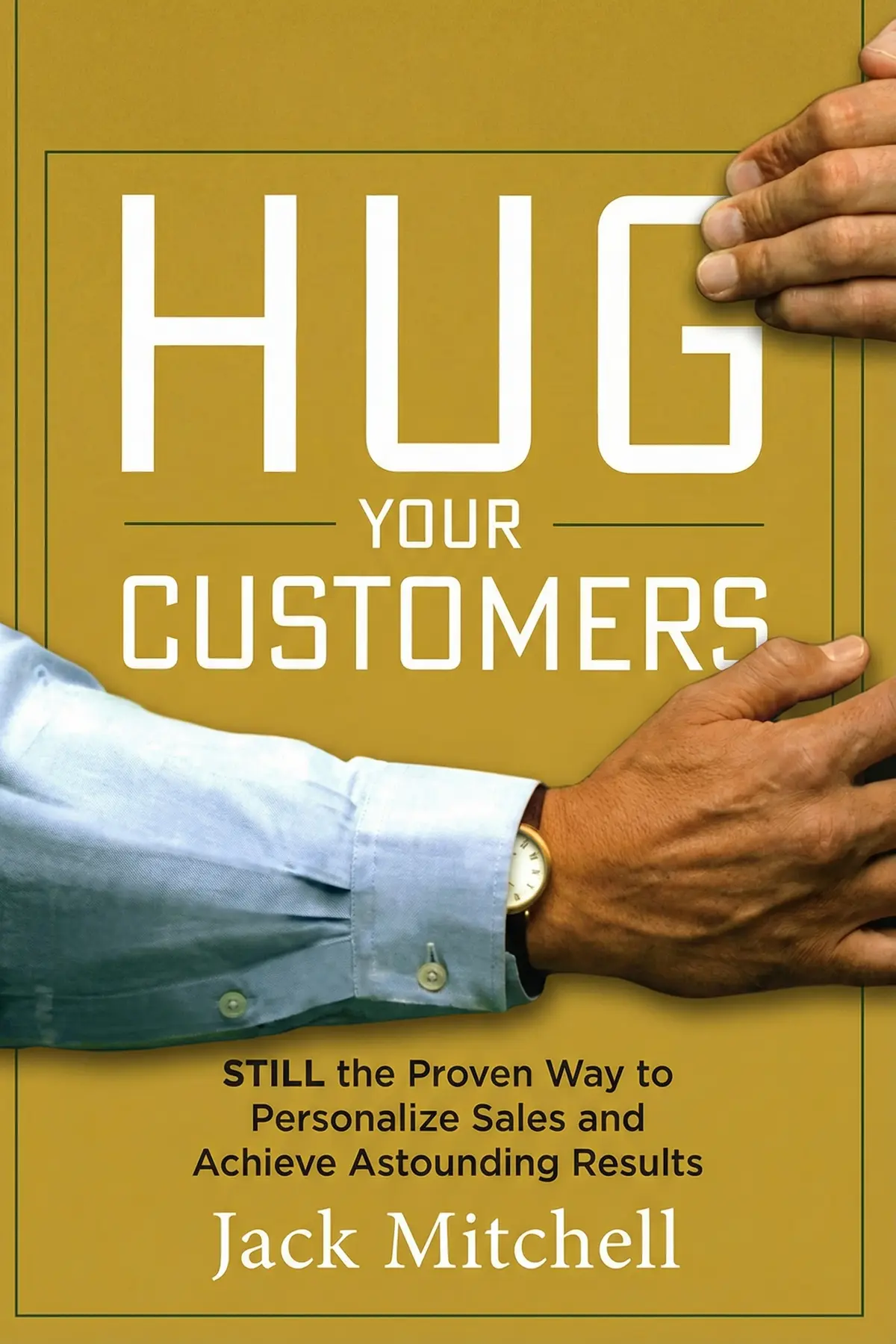
Table of Content
1. Introduction
59 sec
Most stores train staff to smile and ask whether they can help, then stop there the moment a customer needs something unusual. In Hug Your Customers, Jack Mitchell, chairman of the family clothing business Mitchells, argues that the real work begins exactly where that script ends. His approach, which he calls a hugging culture, means finding out what each customer wants and then doing whatever it takes to give it to them, even when no sale follows. A button sewn onto a jacket for a woman who had bought nothing from his store once earned him a seat at the US Open finals beside the former head of IBM.
The book’s case is that loyalty is built by design: by the questions staff ask, the way they move, the building they share, the data they keep and the choices they make when money runs short. By the end, you will know how to turn routine service into the kind people remember and return for, and how to protect it when times get hard.
2. Ask questions that reveal what customers really want
1 min 59 sec
A generic offer of help teaches a salesperson almost nothing. One small change in what staff say first led a clothing store to a jacket, a famous couple and an invitation nobody expected.
3. Turn service into something customers can feel
1 min 50 sec
A worker’s careless gesture lost one shopper forever, while a mother’s daily habit became a company tradition. The difference between them says a lot about what makes people feel truly looked after.
4. Treat every customer, child and dog like a VIP
1 min 46 sec
A store that posts a sign telling dogs to stay outside is sending a message it never meant to send. Mitchell’s alternative stretches the idea of who counts as a customer further than most businesses would dare.
5. One building, one team, faster answers for customers
1 min 44 sec
A customer asked for a sock color the store did not stock, and the answer arrived faster than anyone could have expected. Where the departments sat turned out to matter more than any process.
6. Let your data remember what customers forget
1 min 50 sec
Two shoppers went home with each other’s clothes, and the mix-up could easily have cost the store both of them. What fixed it was not an apology but something most businesses already have and rarely use well.
7. Cut costs in a recession and keep your customers
1 min 44 sec
When income drops, service is usually the first thing a business treats as optional. Mitchell sees it differently, and his plan for paying the bills includes a step most finance teams would resist.
8. Conclusion
1 min 21 sec
Mitchell’s argument comes down to a bet about time. Every favor that earns nothing today, a button sewn on, a store opened after hours during a football game, a dog remembered by name, is a deposit in a relationship that pays back over years. He wants customers hugged physically, emotionally and even financially, and he adds that working this way is more fulfilling for the people who do it.
What lifts the book above a call for kindness is that he builds the care into the business itself: the questions staff are trained to ask, the building the teams share, the system that remembers each customer, the budget rules that protect service when income drops.
He is also wary of rulebooks. Statistics, organizational structure and business manuals, he warns, can bog you down. His advice is to keep looking for new ways to serve people, even ones nobody has tried before.
Start with the next customer you meet. Ask them one question about their own situation, use their name, and do one thing for them that will not show up in today’s sales. Looking after a client’s dog sounded silly too, and it worked. A loose button, after all, once led all the way to the US Open finals.
About this book
What is this book about?
Most businesses stop at a smile and a standard offer of help. When a customer needs something unusual, the script runs out. Jack Mitchell, chairman of a three-generation family clothing business, argues that this is exactly where real service should begin. His approach is what he calls a hugging culture: find out what each customer truly wants, then do whatever it takes to provide it, even when there is no sale in it. He illustrates it with stories from his own stores, from a button repaired for a woman who had bought nothing there to an employee who left a football game to open the shop for a man with an emergency. The book turns that care into a working system. Mitchell explains how personal questions reveal what people want, why physical presence matters, how keeping every department under one roof speeds up answers, how a customer database rescues mistakes and shrinking budgets, and how to cut costs in a recession without cutting the customer. Readers get a practical model for building loyalty that lasts for years.
Book Information
Who it's for
Retail owners and managers
Shop owners and retail managers who want customers to come back for years, not just once.
Service business founders
Founders of service businesses looking for a practical model of personal care.
Supervisors training staff
Team leads training staff to move beyond scripted greetings.
About the Author
Jack Mitchell
Jack Mitchell is chairman of Mitchell Stores, the family business of men's and women's specialty clothing stores founded by his parents, Ed and Norma, which became Mitchells of Westport. He studied at Wesleyan University and the University of California-Berkeley, and the company has served as a Harvard Business School case study. Since 2003 he has also worked as a speaker and author. Hug Your Customers was a Wall Street Journal best seller, followed by Hug Your People in 2008, and Inc. magazine named him on a 2005 list of 26 entrepreneurs.
Ratings & Reviews
Ratings at a glance

What people think
Listeners consider this title to be among their preferred business books, valuing its accessible writing and motivational tone. The quality of information is frequently mentioned, as one listener points out that the methods can be adapted for many industries, whereas another listener finds it especially helpful for those starting in management. The work earns high marks for its concepts and storytelling, with one listener emphasizing the inclusion of amusing and illustrative anecdotes.
Top reviews
Sai
Jack Mitchell has written a modern business classic that every aspiring manager needs to keep on their nightstand. The core philosophy is simple—treat people like human beings—but the way he breaks down 'hugging' into actionable steps is where the magic happens. I particularly appreciated the entertaining anecdotes from the clothing business that illustrate how small gestures lead to massive loyalty. While some might find the suit-selling stories a bit niche, the underlying principles of personalization are universal across any discipline. It’s an inspirational read that focuses on the quality of information rather than just corporate jargon. I’m definitely recommending this to my team to boost our service standards immediately.
Show moreDylan
The chapter on employee morale alone makes this book worth the purchase price. Most business books focus solely on the bottom line, but Jack Mitchell understands that you can’t have happy customers without happy employees. His 'hugging' philosophy extends inward, creating a culture of appreciation that is clearly effective given his company's success. I appreciated the straightforward writing and the lack of complex fluff. To be fair, the examples are very specific to high-end menswear, but if you have any imagination at all, you can easily adapt these 'hugs' to your own industry. It’s an entertaining read that left me feeling motivated to do better for my clients.
Show moreKom
Finally got around to reading this after my business coach recommended it, and I’m glad I did. This isn’t a book about theory; it’s a book about action. Mitchell shows you how to turn every transaction into a relationship, and that’s a lesson that applies whether you’re selling suits or software. The personal stories are genuinely engaging, and they help illustrate why 'hugging'—or over-the-top service—is the ultimate competitive advantage. It’s a beautifully written guide that puts the human at the center of the business. Even if you only implement ten percent of what’s in here, you’ll see a difference in your customer retention. Truly a favorite business read.
Show morePracha
As someone who has worked in sales for over a decade, I found the strategies in this book both refreshing and slightly terrifying. Mitchell advocates for a level of service that feels almost alien in today’s automated world, such as remembering a customer's favorite baseball team or staying open late for a single client. Truth be told, it can feel a little overbearing if you aren't in a high-end luxury niche. However, the chapter summaries are fantastic for a quick refresh, and the breezy writing style makes it an easy weekend read. It’s a great reminder that the human element is what truly drives revenue. It is simple yet profound.
Show morePawinee
Wow, what a heartfelt approach to the often cold world of business transactions. I loved the emphasis on making people feel seen and special, which is a lost art in our digital age. The stories about the tailors and the family dynamics at Mitchells/Richards add a personal touch that makes the advice more digestible. I'll admit that the 'hugging' terminology gets a bit thick at times. It can be a lot. Some chapters feel like they are just repeating the previous ones. Still, for a new manager looking for inspiration on how to build a loyal client base, the quality of information here is top-notch. It’s short, punchy, and genuinely useful for the modern worker.
Show moreSam
In my experience, the simplest ideas are often the hardest to implement, and this book highlights exactly why. Mitchell advocates for a level of radical personalization that requires massive discipline. I found the 'hugging' system to be a great framework for anyone looking to ditch traditional advertising and move toward word-of-mouth growth. While the author does come across as a bit of a braggart regarding his stores, his results are hard to argue with. The book is a quick read, with short chapters that keep the momentum going. It’s common-sense advice that somehow feels revolutionary because so few companies actually do it. Worth a read for small business owners looking for an edge.
Show moreLaor
Not what I expected from a typical business book, but in a good way. The tone is very casual and conversational, almost like you’re sitting down for coffee with Mitchell himself. While he repeats himself a lot, the repetition helps drill in the importance of the core message: treat every customer like royalty. I do think the 'hugging' concept can feel a bit absurd if taken literally, but as a mindset, it’s powerful. It works. The book is well-organized with those helpful summaries at the end of each section. It’s an easy, short read that offers a lot of common-sense wisdom for anyone in a customer-facing role. Give it a shot.
Show moreTum
Ever wonder how much one man can talk about selling $700 suits? Mitchell’s 'hugging' system is certainly effective for his specific Connecticut clothing maven lifestyle, but I struggled to see how this translates to 'library-land' or other public sectors. The book is filled with stories of over-the-top gestures like sending flowers or personal deliveries, which are lovely if you have the margin, but they feel like high-pressure tactics in other contexts. Frankly, some of the data-tracking he suggests feels a bit like stalking. It’s an interesting look into a successful family business, but take the 'universal' advice with a grain of salt. It is just okay.
Show moreRome
After hearing so much hype about this being a 'business bible,' I was a little disappointed by the shallow nature of some of the advice. It’s essentially a collection of anecdotes about being extremely attentive to wealthy people. While the information quality regarding client retention is good, the 'hugging' metaphor is stretched to its absolute breaking point. I found myself skipping through the quizzes because they felt a bit juvenile. Gotta say, it's a breezy read, but it lacks the analytical depth I was hoping for. It’s fine for inspiration, but don’t expect a detailed technical manual on CRM systems or modern marketing. It is a very niche perspective.
Show morePang
Picked this up because a colleague raved about it, but I found myself rolling my eyes before I even hit the halfway mark. The book is incredibly repetitive, taking a simple concept—be nice to your customers—and stretching it thin over way too many pages. Mitchell spends a lot of time talking about high-end suits and wealthy clients, which makes the advice feel totally unrealistic for anyone working in a standard retail or service environment. Look, I get that 'hugging' is a metaphor, but the rhyming platitudes and self-congratulatory tone grew exhausting. It would have been a great 10-page article, but as a full-length book, it feels like a bit of a waste of time.
Show moreQuestions about this book
What is the main idea of Hug Your Customers?
Jack Mitchell argues that businesses should build a hugging culture: learn what each customer truly wants, then do everything possible to provide it, even without immediate profit. At his clothing stores, that means personal questions, first names, physical warmth, special favors and long-term relationships. He believes this kind of care keeps customers loyal, earns their forgiveness for mistakes and helps a business grow.
What does it mean to hug your customers?
Mitchell means it partly literally. His mother, Norma Mitchell, hugged every client and made them coffee, and the stores keep that habit. But a hug can also be a handshake, a high five, carrying a shy customer’s bags, walking someone to the item they asked about, or delivering a purchase in person. He also speaks of hugging customers emotionally and even financially.
How can a small business apply Hug Your Customers?
Replace a generic greeting with a question about the customer’s situation, such as what occasion they are shopping for. Record each customer’s preferences so they are not lost. Reduce the handoffs between a request and someone who can say yes. Welcome children and pets. In hard times, offer installments or credit instead of cutting services customers rely on.
What does Jack Mitchell recommend during a recession?
He advises identifying which parts of the business must stay stable, matching spending to current income, for example returning marketing to an earlier year’s level, and hiring a good financial specialist. Cuts should be the ones customers notice least, never long-relied-on services. He also suggests helping struggling customers with installment payments and credit so they return after the downturn.
Readers also enjoyed




AUDIO SUMMARY AVAILABLE
Listen to Hug Your Customers in 15 minutes
Get the key ideas from Hug Your Customers by Jack Mitchell, plus 5,000+ more nonfiction titles.
- 5,000+ titles
- Listen as much as you want
- 7-day free trial
- Cancel anytime









