
13 min 38 sec
Available in: English
How to Write One Song: Loving the Things We Create and How They Love Us Back
By Jeff Tweedy
Shows how anyone can start writing songs and keep writing them. You drop perfectionism, play with words and sounds, and make a small daily habit that carries you past creative blocks.
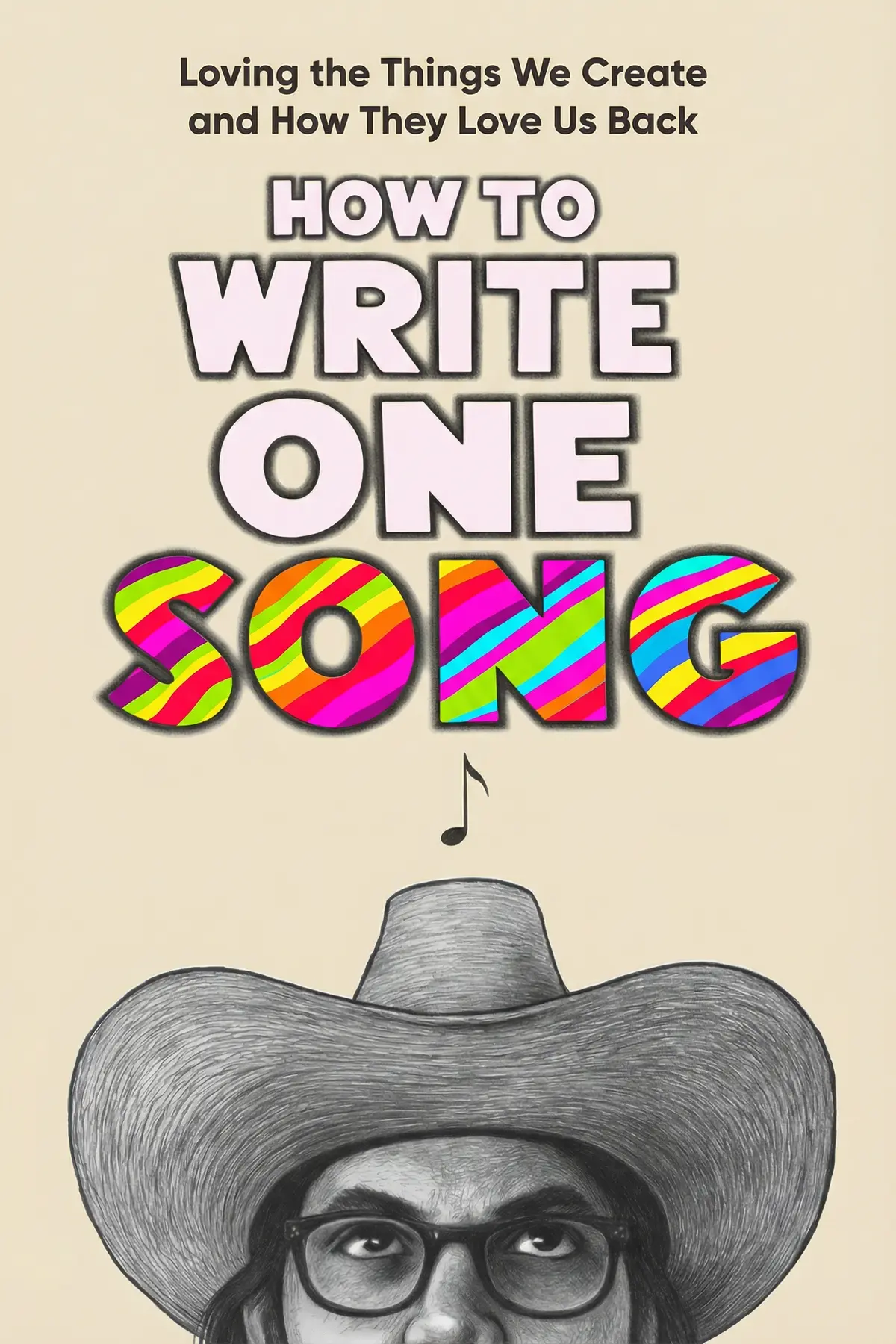
Table of Content
1. Introduction
1 min 00 sec
Plenty of people hum melodies on the way to work and never finish a song, because they believe songwriting needs a rare gift or a bolt of inspiration. In How to Write One Song, Wilco founder Jeff Tweedy argues the opposite. Making songs is a natural human ability, he says, and what usually blocks it is perfectionism. His approach is practical and close to the ground. Stop chasing the perfect song, treat words and sounds as things to play with, and turn up every day for a few minutes. Then songs start to arrive.
That idea runs through everything else in the book. Creativity grows from practice and play, and you see it in a fifteen-minute timer, a ladder of verbs, a collage of random words and the habit of recording yourself and listening back. Beginners get a way to write a first song this week. Writers who have stalled get small exercises that break old patterns and keep them going when the ideas dry up.
2. Trade the perfect song for fifteen loose minutes
1 min 48 sec
Most people who want to write songs are held back by something that looks like a virtue. Tweedy’s first exercise needs only a timer and a willingness to write badly for a quarter of an hour.
3. Find fresh lyrics by bending ordinary words
2 min 01 sec
The words that come easily are usually the words everyone else has already used. A simple climbing game and a pair of scissors can take your lyrics somewhere you never planned to go.
4. Borrow another voice to say what you feel
1 min 42 sec
Your own voice can become a trap when every song circles the same feelings. One odd exercise, built around an ordinary object in your room, shows how much a borrowed point of view can open up.
5. Make real music with whatever you already have
2 min 03 sec
You may think you need serious skill on an instrument before you can make music. Tweedy points to a desk, a phone and the sound of rain, and asks you to listen again.
6. A small daily habit that keeps songs coming
1 min 57 sec
Inspiration is unreliable, and songwriters who wait for it write very little. A few minutes a day, a corner of a room and one small promise to yourself can change that math.
7. Get unstuck and hear your song clearly
1 min 46 sec
Every writer eventually meets a song that will not come together. The way out involves a change of scenery, a strange kind of limit and the uncomfortable act of hearing yourself as a stranger would.
8. Conclusion
1 min 21 sec
The title sets a modest target, and the modesty fits the method. Tweedy never asks for a masterpiece. He asks for one song, then the next, written by someone who has stopped waiting to feel ready. His subtitle speaks of loving the things we create and how they love us back. The practical advice points the same way, because every exercise makes the act of writing something to enjoy instead of something to grade.
A stalled songwriter is usually holding on too tightly: to perfection, to their own voice, to the instrument they know, to the room they always write in. Each tool in the book loosens one of those grips. A random noun replaces the blank page. A borrowed persona replaces the usual voice. A keyboard replaces the guitar, and a café replaces the desk.
So set a timer for fifteen minutes tonight and write without judging a word. Keep a notebook or a voice memo app close, and save every fragment, even the ones that seem useless, because some of them will find a home later. When a song is nearly there, record it and listen back the way a stranger would.
Every song, finished or abandoned, moves you toward the next one. And the next one is the only song you ever have to write.
About this book
What is this book about?
Many people hum melodies and scribble lines but never finish a song. They believe songwriting needs a rare gift or a flash of inspiration. Jeff Tweedy, the musician behind Wilco, takes a down-to-earth view. Creativity is a normal human trait, he argues, and the main thing standing in the way is perfectionism. His book offers a practical toolkit for getting past it. Timed writing sessions take the pressure off. Language games, such as a ladder of ever more specific verbs, a collage of random words and verses built on shared vowel sounds, lead to lyrics you would never plan. To find a sound, he suggests working with whatever instruments you already have, listening to everyday rhythms and following happy accidents. A short daily routine, a song journal and a set of moves for writer's block keep the work going. Beginners get a clear way to write a first song. Experienced writers get fresh exercises to break old habits, refine their work through recording and feedback, and turn one song into many.
Book Information
Who it's for
Never finished a song
Aspiring songwriters who hum melodies but have never finished a song.
Experienced writers feeling stuck
Experienced writers stuck in old patterns or a long creative block.
Busy professionals
Busy professionals who want a creative outlet built from a few minutes a day.
About the Author
Jeff Tweedy
Jeff Tweedy is an American musician, author and record producer from Belleville, Illinois. In high school he started making music with The Plebes, a band that included Jay Farrar and later became the alternative country band Uncle Tupelo. After Uncle Tupelo split, he formed Wilco, whose album A Ghost Is Born won the 2005 Grammy for Best Alternative Album. He also recorded Mermaid Avenue with Billy Bragg, and his memoir Let's Go (So We Can Get Back) was a New York Times bestseller.
Ratings & Reviews
Ratings at a glance
What people think
Listeners find this songwriting guide practical and accessible, with one listener remarking that it explains the methodology in a step-by-step fashion. The prose is elegant and tackles typical songwriting obstacles, providing a motivational feel akin to a pep talk. Listeners value the creative prompts, with one mentioning how they jumpstarted their artistic journey, and they characterize the writing as both sincere and witty.
Top reviews
Wararat
Jeff Tweedy manages to demystify the creative process without stripping away the magic that makes music feel special in the first place. His approach is remarkably practical, treating songwriting as a craft you can practice rather than a lightning bolt of inspiration that hits you while you're doing nothing. I found the 'Word Ladder' exercise particularly helpful for breaking through that initial wall of self-consciousness that usually stops me from writing anything down. While the book is quite short, the step-by-step methodology for pairing unexpected nouns and verbs feels like a secret weapon for any writer. It’s essentially a beautifully written pep talk that reminds us that the goal isn’t to write a masterpiece, but just to finish one song. Frankly, it’s the most inspiring thing I’ve read all year.
Show moreWaree
Finally got around to reading this and ended up writing three songs in a weekend, which is three more than I've written in the last three years combined. Tweedy’s methodology is incredibly easy to follow, especially the way he breaks down the process into manageable, bite-sized tasks that don’t feel overwhelming. I loved the idea of 'stealing' a structure from a favorite track and replacing the words one by one to see where it leads you. The book is honest about how hard the work can be, yet it remains incredibly encouraging throughout every chapter. Even the minor suggestions, like using a different instrument or an unfamiliar tuning to spark a new melody, felt like revelations. This is more than a manual; it’s a reminder that being creative is a vital part of being a human being.
Show moreChon
Wow. This compact guide isn't just about melody or lyrics; it’s a beautifully written manifesto on why we need to create things for our own sanity. Tweedy’s voice is so disarmingly honest and humorous that you feel like you’re sitting in a studio with a mentor who actually wants you to succeed. The step-by-step breakdown of how to tackle a song from scratch makes the process feel like a fun game rather than a stressful chore. I was particularly struck by his advice on embracing the things that come easy to you instead of assuming that difficulty equals quality. It’s an easy read that manages to address the common songwriting challenges we all face, like writer's block and the fear of being 'bad.' If you’ve ever felt the urge to make something but didn't know where to start, buy this.
Show moreJack
Personally, I’m not a musician, but I found that substituting 'poem' for 'song' made this one of the most useful books on creativity I’ve encountered. Tweedy’s advice on pairing unexpected verbs and adjectives is a fantastic exercise for any kind of writer looking to avoid clichés like 'bated breath.' The book is delightfully compact and easy to read, perfect for a quick afternoon session of inspiration before you start working. I especially liked his take on 'stealing' and how re-ordering your strongest lines can propel a piece of writing forward into something unexpected. It’s clear he cares deeply about the act of creation, and that sincerity shines through on every single page. Even if you never intend to record a single note, the lessons on observation and wordplay are invaluable for any artist.
Show moreBoy
Not what I expected, but exactly what I needed. Tweedy treats songwriting as a basic human right rather than a talent reserved for a select few. The chapter on the 'Word Ladder' is a brilliant way to trick your brain into making connections it would never find through logic alone. I’ve read a lot of books on the creative process, but few are this practical and this devoid of pretension. He really walks through the methodology step-by-step, making it nearly impossible to fail if you just follow the instructions. My only minor gripe is that it's so short I finished it in one sitting and wanted more. However, the brevity is also its strength—it gets you away from the book and back to your instrument as quickly as possible. This is a total must-read for Wilco fans and aspiring artists alike.
Show moreSavannah
Is it life-changing for a pro? Maybe not, but for someone stuck in a creative rut, the chapter on random word associations is pure gold. Tweedy writes with a disarming humor that makes the daunting task of lyric writing feel approachable, even for people who haven't picked up an instrument since high school. I did find some of the anecdotes a bit repetitive if you’ve already read his autobiography, but his perspective on overcoming the ego is still worth the price of admission. He treats the song as a separate entity that deserves its own life, which helped me get out of my own way. The suggestion to write immediately after waking up was a total game-changer for my flow. I just wish there were a few more technical tips for those of us struggling with chord progressions.
Show moreAnawin
Ever wonder why you can't just finish a single track? Tweedy argues it's because we're looking at the mountain of a 'career' instead of the first step of a single song. This book is a wonderfully inspiring guide that focuses on the psychological hurdles of creation rather than the theory of music. The section on recording your own conversations to find natural phrasing was a brilliant, practical tip that I’ve already started using in my own process. While some of the 'tricks of the mind' felt a bit like filler, the overall message about letting go of perfectionism really resonated with me. To be fair, you have to be in the right headspace to appreciate his loose, conversational style. It’s not a textbook; it’s a gentle nudge toward the finish line.
Show moreKwame
After hearing so much hype, I was skeptical about how a rock star could teach me anything practical about my own amateur noodling. I was pleasantly surprised to find that Jeff Tweedy is an excellent teacher who doesn't talk down to his audience at all. He provides a daily schedule that, while perhaps specific to his life, offers a great framework for anyone trying to build a consistent creative habit. I’ve been using the technique of writing right before bed and then revisiting the same lines in the morning, and the results have been surprisingly coherent. The book does lean heavily into the 'you can do it' vibe, which might be a bit much for some, but I found it genuinely helpful. It’s a solid, practical resource for anyone who wants to demystify the art of making music.
Show moreEye
The truth is, this book feels a bit like a long-form interview where the artist repeats a few key pieces of advice over and over again. I appreciated the specific tips on word pairings and the 'Company in My Back' anecdote, but I found myself skimming through the more philosophical sections. It’s a pleasant read because Tweedy has a great voice, but I’m not sure it provides a comprehensive roadmap for someone who is truly struggling with the basics of composition. Some exercises, like the one involving setting a timer for a few minutes, felt a little rushed for my personal taste. That said, his passion for the craft is contagious, and it might be enough to get a beginner off the couch. It’s a decent companion piece for fans, but maybe not the definitive songwriting bible I was hoping for.
Show moreMichael
Picked this up because I love Wilco, but I was ultimately disappointed by how thin the actual instructional content felt. It’s a very quick read that mostly consists of standard-issue writing exercises you could find in any basic creative writing workshop or high school English class. If you are already a motivated songwriter, you probably won't find anything here that you haven't already tried or figured out on your own. Tweedy spends a significant chunk of the book just trying to convince the reader to start, which feels unnecessary for someone who already bought a book on the subject. There are some nice moments of humor, but they don't quite make up for the lack of depth. It’s basically a ten-dollar encouragement pamphlet with a few recycled stories from his previous memoir.
Show moreQuestions about this book
What is the main idea of How to Write One Song?
Jeff Tweedy argues that songwriting is a natural human ability, not a rare gift, and that perfectionism is the biggest thing stopping most people. He moves the focus from the finished result to the act of making. Then he offers playful exercises for lyrics and music, plus a daily routine that keeps you writing when inspiration fails.
How does Jeff Tweedy suggest overcoming writer's block?
He treats a block as a normal signal to change approach. His suggestions include writing in a new place, like a park or a café, and imposing a strict limit, such as giving yourself ten minutes to compose a verse on the first object that catches your eye. You can also switch from lyrics to music or back, or learn a cover in a genre you never write in.
What lyric-writing exercises are in How to Write One Song?
Tweedy describes a ladder of verbs and nouns, where a plain word like walk climbs to stroll, saunter, meander and perambulate. There is also a collage of words taken from random pages, and verses where every line ends on the same vowel sound. He also suggests writing as another person or an object, or writing a conversation between two people.
Do you need to play an instrument well to use this book?
No. Tweedy says you do not need to be a skilled musician. He urges using whatever is already at hand: your voice, a basic beat, objects around the house or free apps on a phone or computer. Humming a melody or tapping a rhythm on a desk and recording it can be the seed of a song.
How can I build a songwriting habit using Tweedy's advice?
Set a fixed time each day, even ten or fifteen minutes, and give songwriting its own small space. Start with a warm-up, carry a notebook or voice memo app, and keep a song journal you read back often. Set modest goals, like one verse a week. On low days, use a two-minute rule to get started.
Readers also enjoyed




AUDIO SUMMARY AVAILABLE
Listen to How to Write One Song in 15 minutes
Get the key ideas from How to Write One Song by Jeff Tweedy, plus 5,000+ more nonfiction titles.
- 5,000+ titles
- Listen as much as you want
- 7-day free trial
- Cancel anytime









