

13 min 17 sec
Available in: English
How to Lead When You’re Not in Charge: Leveraging Influence When You Lack Authority
Shows how to build real influence at work without a title. You lead yourself first, choose your attitude, think through problems, take on neglected work and push back on your boss without losing trust.
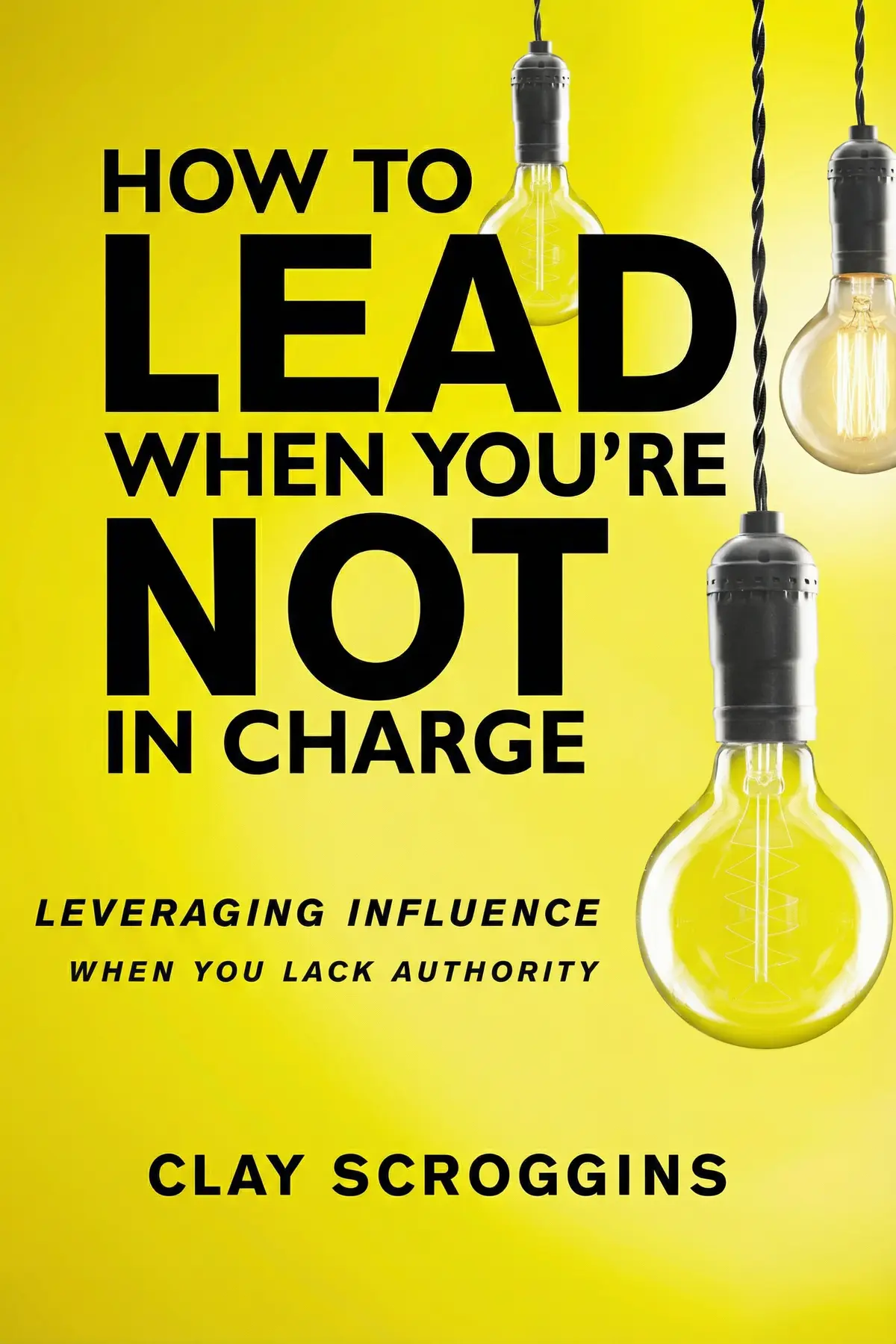
Table of Content
1. Introduction
1 min 00 sec
If you have good ideas but no title, it is easy to sit through meetings waiting for someone with authority to act. In How to Lead When You’re Not in Charge, pastor and leadership speaker Clay Scroggins argues that this waiting is the real mistake. Everyone answers to someone, he says, and the picture of a leader acting with total freedom is a myth. Leadership runs on influence, and influence is available in whatever role you hold today.
His case comes down to one claim. You can lead from any seat if you start by leading yourself, then choose your attitude, sharpen your thinking and take initiative before you try to change anyone above you. Each step earns the trust the next one needs. What follows is a working method you can use this week: how to stop blaming the boss, own decisions you never made, spot work nobody has claimed, and push back upward without burning the relationship.
2. Start leading before anyone hands you a title
1 min 55 sec
Many capable people spend years waiting for permission that never quite arrives. Scroggins traces the delay to something more personal than the org chart, and to a drive most of us are taught to hide.
3. Stop blaming the boss and lead yourself first
1 min 55 sec
A frustrating manager makes a convenient excuse, and it is one almost everyone reaches for. Scroggins asks you to drop it, and he offers a single question for your boss that changes the whole conversation.
4. Turn setbacks into energy by choosing your lens
1 min 55 sec
Two people face the same unfair decision, and one of them thrives while the other checks out. Scroggins argues the difference sits in a choice anyone can make, even with no say in the decision itself.
5. Ask better questions when your work gets rejected
1 min 49 sec
Weeks of effort can vanish in a single meeting with barely an explanation. The urge to stop trying is strong, and Scroggins shows how a different first reaction quietly builds the influence you thought you lacked.
6. Find the neglected work and claim it
1 min 49 sec
When a manager changes direction halfway through a project, holding back can feel like the sensible response. Scroggins sees it as the slow road to stagnation, and he points to unglamorous places where initiative gets noticed.
7. Challenge your boss with tact and keep their trust
1 min 47 sec
Seeing the fix for a problem and staying silent is frustrating, yet speaking up badly can cost more than silence. Scroggins explains what has to be in place before you disagree upward, and when to do it.
8. Conclusion
1 min 07 sec
Most people assume influence arrives with a title. Scroggins argues that leadership is influence, and that it grows from the inside out: an honest sense of who you are, discipline over your own growth, an attitude you choose, clear thinking, visible initiative, and only then the standing to challenge the people above you. The order matters. A challenge from someone known for gossiping about the boss lands as one more complaint, while the same words from a loyal, proactive colleague get a hearing.
The starting points are small and within reach. Ask your manager what is keeping you from the next step, and treat the answer as your plan. Look for the job everyone has been avoiding and take it. When a decision goes against you, find out why it was made before deciding how you feel, then work to make it succeed. And when you do disagree, wait for the calm moment and arrive with a solution.
None of this needs anyone’s permission. You are already in charge of something, and that is exactly where leading begins.
About this book
What is this book about?
Plenty of capable people sit in meetings with good ideas and say nothing, because they believe leading is something you do only after a promotion. Clay Scroggins thinks that belief is the real obstacle. Everyone answers to someone, he points out, so leadership has to be about influence, and influence is available in any role. His method works from the inside out. It starts with an honest sense of identity and a healthy relationship with ambition. Then comes self-leadership: no more blaming the boss, real loyalty, and asking for feedback. After that he covers choosing a positive lens, thinking critically when your work is rejected, and fighting passivity by claiming tasks nobody owns. He ends with challenging the people above you, which depends on a trusting relationship, good timing and constructive framing. Readers get a practical way to grow while they wait for the title. They learn to own decisions they never made, to turn frustration into useful questions, and to disagree with a manager in a way that builds trust.
Book Information
Who it's for
Ideas but no title
Early-career professionals with ideas but no title, unsure how to be heard.
Employees with frustrating bosses
Employees stuck under a frustrating boss who want to keep growing anyway.
Specialists and team members
Specialists and team members who want to disagree with managers without damaging the relationship.
About the Author
Clay Scroggins
Clay Scroggins started at North Point Ministries as a facilities intern, a job nicknamed vice president of nothing, and rose to become lead pastor of North Point Community Church in Alpharetta, Georgia. He studied industrial engineering at Georgia Tech and holds a master's degree and a doctorate from Dallas Theological Seminary. He also wrote How to Lead in a World of Distraction, and he speaks on leadership to groups including the Atlanta Hawks and Chick-fil-A.
Ratings & Reviews
Ratings at a glance
What people think
Listeners find the book both practical and eye-opening, with one listener highlighting how it effectively targets personal attitudes and mindsets. Furthermore, they consider it essential reading for those in leadership, especially young or aspiring ones, and value the simple, easy-to-use tips. However, the faith-based elements spark varied feedback, with some welcoming the biblical insights while others feel the Christian focus is too strong. Finally, the narrative flow and style get inconsistent marks, as some enjoy the writing while others suggest the title is somewhat misleading.
Top reviews
Wan
This was exactly the kick in the pants I needed during a season of career frustration. Scroggins focuses on the internal work—the mindsets and attitudes that we actually have control over when we lack the power to change our circumstances. I love how he emphasizes that influence always outpaces authority, which is such an empowering thought for someone in a support role. It’s incredibly practical and the 'lead yourself' section felt like it was written specifically for my current situation. Sure, it’s written from a Christian perspective, but the truth is that the principles of humility and initiative are universal. I’ve already started implementing his tips on 'challenging up' and have noticed a difference in how my boss receives my feedback. Highly recommend for any young leader who feels like their hands are tied.
Show moreKatya
It’s rare to find a leadership book that focuses so heavily on self-management rather than just managing others. I found myself feeling quite convicted by the sections on choosing positivity, as I’ve definitely been guilty of letting a 'victim' mentality creep into my work life lately. Scroggins is a great storyteller, and his humor helps the more difficult lessons go down easier. Even though many of the examples are church-based, the application to my role in a non-profit was seamless and immediate. It’s all about the intersection of character and influence, which is something many modern business books ignore in favor of 'hacks' and shortcuts. This is a must-read for anyone in their 20s or 30s who feels like they are waiting for their 'real' life to begin once they finally get a promotion. Start leading today.
Show moreEmma
My mentor suggested this during a rough patch at work when I felt completely powerless under a micromanaging supervisor. Honestly, it changed my entire perspective on what it means to be a 'second-chair' leader. Instead of waiting for my boss to change, I started focusing on the areas where I actually had some sway, and the results have been surprising. The author's honesty about his own failures makes the advice feel grounded and achievable rather than preachy or theoretical. It’s a great resource for anyone who feels like they’re in a 'holding pattern' in their career. The insights on building trust and thinking critically are things they don't teach you in school but are vital for survival in any organization. It's a book I'll probably return to whenever I start feeling that old familiar bitterness about my current job title.
Show morePreeda
Finally got around to reading this after seeing it on several 'must-read' lists for aspiring managers. To be fair, Scroggins offers some genuinely useful advice on how to build influence without a formal title, which is a struggle for many of us in entry-level roles. He breaks down the idea that you don't need permission to start leading, and that was a huge paradigm shift for me. However, I did find the prose a bit repetitive toward the middle, and the constant references to church life felt a little out of place for a business book. Still, the core message about taking initiative and owning your attitude is solid. It’s a quick read that provides a decent roadmap for anyone feeling stuck in the middle of a hierarchy. Just be prepared for a heavy dose of faith-based anecdotes along the way.
Show moreChanpen
The chapter on 'challenging up' alone makes this worth the price of admission for anyone in a middle-management role. Truth is, we often wait for the perfect title before we start acting like the leaders we want to be, but this book argues that the time to start is now. I appreciated the emphasis on critical thinking and the reminder that we are responsible for our own growth regardless of who our boss is. The writing style is very approachable, almost like you're grabbing coffee with a mentor who isn't afraid to tell you the truth. My only real gripe is that it feels a bit 'fluffy' in parts, with management cliches that didn't always land for me. However, if you can look past the occasional trope, there are some real nuggets of wisdom here about leveraging your voice effectively even when you aren't the one calling all the shots.
Show moreWatcharin
Look, leadership isn't just about the corner office, and this book does a fantastic job of debunking that myth for the next generation. It's packed with simple, easy-to-implement advice that centers on your own behavior rather than trying to control the people around you. I particularly liked the distinction between authority and influence; it's a subtle difference that changes everything about how you approach a team meeting. While the Christian undertones are very prominent throughout, I think a secular reader could still find value if they’re willing to translate the terminology. The book is light, engaging, and doesn't take itself too seriously, which I appreciated. It’s not a deep academic study on organizational psychology, but as a practical guide for daily office life, it definitely hits the target. I'll be passing my copy along to a junior colleague who is struggling with a micromanaging boss.
Show morePriya
As someone who works in a fast-paced corporate environment, I found the core concepts here to be a mixed bag. On one hand, the author is great at articulating how passivity can kill a career before it even starts. On the other hand, the book feels like it could have been a thirty-page PDF rather than a full-length volume. It gets incredibly repetitive, and some of the cultural references—like talking about the novelty of the iPhone 4—are starting to feel pretty dated in 2024. Not gonna lie, I ended up skimming the last few chapters because the points were just being hammered home over and over again. It’s not a bad book, and the conversational tone makes it easy to digest, but it’s definitely targeted toward a very specific, younger demographic. Good for a one-time read, but not something I’ll keep on my shelf.
Show moreKavya
Scroggins has an undeniably charming voice that makes this a very easy, conversational read. I listened to the audiobook version and his personality really shines through, even when the content starts to feel a bit thin or repetitive. My main issue is that the book often relies on management cliches that we've all heard a thousand times before. 'Be positive,' 'don't be passive,' 'lead yourself'—it's all good advice, but it isn't exactly groundbreaking. In my experience, for a young professional who hasn't read much in this genre, it probably feels revolutionary. But for those of us who have been in the workforce for a while, it might feel a little like 'Leadership 101.' The heavy religious focus also limits its reach, making it hard to recommend to my wider professional circle. A decent entry-level guide, but it lacks the depth I was hoping for.
Show moreJoseph
The title is a bit of a bait-and-switch if you aren't expecting a sermon. Frankly, I was looking for secular management strategies, but this is essentially a Christian living book disguised as a leadership manual. While some of the principles about positivity and critical thinking are universal, the author constantly brings everything back to 'God's plan' and biblical obedience. If you aren't part of a church community, half of the examples will feel totally irrelevant to your daily grind. I also struggled with the advice to just 'trust your leaders' because they were put there by a higher power. That’s a dangerous mindset in a toxic corporate environment where accountability is actually necessary. It felt more like a guide for youth pastors than for people in the technical or corporate world.
Show moreSomchai
I wanted to like this more than I actually did, but the execution just missed the mark for me. The central premise—leading without authority—is fascinating and highly relevant, but the book spends way too much time on anecdotes from the author's specific church experience. It felt more like a collection of compiled sermons than a cohesive leadership strategy for the modern professional. I also found the pacing to be quite sluggish; it felt like I was reading the same three points rewritten in different ways for 240 pages. For a book about taking charge and being proactive, the advice felt surprisingly passive at times, especially regarding how to handle incompetent superiors. I think there are better, more rigorous books out there on organizational influence that don't require you to sift through so much theological filler to find the practical takeaways.
Show moreQuestions about this book
What is the main idea of How to Lead When You're Not in Charge?
Clay Scroggins argues that leadership is influence, not position, and since everyone answers to someone, waiting for a title only wastes chances to contribute. He builds influence from the inside out: a secure identity and healthy ambition, leading yourself instead of blaming the boss, choosing positivity, thinking critically, rejecting passivity, and finally challenging authority with trust, good timing and a solution in hand.
How do you lead when you have a bad boss?
Scroggins says a bad boss is no excuse for stalled growth, because you remain responsible for your own actions and development. He recommends staying loyal and avoiding gossip, which damages your credibility, checking your own motives, asking others for feedback, setting clear goals with some accountability, and asking your boss directly what is keeping you from the next step in your career.
How do you challenge your boss without damaging the relationship?
According to Scroggins, start with trust and rapport so your suggestion is not heard as criticism. Choose a quiet time, like a one-on-one chat, instead of immediately following a tense meeting or while a deadline is bearing down. Avoid absolute complaints like this never works. Instead lead with a solution, explain how it helps the team reach its goals, and offer alternatives you have already thought through.
How can I show initiative at work without authority?
Scroggins suggests taking on small jobs that nobody owns, like cleaning up a storage area that has been ignored or planning a minor gathering that pulls the team together. He also recommends setting aside time to plan and reflect instead of only reacting, and anticipating what your team and boss need, especially in gaps no one covers. That signals you are ready for more responsibility.
Who should read How to Lead When You're Not in Charge?
It suits people who have ideas but no formal authority: early-career employees, specialists, and anyone working under a manager they find frustrating. It also helps those who struggle with feeling powerless when decisions go against them, and those who want to disagree upward without hurting their standing. The method works in any role because it starts with leading yourself.
Featured in
Readers also enjoyed



A Year with Peter Drucker: 52 Weeks of Coaching for Leadership Effectiveness
Joseph A. Maciariello



60 Seconds & You’re Hired!
Robin Ryan

Acting with Power: Why We Are More Powerful Than We Believe
Deborah Gruenfeld


All In: How Great Leaders Build Unstoppable Teams
Mike Michalowicz
AUDIO SUMMARY AVAILABLE
Listen to How to Lead When You’re Not in Charge in 15 minutes
Get the key ideas from How to Lead When You’re Not in Charge by Clay Scroggins, plus 5,000+ more nonfiction titles.
- 5,000+ titles
- Listen as much as you want
- 7-day free trial
- Cancel anytime









