
11 min 27 sec
Available in: English
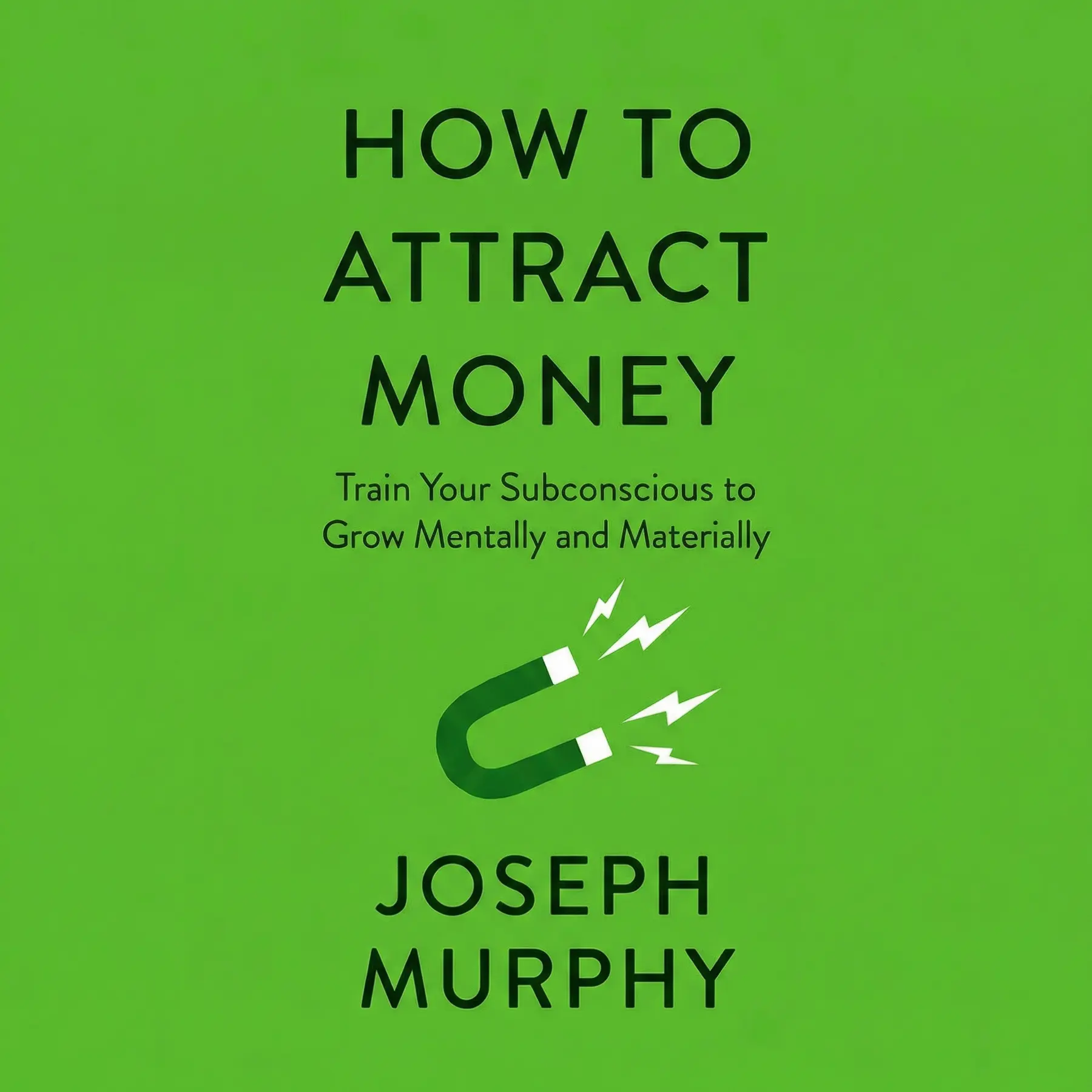
How to Attract Money
Joseph Murphy argues that your beliefs about money shape your finances. He shows how to drop the idea that wealth is wrong, use affirmations you can actually believe, and stop envy and fear from working against you.
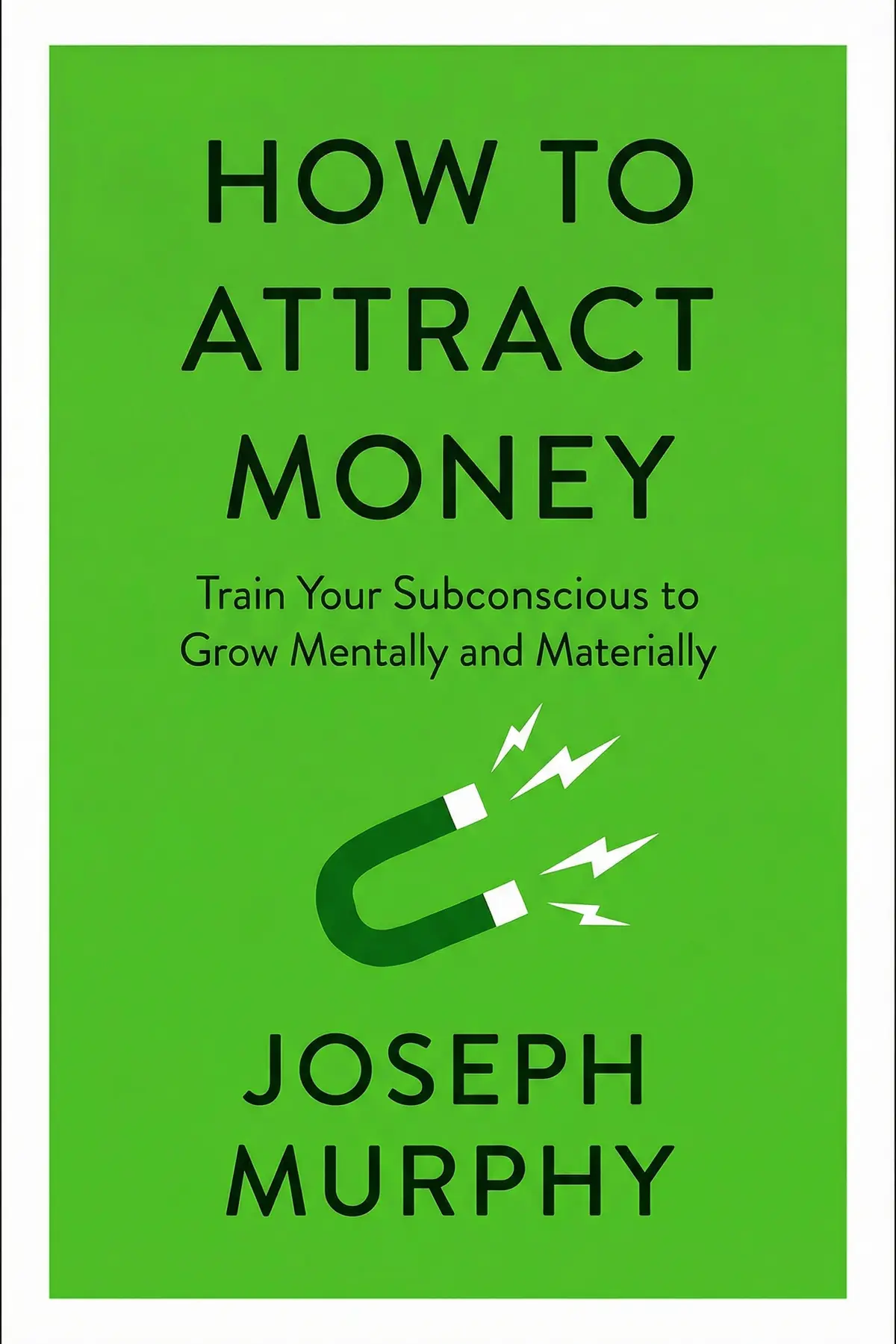
Table of Content
1. Introduction
1 min 00 sec
If money feels like something that happens to other people, Joseph Murphy’s starting point may surprise you: the first obstacle is often a belief that wanting money is wrong. In How to Attract Money, the minister and psychology doctor argues that money is simply a symbol of exchange, a tool for the security, health and education people actually want. Treat it as evil, he says, and part of your mind will steer you away from it.
His central claim is that your finances follow the beliefs you hold about money, your own and other people’s, so changing those beliefs changes the decisions that build wealth. He makes the case with a cleaner who became a doctor, a hoarder who lost everything she stored, and a colleague’s promotion that can either drain you or help you. Along the way he offers a nightly affirmation practice designed for people who cannot yet believe they are rich, and a single question that keeps the pursuit of money honest.
2. Stop treating money as the villain
1 min 51 sec
Films and television have taught many of us that wealth corrupts and modest means are noble. Murphy argues that this old story does real damage, and he uses a household comparison to show why it falls apart.
3. Turn a distant dream into daily conviction
1 min 48 sec
A man with no money and no high school diploma spent his days cleaning the offices of the doctors he wanted to become. What he did each night before sleep changed the direction of his life.
4. Affirmations your own mind will accept
2 min 02 sec
Telling yourself you are rich when your pocket holds a few coins can make things worse. Murphy explains why the usual positive self-talk fails and what kind of sentence actually gets past your doubts.
5. Celebrate a rival's win to protect your own
1 min 47 sec
A colleague gets the promotion you wanted, and your first reaction feels completely natural. Murphy argues that this reaction can cost you far more than the job you missed.
6. Ask what the money is for
1 min 47 sec
A woman who knew coffee would be rationed during a war stocked her house with it, and later, while she was away, someone broke in and took all of it. Her story leads Murphy to one plain question worth asking before any money decision.
7. Conclusion
1 min 12 sec
Murphy’s book rests on an image he returns to at the end: you are the captain of your own ship. Money, in his account, is a neutral current, like the electricity in your walls. What decides where it flows in your life is the set of beliefs at the helm. Is wanting money decent? Are you capable of earning it? Is someone else’s gain your loss?
The cleaner who pictured his name on a diploma and the woman who hoarded coffee both acted on what they believed. One belief pointed toward growth and drew help from others. The other pointed toward scarcity and delivered exactly that.
What the book asks of you is small and can be repeated every day. Tonight, in a relaxed moment, say a growth sentence you can actually believe, such as my wealth is growing. The next time a colleague wins, congratulate them before resentment settles in. And before any choice about money, ask what the money is for.
Murphy’s closing claim is blunt: the main thing holding you back is you. That also means the person who can turn the ship is already on board.
About this book
What is this book about?
Plenty of people say they want more money while some part of them believes that wanting it is greedy, or that being poor is more virtuous. Joseph Murphy, a minister who also held a doctorate in psychology, argues that this hidden conflict, the belief that you can't, is the only thing standing between you and an abundant life. In his view, money is just a symbol of exchange, a tool for security, health, education and a good life, and the beliefs you hold about it shape the decisions you make. Murphy builds his case on stories: a cleaner in a doctors' office who pictured his own name on a medical diploma every night, and a wartime hoarder who lost everything she had stockpiled. From them he draws a practical method. He describes a relaxed nightly affirmation practice that starts with statements your mind can accept, explains how envy of a colleague's success works against you, and offers one question to keep the pursuit of money honest. Readers get a short, direct reframing of their relationship with money and a small daily routine for changing it.
Book Information
Who it's for
Conflicted about wanting money
People who feel uneasy or guilty about wanting more money.
Professionals stuck in resentment
Professionals stuck in resentment after a colleague's promotion or raise.
Wanting affirmations they believe
Readers who tried positive affirmations, found them hollow and want a version they can believe.
About the Author
Joseph Murphy
Joseph Murphy (1898 to 1981) was born in Ireland, trained for the priesthood with the Jesuits and later worked as a pharmacist in New York. He was ordained in Religious Science in 1946 and later in Divine Science, and from 1949 he led the Los Angeles Divine Science Church, which grew into one of the largest New Thought congregations. He earned a doctorate in psychology from the University of Southern California and wrote more than 30 books, including The Power of Your Subconscious Mind.
Ratings & Reviews
Ratings at a glance
What people think
Listeners find this work accessible and clear, praising the specific guidance and detailed, sequential instructions included. It also successfully integrates inspirational encouragement with practical techniques, presenting various bits of wisdom and scriptural connections. They appreciate the brief runtime and regard it as a beneficial resource.
Top reviews
Monthon
This book is a tiny powerhouse that manages to distill complex psychological principles into bite-sized, actionable steps. Murphy argues that your right to be rich is inherent, and frankly, his approach to shifting the subconscious mind via simple affirmations like 'health, wealth, and success' is surprisingly effective. I loved how he describes money as a symbol of exchange rather than some rooted evil. The instructions are incredibly precise, making it easy to incorporate these mental exercises into a busy daily routine. While some might find the biblical references a bit heavy-handed, I viewed them as timeless illustrations of inner power. It’s a quick read, but the wisdom inside stays with you long after you’ve put it down. If you are struggling with a scarcity mindset, this is the exact manual you need to start seeing the abundance that is already around you.
Show morePensri
Picked this up during a particularly low point in my career, and it served as a much-needed mental reset. Joseph Murphy has this way of explaining that poverty is essentially a 'mental disease,' which sounds harsh at first, but it makes sense when you look at it through the lens of psychology. He breaks the book into two clear parts: your right to be rich and the road to riches. The instructions for the mirror exercise are so simple that anyone can do them, yet they really help in silencing that inner critic. I've started repeating the 'divine surplus' mantra during my commute, and I've noticed a significant shift in my confidence levels already. It’s not just about getting cash; it’s about feeling supported by the universe. For such a small book, it definitely packs a motivational punch that lingers.
Show moreSakura
The chapter on 'stealing from yourself' was worth the price of the book alone for me. It’s a radical perspective on how jealousy and envy toward other people’s wealth actually block your own prosperity. Murphy explains that when we resent someone else's success, we are telling our subconscious that success is something bad or out of reach. This insight helped me identify several mental blocks I didn't even know I had. The book is an easy read, but the instructions require a lot of discipline to follow through on. It’s not a 'get rich quick' scheme; it’s a 'change your mind to change your life' process. I appreciate how he defines money as a mechanism for experience rather than a goal in itself. It’s a short, powerful, and deeply encouraging text for anyone feeling stuck.
Show moreSaovapa
Wow. This book might be small, but the impact it had on my daily outlook was immediate. Murphy’s central argument is that you shouldn't be ashamed of wanting a better life, because money is just a symbol of the abundance we are all entitled to. I love the way he structures his prayers and affirmations so that they don't create mental friction—you start with things you can actually believe, like 'my wealth is growing,' and move up from there. The logic is sound: if you think you’re a failure, you’ll act like one. The book is filled with real-life stories that illustrate how a simple change in perspective can open doors you never thought existed. It’s an easy read, precisely written, and provides a clear-cut path to mental and financial freedom. Highly recommended for fans of the LoA.
Show morePui
Ever wonder why some people seem to attract prosperity effortlessly while others struggle despite working twice as hard? Murphy suggests the answer lies deep within our subconscious conditioning, and he provides a roadmap to retooling those hidden beliefs. To be fair, the book is quite short, which I actually appreciated because it cuts straight to the chase without the fluff found in modern self-help. The step-by-step details on how to use prayer and meditation to manifest financial stability are clear and easy to follow. I found the section on not romanticizing poverty particularly eye-opening because society often treats struggle as a virtue. My only minor gripe is that the tone is very much of its time, but the core message is universal. It’s a great resource for anyone looking to align their internal thoughts with their external financial goals.
Show moreOmar
As someone who has read a lot of modern Law of Attraction material, going back to the source with Joseph Murphy was a fascinating experience. The truth is, most of the 'gurus' today are just rehashing what he wrote decades ago. He explains how our inner convictions act like a compass, guiding us toward either success or failure based on what we feed our subconscious. I particularly enjoyed the story about the man who wanted to be a doctor; it’s a beautiful example of how visualizing the end result can create the path to get there. The writing is incredibly direct, providing a step-by-step guide to changing your internal dialogue. Yes, there are many biblical quotes, but if you look past the religious terminology, the psychological foundations are solid. It’s a valuable resource for anyone serious about mindset work.
Show moreChamnong
Finally got around to reading this classic, and I was surprised by how much I enjoyed the straightforward, no-nonsense writing style. Murphy doesn't waste your time with complex theories; instead, he gives you actionable advice that you can start using immediately. The concept that money is simply 'electricity' for your life—neither good nor bad, just a tool—is a great way to de-stigmatize the desire for wealth. I found the 'divine solution' affirmations to be particularly helpful for reducing anxiety around bills and expenses. To be fair, it is a very short book, and you could probably finish it in an hour, but the density of the information is high. It blends motivational encouragement with very specific mental drills. It’s a solid 4-star read for anyone looking to improve their psychological relationship with their finances.
Show moreNarong
Not what I expected at all, and to be honest, I felt a bit misled by the title and the blurb. While I was looking for a practical guide on financial management or Law of Attraction, this felt more like a religious sermon wrapped in a self-help cover. The author constantly leans on biblical scriptures and 'God' as the primary source of wealth, which might be jarring if you aren't prepared for a heavily theological slant. Look, I’m not saying the advice about positivity is bad, but the way it’s presented feels very forced and repetitive. Every success story seems to end with a tribute to divine intervention rather than personal strategy. If you are a person of faith, you will likely love this, but for the agnostics among us, it’s a difficult pill to swallow. I wanted more about money and less about pews.
Show moreKoi
Personally, I found this to be a bit of a mixed bag, though I can't deny there are some real nuggets of wisdom scattered throughout. On one hand, the advice on maintaining a positive attitude and using affirmations to reprogram the mind is classic and effective. On the other hand, the writing feels incredibly dated and the heavy reliance on scripture made it feel a bit repetitive after a while. I agree with the core idea that wealth is a state of consciousness, but some of the examples felt a bit too simplistic for the complexities of the modern world. However, if you can get past the old-school tone, the precise instructions for evening meditations are actually quite soothing. It’s a decent introductory text for manifestation, even if it’s not the most revolutionary thing I’ve ever read.
Show moreFrida
In my experience, Joseph Murphy’s work is best taken with a grain of salt if you aren't particularly religious. While the book claims to be about attracting money, it is essentially a guide to Christian mysticism and subconscious reprogramming. I found the step-by-step details on conditioning the mind to be quite useful, but I had to do a lot of mental translation to swap out 'God' for 'Universe' or 'Inner Self.' The brevity of the book is a plus, and it definitely provides some motivational encouragement for those feeling down on their luck. However, it lacks the practical financial advice that the title might lead a modern reader to expect. It's more of a spiritual manual than a wealth-building guide, so keep that in mind before you buy.
Show moreQuestions about this book
What is the main idea of How to Attract Money by Joseph Murphy?
Murphy argues that your beliefs about money shape your financial reality. He calls money a symbol of exchange, a neutral tool for security, health and a full life, and says that seeing it as evil makes people hold back from their goals. Training the subconscious toward positive beliefs about wealth, in his view, leads to better decisions and a richer life.
How does Joseph Murphy recommend using affirmations for money?
He suggests relaxing into a calm, meditative state, often while falling asleep, letting your mind wander over what wealth means, and then repeating statements about your prosperity. He warns against claims you believe are false, such as I am wealthy when you have ten cents. Start instead with growth statements like my wealth is growing, and move to bolder ones as belief builds.
Is wanting money wrong, according to How to Attract Money?
No. Murphy argues that wanting a better life is one of the most natural human desires, and that money is simply the tool for security, education and a future for your children. He compares money to electricity, which can light a home or kill someone without being evil in itself, and calls the idea of evil money a kind of superstition.
What does Murphy say about envy and other people's wealth?
He says jealousy, envy and bitterness feed the part of your mind that believes you lack something. If a colleague is promoted over you and you feel robbed, you may withdraw from your work. Being glad for them keeps you engaged and keeps the relationships that could help you later. Gaining money at others’ expense, he warns, steals from your future self.
Who should read How to Attract Money?
It suits readers who feel conflicted or guilty about wanting money, people whose envy of others’ success is affecting their work, and anyone curious about affirmation and belief as tools for financial change. Murphy writes from a spiritual perspective and treats affirmation as a form of prayer, so it will speak most to readers open to that approach.
Readers also enjoyed





A Guide to the Good Life: The Ancient Art of Stoic Joy
William B. Irvine


A High-Performing Mind: Strengthen Your Mind and Live Your Best Life
Andrew D. Thompson


Abundance: The Inner Path to Wealth
Deepak Chopra

AUDIO SUMMARY AVAILABLE
Listen to How to Attract Money in 15 minutes
Get the key ideas from How to Attract Money by Joseph Murphy, plus 5,000+ more nonfiction titles.
- 5,000+ titles
- Listen as much as you want
- 7-day free trial
- Cancel anytime









