

14 min 09 sec
Available in: English
How Brands Grow: What Marketers Don’t Know
By Byron Sharp
Shows why brands grow by winning more buyers, especially occasional ones, and by being easy to recall and easy to buy, instead of chasing loyalty, uniqueness or discounts that the evidence says matter less.
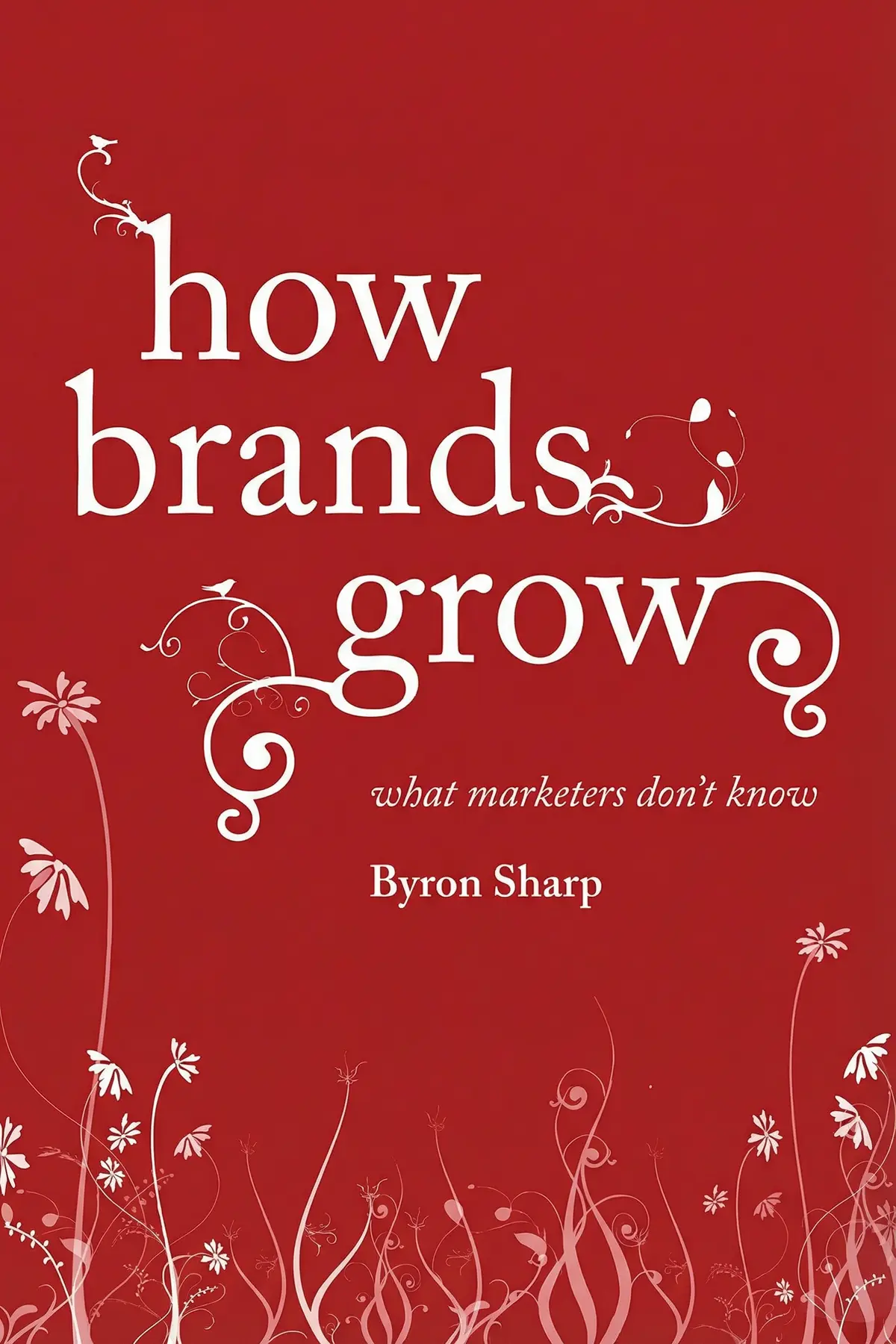
Table of Content
1. Introduction
1 min 02 sec
If you market a product, much of what you were taught about loyalty, heavy users and standing out may be closer to folklore than fact. In How Brands Grow, marketing scientist Byron Sharp shows that a small brand having fewer loyal buyers is no failure of strategy: it is a regular pattern that comes with being small.
Sharp, who founded the Ehrenberg-Bass Institute, wants marketers to work from measured patterns in how people buy instead of beliefs handed down for decades. His argument, built piece by piece, is that brands grow by reaching more buyers, many of them occasional, and by being easy to remember and easy to buy. Loyalty campaigns, product uniqueness and constant discounts matter much less than most plans assume.
Along the way you will see why Colgate’s managers worried about the wrong number, why a modest discount on a sweater can demand half again as many sales, and why a Starbucks always seems to be nearby when you want coffee.
2. Read loyalty numbers against your brand's size
1 min 29 sec
A toothpaste brand saw its loyalty figures trailing a rival’s and ordered tougher advertising to fix them. The real explanation had nothing to do with its marketing, and it applies to almost every brand report.
3. Put your effort into winning new buyers
1 min 27 sec
One famous business article promised that keeping a few more customers could nearly double profits. Look closely at how that claim was built, and a very different growth priority comes into view.
4. Stop ignoring the customers who rarely buy
1 min 23 sec
Most brands build their plans around their most devoted customers, trusting a famous rule about the vital few. When researchers counted actual sales, that rule turned out to overstate the case by a wide margin.
5. Customers care less about your brand than you hope
1 min 32 sec
A cola taste test seemed to prove that a label can change what people taste. Yet when researchers asked customers the same question twice, their answers told a far less flattering story about brand devotion.
6. Make your brand easy to spot from the street
1 min 36 sec
Burgers, pizza and fried chicken look like separate markets with separate customers. Watch what a hungry traveler actually does in an unfamiliar city, and the usual case for standing out by being unique starts to crumble.
7. Aim your ads at people who might forget you
1 min 31 sec
Coca-Cola is one of the best-known brands on Earth, yet it keeps changing the story its ads tell. The reason reveals what advertising really does, and which customers it barely touches.
8. Check whether a discount pays for itself
1 min 29 sec
A sale sign almost always lifts sales, which is why brands keep reaching for it. A simple sweater calculation shows how quickly that lift can turn into a loss, and the damage can outlast the sale.
9. Be the brand people think of and can find
1 min 32 sec
Shoppers face hundreds of ads a day and rarely search for the best option. Sharp’s answer to that crowded world comes down to two kinds of availability, and a coffee chain shows both at work.
10. Conclusion
1 min 08 sec
How Brands Grow treats marketing as a field that can be measured, and once it is measured, many cherished rules start to look like bloodletting. Loyalty follows size. Defection is mostly set by market share. Heavy buyers matter less than Pareto suggests, stated attitudes shift from one survey to the next, and a unique product counts for less than a logo someone can spot from across the street. What remains is a plainer picture of growth: reach more people, especially the ones who buy from you rarely, and make your brand easy to recall and easy to get.
That picture gives you firm ground for action. Before reacting to a weak loyalty score, check it against brands of your size. Put real effort into winning new buyers, including the light buyers your plans probably overlook. Give your brand a color, shape or name strangers can recognize, and use advertising to keep it fresh in their memories. And run the margin math before any sale goes live.
The hungry traveler never weighed burgers against chicken. They saw a golden arch and walked in.
About this book
What is this book about?
Marketers make the same decisions every week: whether to run a sale, whether to spend on keeping customers or winning new ones, how to make a brand stand out. Byron Sharp argues that most of these choices rest on long-held beliefs that nobody has checked against the evidence, much as doctors once trusted bloodletting. Drawing on marketing science, Sharp takes those beliefs apart one at a time. Small brands have less loyal customers because they are small, a pattern called double jeopardy. Defection rates depend mostly on market share. Light buyers bring in far more sales than the 80/20 rule suggests. Emotional bonds with brands are weak, and being distinctive does more than being different. Advertising works by keeping a brand alive in the memory of occasional buyers, while price promotions often cost more than they earn. The result is a plain model of growth: reach more people and make your brand easy to think of and easy to find. Readers get a set of tests they can apply to their own numbers, from loyalty scores to discount math, and a clear sense of where marketing money actually does its work.
Book Information
Who it's for
Marketing managers
Marketing managers who report loyalty and retention numbers and want to know which ones really matter.
Founders and small businesses
Founders and small business owners deciding where to spend a limited marketing budget.
Students and career changers
Students and career switchers who want an evidence-based view of how brands grow.
About the Author
Byron Sharp
Byron Sharp is a marketing scientist from New Zealand who studied marketing at Auckland University, worked in Australia, and then earned a research master's degree and a PhD in marketing. He founded the Ehrenberg-Bass Institute, where more than 50 marketing scientists look for law-like patterns in how people buy and how brands perform. His own research focuses on empirical laws marketers can use, and he has published over 100 academic papers and serves on the editorial boards of four journals.
Ratings & Reviews
Ratings at a glance
What people think
Listeners find this marketing book accessible and well-crafted, noting the inclusion of significant data throughout. Its perceptive content is highly regarded, with one listener observing that it provides an unbiased perspective on the drivers of growth. However, listeners have varied reactions regarding the work's pacing and how simple it is to comprehend.
Top reviews
Sirirat
Finally got around to reading Byron Sharp’s manifesto and frankly, it's the cold shower the marketing world desperately needed. While Philip Kotler’s textbooks describe the 'what' of marketing, Sharp uses hard data to challenge the 'how' we’ve all been taught. He systematically dismantles the obsession with brand loyalty, proving that market penetration is the only true engine for sustainable growth. The writing is punchy and direct, though his tone can sometimes border on arrogant when he’s dismissing decades of established theory. I particularly appreciated the sections on mental and physical availability, which feel much more grounded in reality than vague 'brand love' concepts. If you’re tired of fluff and want to see the actual math behind consumer behavior, this is essential. It’s not just another business book; it’s a data-driven assault on marketing myths that will make you question every campaign you've ever run. Highly recommended for those who value evidence over intuition.
Show moreWipawan
This book is a wrecking ball for traditional marketing departments. Sharp takes aim at the idea of 'targeted loyalty' and shows that brands grow by reaching the entire category, not just a small sliver of heavy users. Truth is, most of your 'loyal' customers are just light buyers who haven't switched yet. The data is meaningful and presented in a way that is surprisingly easy to read for an academic work. Some might find the lack of focus on digital marketing or social proof a bit dated, but the fundamental laws of buyer behavior haven't changed. He makes a compelling case that distinctiveness—being easy to identify—is far more important than trying to be 'different' in a way consumers don't even notice. It’s a polarizing read, but that’s exactly why it’s valuable. Don't expect a warm and fuzzy guide to brand building. Expect a clinical, evidence-based autopsy of marketing failures.
Show moreSue
Sharp provides an objective lens through which we can finally view the messy reality of consumer behavior. This book is beautifully written and serves as a much-needed antidote to the 'purpose-led' marketing fluff that has dominated the industry lately. By focusing on physical and mental availability, he offers a clear roadmap for growth that relies on reach rather than the myth of deep brand love. The meaningful data included throughout the chapters makes this a standout in a sea of anecdotal business books. Some readers might find his stance on mass marketing a bit old-fashioned in the age of hyper-targeting, but his evidence suggests the old ways of broad reach still win. The truth is, most people are just trying to get through their shopping list as quickly as possible. This book respects that reality. It’s a refreshing, well-paced guide for anyone who wants to understand the actual mechanics of the marketplace.
Show moreSarawut
Picked this up on a whim and ended up finishing it in two sittings because it was so provocative. Sharp’s takedown of the 'differentiation' myth is particularly satisfying, especially for anyone who has sat through endless meetings about 'brand essence.' He argues that being easy to find and easy to buy is 90% of the battle. While I found his critiques of Kotler a bit repetitive, the empirical evidence he brings to the table is hard to ignore. The pacing is excellent, and he avoids the usual business-speak that makes most marketing books unreadable. My main criticism is the lack of attention to digital-first brands, but the psychological principles he describes likely still apply. It’s a powerful, data-driven look at growth that cuts through the noise. If you want to stop guessing and start growing based on how people actually shop, buy this. It’s easily one of the most important marketing books of the last two decades.
Show moreWittaya
Ever wonder why small brands stay small despite having 'loyal' followers? This book explains it through the Law of Double Jeopardy, showing that niche brands suffer twice—having fewer buyers who also buy less frequently. It's a forehead-slappingly obvious realization once you see the stats laid out so clearly. Sharp views customers as 'cognitive misers' who just want to make a quick decision without overthinking their choice of detergent. The pacing is a bit uneven, and some chapters feel like they’re repeating the same point, but the core message is undeniable. I love how he pits scientific evidence against the fashionable, yet unproven, theories that dominate most boardrooms today. You might not agree with his dismissive take on differentiation versus distinctiveness, but you can't ignore his numbers. It’s a refreshing, objective look at growth drivers that every CMO should keep on their desk. Truly an eye-opener.
Show moreBee
As someone who spent years worshiping at the altar of target marketing, reading this felt like a betrayal in the best way possible. Sharp’s argument for mass marketing and broad reach is backed by empirical evidence that is hard to argue with, even if it feels counterintuitive at first. He tackles the 'loyalty vs. penetration' debate with a level of objectivity that is rare in business literature. I found the chapter on how advertising actually works—by refreshing memory structures rather than 'persuading'—to be particularly brilliant. However, the book does drag in the middle, and the dismissal of niche strategies feels a bit oversimplified. To be fair, not every brand has a Coca-Cola budget to achieve the kind of reach he advocates for. Despite the FMCG bias, the underlying logic about mental and physical availability is universal. It’s a well-written, provocative piece that forces you to justify your strategy with data rather than just buzzwords.
Show moreClara
Wow, talk about a reality check. Sharp essentially tells us that everything we thought about 'brand personality' is mostly nonsense because consumers don't actually care that much. We like to think people have deep relationships with their dish soap, but they really just buy what's available and familiar. The writing style is surprisingly accessible, making complex statistical patterns easy to digest for a non-academic audience. I appreciated the critique of the Pareto Law; it’s not the 80/20 rule we’ve been told, but more like a 50/20 reality. My only gripe is that the author spends so much time attacking Philip Kotler that it occasionally feels personal. Some of the charts are also a bit manipulative with their scaling, which is ironic for a book preaching scientific rigor. Still, the core insights into how brands actually scale are invaluable. It provides a much-needed objective view on what actually moves the needle.
Show moreLek
After hearing so much hype about the Ehrenberg-Bass Institute, I finally dove into this. It’s a fascinating, if somewhat repetitive, look at why traditional segmentation often fails. Sharp’s central thesis—that brands are more similar than they are different—is backed by some pretty staggering cross-category data. I especially liked the section debunking the idea that you can't influence brand churn. He proves that loyalty is mostly a function of market share, which is a total flip of how most marketers think. Got to say, the book is a bit light on how to apply these rules if you don’t have a massive advertising budget. It’s very geared toward global leaders and less toward the scrappy underdog. Nevertheless, the logic is sound and the writing is clear enough for anyone to follow. It’s a must-read if only to understand why your competitors are winning without having a 'better' product.
Show moreLook
The data is compelling, but I can’t help feeling that Sharp throws the baby out with the bathwater regarding differentiation. He argues that being 'distinctive' is enough, yet many of his own examples rely on brands that were once highly differentiated. It’s a dense read at times, and the pacing fluctuates between thrilling revelations and dry statistical analysis. I also found his dismissal of customer complaints as a factor in churn to be quite reckless for any service-oriented business. If you ignore your customers, they will leave, regardless of what the 'laws' of growth say. That being said, the evidence regarding light buyers being the real drivers of growth is a game-changer. It’s a polarizing book that will either make you a disciple or a skeptic. I fall somewhere in the middle, admiring the research while questioning the universal application of his 'laws.' It's useful, even if the delivery is a bit arrogant.
Show moreNora
Look, I wanted to love this, but the heavy focus on FMCG brands like Coke and Pepsi makes it feel a bit one-dimensional. Sharp is an incredibly self-important writer who seems to delight in sneering at everyone who came before him. While his 'Double Jeopardy' law is interesting, he even admits in the text that it doesn't always apply to categories like shampoo, which makes the 'law' label feel a bit misleading. The graphs are also frustrating because they often use modified Y-axes to make small differences look massive. If you’re a small B2B startup or a service-based business, a lot of this advice about mass marketing via TV might feel completely irrelevant or even dangerous. He basically tells small brands to give up if they can't afford massive reach. It’s an insightful read for the data alone, but the tone is grating and the scope is narrower than the author wants to admit.
Show moreQuestions about this book
What is the main idea of How Brands Grow by Byron Sharp?
Sharp argues that marketers too often follow traditional beliefs instead of evidence from marketing science. What the evidence points to is that brands grow by winning additional buyers, many of whom buy only lightly or occasionally, and by staying mentally available and simple to find. Loyalty mostly follows market share, emotional bonds are weak, and distinctiveness matters more than product differences.
What is the double jeopardy law in marketing?
Double jeopardy is the pattern in which a brand with a smaller share of the market gets fewer customers, and those customers also show less loyalty than the buyers of larger brands. Sharp uses Colgate and Crest in 1989 as an example: Colgate, with 19 percent of the market, had fewer loyal buyers than Crest, with 37 percent, simply because it was smaller.
Should a brand focus on retention or acquisition according to Sharp?
Sharp favors acquisition. Defection rates are largely set by a brand’s size, so they are hard to control. In a study of Australian banks, CBA, with 32 percent of the market, lost 3.4 percent of customers, while Adelaide Bank, with 0.8 percent, lost 8 percent. He also shows that a famous 1990 retention claim rested on a thought experiment.
What are mental and physical availability?
Mental availability is the chance that a brand comes to mind when someone is about to buy, and it tends to rise with market share. Physical availability means the brand can actually be bought where and when the need appears. Sharp uses Starbucks to show both: many people think of it first for coffee, and there are many stores in each city to catch them.
How can I apply How Brands Grow to my own marketing?
Compare your loyalty figures with brands of a similar size before trying to fix them. Shift effort toward winning new buyers and reaching light buyers. Build distinctive assets such as bright packaging or a memorable name, and use ads to keep the brand in memory. Before any discount, calculate how many extra sales the price cut requires to stay even.
Featured in
Readers also enjoyed





AUDIO SUMMARY AVAILABLE
Listen to How Brands Grow in 15 minutes
Get the key ideas from How Brands Grow by Byron Sharp, plus 5,000+ more nonfiction titles.
- 5,000+ titles
- Listen as much as you want
- 7-day free trial
- Cancel anytime









