

13 min 18 sec
Available in: English
Hook Point: How to Stand Out in a 3-Second World
By Brendan Kane
Shows how to win the first three seconds of attention online and in meetings with hook points: short, honest openings you test, fit to your audience and build on your brand's mission.
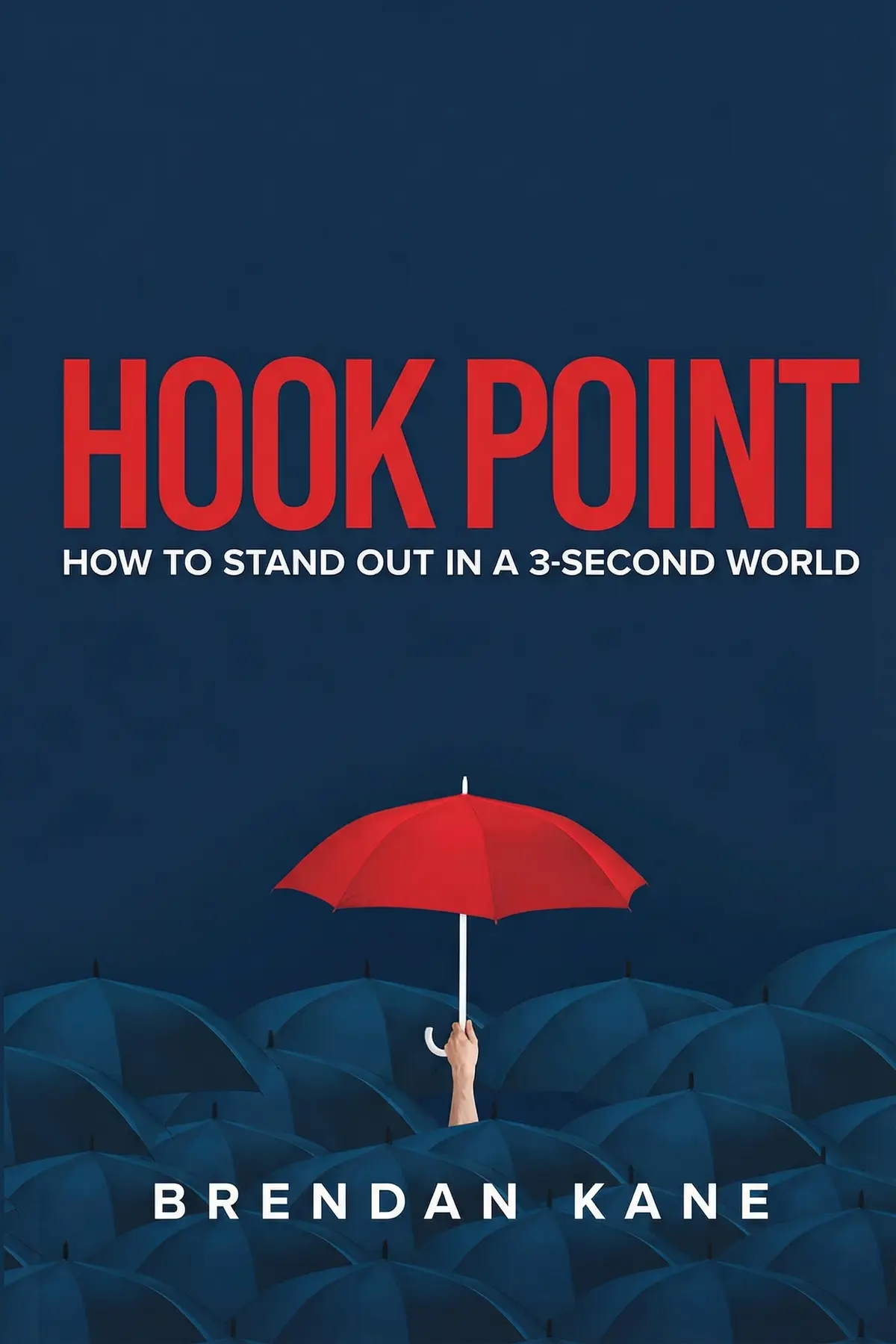
Table of Content
1. Introduction
1 min 04 sec
If your posts, videos or pitches keep vanishing into the scroll, the trouble is usually the first three seconds. Facebook’s own metrics show that people decide within that window whether to keep watching a video. In Hook Point, digital strategist Brendan Kane, who once grew a page past a million followers in 30 days, argues that standing out now depends on a hook point. That can be a phrase, an image, a personality or a selling point that stops someone mid-scroll and makes them curious enough to engage.
About 60 billion messages go out daily, and the typical person devotes 11 hours of each day to digital content, so merely stating who you are no longer cuts through. Kane’s case is that a hook holds attention only when it is honest, tested and shaped by listening to the people you want to reach. By the end, you will be able to draft openings that earn a second look, read a meeting room as it reacts, and keep your message true as it grows.
2. Earn attention without sliding into clickbait
1 min 49 sec
A misleading headline and a great hook both stop the scroll. Only one gets past the three-second decision, and a famous perfume advertisement shows how a message can earn that attention.
3. Four openings that make people stop and listen
1 min 51 sec
Most messages fail on the blank page, describing what a company does and hoping someone cares. Kane studies hooks that already worked, from shoes to video rentals, and pulls out four patterns anyone can borrow.
4. Win the first three seconds of every video
1 min 43 sec
A large following will not save a post that loses viewers at the start. Kane explains how platforms quietly test your content on a small crowd first, and what to put in the opening moments so it passes.
5. Tailor your pitch to the person across the table
2 min 01 sec
A strong answer can still lose the room if it speaks to the wrong part of the listener. Kane borrows a model of six communication styles to show why the same idea needs different words for different people.
6. Build hooks on what your brand believes
1 min 49 sec
In 1992 Nike backed a French footballer to lead an English club, at a time of fierce rivalry between the two nations. The gamble paid off for a reason that has little to do with football.
7. Let your audience show you the next hook
1 min 49 sec
A book series about computers became a global publishing name because someone bothered to read the comment cards. Kane shows how to turn everyday listening into a steady supply of hooks that feel timely.
8. Conclusion
1 min 12 sec
Kane’s book comes down to a fair trade. Strangers give you three seconds of attention, and a hook point is how you earn more by promising something real and then delivering it. Halbert’s perfume line, Netflix’s no late fees and Nike’s bet on Cantona all worked because the surprise at the front matched something true underneath. Clickbait breaks that trade. An honest hook keeps it, and the trade can be renewed as audiences change, the way Nike moved from running shoes to Michael Jordan to the Vaporfly.
The work is smaller than it sounds. Draft several openings for your next post, email or pitch, using a flipped expectation, a clear promise, a named pain or an if/then line, and let a quick test choose between them. Put your strongest material in the first seconds. In the room, notice which communication style you are facing and answer the question actually asked. And keep listening, the way the For Dummies team read its feedback cards, because your audience will keep telling you what the next hook should be.
Three seconds buys you a hearing. What you put after them decides whether people stay.
About this book
What is this book about?
People send about 60 billion messages a day and spend an average of 11 hours a day with digital content. In that crowd, simply saying who you are and what you sell gets lost. Most viewers decide within three seconds whether a video deserves their time. Brendan Kane, a digital strategist who has built online platforms for stars and brands, argues that the answer is a hook point. A hook point is a phrase, image, personality or selling point that stops someone mid-scroll and makes them curious enough to engage. Unlike clickbait, it delivers on its promise. Kane draws on cases from Gary Halbert's perfume advertisement to Netflix, Nike and the For Dummies books. Readers get four ways to write hooks, practical rules for the opening seconds of a video, and a model of six communication styles for live pitches. Kane also explains why a hook only lasts when it rests on your mission and on close listening to your audience.
Book Information
Who it's for
Marketers and founders online
Founders and marketers whose posts and videos get scrolled past in seconds.
Algorithm-curious creators
Creators who want to understand how platform algorithms decide what spreads.
Idea pitchers in meetings
Professionals who pitch ideas in meetings and want to read the room and adapt as they speak.
About the Author
Brendan Kane
Brendan Kane is a digital strategist, author and speaker who has advised Fortune 500 companies, brands and celebrities for nearly 20 years, building online platforms for stars such as Taylor Swift and Rihanna. He developed the first video influencer campaign in 2007 and served as a vice president at a major motion picture company. In a personal experiment, he gained more than a million followers across 100 countries in 30 days.
Ratings & Reviews
Ratings at a glance

What people think
Listeners find the book remarkably beneficial, offering numerous hands-on lessons and a consistently pleasant reading experience. They also value the depth of information provided, with one listener highlighting how each chapter provides a summary of the discussion. The content is frequently described as inspiring, with one listener mentioning how it gets their creative mind brewing. However, views on its cost-effectiveness are divided; while some find it highly valuable, others say it delivers nothing of real value. Similarly, reactions to the marketing tactics are split, with one listener appreciating its effective approach while another points out excessive self-promotion.
Top reviews
Surasit
Finally got around to reading Brendan Kane's work, and it’s easily one of the most practical marketing guides I’ve picked up this year. The way he breaks down the Process Communication Model (PCM) for different personality types—like Rebels or Harmonizers—gave me a whole new way to think about my ad copy. I’ve already started experimenting with the “fairy tale” story structure for my brand, and the initial engagement numbers are looking promising. It’s an edifying read that doesn’t just tell you what to do but explains why certain hooks work in our distracted digital age. If you’re struggling to stand out, this is the blueprint you need.
Show moreKwame
Ever wonder why some videos go viral while yours get buried in the feed? Hook Point explains the science behind those first three seconds, and it’s honestly fascinating. I loved the breakdown of how to subvert expectations—like his "Safety is Dangerous" example—because it shows how to grab attention without being fake. The book is packed with actionable tips, from using pain points in headlines to the importance of A/B testing your concepts before a big launch. It’s a must-read for digital creators who are tired of shouting into the void and want to actually see results from their content. My creative mind is definitely brewing with new ideas now.
Show morePornpimon
As a freelance graphic designer, I’m constantly fighting the noise of social media. Kane’s “3-second rule” really hit home because it forced me to look at my portfolio through a much harsher lens. The book provides a solid framework for capturing attention quickly, especially the bits about subverting expectations. I particularly appreciated the quick tips and recaps at the end of each chapter, which made it easy to digest the core strategies without getting lost. While some of the anecdotes felt a bit like humble-bragging, the practical advice on A/B testing and understanding your audience's pain points is genuinely useful. It’s a fast read that gets your creative gears turning if you actually apply the steps.
Show moreJirapat
The chapter on storytelling and using a “fairy tale” structure for brands was a total game-changer for my marketing strategy. I’ve been struggling to make my service feel "shareable," and Kane’s advice on creating a knight-and-dragon narrative really clicked for me. The book moves at a good pace, and the advice on meme cards and social video timing is specifically relevant for anyone trying to grow on Instagram or TikTok. There’s a bit of name-dropping that feels unnecessary at times, but the underlying logic is sound. It’s a great tool for anyone looking to build a brand that actually resonates with people instead of just adding to the noise.
Show moreSeksan
Picked this up during a marketing slump, and it provided exactly the spark I needed to rethink my approach. The truth is, most of us are too close to our own products to see them objectively, and Kane’s framework helps you step back and find that one unique angle. I found the section on building trust and authenticity particularly moving; it reminded me that a hook isn’t just about the click, it’s about the "why" behind your brand. The writing style is casual and easy to read, though I do agree with other reviewers that a tighter edit would have made it even better. Still, it’s a high-value read for any entrepreneur.
Show morePrasarn
Honestly, I was skeptical at first because so many social media "gurus" just peddle the same old advice. However, Kane’s focus on the "Hook Point" as a combination of text, insight, and performance gave me a much more holistic view of digital marketing. The five-step creation process is something I can actually use with my team to brainstorm better campaigns. I do think the book could have been shorter, but the examples he provides—like the Away suitcase—really help illustrate his points. If you can ignore the occasional self-promotion, there is a lot of legitimate wisdom here for building a brand that stands out.
Show moreLaddawan
To be fair, the core idea of a “Hook Point” is brilliant and absolutely necessary in today’s economy. I liked the five-step process for creating hooks and the emphasis on authenticity, but the book feels padded with a lot of unnecessary fluff. Kane uses examples like Tesla and the Blair Witch Project, which are great, but then he goes on long tangents about his own career that don't always add value. I’m giving it three stars because the chapter summaries are excellent and save you from having to reread the repetitive parts. It’s a decent resource for beginners, though you have to sift through a lot of self-promotion to get to the gems.
Show moreWeera
Brendan Kane clearly knows his stuff, but the delivery is a bit hit-or-miss depending on what you’re looking for. On one hand, the “3-second rule” and the PCM personality breakdowns are incredibly insightful and worth the price of the book alone. On the other hand, there is a lot of "noise" in the writing that contradicts the book's own message about being concise and getting to the point. I appreciated the summaries at the end of the chapters, as they condensed the useful information into bite-sized pieces. It’s a helpful book, but it lacks the depth of a truly great business classic. I’d call it a "skim-and-win" kind of read.
Show moreChon
This book should have been a 15-page PDF instead of a full-length hardcover. Frankly, the amount of repetition is staggering, and I found myself skimming through pages of the author’s self-praise just to find one actionable tip. There are several typos and sentences that seem to repeat almost verbatim in different chapters, which makes me wonder if anyone actually edited this. The central concept of the "Hook Point" is interesting, but Kane spends more time selling his consulting services than he does teaching the reader how to replicate his success. If you are brand new to marketing, you might find some value here, but seasoned pros will likely find it lacking in substance and over-reliant on name-dropping celebrities.
Show moreTak
Not what I expected based on the hype and the gorgeous cover. Look, I wanted to learn how to craft better hooks, but this felt more like a 200-page advertisement for Brendan Kane’s services. He spends so much time talking about his past successes with big-name celebrities that he forgets to actually teach the reader how to do it themselves. The advice is extremely surface-level—basically telling you to "be unique" and "test things"—which isn't exactly groundbreaking information. It’s a very click-baity book that promises a lot and delivers very little real-world substance. Don’t waste your money on this when there are far better copywriting books available for half the price.
Show moreQuestions about this book
What is a hook point according to Brendan Kane?
A hook point is a phrase, image, personality or selling point that stops someone mid-scroll and makes them curious enough to engage with you. Kane traces the idea back to the newspaper lead and the copywriter’s hook line. What separates it from clickbait is substance: a hook point keeps the promise it makes, so the interest it creates lasts instead of turning into distrust.
How do you write a good hook point?
Kane offers four approaches. Flip your audience’s expectations, as with a meditation video that opens by calling meditation a scam. State a clear value proposition, as The 4-Hour Workweek does in its title. Describe your audience’s problem better than they can. Or use an if/then line aimed at one specific problem. He advises drafting several versions and testing them against each other.
What is the three-second rule in Hook Point?
Citing Facebook metrics, Kane says people decide within about three seconds whether to keep watching a video. Since algorithms promote content that holds attention, those seconds decide how far a post travels. His advice is to open with your strongest material, tell viewers clearly what is coming, and set the tone with visuals and pacing that give a taste of what follows.
How can Hook Point help in meetings and sales pitches?
Kane suggests treating people’s reactions in the room as live feedback and adjusting as you go. He uses the Process Communication Model, which sorts people into thinkers, persisters, harmonizers, imaginers, rebels and promoters. Match your answer to the question: if someone asks about team morale, speak to how people will feel, not to an efficiency percentage.
Who should read Hook Point?
It suits founders, marketers and creators who struggle to get noticed online, and professionals who pitch ideas in person. Kane is a digital strategist who has worked with Fortune 500 companies and celebrities, and the book mixes platform mechanics, such as how YouTube weighs watch time, with lessons on authenticity and listening drawn from Nike, Apple and the For Dummies series.
Readers also enjoyed





AUDIO SUMMARY AVAILABLE
Listen to Hook Point in 15 minutes
Get the key ideas from Hook Point by Brendan Kane, plus 5,000+ more nonfiction titles.
- 5,000+ titles
- Listen as much as you want
- 7-day free trial
- Cancel anytime









