

A Life Decoded: My Genome: My Life
J. Craig Venter
 English
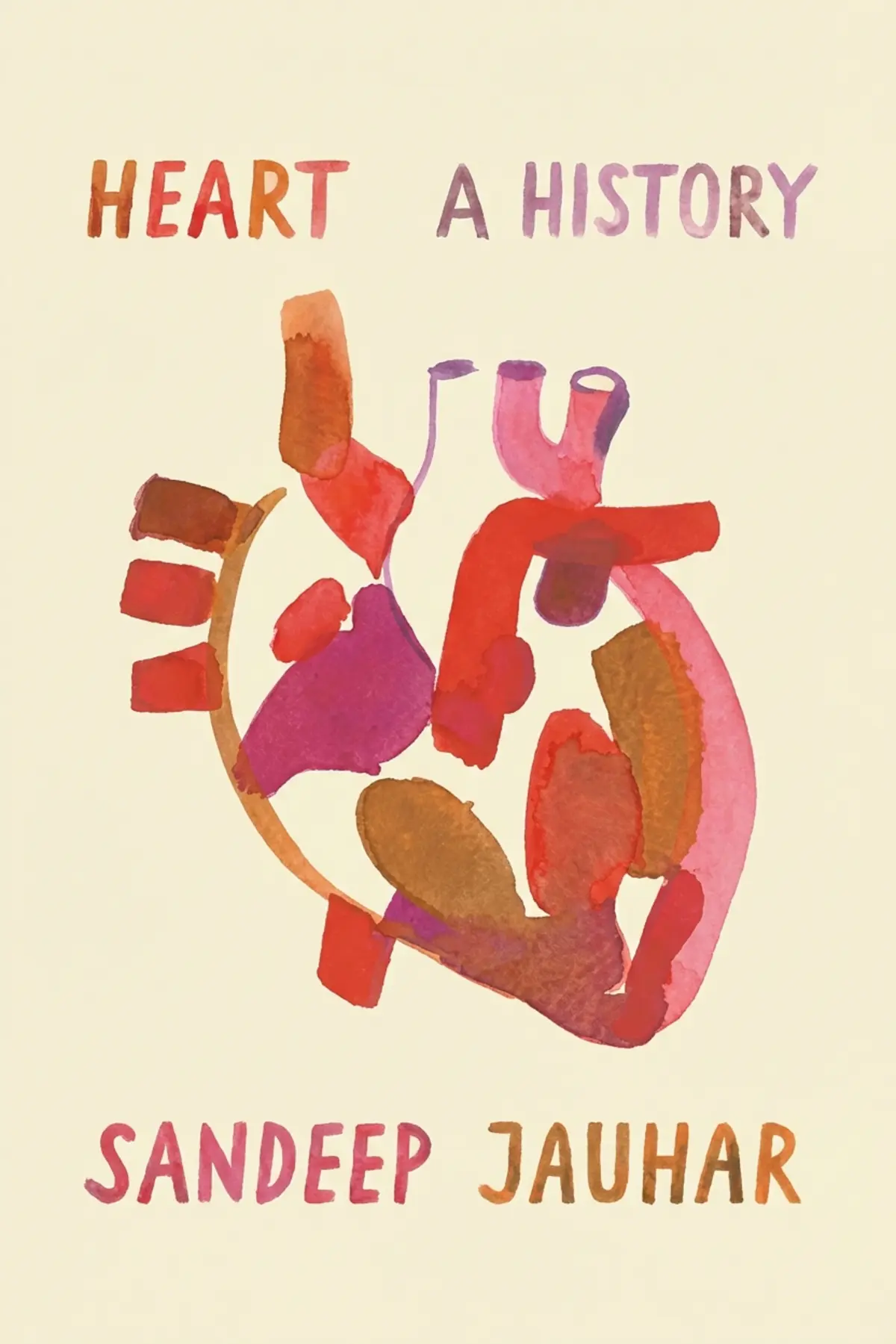
A cardiologist's history of the heart. It covers the self-experiments and surgeries that taught doctors to repair the heart, and the studies showing how grief, stress, habits and poverty damage it.
1 min 07 sec
If you think of the heart as half valentine and half pump, cardiologist Sandeep Jauhar says you are right twice, and the two halves are more closely joined than medicine once believed. Grief alone can twist a heart into the shape of a Japanese octopus trap. In Heart: A History, Jauhar follows the organ from symbol of love and courage to something surgeons learned to stop, open, mend and unblock within one century.
His argument is that the heart answers to both the scalpel and the life around it. Daring experiments taught medicine to repair it, and large studies showed that habits, relationships and social standing decide how often it fails. Expect an intern who tied a nurse to a table so he could thread a tube into his own heart, a surgeon who kept a baby alive through his father’s veins, and a balloon that cleared clogged arteries. By the end, you will know what really strains a heart, and you will have a story of medical nerve worth retelling.
1 min 37 sec
A teenager’s failed science project and his mother’s gentle scolding open a much older story. It explains why a lover’s symbol is shaped the way it is, and why one ancient plant may be part of the answer.
1 min 45 sec
A woman suddenly has chest pain and trouble breathing, as if her heart were about to stop, yet the trigger is emotional stress. Doctors named her condition after a fishing pot, and the trigger is the last thing most people expect.
1 min 44 sec
A young intern in 1929 locked a nurse out of the decision and turned the knife on himself. People laughed at him for his odd experiment, yet in the end three men shared the Nobel Prize in medicine.
1 min 50 sec
Surgeons faced a deadline of a few minutes that no operation could meet. The way around it came from the womb, a beer hose and a milk pump, and then from one family’s courage.
1 min 38 sec
Before the 1950s, doctors blamed heart attacks on worry, hard work and a popular pill. A small town near Boston agreed to be watched for twenty years, and what it revealed changed medicine’s whole approach.
1 min 52 sec
People in India ate vegetarian diets, smoked less and had lower cholesterol, yet their hearts failed far more often. The search for the missing cause led researchers to immigrants in San Francisco and to poor city neighborhoods.
1 min 43 sec
Clogged arteries were common and doctors were stuck, because nobody knew how the blockage formed. Once a strange chain of cellular events was mapped, the fix turned out to need little more than air.
1 min 15 sec
Over a century, Jauhar’s heart turns out to be both things the old metaphors always said it was. It is a muscle that Forssmann reached with a tube, that Lillehei held still while a father’s blood did its work, and that Gruentzig opened with a few puffs of air. It is also an organ that can bend into the shape of an octopus trap after a death. Jauhar believes it suffers in a loveless marriage, and the studies show it straining under migration and poverty. The surgeons were brave enough to look inside it. The population studies were patient enough to look at the lives around it. Both were needed.
Both views give you something to use. The habits behind the Swedish finding are plain: eat well, move, and stay away from cigarettes and alcohol. The later research adds what Framingham missed, so treat chronic stress, isolation and insecurity as real risks that you can name and work on. And when grief hits someone close to you, take their chest pain seriously, because it may be more than a figure of speech.
Jauhar’s mother told him his heart was too small for hard things. A century of medicine suggests that every heart is tougher than we thought, and more tender too.
For most of history, the heart was easier to write poems about than to treat. People saw it as the seat of love and courage. Doctors could not reach it, could not stop it long enough to operate, and could not explain why it failed. Cardiologist Sandeep Jauhar tells how that changed within a single century. Werner Forssmann was an intern who threaded a tube into his own heart. C. Walton Lillehei kept a child alive through his father's blood vessels during surgery. Andreas Gruentzig cleared clogged arteries with a small balloon. Alongside these pioneers, Jauhar follows the Framingham Heart Study and the research that came after it, which tied heart disease to blood pressure, cholesterol and smoking, and then to migration, poverty and insecurity. His larger point is that the old metaphors were partly right. Grief can deform the heart, stress damages its tissue, and a lonely or insecure life raises its risk. Readers get a clear account of how modern cardiology was built, along with a plain sense of what really strains a heart and what protects it.
Readers who want to understand their heart health beyond cholesterol numbers and diet charts.
People living with long stress, grief or insecurity who wonder what it does to the body.
Fans of medical history curious about the risky experiments behind modern cardiology.
Sandeep Jauhar is a cardiologist and writer. He has written for The New York Times since 2015, and his essays have appeared in The Wall Street Journal, TIME and Slate. His books include Intern, Doctored and My Father's Brain. Heart: A History was a finalist for the Wellcome Book Prize and the January 2019 pick of the PBS NewsHour and New York Times book club. His TED Talk on the emotional heart was among the ten most-watched of 2019.
Listeners find this work to be a captivating and beautifully composed account that offers incredible perspectives on the history of medicine, specifically in the field of cardiology. They value the way the author's own life experiences are intricately woven into the narrative, and one listener emphasizes the human narratives behind major cardiological breakthroughs. Listeners also appreciate the book's emphasis on emotional health and its connection to medicine, with one noting how it details the development of artificial valves.
Ever wonder why we use the heart as a metaphor for love despite it being a literal muscle? Sandeep Jauhar bridges that gap beautifully by exploring how our emotional states directly impact our biological cardiovascular health. This isn't just a dry textbook; it’s a deeply moving narrative that weaves the author’s own family history—specifically the tragic losses of his grandfathers—into the broader tapestry of medical advancement. I was particularly fascinated by the discussion on how stress and anxiety can physically manifest as heart ailments. It makes you realize that medicine isn't just about valves and tubes, but about the human spirit. While the technical descriptions of early heart-lung machines are intense, the prose remains accessible for the average reader. This book changed how I view my own lifestyle and emotional well-being.
Show moreAs someone who has always been fascinated by medical history, I found this to be an absolute page-turner. Jauhar’s personal connection to the subject, sparked by his own coronary blockages and his family’s history of heart disease, adds a layer of urgency that most science books lack. The way he describes the first open-heart surgeries using cross-circulation is terrifying and brilliant all at once. Truth is, we often take modern cardiology for granted, forgetting the blood and grit it took to get here. The accounts of his time as a first responder during 9/11 were harrowing but necessary to understand his perspective on mortality. It is a rare book that can educate you on ventricular fibrillation while also making you reflect on your own legacy. Highly recommended for any science lover.
Show moreAfter hearing about this on a podcast, I had high expectations, and Jauhar delivered. The book is an incredible blend of memoir and science that doesn't shy away from the messy reality of medical progress. I was particularly struck by the stories of doctors who risked their own lives and reputations to explore the heart when it was still considered a 'forbidden' organ. The author’s own shock at finding plaques in his arteries serves as a powerful framing device for the entire history. It reminds us that even the experts aren't immune to the ticking clock inside their chests. The focus on how our modern, sedentary lifestyle is undoing decades of progress was a real wake-up call for me. This is science writing at its most human.
Show moreThis book is a masterpiece of medical storytelling. Sandeep Jauhar manages to explain complex things like ventricular fibrillation and implantable defibrillators in a way that feels natural and vital. I loved how he explored the 'vulnerable heart' and the physiological impact of grief and anxiety—it's something we don't talk about enough in traditional medicine. The personal stories about his grandfathers gave the historical data a soul. Yes, some of the animal testing and surgery details are a bit graphic, but that is the reality of how these life-saving techniques were developed. It’s a compelling, well-written read that provides amazing insights into the organ that is both a pump and the perceived seat of our soul. I couldn't put it down.
Show moreSandeep Jauhar manages to make the history of the heart feel like a high-stakes thriller. From the first risky catheterization to the modern miracle of artificial valves, the sheer bravery of these medical pioneers is staggering. I never knew that the technology for AEDs was so relatively new, which is wild considering how ubiquitous they are now. The book shines when it focuses on the 'vulnerable heart'—the idea that our autonomic nervous system is constantly communicating our fears to our chest. My only real gripe is that the middle section gets bogged down in the 'heart as a machine' metaphor, which felt a bit dry compared to the vivid opening. However, the human stories behind the innovations keep it grounded. It’s a compelling look at the organ that defines our existence.
Show moreThe chapter on self-catheterization is enough to make anyone’s skin crawl, yet it perfectly illustrates the obsessive nature of early cardiologists. Jauhar writes with a workmanlike prose that, while not poetic, is incredibly clear and efficient. I particularly enjoyed the sections on how meditation can sometimes be as effective as medication for certain heart conditions. It’s refreshing to see a specialist acknowledge that the biological heart is inextricably linked to our emotional system. I did find the structure a bit frustrating at times, especially when a compelling patient story was interrupted by twenty pages of historical data. Still, the insight into his own heart scan and the realization of his mortality made the science feel much more personal. It's a solid 4-star read for anyone interested in the pump that keeps us alive.
Show moreFinally got around to reading this for my book club and I’m glad I did. It is a dense, information-heavy stroll through the history of cardiology that somehow manages to stay engaging. Jauhar is a likeable and modest narrator who doesn't try to make himself the hero of every story, which I appreciated. The connection between the 'metaphorical' heart of emotions and the 'biological' heart of muscle is the strongest theme here. I learned a ton about the development of the heart-lung machine and the evolution of CPR, which was surprisingly recent. Look, it’s not a light read—there are some heavy sections on death and medical failure—but it’s an important one. It provides amazing insights into why heart disease remains such a formidable killer today.
Show moreLook, the technical bits might be a bit much for some, but I found the medical history absolutely riveting. I’ve read a few of these doctor-memoirs, and Jauhar holds his own by being incredibly honest about the 'hardening' of a doctor's heart over time. His descriptions of working in the makeshift morgues at Ground Zero were some of the most moving parts of the book, even if they weren't strictly about cardiology. They set the stage for his obsession with how we handle death and the organs that fail us. The book does a great job explaining why we are seeing a decline in heart health despite all our tech. It’s a sobering but necessary look at the intersection of lifestyle, emotion, and anatomy. A few too many details on frog experiments, but otherwise excellent.
Show moreTo be fair, there is a lot of incredible information here, but I struggled with the tone at times. The author is clearly an expert, yet the constant shift between his personal life and the history of cardiology felt a bit disjointed. I found the segments regarding animal experimentation particularly difficult to stomach; some of those historical studies were genuinely revolting and could have been relegated to the footnotes. Also, if you are squeamish, beware of the graphic descriptions of early medical procedures and the author’s time in the 9/11 morgues. It’s informative, certainly, but the narrative flow is frequently interrupted by technical jargon that slows everything down. It is a worthwhile read for the history, but it didn't quite reach the heights of writers like Atul Gawande for me.
Show moreNot what I expected and frankly, I’m quite disappointed. I picked this up hoping for a hopeful look at heart health, but it was filled with such gruesome detail that I had to put it down several times. The description of the first self-catheterization was so agonizingly vivid that it made me feel physically ill. Furthermore, the extensive focus on cruel animal studies was distracting and, in my opinion, unnecessary for a book aimed at a general audience. I understand these experiments happened, but the level of detail felt gratuitous. I also found it hard to connect with the author's family anecdotes because they weren't developed enough to feel like real people. I ended up recycling my copy rather than passing it on because I couldn't recommend it in good conscience.
Show moreCardiologist Sandeep Jauhar traces how the heart went from a symbol of love and courage to an organ surgeons could open and repair. He covers Werner Forssmann’s self-experiment, C. Walton Lillehei’s cross-circulation surgery, the Framingham Heart Study and Andreas Gruentzig’s balloon angioplasty. He also argues that emotions, relationships and social conditions affect the physical heart as surely as diet and smoking do.
According to Jauhar, yes. Stress and anxiety make the body tighten its blood vessels, which raises heart rate and blood pressure, and over time that pressure damages heart tissue. Takotsubo cardiomyopathy, named after a Japanese octopus pot, is a condition in which intense emotional strain deforms and weakens the heart. It mostly affects women after a breakup or a death. Many recover, but some die of grief.
Starting in the 1950s, the study followed 5,000 residents of Framingham, near Boston, for 20 years. It linked heart disease to high blood pressure, hypertension, cholesterol and smoking, which moved medicine toward prevention. It led eventually to bans on cigarette advertising and to warning labels. Later studies in India, among Japanese immigrants in San Francisco and in poor urban communities showed that social stress matters too.
Jauhar cites a Swedish study finding that a healthy diet, exercise and avoiding alcohol and nicotine could prevent four in five cardiac arrests. He also argues that chronic stress, a loveless marriage, cultural uprooting and financial insecurity raise heart risk. His conclusion is that protecting the heart takes personal habit change as well as social reform.
It suits readers who want a clear, story-driven history of cardiology. It also fits anyone curious about how emotions and living conditions affect physical health, and people who want to understand what actually strains the heart. It works well for listeners who like medical pioneers’ stories and want lessons about their own habits and stress at the same time.
J. Craig Venter

Andrew Ross Sorkin

Ben Macintyre

Carl Zimmer

Fay Bound Alberti
Ron Chernow

Bill Bryson

Philip Freeman

Jeff Hawkins
AUDIO SUMMARY AVAILABLE
Get the key ideas from Heart by Sandeep Jauhar, plus 5,000+ more nonfiction titles.









