

14 min 46 sec
Available in: English
Happy Ever After: A Radical New Approach to Living Well
By Paul Dolan
Paul Dolan tests the standard life script of wealth, prestige, marriage, children and perfect health against data on how people actually feel, and shows when following your own experience serves you better than meeting expectations.
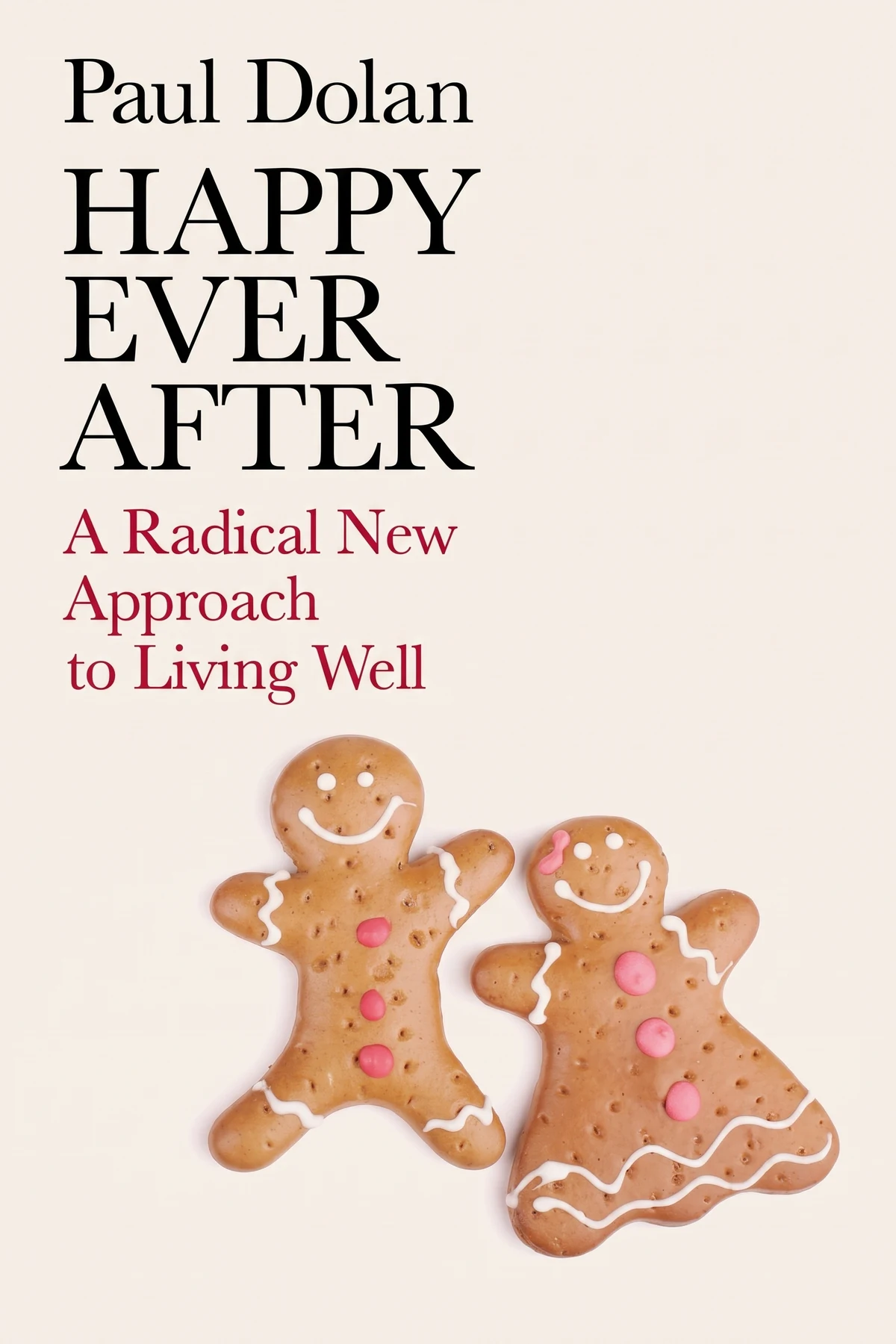
Table of Content
1. Introduction
1 min 04 sec
Plenty of people do everything they were told would make them happy, from the senior job to the marriage and the children, and still feel miserable. In Happy Ever After, London School of Economics behavioral scientist Paul Dolan argues that the script itself is often to blame. He calls these scripts social narratives: shared expectations that we should want wealth, success, a spouse, kids and a healthy body, and that anyone who chooses otherwise is strange or selfish.
Dolan grants that narratives are useful, because they make a complicated world simpler. But they push us to chase what we are expected to want and to ignore how our days actually feel. Holding each narrative up against data on lived experience, he finds that most of the boxes we rush to tick bring less happiness than promised, and that judging people who skip them does real harm. What follows is a way to test any big choice, from salary and working hours to marriage, parenthood and health, against evidence and your own experience.
2. Find the income band where happiness peaks
1 min 39 sec
Most people assume each raise buys a little more contentment. Large surveys of daily life show something different past a certain point, and one study about house sizes shows why your neighbors may matter more than your salary.
3. Trade prestige for work that feels good
1 min 40 sec
A famous employer, a senior title and long hours look like proof of a good career. Surveys of florists, lawyers and chief executives suggest the people we envy at work may not be the ones enjoying it.
4. Judge marriage by the years after the wedding
1 min 42 sec
Nearly everyone counts a lasting marriage as part of a happy life. One survey detail, about who happens to be in the room when the question is asked, changes how the answers look.
5. Rethink fidelity with the evidence in view
1 min 53 sec
Few moral rules are held more firmly than the rule against cheating. A look at search data, owl monkeys and couples who set their own terms suggests the rule deserves a closer look than it usually gets.
6. Feel free to choose a child-free life
1 min 52 sec
People without children are often pitied or called selfish. Figures on cost, carbon and the daily experience of mothers make the decision look far more reasonable than the usual story allows.
7. Put happiness back into your health choices
1 min 47 sec
Clean eating and fitness are treated as obvious goods, and people who fall short are judged for it. The research on weight, hiring and mental illness points to a different source of the harm.
8. Judge others less once you see what shapes them
1 min 47 sec
We praise people for their success and blame them for their failures, as though each life were freely chosen. A birthday, a parent’s paycheck and an imagined car repair suggest otherwise.
9. Conclusion
1 min 22 sec
Dolan’s book works like a pair of glasses for the life script most of us inherited. Every item on it sounds like a route to happiness: the big salary, the impressive title, the wedding, the faithful lifelong partner, the children, the perfect body. Measure them against how people actually feel through their days, and each one becomes a choice that suits some people and not others. Happiness peaks at just enough money. Married people sound happier mainly when their spouse is listening.
The habit Dolan recommends is simple. When you face a big decision, imagine it belongs to your best friend. Would you rather they were married but often miserable, or single and rarely miserable? Would you want them in a prestigious job they complain about every evening, or in shorter weeks doing work they enjoy? The answer you give for a friend is often more honest than the one you give yourself, because it carries less of other people’s expectations.
Then turn the same generosity outward. Parents, luck and pressures nobody chose shape much of every life, so the person who skipped a box may simply have read their own life more carefully. In Dolan’s version, happy ever after means whatever actually feels good to live.
About this book
What is this book about?
Many people tick every box they were handed. They get the senior job, the marriage, the children and the healthy routine, and they are still unhappy. Behavioral scientist Paul Dolan argues that the boxes are often the problem. He calls them social narratives: widely shared expectations about how a good life should look, along with quiet disapproval of anyone who chooses differently. Dolan takes these narratives one at a time and checks them against evidence about daily experience. That evidence comes from time-use surveys of around 20,000 Americans, a German panel that has followed people for about 20 years, studies of florists, lawyers, chief executives and their secretaries, and research on mothers, weight and luck. Again and again, the expected path delivers less happiness than it promises, and the judgment aimed at people who leave it does real harm. Readers get a clear way to question big decisions about pay, working hours, relationships, parenthood and health. They also get a simple test, borrowed from friendship, for separating what they want from what they have been told to want, and a case for treating other people's choices more kindly.
Book Information
Who it's for
Professionals sensing something's off
Professionals who have ticked the expected boxes and still feel something is off.
Young adults choosing careers
Young people weighing pay, prestige and hours as they choose a career.
Tired of being pitied
Single or child-free readers tired of being pitied, and anyone who wants to judge other people's choices less harshly.
About the Author
Paul Dolan
Paul Dolan is a professor of behavioral science at the London School of Economics and Political Science, where he directs the Executive MSc in Behavioural Science. He previously held academic posts at Imperial College London, York, Newcastle and Sheffield, and was a visiting scholar at Princeton University. His research covers how happiness is measured, what causes it and what it means for public policy. He also wrote Happiness by Design and Beliefism, and he hosts the Duck-Rabbit podcast.
Ratings & Reviews
Ratings at a glance
What people think
Listeners find that although reactions are mixed concerning the author’s rejection of conventional success, many value the book’s daring critique of "social narratives" surrounding finances, marriage, and health. They appreciate the inclusion of deep behavioral science insights and compelling statistics meant to dismantle typical myths about the perfect life. Additionally, listeners describe the narration as personal and grounded, with one listener mentioning that the author's "unapologetic" and funny approach makes the complex data very approachable. The book is also commended for offering a stimulating structure that empowers listeners to establish their own versions of happiness rather than adhering to the expectations of society.
Top reviews
Sirinat
Dolan’s take on the 'happiness narrative' is exactly the wake-up call I needed to stop comparing my life to a Hallmark movie. By digging into behavioral science, he exposes how we’ve been sold a lie about what it means to be successful. We are constantly pressured to earn more, marry perfectly, and breed early, yet the data shows these milestones don’t guarantee a smile. Truth is, many of us are just chasing ghosts because we’re afraid of what the neighbors might think. I found his unapologetic tone refreshing, especially when he challenges the idea that we must always strive for more. Why is being 'just okay' or choosing a different path viewed as a failure by the middle class? This book provides a much-needed framework for defining a good life on your own terms. It is bold, data-driven, and occasionally hilarious.
Show moreDome
Picked this up during a bit of a mid-life crisis and found it oddly comforting. Dolan is unapologetically himself, and he gives the reader permission to be the same. The book is packed with arresting statistics—like how marriage often benefits men far more than women in terms of health and longevity. It’s a refreshing change from the usual 'have it all' rhetoric that makes everyone feel like they're failing at life. I actually laughed out loud at some of his critiques of the middle-class obsession with status symbols. Not gonna lie, I was skeptical at first, but his arguments against over-investing in education and career at the expense of daily joy really hit home. If you're tired of feeling guilty for not being 'successful' enough, this book is a great antidote.
Show moreWaree
Not what I expected from a behavioral science book, but in the best way possible. Dolan takes a sledgehammer to the pillars of the 'perfect life'—money, marriage, and kids—and asks us to look at the wreckage. He argues that we are often miserable because we are trying to satisfy a society that doesn't actually care about our well-being. The chapter on why we shouldn't always prioritize health over pleasure was a personal favorite of mine. Why live to 100 if you've spent 80 years avoiding everything that tastes good? His writing is punchy, direct, and doesn't hide behind jargon. This book is for the rebels and the people who have always felt like they didn't quite fit the mold. It is a brilliant, provocative defense of living life on your own terms.
Show moreThanakorn
Wow. This book is a radical departure from the usual garbage you find in the self-growth section. Paul Dolan uses his background as a scientist to show that much of what we think we know about happiness is actually based on flawed social narratives. I loved how he explored the idea that we can be 'happy enough' without constantly needing to climb the next ladder. The sections on how these narratives disproportionately affect the working class were particularly powerful and well-argued. It's a brave book that isn't afraid to tell people that they might be better off staying single or skipping the promotion. Personally, I found it incredibly liberating to read a perspective that values the present moment over a curated future. Definitely a must-read for anyone feeling burnt out by the modern world.
Show moreTod
Ever wonder why we’re all chasing a version of success that leaves us feeling hollow and exhausted? Dolan dives deep into the statistics to show that our social expectations around wealth and marriage are often at odds with our actual well-being. The chapter on the trade-offs of health was particularly eye-opening for me. We spend so much time obsessing over living longer that we forget to actually enjoy the life we have right now. To be fair, some of the economic arguments felt a little contradictory toward the end, but the core message is solid. He uses arresting data to prove that staying single or choosing not to have kids can be a perfectly valid—and often happier—route. It’s not a comfortable read, but it is a necessary one for anyone feeling trapped by the 'standard' life plan.
Show moreAubrey
Finally got around to reading this, and I’m struck by how much it challenges the 'more is better' mindset that dominates our culture. Dolan manages to strip away the glossy finish of modern expectations to reveal something much more authentic and gritty. His discussion on social class was particularly poignant, highlighting how the 'narrative' often serves the wealthy while leaving others behind. The writing style is human and relatable, which is a rare feat for a Professor at the LSE. I loved the way he dissected the myths of the perfect life without relying on tired self-help clichés. While I didn't agree with every single statistical interpretation, the book forced me to re-evaluate my own priorities. It turns out that winning the rat race might just mean you're still a rat, and Dolan proves it with data.
Show moreWittaya
As someone who usually loves behavioral economics, this was a bit of a mixed bag for me. On one hand, the research on how darker rooms foster creativity or how income doesn't always scale with joy is fascinating stuff. Paul Dolan is clearly a brilliant mind who isn't afraid to use a few f-bombs to make a point, which I appreciated. However, I felt he often swapped one rigid social narrative for another, almost shaming those who actually enjoy their careers or traditional families. The book falls into a trap of being a bit too prescriptive about being 'un-prescriptive.' Look, I get that social pressure is real, but some of his conclusions feel like they are based on a very specific, narrow view of what constitutes a 'narrative.' It is definitely thought-provoking, though I wouldn't call it a definitive guide.
Show moreKatya
The data presented here is genuinely arresting, especially regarding the statistics on wealth and misery in the US compared to the UK. It’s a dense read at times, but Dolan’s voice keeps things moving with a mix of academic insight and casual grit. I particularly enjoyed the sections on how we should prioritize our current experiences over some vague future goal that might never arrive. However, I struggled with his dismissal of ambition as a purely social construct. For many people, striving for a goal is the very thing that provides a sense of meaning. To be fair, he does acknowledge that his view isn't a one-size-fits-all recipe, but the bias is clear. It’s a rewarding read if you want to challenge your assumptions, but keep your critical thinking cap on. It provides a good framework, even if you don't buy the whole package.
Show moreWit
While I appreciate the effort to debunk social myths, Dolan’s logic often feels self-defeating and strangely cynical. He spends a lot of time telling us that our desires for things like education and financial security are just 'narratives' forced upon us. But isn't his own vision of happiness just another narrative he’s trying to sell? The evidence presented, like the Easterlin Paradox, is debated by other economists, yet he presents it as an absolute truth. I found the tone to be a bit dismissive of people who find genuine joy in the things he labels as traps. In my experience, true happiness comes from a sense of agency and purpose, not just opting out of society's expectations. It’s an interesting read for the controversy alone, but the empirical rigor felt lacking in several key areas. It felt more like an ideological manifesto than a balanced scientific study.
Show moreBee
The most irresponsible pile of academic nonsense I’ve encountered in years, masquerading as helpful social science. Dolan seems determined to encourage a generation of 'disciples of mediocrity' who believe that ambition is a dirty word. He essentially argues that we should settle for the path of least resistance rather than pushing ourselves to achieve something meaningful. Franky, the way he demonizes the middle class and suggests that hard work is just a social trap is insulting to anyone who has actually struggled to build a life. It feels like he has a massive chip on his shoulder regarding traditional success. If you value discipline, delayed gratification, or setting high standards for your children, stay far away from this manual for laziness. It’s an ego-centric vision of happiness that ignores the fulfillment found in genuine accomplishment and responsibility.
Show moreQuestions about this book
What is the main idea of Happy Ever After by Paul Dolan?
Dolan argues that social narratives, the shared expectations that we should pursue wealth, success, marriage, children and a healthy body, often fail to make people happy. He checks each one against data on how people actually feel day to day and finds that following your own experience usually serves you better. He also argues that people who leave the script deserve less judgment.
How much money makes people happiest according to Paul Dolan?
Citing the American Time of Use Survey of about 20,000 people, Dolan reports that happiness peaks among Americans earning $50,000 to $75,000 a year and then falls. People on $100,000 are no happier than people on $25,000. Comparison matters too: in a study by Bob Frank, most people preferred a smaller house if it was bigger than their neighbors’ houses.
Does Happy Ever After say marriage makes people happier?
Not much, on Dolan’s evidence. A long-running German panel shows that the years around the wedding are pleasant, but afterward about as many people become less satisfied as become more satisfied. US survey data suggests married people report more happiness than single people only when their spouse is present, and otherwise no more than divorced people.
How can I apply the ideas in Happy Ever After?
Dolan’s main tool is to treat your own decisions as if they belonged to your best friend. Ask whether you would rather they were married but often miserable or single and rarely miserable. You can also aim for just-enough income, consider shorter working weeks, since happiness peaks at 21 to 30 hours, and judge other people’s choices less harshly.
Readers also enjoyed


Acting with Power: Why We Are More Powerful Than We Believe
Deborah Gruenfeld




Age of Propaganda: The Everyday Use and Abuse of Persuasion
Anthony Pratkanis



A Guide to the Good Life: The Ancient Art of Stoic Joy
William B. Irvine
AUDIO SUMMARY AVAILABLE
Listen to Happy Ever After in 15 minutes
Get the key ideas from Happy Ever After by Paul Dolan, plus 5,000+ more nonfiction titles.
- 5,000+ titles
- Listen as much as you want
- 7-day free trial
- Cancel anytime









