

14 min 16 sec
Available in: English
 ไทย
EnglishไทยGet Well Soon: History’s Worst Plagues and the Heroes Who Fought Them
A brisk tour of history's deadliest outbreaks, from a dancing mania to the Spanish flu, showing why guessing, blame and censorship spread disease while close observation and compassion stopped it.
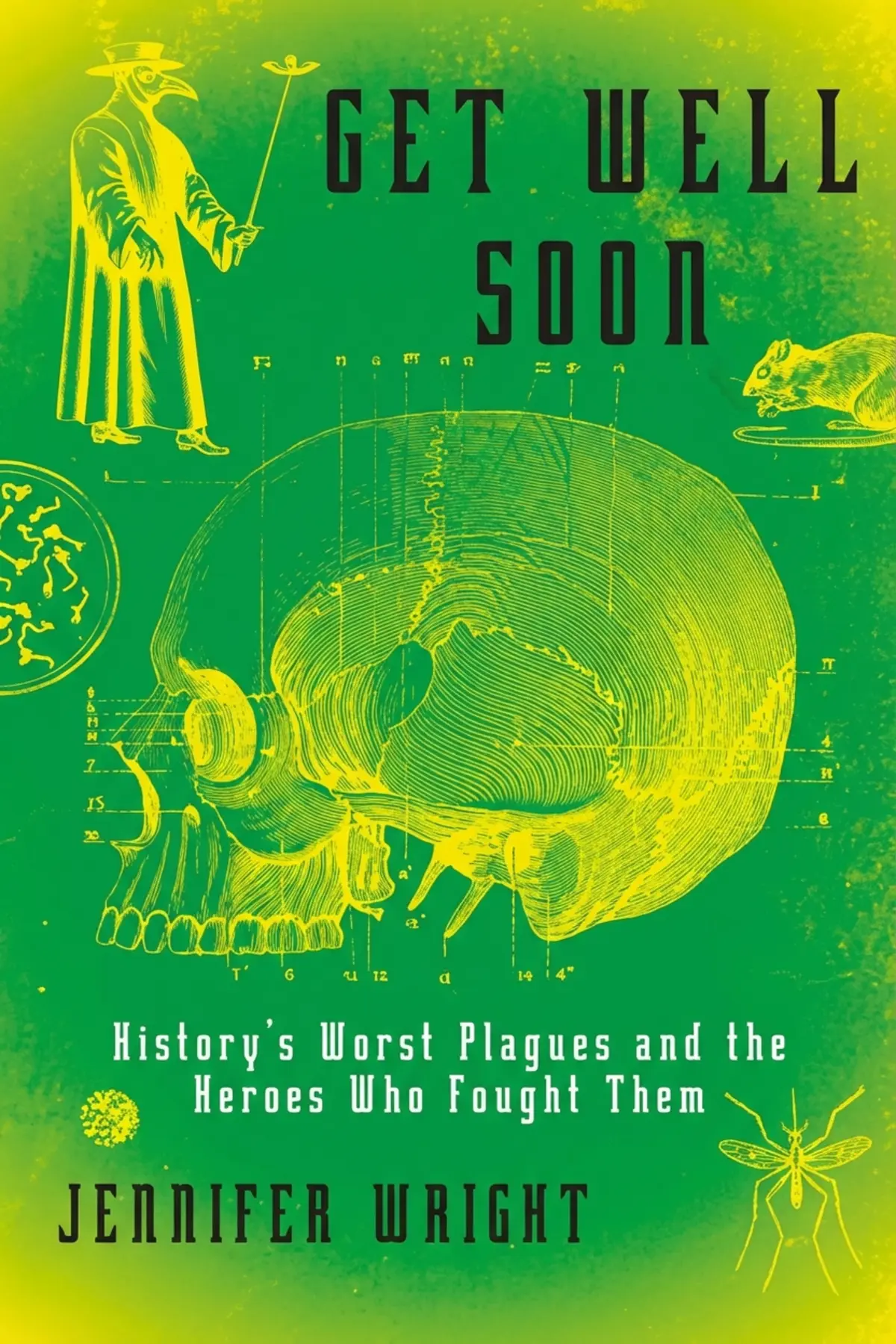
Table of Content
1. Introduction
1 min 02 sec
When a frightening illness spreads, the hard part is often telling a good response from a bad one. In Get Well Soon, Jennifer Wright, political editor-at-large at Harper’s Bazaar, offers a way to do that by walking through history’s worst plagues. Her first lesson comes from fourteenth-century Europe, where people who did not know what spread the bubonic plague invented cures that made it worse, such as moving into the sewers, right where the rats lived.
The same pattern runs through every outbreak she describes. Disease does its greatest damage when societies answer it with superstition, stigma, stubbornness or silence. It retreats when they answer with careful observation, honest reporting and compassion. Six episodes carry the argument, from a town that danced itself to death to a flu that newspapers were forbidden to mention. Together they give you a working test for any health scare: who is guessing, who is looking closely, and who is caring for the sick.
2. Test any cure by asking what it assumes
1 min 58 sec
Medieval Europeans tried everything against the plague, from vegetables to living underground. One famous physician got surprisingly close to the truth, yet almost nobody would follow his advice, for a reason that sounds absurd today.
3. Trust evidence over the experts' favorite theory
2 min 00 sec
London’s leaders believed they were protecting the city from disease when they gave their order about waste. One doctor who interviewed every affected household proved them wrong, and the establishment’s reply was an insult rather than a thank-you.
4. What milkmaids teach about stopping a killer
2 min 04 sec
An empire with an army of 80,000 fell to fewer than two hundred soldiers, and the decisive weapon was invisible. The defense against it was eventually found on dairy farms, by someone who paid attention.
5. Care for the sufferers instead of blaming them
1 min 59 sec
In 1518, a woman began dancing in a city street until she collapsed, and soon a growing crowd was dancing until their feet bled. The town tried moral bans, then holy shoes. Wright thinks something else ended it.
6. Compassion can lift a disease's stigma
1 min 56 sec
Hawaii sent its leprosy patients to a remote island and left them there. One Belgian priest went to join them, knowing the risk, and the moment he learned he was infected is unforgettable.
7. Learn how silence turns an outbreak into catastrophe
1 min 57 sec
A Texas doctor saw the danger early and raised the alarm. Then wartime laws made the disease almost impossible to discuss, and it ended up named after the one country willing to report it.
8. Conclusion
1 min 20 sec
Wright’s plagues run from the fourteenth century to the twentieth, yet the same choice returns in each. A city can blame sin or examine its water pump. It can banish the sick to an island or send someone to change their bandages. It can print the bad news or forbid it. Each wrong choice was paid for in lives: 15 a day in Strasbourg, a tenth of a Soho neighborhood in a week, 675,000 Americans while the newspapers looked away. Each way out began with someone who looked closely or cared openly.
Her message to governments and communities is that disease calls for transparency, compassion and treatment grounded in science, with no room for superstition, prejudice or censorship. For one person, that becomes a habit of mind. Before trusting a remedy, ask what it assumes about the cause. When an illness strikes unevenly, notice who stays well. When officials go quiet, find out who is still reporting.
Wright’s last warning is a small one. Some people still scatter chopped onions around their homes to keep illness away, a belief common enough that the National Onion Association answers it on its website. The onions never helped. Looking closely, and caring for the sick, still does.
About this book
What is this book about?
For most of human history, nobody knew what caused disease. People guessed, and the guesses were often deadly. Some medieval Europeans suggested living in sewers to escape the plague. Victorian London emptied its sewage into its own drinking water. Wartime governments made it illegal to report a flu that went on to kill tens of millions. Jennifer Wright retells these episodes with energy and dark humor, but she also draws a clear lesson from them. Outbreaks grow worst when communities answer them with superstition, prejudice or censorship. They are beaten by people who look closely at the evidence and care openly for the sick: John Snow going door to door in Soho, Edward Jenner noticing that milkmaids stayed healthy, Father Damien changing bandages on Molokai. Readers get six vivid stories they can retell, from Strasbourg's dancing plague to the fall of the Inca empire, along with a practical way to judge any health scare: ask what a cure assumes, notice who stays well, and treat official silence as a warning sign.
Book Information
Who it's for
History buffs
History lovers who want gripping, retellable stories about plagues, from the Inca empire to cholera-stricken London.
Uneasy about health scares
Professionals uneasy about the next health scare who want a simple way to judge cures, experts and official silence.
Curious about compassion's impact
Caregivers and team leads curious how compassion has changed outcomes for the sick.
About the Author
Jennifer Wright
Jennifer Wright is political editor-at-large at Harper's Bazaar and the author of seven books, including the pop histories It Ended Badly, about thirteen of history's most disastrous break-ups, and Get Well Soon, which became an Audible bestseller. Her writing has appeared in The New York Times, the New York Observer, Cosmopolitan and Maxim, and she cofounded the website TheGloss.com. She speaks and moderates panels on subjects including women's issues, reproductive rights, love and plagues.
Ratings & Reviews
Ratings at a glance

What people think
Listeners find this book to be a remarkably engaging and educational experience, full of interesting facts and well-documented material. This brilliantly written collection of essays stands out for the author's compassionate handling of the subject matter. They describe the historical details as captivating and the darker content as truly unsettling, with one listener highlighting how it lays out two millenia worth of horrors and tragedy. Though many listeners enjoy the comedic tone, some find the humor bothersome.
Top reviews
Chamnong
Picked this up during a long flight and couldn't put it down. Wright manages to take two millennia of absolute tragedy and turn it into a series of essays that are somehow both witty and deeply respectful of the victims. The chapter on the Spanish Flu was particularly haunting given our recent global experiences, highlighting how history truly does repeat itself when leadership fails. I appreciated the focus on 'heroes' like the scientists who bucked convention to save lives. It’s a rare book that makes you laugh out loud while simultaneously feeling a profound sense of horror at the human condition. If you enjoy Mary Roach, this mix of science and snark is exactly your speed.
Show moreSiraporn
After hearing so many recommendations, I finally dove into Wright's exploration of our viral past. The final chapter on the AIDS crisis was an emotional gut-punch that moved me to tears. She doesn't hold back when discussing the Reagan administration’s mishandling of the epidemic, and her anger is righteous and well-documented. It’s refreshing to see a history book that isn't afraid to take a moral stand against bigotry and ignorance. The narrative structure is perfect, with each chapter functioning as its own self-contained story of a specific disease. This isn't just a list of symptoms; it is a compassionate look at the people who suffered and the few who tried to help.
Show moreJan
Wow. I am an unabashed science nerd, and this is easily one of the best non-fiction books I’ve encountered this year. Wright finds a way to make the most depressing topics imaginable—like the Black Death and tuberculosis—genuinely engaging. The way she connects historical mismanagement to modern-day anti-vax movements is both brilliant and terrifying. She reminds us that while our medicines have improved, human stupidity remains a constant threat. The audiobook narration by Gabra Zackman is also fantastic, striking the perfect balance between informative and friendly. It’s a horrifying, beautiful, and necessary read for anyone living in a post-2020 world. I’ve already bought copies for three friends.
Show moreGin
Finally got around to reading this, and it’s arguably the most relevant history book for our current era. Wright highlights the heroes who fought for logic and cleanliness when the rest of the world was turning to superstition. I loved the emphasis on how simple acts of kindness and common sense saved more lives than any 'miracle' cure. Her writing is punchy, fast-paced, and filled with facts that will make you the most interesting person at any dinner party. The horror is real, but the hope she provides through the stories of medical pioneers is even stronger. It’s a fantastic series of essays that manages to be both educational and incredibly entertaining.
Show moreGiulia
This book manages to be both a hilarious comedy set and a tragic documentary about human suffering. Wright’s ability to weave together pop culture and historical data is impressive, even if the humor is a bit polarizing. I personally loved the sass—it makes the darker chapters much easier to digest. The message about the dangers of anti-science rhetoric is delivered with a sledgehammer, but honestly, it needs to be. We often think we are too advanced for a plague, but this book proves that hubris is our greatest weakness. It is well-documented, passionately written, and deeply engaging from start to finish.
Show moreJune
Ever wonder why some societies collapsed while others thrived during an outbreak? This book provides a fascinating, albeit gruesome, look at how plagues like Leprosy and Smallpox shaped human history. I found the section on Father Damien and the leper colonies to be incredibly inspiring. Wright’s conversational style makes complex historical events feel immediate and relevant. My only minor gripe is that the humor occasionally feels a bit forced, distracting from the gravity of the situations described. Still, the bibliography alone is a treasure trove for anyone looking to go deeper into medical history. It’s a solid 4-star read that I would recommend to any science geek.
Show moreRania
As someone who usually sticks to dense medical journals, I found this surprisingly refreshing despite its lighter approach. It’s an apposite book for our times, providing a much-needed perspective on how society reacts to the unknown. The chapter on the Antonine Plague was a standout, showing how a single outbreak can ripple through the economy and dismantle an entire empire. Wright isn't a scientist, but her dedication to research is evident in the massive list of references at the end. While the pithy comments don't always land, the core information is solid. It’s an excellent gateway book for people who might be intimidated by more traditional, academic history texts.
Show moreTang
To be fair, I went into this expecting a dry recitation of dates and death tolls, but Wright gives us something much more human. Each chapter tackles a different illness with a focus on the social psychology of the era. The way she describes the 'ethereal' beauty associated with consumption in art vs. the gruesome reality of the disease was eye-opening. While her 'cheeky' tone might rub some the wrong way, I thought it helped lighten the heavy subject matter. My only real complaint is that I wanted more depth on the biological mechanisms of the viruses themselves. Regardless, it's a very readable and informative overview of humanity's longest-running war.
Show moreJoseph
The research here is clearly extensive, yet the tone often felt jarringly mismatched with the subject matter. To be fair, Wright has done her homework on everything from the Antonine Plague to the development of the polio vaccine. However, the constant insertion of dated pop culture references and sophomoric humor felt like she was trying too hard to be the 'cool' historian. I wanted more medical science and less editorializing about her personal grievances with historical figures. While it’s a very accessible introduction to epidemiology for a layperson, the writing style occasionally borders on the juvenile. It’s worth reading for the facts, but be prepared for a lot of misplaced exclamation points.
Show moreTar
Not what I expected from a book marketed as a history of plagues. Frankly, the author’s constant need to be funny ruined the experience for me. Instead of focusing on the fascinating pathology of these diseases, the text is cluttered with self-referential 'I' sentences and snarky commentary. It reads more like a long series of blog posts than a cohesive historical narrative. I found her habit of shaming people from the past who didn't share her modern sensibilities to be quite annoying. If you want a serious look at epidemiology, you are better off sticking to 'The Ghost Map' or 'The Coming Plague.' This felt more like pop-culture fluff.
Show moreQuestions about this book
What is Get Well Soon by Jennifer Wright about?
It retells some of history’s deadliest outbreaks, including the bubonic plague, smallpox, leprosy, cholera, the Spanish flu and the 1518 dancing plague in Strasbourg. Wright shows how people misunderstood each disease and the heroes who fought back, such as John Snow, Edward Jenner and Father Damien. Her lesson is that superstition, prejudice and censorship make epidemics worse, while science, honesty and compassion bring them under control.
How did John Snow stop cholera in London?
During an 1854 outbreak in Soho that killed a tenth of the neighborhood in a week, Snow interviewed the affected households. He found that the sick had drunk from the Broad Street pump while the healthy had not, which pointed to contaminated water rather than bad air. The medical establishment mocked him, but in 1866 officials began advising people to boil their water, and London had no further cholera outbreaks.
Why was it called the Spanish flu?
According to Wright, wartime laws in countries like the United States and Britain banned reporting that might hurt public morale, so newspapers there ignored the deadly flu. Spain was neutral and had no such censorship, so its press reported the outbreak freely and the disease became linked with Spain. Because the outbreak went unacknowledged elsewhere, no preventive public health measures were taken.
What caused the dancing plague of 1518?
Nobody in Strasbourg knew. The city’s elders blamed God’s anger at the town’s sins and banned gambling and prostitution, which did nothing. Sufferers were then taken to the shrine of Saint Vitus at Hellensteg and given red shoes marked with holy oil, after which they stopped dancing. Wright argues the real remedy was most likely the community’s care and concern, not the faith cure.
What practical lessons does Get Well Soon offer?
Wright’s history suggests a few habits. Check what a proposed cure assumes about the cause, since plague remedies built on the bad-smell theory only made things worse. Look for patterns in who stays healthy, as Jenner did with milkmaids. Treat official silence about a danger as a warning. And skip the chopped onions: they have never kept disease out of a home.
Readers also enjoyed

Alexander Hamilton
Ron Chernow

Alexander the Great
Philip Freeman


A History of Iran: Empire of the Mind
Michael Axworthy
A History of the World in 6 Glasses
Tom Standage

A Long Way Gone: Memoirs of a Boy Soldier
Ishmael Beah


AUDIO SUMMARY AVAILABLE
Listen to Get Well Soon in 15 minutes
Get the key ideas from Get Well Soon by Jennifer Wright, plus 5,000+ more nonfiction titles.
- 5,000+ titles
- Listen as much as you want
- 7-day free trial
- Cancel anytime









