

13 min 45 sec
Available in: English
Get Off Your “But”: How to End Self–Sabotage and Stand Up for Yourself
Sean Stephenson shows how the word but turns wishes into excuses. He gives six practical shifts, from your inner voice to your friendships, that help you stop sabotaging yourself and take charge.
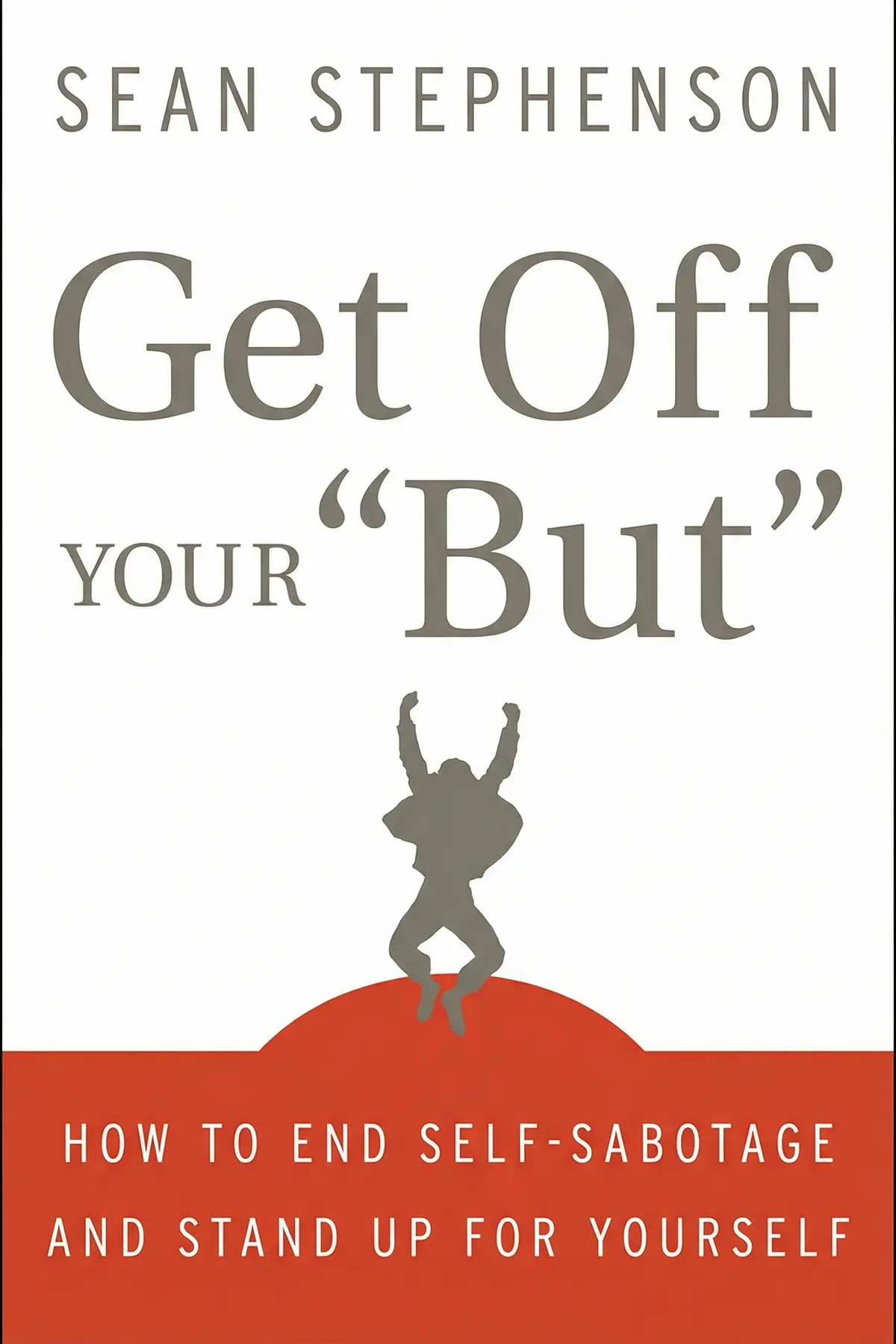
Table of Content
1. Introduction
1 min 01 sec
Most people who feel stuck already know what they want. What holds them back is the word that comes right after the wish: but. In Get Off Your But, the therapist and speaker Sean Stephenson argues that this word works like a soft cushion, a comfortable excuse that lets us stay unhappy without having to change. After meeting thousands of people on his travels, he decided that the size of a person’s but was the largest obstacle they faced.
Stephenson knew about limits. He was born with osteogenesis imperfecta, a condition that leaves bones so fragile they break easily, and he still grew up confident enough to work in the White House and build a therapy practice. His claim is that excuses lose their grip once you change six things: how you connect, how you talk to yourself, how you carry your body, where you aim your attention, who your friends are and who you hold responsible. Each shift comes with an exercise small enough to try tonight.
2. Turn your worst setback into a lesson
1 min 33 sec
A nine-year-old boy lying with a broken leg on his favorite night of the year heard one question from his mother. It decided how he would read every painful moment that followed.
3. Win people over with real attention
1 min 42 sec
We have countless ways to reach each other, yet plenty of people are still lonely. One former president could turn an enemy into a fan in a single conversation, and his habits were surprisingly ordinary.
4. Talk to yourself like a trusted mentor
1 min 36 sec
There is a voice that speaks to you all day, and you would never accept its tone from a friend. A simple overnight notebook exercise shows how much of what it says is fear dressed up as fact.
5. Shift your mood by changing your posture
1 min 44 sec
Your shoulders, your breathing and your face tell everyone how you feel before you speak. Stephenson argues the signal can run the other way, and a close friend’s long struggle with her weight shows what happened when it did.
6. Give self-pity fifteen minutes, then move on
1 min 46 sec
Telling yourself to cheer up rarely works, and pretending a bad day is fine works even less. Stephenson’s answer involves a kitchen timer and permission to wallow, with one firm condition attached.
7. Build a pit crew of friends who help
1 min 36 sec
Some friends seem supportive while making sure you never change. Stephenson borrows an image from motor racing to sort the people who repair you from the people who keep you parked.
8. Take the driver's seat in your own life
1 min 37 sec
A short formula sits at the center of the whole book, and it splits people into two groups. One steers; the other waits for life to happen. Moving across the line asks for a list and an act of forgiveness.
9. Conclusion
1 min 10 sec
Stephenson had more reasons than most people to say but. As a child he broke bones often, once missing Halloween because of it, and lived with real physical limits. His argument carries weight because he chose to treat those limits as material for growth, beginning with one question his mother asked when he was nine. Every lesson in the book aims at the same target: the soft cushion of excuse that lets a person stay unhappy while feeling justified.
What makes the method usable is how small each step is. Catch the next but in your own voice, and ask what staying the same will cost you. Write down what you say to yourself for one day, then rewrite the worst line the way you would say it to someone you respect. When a hard day floods in, give the self-pity its fifteen minutes on a timer, then turn to what you still have. And look at your friends as a pit crew, keeping close the ones who help you get back on the track.
Beneath it all sits his formula, cause over effect. The setbacks will come either way. Whether each one becomes a gift or a burden is the part you get to decide.
About this book
What is this book about?
Most people who feel stuck already know what they want. The trouble comes right after the wish: I would love to change, but I have no time, no money, no confidence. Sean Stephenson argues that this small word works as a soft cushion. It lets us stay unhappy and feel justified about it. Stephenson was born with brittle bones and spent his childhood breaking them. He still grew up to work in the White House, speak to large audiences and open a therapy practice. He builds his case on his own life and on the people he met, and he turns it into six lessons: connect instead of just communicating, choose kinder words for yourself, use your body to change your mood, point your attention at what you have, pick friends who help you grow, and live at cause instead of effect. Each lesson comes with a simple exercise, such as writing down your self-talk, giving self-pity a fifteen-minute timer, or making a list for your last day on Earth. Readers get a plain method for catching their own excuses and replacing them with action.
Book Information
Who it's for
Procrastinators questioning their excuses
People who keep postponing a change and suspect their own excuses are the real obstacle.
Reserved students and professionals
Shy professionals and students who want to connect with others and speak to themselves more kindly.
Those feeling held back
Anyone stuck in self-pity, blame or friendships that keep them from moving forward.
About the Author
Sean Stephenson
Sean Stephenson (1979-2019) was born in La Grange, Illinois, with osteogenesis imperfecta, a rare condition that makes bones extremely fragile. He stood three feet tall, used a wheelchair and broke more than 200 bones before he turned 18. He went on to earn a doctorate in clinical hypnosis and became a board-certified therapist. His talks and online videos reached millions of people, and this book has been published in ten languages. He described his mission as helping people let go of insecurity.
Ratings & Reviews
Ratings at a glance
What people think
Listeners find this to be a remarkable debut that warrants deep study rather than a quick glance, with one listener noting it is a must-read for procrastinators. The work weaves together a motivating story with various practical exercises and tips, and listeners report it changed their lives immediately. They prize the author's heartfelt tone, and one listener mentions how the book helped them cope with procrastination.
Top reviews
Prim
This book arrived at just the right time in my life when I was drowning in my own excuses. Sean Stephenson manages to use his own harrowing experience with Osteogenesis Imperfecta not just as a tragedy, but as a lens to focus on our own internal hurdles. I used to say 'I'd start that project, but I'm just too busy,' or 'I'd go back to school, but I'm too old.' Sean shreds those 'buts' with a mix of humor and brutal honesty that makes it impossible to keep feeling sorry for yourself. The exercises in the book forced me to keep a journal of my reactions, which provided some really uncomfortable but necessary insights. Truth is, we often choose to be victims because it's easier than taking responsibility. After reading this, I feel like I've been given a fresh perspective on what it means to actually live a life of excellence. It’s more than just a motivational speech in print; it's a practical guide for anyone stuck in a rut.
Show moreKasemsan
Picked this up after seeing a clip of Sean speaking at an event, and his energy is just as infectious on the page as it is in person. His message is clear: your limitations are mostly perceived. I love how he defines pain as his teacher, rather than his enemy. It really forced me to look in the mirror and acknowledge that my 'roadblocks' were actually of my own creation. The book is filled with these little nuggets of wisdom, like the 'never put your glow on low' quote, which has become my new daily mantra. Not gonna lie, some of the exercises were difficult to finish because they require a level of honesty with yourself that most people try to avoid. But that’s exactly why it works. It’s a kick in the pants for anyone who has been sitting on their 'but' for too long. Whether you're dealing with a career crisis or just general malaise, Sean’s story proves that there is no excuse for not pursuing your dreams.
Show morePranee
Finally got around to reading this and I’m kicking myself for waiting so long! Sean Stephenson is like the Yoda of personal development—he’s small in stature but a total giant when it comes to wisdom and perspective. The way he breaks down the 'but' excuses we all use is just brilliant. I caught myself saying 'I'd exercise more, but I'm tired' at least three times while reading, and it made me laugh because he calls out exactly that kind of behavior. The book is very interactive, which I loved. It’s not just passive reading; it’s about doing the work and actually applying the lessons to your life. His story of meeting Tony Robbins and setting ten-year goals really inspired me to rethink my own long-term plans. This isn't just a book you read once and put on the shelf; it's a guide you'll want to revisit whenever you feel your motivation starting to lag.
Show moreMan
Wow, just wow. This book 'smacked me upside the head' in the best way possible. I’ve been sitting on my 'but' for months regarding a career change, and Sean’s words were the exact kick in the pants I needed. He makes you realize that there are absolutely no excuses for not living life to the fullest. If a man who has faced that much physical pain can build a 'rock star' life, what is stopping me? The exercises are simple but profound, especially the ones focused on discarding limiting beliefs given to us by others. I love that he doesn't stay in 'preachy' mode for long and keeps things light with a great sense of humor. This is a must-read for anyone who feels like they are just drifting through life. It really is a realistic guidebook for taking control of your own destiny. Thanks, Dr. Sean, for reminding us to never put our glow on low!
Show moreRungtip
Ever wonder why you're consistently stuck in the same self-destructive patterns? Stephenson’s 'Get Off Your But' is a fascinating dive into the mechanics of self-sabotage. I found his concept of internal vs. external disabilities to be particularly striking. To be fair, some of the sections felt a bit like a typical 'rah-rah' motivational seminar, but he always manages to reel it back in with a personal anecdote about his physical pain or his interactions with mentors like Tony Robbins. The writing style is very conversational and easy to digest, which helped me fly through the chapters. I did find a few of the exercises a bit repetitive toward the end, but the overall message is incredibly solid. If you struggle with procrastination or a lack of confidence, this is definitely worth your time. He doesn't just tell you to be better; he shows you the tools he used to thrive despite having almost 200 broken bones by the time he was eighteen. Truly humbling.
Show moreSamroeng
Not what I expected from a typical self-help manual, and I mean that in the best way possible. Stephenson writes with a level of candor that is rare in this genre; he admits his own struggles with victimhood and insecurity despite his success. That humility makes his advice much easier to swallow. He establishes a common ground where we’re all just trying to get through the day, regardless of whether our disabilities are visible or hidden. The chapter on confidence was especially helpful for me, specifically the part about shifting perceptions. It's not a long book, but it’s packed with practical skills that you can start using immediately. One minor gripe is that some of the anecdotes felt a bit dated, but the core principles are timeless. It’s a great tool for leveling up emotionally. I've already recommended it to a few friends who are going through some rough transitions at work. Very solid 4-star read.
Show morePhimwan
As someone who usually avoids the 'rah-rah' motivational circuit, I found Stephenson’s voice surprisingly grounded and authentic. He doesn't sugarcoat the reality of his physical condition, which gives him a level of credibility that most 'gurus' just don't have. He explains that he doesn't just 'get used to' the pain; he learns to control it. That’s a powerful distinction. The book helped me realize that I’ve been using my own minor health issues as a crutch to avoid taking risks. To be fair, the 'but' puns get a little old after a while, and the layout of the book is a bit busy, but the content is top-notch. It’s a very human look at what it takes to be successful when the odds are stacked against you. It certainly made me want to quit whining about my commute and my workload. Definitely a worthwhile read if you need a fresh perspective on your life.
Show morePornthip
While I respect Sean Stephenson's incredible journey and his 'Three Foot Giant' persona, I found some of the advice in this book to be a bit basic. Don’t get me wrong, his life story is purely inspirational and his resilience is unmatched. However, if you have read a lot of self-help literature before, many of these concepts—like goal setting and reframing negative thoughts—will feel very familiar. The 'but' exercise is a clever hook, but it felt a little stretched out over the course of the whole book. In my experience, the writing can lean toward the preachy side at times, which might be a turn-off for some readers. Look, it’s a quick, easy read and the journal prompts are decent enough for someone just starting their personal development journey. It’s a good book, just not the revolutionary 'life-changer' I was expecting based on some of the more hyperbolic reviews I’ve seen online. A solid three stars for the effort and the author's sincerity.
Show moreGin
The chapter on self-sabotage was definitely the highlight for me, as it offered some genuine insights into why we hold ourselves back. Sean's life is undeniably impressive, and his ability to turn his physical challenges into a platform for helping others is amazing. Personally, though, I felt the book was a bit too short and didn't go deep enough into the 'how-to' of the psychological exercises. It felt more like a collection of great speeches and anecdotes rather than a comprehensive guidebook. The tone is very encouraging, which is nice, but I was looking for a bit more meat on the bones of his psychotherapy background. It’s a good 'starter' book for anyone feeling stuck, but seasoned self-help readers might find it a bit light on new information. Still, his infectious attitude comes through on every page, and it's hard not to feel at least a little more motivated after finishing it.
Show moreAmara
Frankly, the author's personal story is absolutely remarkable, and he is a hero for what he has endured and achieved. However, as a self-help manual, this didn't quite land for me. The tone felt a little bit too simplistic for the complex issues I'm currently facing. It’s very much in the vein of 'if I can do it, you can too,' which is a nice sentiment but doesn't always account for the nuances of clinical depression or systemic obstacles. The writing is very direct, which I appreciate, but at times it felt a bit like being yelled at by a motivational speaker. I also found the constant references to his celebrity connections a little distracting from the core message. It might be a 'must-read' for chronic procrastinators who just need a firm nudge, but for those of us looking for deeper psychological strategies, it felt a bit thin. I wanted to like it more than I actually did.
Show moreQuestions about this book
What is the main idea of Get Off Your But by Sean Stephenson?
Stephenson argues that the biggest obstacle for most people is the but that follows their wishes, a comfortable excuse that lets them avoid change and stay unhappy. He offers six lessons for getting past it: connecting deeply with others, choosing kinder words for yourself, using your body to shift your mood, focusing on what you have, choosing supportive friends and taking full responsibility for your life.
What is the Freedom Formula in Get Off Your But?
The Freedom Formula is written as C greater than E, meaning cause over effect. People living at Cause steer their lives on purpose, while people living at Effect feel that life just happens to them and spend their energy on excuses and blame. Stephenson calls it the book’s most important concept and says moving to Cause requires taking full responsibility for your own life.
What is the Egg-Timer Technique?
When negativity overwhelms you, Stephenson suggests setting a timer for 15 minutes. During that time you may cry, sulk and feel as sorry for yourself as you like. When the timer goes off, the self-pity stops. The exercise gives bad feelings a limit instead of denying them, and it trains you to control your focus and turn toward gratitude, which he calls focused appreciation.
How can I apply the ideas in Get Off Your But?
Start by eavesdropping on your inner voice: write down what you say to yourself without judging it, review it the next day and replace harsh lines with kinder ones. Before hard conversations, relax, breathe deeply and stand tall. Treat your friends as a pit crew and set boundaries with those who feed your complaints. Then list what you would do on your last day and act on one item.
Who should read Get Off Your But?
It suits readers who know what they want to change but keep finding reasons not to start. Shy people looking to connect, people caught in negative self-talk or self-pity, and anyone surrounded by friends who keep them in a rut will find direct exercises. Stephenson’s own life, marked by hundreds of broken bones, gives his message about excuses unusual credibility.
Readers also enjoyed




A Guide to the Good Life: The Ancient Art of Stoic Joy
William B. Irvine


A High-Performing Mind: Strengthen Your Mind and Live Your Best Life
Andrew D. Thompson


Abundance: The Inner Path to Wealth
Deepak Chopra

AUDIO SUMMARY AVAILABLE
Listen to Get Off Your “But” in 15 minutes
Get the key ideas from Get Off Your “But” by Sean Stephenson, plus 5,000+ more nonfiction titles.
- 5,000+ titles
- Listen as much as you want
- 7-day free trial
- Cancel anytime









