

16 min 02 sec
Available in: English
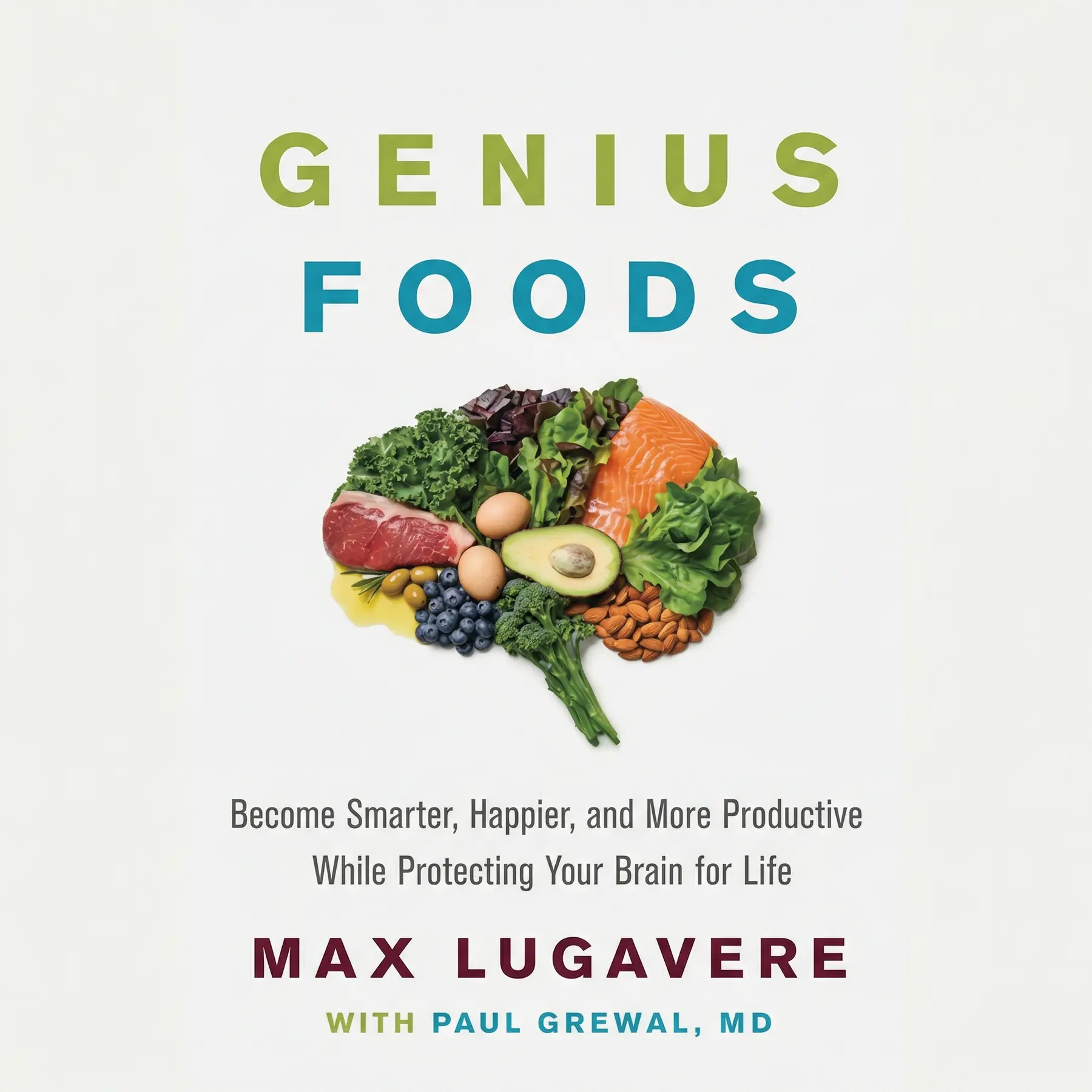
Genius Foods: Become Smarter, Happier, and More Productive While Protecting Your Brain for Life
By Max Lugavere
Shows how the fats, sugars, fiber and fasting habits in your diet shape your focus and mood today, and how to eat in a way that lowers your risk of dementia later.
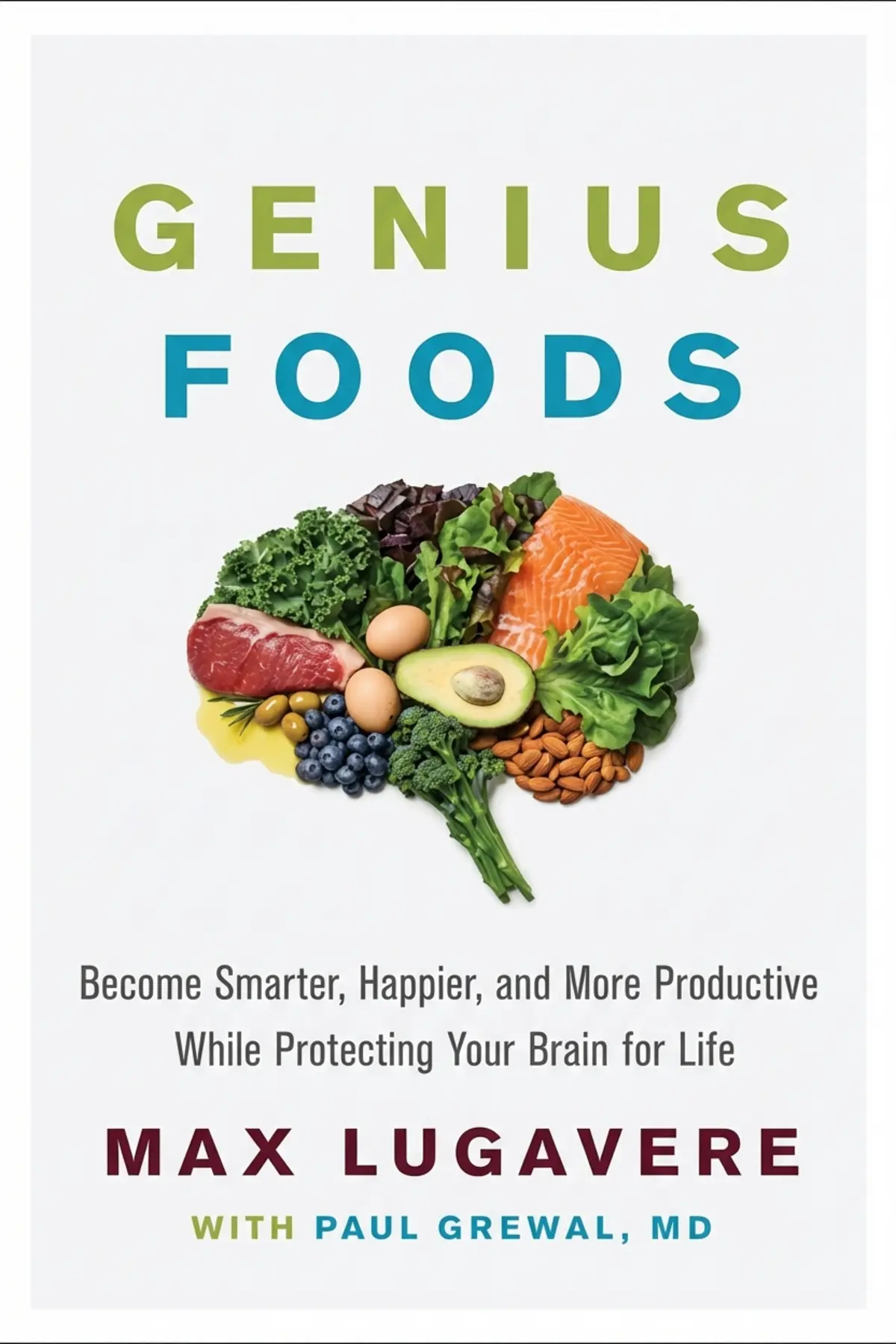
Table of Content
1. Introduction
48 sec
Afternoon brain fog, a name that will not come, a private fear of ending up like an aging parent: most people accept these as the cost of getting older. In Genius Foods, health and science journalist Max Lugavere argues that the brain keeps rewiring itself for life, and that food is one of the strongest forces steering it. He came to the subject after his mother developed Alzheimer’s unusually early, and spent more than five years in the research.
His case is that fats, sugars and fibers either build the brain up or wear it down, so the meals that guard against dementia decades from now can also make you clearer and steadier this month. By the end, you’ll know which oil belongs on a salad, why eggs deserve a defense, and how a two-week plan puts it all into practice.
2. A brain that keeps improving at any age
1 min 34 sec
For decades people were told the brain peaks in their mid-twenties. Two studies, one on severe depression and one on 1,200 older adults, suggest a far more hopeful story, and it starts in the kitchen.
3. Choose the fats that feed your neurons
1 min 50 sec
The same family of fats can sharpen memory or help build the plaque seen in Alzheimer’s. What decides which one you get is often how the oil was treated before it reached your plate.
4. Spot the sugar hiding in everyday food
1 min 44 sec
A dose of fructose matching one bottle of soda left lab rats struggling in a simple maze. The sweetener sold as the natural choice turns out to be only one of sugar’s disguises.
5. Swap the pasta for vegetables and eggs
1 min 52 sec
Most Alzheimer’s patients share a metabolic problem that starts with everyday staples. Meanwhile, the nutrient many people fear may be one of the brain’s most important building materials.
6. Give your brain a cleaner fuel
1 min 33 sec
The brain can run on something other than sugar. The cleaner alternative appears when you eat nothing at all for a while, or when you eat one particular kind of fat.
7. Feed the gut bacteria that talk to your brain
1 min 45 sec
Trillions of bacteria help decide how much of your food becomes brain protection. A ten-year study of 1,600 adults shows how large the gap grows between people who feed them well and people who do not.
8. Steadier mood and focus from three messengers
1 min 50 sec
Memory, mood and focus each depend on a different chemical messenger, and each responds to different foods and habits. One surprise involves common medicines; another involves a stationary bike.
9. A two-week plan to sharpen your thinking
2 min 04 sec
Fourteen days without processed carbs, commercial oils and soft drinks is the opening move. What comes after is gentler, and how much it allows depends on how hard you train.
10. Conclusion
1 min 02 sec
Genius Foods asks you to see each meal as a decision about the brain you will live with: one still learning at 90, or one that ages ahead of schedule. Lugavere started from his mother’s illness, and the studies he gathered, from a Berlin hospital to a Louisiana university, keep pointing the same way. The fats you pick, the sugar you allow and the hours between meals all reach the organ doing your thinking.
The changes he asks for are plain. Make extra virgin olive oil the default and retire the commercial frying oil. Put eggs back on the breakfast table without guilt, and let vegetables fill the space bread and pasta used to take. Finish dinner early enough to give the body a long overnight stretch. When a sweet craving hits, take a square of dark chocolate instead.
The brain is changing tonight either way. What you put on the plate decides the direction.
About this book
What is this book about?
Most diet advice chases waistlines or the latest headline. Max Lugavere looks at a different organ. After his mother developed early-onset Alzheimer's, the journalist spent more than five years studying how nutrition affects the brain. He concluded that the brain keeps changing throughout life and that food helps decide in which direction. Genius Foods sorts everyday ingredients by what they do to your mind. Olive oil, fatty fish, eggs and fiber-rich vegetables come out well, while fried oils, trans fats, added sugar and grain-heavy meals come out badly. Along the way Lugavere defends cholesterol, explains how fasting gives the brain a cleaner fuel called ketones, and traces the links between gut bacteria, the immune system and mood. The book closes with the Genius Plan, a two-week reset that removes processed carbs and oils and caps carbohydrates, followed by a gentler stage for daily life. Readers get a clear shopping list and a reason behind every item on it.
Book Information
Who it's for
Professionals fighting brain fog
Professionals who fight afternoon brain fog and want food choices that keep them focused.
Wanting lower dementia risk
Adult children of parents with dementia who want to lower their own risk.
Exploring low-carb and fasting
People curious about low-carb eating or intermittent fasting who want the brain-health case for it.
About the Author
Max Lugavere
Max Lugavere is a journalist who covers health and science, with earlier work as a filmmaker and in television. He studied film and psychology at the University of Miami. He co-directed Little Empty Boxes, a documentary about his mother's experience with dementia, and has spoken at South by Southwest, TEDx and the New York Academy of Sciences. Genius Foods became a New York Times bestseller published in eight languages, and he has since written The Genius Life and Genius Kitchen.
Ratings & Reviews
Ratings at a glance
What people think
Listeners find this work thoroughly investigated and compelling, with lucid descriptions that transform intricate scientific concepts into something digestible for those without a technical background. It offers a sequential roadmap for cognitive wellness, addressing gut health while delivering actionable advice for everyday life. Listeners value the nutritional perspective, especially its emphasis on mental clarity and memory, and describe the content as approachable and straightforward.
Top reviews
Tum
This book changed the way I navigate the perimeter of the grocery store, making the science of neuro-nutrition feel incredibly tangible. Max Lugavere doesn’t just lecture you; he guides you through the '10 Genius Foods' with a tone that feels like a conversation with a very smart friend. I especially appreciated the breakdown of how extra-virgin olive oil acts as a 'brain liquid' and the importance of monounsaturated fats. While the technical explanations about the blood-brain barrier are deep, they never felt overwhelming or dry. My only real gripe is that some of the recipes seem a bit heavy on the expensive specialty items. Regardless, the actionable advice on avoiding processed seed oils is worth the price of admission alone. I feel sharper and more focused just two weeks after implementing his suggestions on leafy greens and blueberries. It's a refreshing take in a world full of confusing, contradictory health advice.
Show moreSaranya
The heart behind this research is what really got to me, as Max started this journey to help his mother with her Alzheimer’s diagnosis. You can feel that personal stakes are high in every chapter, which makes the science feel much more human and urgent. I’ve read plenty of diet books, but this one focuses specifically on how to keep your mind from 'shrinking' as you age. The advice on wild-caught salmon and the specific types of greens to eat was incredibly enlightening for my family. Not gonna lie, I was surprised by how much he talks about the gut-brain connection and its impact on our mood. It’s not just a list of foods; it’s a manual for protecting your most valuable organ from the modern toxic environment. I bought copies for my siblings because I want us all to be on the same page regarding our long-term health. Truly a must-read for anyone worried about memory loss.
Show moreUbolrat
Finally got around to reading this after hearing Max on a podcast, and it’s a total game-changer for my morning routine. I used to be a 'toast and cereal' person, but switching to the 'Genius Foods' breakfast options has totally eliminated my 2 PM energy crash. The way he explains how sugar affects our cognitive function was a massive eye-opener for me. Look, I’m not usually one for science books, but this was written in a way that actually kept me turning the pages. The pop culture references sprinkled throughout make the heavy topics like mitochondrial health much more relatable. I especially liked the 'Genius Plan' at the end which gives you a step-by-step guide to overhauling your kitchen. If you want to feel more alert and protect your brain for the future, you need this on your shelf. It’s easily one of the most practical health books I’ve purchased in years.
Show morePlernpiriya
After hearing so much buzz about the 'brain-food' connection, I decided to dive in and see if the hype was real. Max Lugavere delivers a compelling argument for how our modern diet is essentially starving our brains of the nutrients they need to thrive. The '10 Genius Foods' list is brilliant because it gives you a clear starting point instead of just a list of things you can't have. Personally, I found the information on 'fisetin' in strawberries and the importance of choline in eggs to be particularly useful. The book is structured logically, moving from the biological foundations to the practical application in the kitchen. It’s more than just a diet book; it’s an education on how to live better in a world designed to make us sick. I’ve already noticed a difference in my memory and overall mental clarity. This is the kind of information that should be taught in schools.
Show moreSawit
Look, I’m not a scientist, but the logic here seems pretty sound for the average person looking to avoid dementia. The book is very readable and avoids a dry, clinical tone. I appreciated the practical tips, like how to choose the right olive oil and why we should be wary of 'heart-healthy' labels on cereal boxes. Truth is, Lugavere makes a very strong case for the impact of inflammation on mental sharpness. I did find some of his 'debunking' of medical advice to be a little bold, but the layout makes it very easy to reference. A great resource for the health-conscious reader.
Show moreErn
As someone who has always been skeptical of self-proclaimed health gurus, I found that Max Lugavere actually backs his claims with a surprising amount of cited research. The book focuses on the prevention of cognitive decline, a topic that hits home for many of us with aging parents. He simplifies complex concepts like inflammation and insulin resistance without making the reader feel unintelligent. Truth is, the 'Genius Foods' list is easy to memorize and even easier to start incorporating into daily meals immediately. I loved the section on the benefits of dark chocolate and avocados, though I’m still on the fence about the high-fat intake he suggests. Even if you don't follow the ketogenic-leaning aspects perfectly, the emphasis on whole foods is a necessary wake-up call. It's an engaging, fast-paced read that manages to bridge the gap between academic journals and practical kitchen advice.
Show moreOksana
Ever wonder why certain foods make you feel foggy while others sharpen your focus? Max Lugavere answers that question with a deep dive into the neurobiology of nutrition that is both fascinating and accessible. I really enjoyed the sections on how fasting can trigger brain-derived neurotrophic factor, essentially acting as fertilizer for our neurons. To be fair, some of the specific food recommendations, like strawberries, come with risks like pesticide residue that he doesn't emphasize enough. However, his overall framework for reducing systemic inflammation through diet is something I haven’t seen explained this clearly elsewhere. The book is well-organized, moving from the 'why' to the 'how' with shopping lists and clear meal plans. It’s a solid resource for anyone looking to optimize their brain power through their fork. I didn't give it five stars only because some of the science feels a little too 'new' to be settled.
Show moreMoo
Max Lugavere writes with a punchy, engaging style that makes reading about neurobiology feel like a breeze. He successfully simplifies the complexities of how our diet affects our brain's aging process without being condescending. Gotta say, the emphasis on extra-virgin olive oil has changed my daily cooking habits for the better. My only minor complaint is that the book sometimes feels like it's trying to sell a specific, expensive lifestyle. Still, the core message about avoiding processed junk is universal and backed by solid reasoning. It’s a high-quality guide for anyone wanting to take their cognitive health seriously.
Show moreOoi
To be fair, there's a lot of useful information here, but I wouldn't take every single word as absolute dogma. The book is heavily slanted toward a low-carb, high-fat approach which might not work for every body type or lifestyle. While I appreciate the focus on 'genius foods' like walnuts and broccoli, the demonization of all grains felt a bit extreme to me. In my experience, balance is key, and Lugavere’s approach feels slightly restrictive and potentially hard to maintain long-term for a busy family. The writing is punchy and he makes the science easy to digest, which I liked. But I still have questions about the long-term impact of the high animal protein intake he advocates for. It’s a good starting point for learning about brain health, but I’d suggest reading it alongside other perspectives. It’s definitely a trendy take on nutrition that aligns with the current keto craze.
Show morePannipa
Wait a second before you buy into the hype surrounding this 'layman's' guide to brain health. While Lugavere is a great communicator, we have to remember he doesn’t actually hold a degree in nutrition or medicine. His aggressive stance on saturated fats and red meat completely ignores massive, long-term studies that link these foods to cardiovascular issues. Frankly, recommending a 'killer eggs' recipe with extra salt feels irresponsible for readers who might already have high blood pressure. He cherry-picks data to fit a trendy narrative while dismissing established experts like Dr. Joel Fuhrman. I found the tone a bit too glib for such a serious subject, almost like he’s trying too hard to be the 'cool' science guy. If you’re looking for a balanced view, you won’t find it here; it’s very one-sided toward the high-fat, low-carb lifestyle. Use caution and cross-reference his claims with actual medical professionals before overhauling your entire diet based on this book.
Show moreQuestions about this book
What is the main idea of Genius Foods?
Max Lugavere argues that the brain keeps changing throughout life and that diet is one of the strongest influences on that change. Good fats like extra virgin olive oil and omega-3s, plenty of fiber, eggs and vegetables support it, while fried oils, trans fats, sugar and grain-heavy meals wear it down. The same choices that can lower dementia risk later can, he argues, improve focus and mood now.
What foods does Max Lugavere recommend for brain health?
He favors extra virgin olive oil, avocados and macadamias for monounsaturated fat, and wild salmon, sardines, mackerel and eggs for omega-3s. Eggs, shrimp and beef liver supply choline. Berries and other low-sugar fruits replace sweet fruit, and prebiotic foods like arugula, fennel, leeks and unripe bananas feed gut bacteria. For a sweet treat he suggests organic, fair-trade dark chocolate with at least 70 percent cocoa.
Is cholesterol bad for the brain according to Genius Foods?
Lugavere argues it is not. About a quarter of the body’s cholesterol is in the brain, where it builds the myelin that insulates neurons, and a 2005 Framingham Heart Study analysis found higher cholesterol went with better scores on cognitive tests. He places the blame on sugar, refined carbs, alcohol, stress and low fiber, which damage the particles that carry cholesterol and lead to artery plaque.
What is the Genius Plan in Genius Foods?
It is a two-stage eating plan. During the first 14 days you cut out processed carbs, wheat and gluten, sweeteners, commercial cooking oils, as well as juices and soft drinks, and hold carbs to 20 to 40 grams daily. Afterward, carbs rise to 50 to 70 grams a day, and people who train intensely add starchier choices such as sweet potatoes or rice after hard workouts.
Does Genius Foods recommend intermittent fasting?
Yes. Lugavere suggests fasting 16 hours a day and eating within an eight-hour window, which he says lowers insulin and pushes the body to burn fat and make ketones, a cleaner fuel for the brain. He cites a Louisiana State University study in which overweight volunteers who stopped eating at two in the afternoon shifted toward burning fat. Coconut oil and other MCT fats can also raise ketones.
Readers also enjoyed






AUDIO SUMMARY AVAILABLE
Listen to Genius Foods in 15 minutes
Get the key ideas from Genius Foods by Max Lugavere, plus 5,000+ more nonfiction titles.
- 5,000+ titles
- Listen as much as you want
- 7-day free trial
- Cancel anytime









