

A Promised Land
Barack Obama
 English
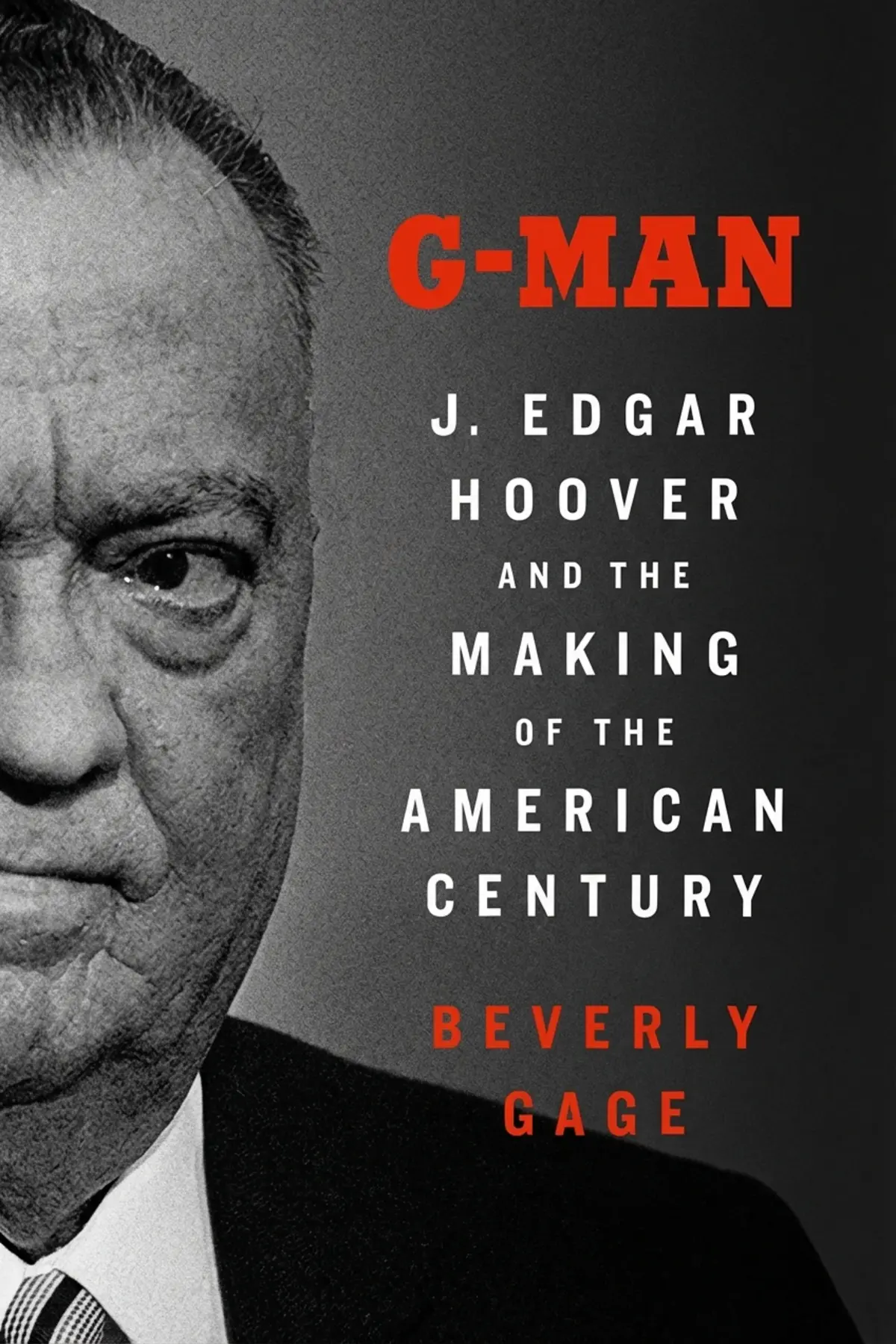
A Pulitzer-winning biography that shows how one man's talent for control, his private contradictions and decades of political permission turned the FBI into a national power, and what that teaches about how authority builds up.
1 min 01 sec
If all you know of J. Edgar Hoover is the legend of secret files and whispered rumors, you know the costume but not the machinery. In G-Man, Yale historian Beverly Gage argues that Hoover’s enormous power never arrived in one grab. It piled up slowly, policy by policy, across eight presidential administrations that kept letting it grow.
Gage built her portrait from the documented record, hundreds of Hoover’s own journals and a vast store of newly found papers. What emerges is a man who ran the FBI for 48 years and a country that kept handing him more. The thread through every episode is that Hoover and the system that rewarded him shaped modern America together, and that his private contradictions steered how he used that power.
Follow it and you will recognize how authority hardens, how fear of one’s own weakness can turn into a public crusade, and why institutions, not only villains, decide how far one person can go.
1 min 49 sec
He was born with every advantage a Washington boy could want, and a historian thinks he might have become a hero. Something in what he was taught to admire pushed him somewhere else entirely.
1 min 44 sec
A young official leads a huge operation and, for the first time in his life, the people around him push back. What he did next became a working method for half a century.
1 min 48 sec
A 29-year-old expecting to be fired walks out with control of a federal bureau and a list of conditions. The rules he set, and the map on his wall, still tell you who he was.
1 min 46 sec
He did not even like the movies that made him a household name. But the applause changed his life in public and in private, and widened a gap he would never close.
1 min 47 sec
He had no idea what Japan was planning. Yet when the bombs fell, his agents knew exactly whose doors to knock on, because of files built up over years of calm.
1 min 54 sec
These were the years Americans loved him most, and the years he did some of his hardest damage. One moment of genuine courage sits right in the middle of them.
1 min 49 sec
A new generation found him old-fashioned, two assassinations happened on his watch, and even a friendly president wanted him gone. Yet the real lesson of his final years concerns the people who let him stay.
1 min 10 sec
G-Man finally reads as a portrait of a mirror. Much of what Hoover condemned in others, Gage argues, he feared in himself: physical weakness, homosexuality, even cruelty. The small boy with a depressed father became the loudest champion of strength. The young man who flattered authority spent his life collecting it. He fought injustice and committed it, from the Palmer Raids and Japanese internment to McCarthyism and the wiretaps on King, and those inner contradictions shaped how he handled crime, politics and government.
Yet the man alone does not explain the outcome. Eight administrations kept extending his reach, and nobody stopped to add up the total.
The habit worth keeping from this book is a kind of double vision. When a leader rages against some vice, ask what that rage might be covering. When an office gains one more power in a crisis, ask who will check it in ten years, and whether anyone will remember to.
Hoover kept a pin on his wall for every agent he commanded. For 48 years, the country never kept an equally close map of him.
J. Edgar Hoover ran the FBI for 48 years, from the aftermath of World War I to the Nixon era, and his name still calls up secret files and rumors. Beverly Gage, a Yale historian, sets the legends aside and asks what we can actually know about the man and how he became so powerful. Drawing on documented history, Hoover's own diaries by the hundreds and several hundred thousand pages only recently uncovered, Gage traces him from an ambitious Washington boy ashamed of the men in his family to the founder of a modern bureau. Along the way come the Palmer Raids, Hollywood fame, the wartime internment lists, the anti-communist crusade beside Joseph McCarthy and the wiretaps on Martin Luther King Jr. Gage's answer has two parts. Hoover's private contradictions shaped how he used power. And that power never arrived all at once. It built up policy by policy because eight administrations kept granting more of it. Readers come away with a clear picture of one of the twentieth century's most influential officials and a sharper eye for how institutions let individuals grow beyond their checks.
History readers who want the real story behind the Hoover legends and rumors.
Managers and professionals curious how one person's authority quietly outgrows every check.
Anyone following debates about surveillance, policing and civil rights who wants their twentieth-century roots.
Beverly Gage teaches history and American studies at Yale University, where she previously directed the Brady-Johnson Program in Grand Strategy. G-Man, published in 2022, won her a Pulitzer Prize. She is also the author of The Day Wall Street Exploded, published in 2009, and This Land is Your Land, published by Simon and Schuster in 2026. In 2021 she was nominated to the National Council on the Humanities.
Listeners find this biography to be thoroughly researched and all-encompassing, with one listener mentioning that it spans Hoover's whole life. The writing is both entertaining and high-quality, and one listener calls the book a fascinating balanced read. They value the narrative's depth and length, while one review points out its remarkably well-crafted conclusion. Listeners report mixed reactions concerning the pacing.
Gage’s work is a masterclass in biographical writing. I found the exploration of Hoover’s early days in the Kappa Alpha fraternity particularly enlightening, as it sets the stage for his lifelong obsession with a specific, rigid version of American manhood. While the book is undeniably massive, the date-stamped chapters keep the narrative from becoming a tangled mess of dates and acronyms. Frankly, it’s rare to find a historian who can maintain such evenhandedness while documenting such blatant abuses of power. She doesn't shy away from his crusade against Martin Luther King Jr., yet she also manages to humanize him through his relationship with Clyde Tolson. It’s a dense read, but the prose is crisp enough to keep you moving through the decades. This isn't just a biography; it's a map of how modern America was built.
Show moreWow, I thought I knew the history of the FBI, but this book proved me wrong on almost every level. Gage masterfully avoids the "one-dimensional villain" trope that usually defines Hoover in modern pop culture. Instead, she shows us a man driven by a specific, albeit exclusionary, vision of government efficiency. The chapter on the Martin Luther King Jr. suicide letter was absolutely gut-wrenching to read in full context. It highlights the sheer depravity of what happens when one man holds a directorship for 48 years without oversight. Not gonna lie, I was surprised by how much I enjoyed the deep dive into his personal life with Clyde Tolson. Gage handles their relationship with a level of nuance that feels both modern and historically grounded. A truly essential read for anyone interested in the 20th century.
Show moreAfter hearing this won the Pulitzer, I had to see if it lived up to the hype. It absolutely does. This is a comprehensive, epic biography that manages to make bureaucratic history feel like a thriller. I was particularly fascinated by the contradiction of Hoover: a man who demanded absolute moral purity from his agents while running illegal "black bag" operations. Gage’s ability to hold these opposing ideas together is what makes the book so successful. She doesn't just list his crimes; she explains the world that allowed him to flourish for nearly five decades. The relationship between Hoover and Tolson is explored with great sensitivity, avoiding the usual tabloid sensationalism. It’s a long journey, but the insight into the American Century is well worth the effort.
Show morePicked this up on a whim and was immediately sucked into the story of Hoover’s strange childhood and his intense relationship with his mother. Most bios skip to the FBI years, but Gage understands that the man was formed long before he took office. The narrative flow is surprisingly smooth for such a thick book. I particularly enjoyed the sections on the "War on Crime" era; it read like a noir novel but with the weight of real history. Hoover’s obsession with list-making and surveillance is portrayed not just as a quirk, but as a fundamental tool of state control. The way he used COINTELPRO to target anyone he deemed "subversive" is a stark reminder of the dangers of unchecked authority. This is easily the most comprehensive account of his life ever written.
Show moreAs someone who loves 20th-century history, this is the definitive account I've been waiting for. Gage’s prose is elegant and her research is clearly exhaustive, drawing on files that previous biographers simply didn't have access to. The way she handles the rumors regarding Hoover’s sexuality is a masterclass in historical restraint; she presents the evidence of his bond with Clyde Tolson without making baseless claims. It makes Hoover’s story feel like a true American tragedy. The damage he did to the lives of thousands of citizens is presented alongside his genuine belief in government expertise. It’s a haunting look at how one man’s personal demons and virtues can reshape an entire nation’s democracy. I cannot recommend this highly enough for serious history buffs.
Show moreFinally finished this beast of a book after two weeks of dedicated reading. The level of detail Gage provides is staggering, covering everything from his childhood in D.C. to his final days under the Nixon administration. Personally, I thought the sections on the pre-war Bureau were a bit slow compared to the high-stakes drama of the Cold War era. However, the story quality remains high throughout. The author manages to balance Hoover’s genuine innovations in forensics with the terrifying reality of COINTELPRO. It’s a complex portrait of a man who was neither a simple villain nor a pure hero. If you can handle the 700-page count, the payoff is a much deeper understanding of how federal power became so unchecked.
Show moreIs it possible to feel a sliver of sympathy for a man as destructive as J. Edgar Hoover? Gage’s biography suggests that the answer is complicated. She portrays him as a tragic figure who eventually undermined the very professionalism he worked so hard to establish within the Bureau. I found the pacing to be a bit hit-or-miss, especially during the exhaustive descriptions of administrative growth in the 1920s. Still, the writing is consistently entertaining and never feels like a dry textbook. The way she links his early fraternity life to his later recruitment tactics was a stroke of genius. While I think some of the middle chapters could have been trimmed, the conclusion is remarkably well-crafted and lingers in your mind long after finishing. It is a brilliant, if exhausting, achievement in research.
Show moreThe chapter on the Red Scare was chillingly relevant to our current political climate. It’s fascinating to see how Hoover manipulated both progressives and conservatives to maintain his grip on power. While I loved the depth of the research, I’ll admit the sheer volume of names and dates became overwhelming at times. I had to frequently flip back to earlier sections to remember which agent was which. Thankfully, the date-stamped chapters helped keep me oriented in the timeline. To be fair, Gage is very transparent about her own distaste for Hoover, yet she never lets that bias cloud the historical facts. She gives him credit for modernizing law enforcement while rightfully skewering his racist ideologies. It’s a balanced, heavy, and deeply necessary biography.
Show moreTo be fair, Hoover is a tough subject to make human, but Beverly Gage pulled it off. She doesn't excuse his actions—especially the horrific treatment of the Civil Rights movement—but she explains his motivations with incredible clarity. I found the discussion of his Kappa Alpha roots to be the most revelatory part of the entire book. It explains so much about the culture he built at the FBI. The book is definitely a commitment, and I did find my attention flagging during the chapters on the 1950s communist hunts. However, the final sections on the 1960s and 70s are gripping and provide a great sense of closure. It’s a fascinating, balanced read that doesn't rely on simple caricatures.
Show moreLook, the research here is undeniable, but the pacing occasionally killed my interest. At over 700 pages, Gage documents every single meeting and memo, which makes the middle sections feel like a slog through bureaucratic molasses. I appreciated the deep dive into the "Official and Confidential" files, but did we really need quite so much detail on his early administrative reforms? To be fair, the conclusion is remarkably well-crafted and ties the legacy of the "deep state" together beautifully. It’s a comprehensive look at a man who was essentially the shadow president for half a century. However, I think a tighter edit would have made the narrative much more impactful for a general reader. If you have the patience, it's a fascinating study of power, but be prepared for some dry stretches.
Show moreG-Man is a biography of J. Edgar Hoover, who led the FBI for 48 years. Gage follows him from a Washington childhood shaped by shame about weakness, through the Palmer Raids, the building of the bureau, Hollywood fame, wartime internment, McCarthyism and the wiretapping of Martin Luther King Jr. Her argument is that Hoover’s power built up gradually, policy by policy, because eight presidential administrations allowed it.
Gage drew on the already documented history of Hoover and the FBI, on hundreds of Hoover’s personal journals and on hundreds of thousands of pages of newly uncovered material. That record lets her describe both the public official and the private man, including his close bond with his deputy Clyde Tolson and the contradictions between how he lived and what he preached.
Gage writes that Hoover was most likely gay. He never showed interest in women, was almost always beside his deputy Clyde Tolson, and wrote flirtatious letters to an agent named Purvis. Many people then and most people now assume Tolson and Hoover were secret lovers. Gage sees this as a likely reason Hoover worked so hard, with Joseph McCarthy, to drive gay people out of government.
Once, strongly. Since the 1920s the bureau had probed more than a thousand cases of civil rights violations, and the brutality of lynchings horrified Hoover. His testimony went into a 1947 report that President Truman used to push for anti-lynching laws. Gage calls it the only time he stood up forcefully for civil rights. In the 1960s he wiretapped Martin Luther King Jr. and his associates.
Gage’s key lesson is that no single person, however ambitious, builds that much power alone. Hoover gathered authority step by step, and president after president let him keep it. For readers, that means watching how small grants of power accumulate inside any institution, and noticing when a leader’s public crusade may be aimed at something he fears in himself.
Barack Obama

Anthony Pratkanis


Masaji Ishikawa

Ben Macintyre

Yuval Noah Harari



James Shapiro

John Rawls
AUDIO SUMMARY AVAILABLE
Get the key ideas from G-Man by Beverly Gage, plus 5,000+ more nonfiction titles.









