

14 min 37 sec
Available in: English
Fukushima: The Story of a Nuclear Disaster
Shows how a natural disaster that no one could predict became a nuclear catastrophe through weak backups, softened truth and captured regulators. It also explains why the same risks remain in Japan and the United States.
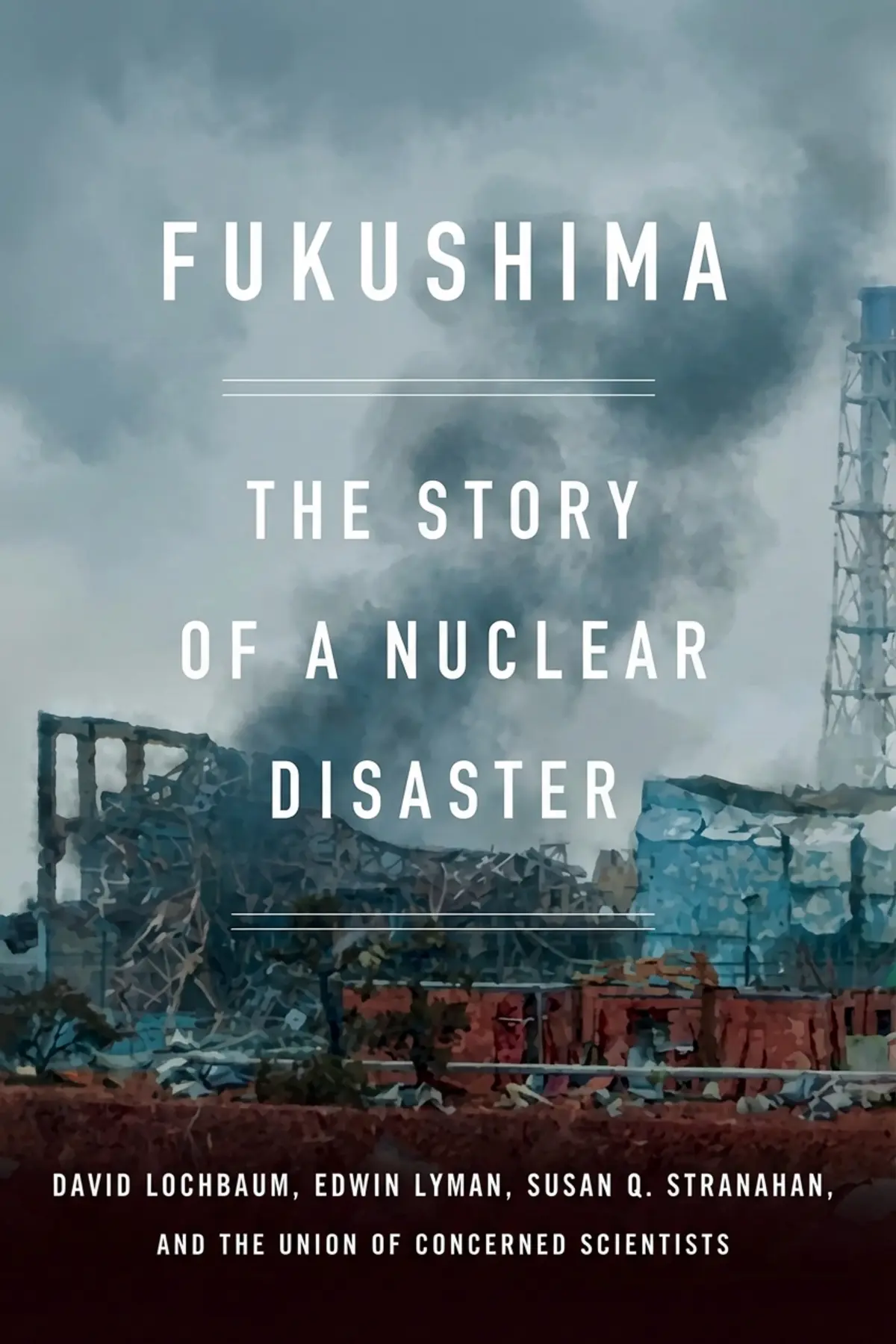
Table of Content
1. Introduction
1 min 04 sec
Most of us assume that when something goes catastrophically wrong, the cause was simply too big to stop. In Fukushima: The Story of a Nuclear Disaster, nuclear engineer David Lochbaum, physicist Edwin Lyman and journalist Susan Q. Stranahan, writing with the Union of Concerned Scientists, show how that assumption helped a nuclear plant melt down. Nobody could have predicted the earthquake of 11 March 2011. The scale of the damage was another matter, the authors argue, because it grew out of human choices.
Backup systems failed together. Officials held back the truth. Regulators sat too close to the industry they were supposed to watch. And those choices, the authors warn, have barely changed in Japan or in the United States.
Follow the story and you gain a way of reading any large failure, in a power plant, a company or a government. Look past the trigger to the decisions made years before it, and to the people who had reasons not to see them.
2. Grasp the true force behind the 2011 disaster
1 min 56 sec
Japan had one of the best earthquake warning networks on Earth, and its first reading was still wildly wrong. The scale of what arrived explains why the systems built for surprises had to work.
3. Build backups that cannot all fail at once
2 min 01 sec
The plant had a main power supply, an emergency generator and a last-resort plan for releasing pressure. One flood found the single weakness they all shared, and the operators were left in the dark.
4. Sharing bad news early keeps a crisis from growing
1 min 51 sec
Officials had a forecasting system built for exactly this kind of emergency, and a vocabulary chosen to keep people calm. Both failed the public, for reasons that every manager facing bad news will recognize.
5. Spot the cozy ties that silence safety warnings
2 min 22 sec
An inspector found a crack in a reactor and reported it, against his employer’s orders. What happened next shows how a whole safety system can be arranged so that nobody wants to hear bad news.
6. Count the full price of an ignored risk
2 min 01 sec
Within two weeks TEPCO sought a $25 billion loan, the government projected a $317 billion hit to the economy, and contaminated milk raised alarm. Protesters filled the streets of Tokyo, yet the government still restarted two reactors.
7. Spot vague safety promises before real risks stay hidden
2 min 06 sec
All five American nuclear regulators agreed a Fukushima-style accident was highly unlikely at home. The authors point to reactors sitting below large dams, and to one small change of wording that reveals a great deal.
8. Conclusion
1 min 16 sec
At first Fukushima seems like a story about the power of nature: a quake that tilted the planet and a wave that broke ice off Antarctica. The authors turn it into a story about people. Nobody could have predicted the earthquake. Yet corruption, short-term thinking and deliberate neglect made the meltdown worse. Backups stood where one flood could take them all. A plan never explained how to open a valve by hand. An inspector was fired for finding a crack. Officials preferred the phrase fuel pellet melt to the plain truth. The authors’ warning is that neither Japan nor the United States has fully absorbed these lessons, and reactors remain at risk.
What the book supports is easy to say and harder to practice. Check whether your safety nets share a single point of failure. Treat the person who reports a crack as an asset, and be wary when those who judge safety are paid by the people they judge. Name problems in plain words, early, before every fact is confirmed.
The wave was the trigger. The disaster came from decades of choices, and the next one is being decided the same way, quietly, today.
About this book
What is this book about?
On 11 March 2011, one of the largest earthquakes ever measured struck off Japan, and the tsunami that followed flooded the Fukushima Daiichi nuclear power plant. The power went out, the cooling stopped and the reactors melted down. It is tempting to blame the sea for everything that followed. Nuclear engineer David Lochbaum, physicist Edwin Lyman and Pulitzer-winning journalist Susan Q. Stranahan, writing with the Union of Concerned Scientists, argue otherwise. They show how backup systems failed together, how officials and loyal media held back information and avoided the word meltdown, and how regulators who took industry money and expected industry jobs let warnings go unheard. One inspector who reported a crack in a reactor was fired for it. The book then follows the economic and political damage and turns to the United States, where the authors find the same comfortable assurances and vague safety standards. Readers get a clear account of a modern disaster and a way of seeing any large failure: look past the trigger to the decisions that shaped how bad it became.
Book Information
Who it's for
Learning from buried warnings
Professionals in risk, safety, engineering or compliance who want a real case of how warnings get buried.
Leaders facing bad news
Managers and leaders deciding when to share bad news and how to treat the people who raise it.
Following the nuclear debate
Readers following the debate over nuclear power who want to know what went wrong in 2011.
About the Author
David Lochbaum
David Lochbaum is a nuclear engineer who spent close to twenty years working in nuclear power plants and directed the Nuclear Safety Project at the Union of Concerned Scientists. Edwin Lyman is a physicist and the organization's Director of Nuclear Power Safety. He has testified before Congress and analyzed the damage at Fukushima Daiichi after the 2011 disaster. Susan Q. Stranahan is a journalist covering energy and the environment who led The Philadelphia Inquirer's reporting on the Three Mile Island accident, work that shared the 1980 Pulitzer Prize.
Ratings & Reviews
Ratings at a glance
What people think
Listeners find this book to be thoroughly researched and educational, with one listener emphasizing the in-depth technical breakdowns regarding the Fukushima catastrophe. The prose earns praise for its accessibility and unsettling themes, while one person notes that it serves as a sobering prompt regarding hazards close to home. However, reactions are divided concerning the storytelling approach and nuclear security topics. Furthermore, one listener mentions a deficiency in the book's narrative flow.
Top reviews
Wachira
Finally got around to reading this essential critique of the nuclear industry’s safety culture and it did not disappoint. The authors provide a meticulous, blow-by-blow account of the mechanical and systemic failures that led to the meltdown. What makes this book stand out is how it connects the dots between the tragedy in Japan and the regulatory environment in the West. They show how cost-benefit analyses often outweigh safety concerns, putting millions at risk. It’s an ugly story, but one that needs to be told. The description of the tsunami waves overtopping the wall is vivid and terrifying. This is more than just a history book; it’s a warning. For anyone who thinks our current reactors are 'failsafe,' this will be a very eye-opening experience.
Show moreSomrutai
Wow, this is a chilling look at how we calculate the value of human life in the face of catastrophic risk. The book is impeccably researched and presents every concise detail of the events at Fukushima with frightening clarity. I was particularly struck by the sections on how the NRC ignores accidents that fall outside of their narrow 'design-basis' models. It’s like designing a car that’s only safe if you hit a very specific type of tree. The authors, coming from the Union of Concerned Scientists, clearly know their stuff. Not gonna lie, the last few chapters made me very leery about living downwind from a plant. It’s a comprehensive, readable, and vital piece of investigative journalism that exposes the hubris of the nuclear industry.
Show moreJong
After hearing about this book on a podcast, I was eager to dive into the technicalities of the 2011 meltdown, and it exceeded my expectations. The writing style is engaging and surprisingly 'thriller-like' in the beginning, though it transitions into a very serious analytical piece later on. The authors do a wonderful job explaining complex concepts like the RASCAL model and reactor scrams without losing the reader. It is a reminder of the nearby dangers we often ignore for the sake of convenience. While some might find the criticism of the NRC too harsh, the timeline of events presented here makes a very compelling case for reform. It’s an essential read for anyone who wants to understand the true cost of nuclear energy beyond just the price of electricity.
Show morePornpimon
Picked this up looking for a disaster story, but I walked away with a profound fear of regulatory capture. This is a terrifyingly detailed look at how 'design-basis' assumptions can lead to catastrophe when nature doesn't follow the rules. The authors do a fantastic job explaining why the NRC's models are essentially a fraud because they don't account for multi-reactor failures or beyond-design-basis events. The technical explanations are accessible without being dumbed down. Personally, I didn't mind the shift to the American perspective because it makes the disaster feel relevant to my own backyard. It’s a sobering reminder that 'statistically rare' doesn't mean 'impossible.' It is a bit repetitive in parts, especially regarding the regulatory bickering, but the core message is too important to ignore. Essential reading for anyone interested in the energy cocktail.
Show moreKai
Ever wonder what’s actually happening behind the gates of those massive cooling towers you drive past on the highway? This book provides a chilling answer. While the narrative is occasionally fragmented—jumping between the fall of 2011 and decades-old U.S. policy—the sheer level of detail is impressive. It exposes the 'too-cozy' relationship between the nuclear industry and its regulators. I found the sections on the cost-benefit analysis of human life particularly disturbing. Frankly, the book is a bit of a wake-up call. It’s not just about what happened in Japan; it’s about the arrogance of thinking we have mastered such a volatile technology. The writing is clear and the research is impeccable. It may be dry during the committee meeting descriptions, but the implications are hair-raising.
Show moreBo
Not what I expected, but perhaps what I needed to read. I went in wanting a survival story and ended up with a deep-dive into the failures of nuclear safety reasoning. The book is very comprehensive on the unfolding of the loss at the plant. It effectively uses the Japanese crisis as a mirror to show the vulnerabilities in American plants, especially those built by GE. Look, it’s a bit technical and the authors definitely have an agenda, but the facts they present about our lack of preparation for 'rare' events are hard to argue with. Some of the organization is confusing, and I wish there was more about the human experience on the ground, but as an expose of failed regulation, it’s top-notch.
Show moreCarter
As someone who follows energy policy, I found the technical breakdown of the Fukushima Daiichi failure to be quite illuminating, even if the second half of the book is a bit heavy-handed. It suffers from a bit of a split personality. The first half is a well-researched, neutral account of the earthquake and the subsequent mechanical failures. However, once the focus shifts to the NRC and U.S. safety standards, the tone shifts dramatically toward bias. Truth is, the extrapolation from a Japanese tsunami to American inland reactors feels forced at times. While the 'spooky' reminders of how close many of us live to these plants are effective, the lack of continuity in the writing style makes it hard to stay engaged. It is informative but definitely has a clear political slant.
Show moreLillian
Why is a book titled 'Fukushima' so strangely obsessed with the United States? The authors constantly interrupt the Japanese narrative to pivot back to American reactor operators and U.S. regulatory squabbles. It feels disjointed. One minute we are discussing a 'vanilla scram'—a term apparently common in the U.S. but hardly relevant to the immediate chaos in Japan—and the next, we are bogged down in measurement inconsistencies. Japan uses the metric system, yet this book flip-flops between feet and meters with zero consistency. It is incredibly distracting for a reader trying to visualize the scale of the tsunami. By the time the book started rehashing Three Mile Island for the hundredth time, I had completely lost interest in the actual Japanese events. The organization is a total mess.
Show moreSom
The first few chapters really pull you in with a blow-by-blow description of the tsunami hitting the seawall, but then the momentum just dies. What starts as a 'thriller-like' account quickly devolves into a dry, repetitive slog through committee meetings and regulatory jargon. I feel like I could pass an exam on the RASCAL model now because the authors mention its fifty-mile limitation every five minutes. The narrative structure is confusing, jumping from the 2011 disaster to 1970s risk studies and back again without much flow. To be fair, the research is clearly there, but the delivery is incredibly dull. It lacks the human element I was hoping for. It focuses on bureaucratic failures at the expense of the actual people who lived through the meltdown.
Show moreSirinat
This book feels more like a political manifesto than a historical account of a tragedy. I expected a deep dive into the technical timeline of the disaster, but instead, I got a relentless lecture on the evils of nuclear power. The authors spend an exhausting amount of time soapboxing about the risks without offering any viable energy alternatives. Are we supposed to just go back to burning coal, which statistically kills far more people through pollution and accidents? It is frustrating because the technical parts are actually quite decent, yet they are buried under layers of agenda-driven rhetoric. The title is essentially bait-and-switch. If you want a neutral history of what happened on the ground in Japan, look elsewhere. This is just the Union of Concerned Scientists grinding an axe against the NRC.
Show moreQuestions about this book
What is the main idea of Fukushima: The Story of a Nuclear Disaster?
The authors argue that the 2011 earthquake could not have been predicted, but the severity of the nuclear disaster was not inevitable. Backups that failed together, a flawed emergency plan, information withheld from the public and regulators too close to the industry all made it worse. They also warn that Japan and the United States have not fully learned these lessons, so reactors remain at risk.
Why did the Fukushima Daiichi plant melt down?
The tsunami flooded the plant and cut the electricity that cooled its reactors. Without cooling, the fuel starts melting within about 30 minutes. The flood also knocked out the emergency generator and the control room instruments, so operators could not see inside the reactors. The emergency plan did not explain how to open the venting valves by hand, so the pressure could not be released.
Who was Kei Sugaoka and why does his story matter?
Before the disaster, Kei Sugaoka, an inspector working for TEPCO at its nuclear plants, discovered a flaw in the form of a crack inside a reactor at Fukushima. TEPCO told him to conceal it, but he reported it to government regulators. They sent the matter back to TEPCO, which fired him. The authors use his story to show how cozy ties between industry and regulators silenced safety warnings.
Could a Fukushima-style accident happen in the United States?
The authors say yes. In 2012 all five Nuclear Regulatory Commission commissioners called it highly unlikely, but several American reactors sit downstream of large dams that an earthquake or terrorist attack could break. The authors say the NRC has known for years that it underestimates this risk and has done nothing. They also criticize its vague safety standards, including a definition of adequate protection that it has never written down.
What lessons from Fukushima apply outside the nuclear industry?
The book points to habits that fit any organization. Check whether your backup systems could all fail from one event. Protect the people who report problems instead of punishing them. Be cautious when those judging safety depend on the people they judge. Share bad news early and plainly, even before every detail is confirmed, because Fukushima shows that waiting for certainty costs time a crisis does not allow.
Readers also enjoyed

Alexander Hamilton
Ron Chernow

Alexander the Great
Philip Freeman


A History of Iran: Empire of the Mind
Michael Axworthy

A History of the World in 6 Glasses
Tom Standage

A Long Way Gone: Memoirs of a Boy Soldier
Ishmael Beah


AUDIO SUMMARY AVAILABLE
Listen to Fukushima in 15 minutes
Get the key ideas from Fukushima by David Lochbaum, plus 5,000+ more nonfiction titles.
- 5,000+ titles
- Listen as much as you want
- 7-day free trial
- Cancel anytime









