

A Promised Land
Barack Obama
 English
The former British prime minister explains how he dragged the Conservatives into modern Britain, won two elections, and why he still thinks calling the Brexit referendum was right, even though losing it ended his time in office.
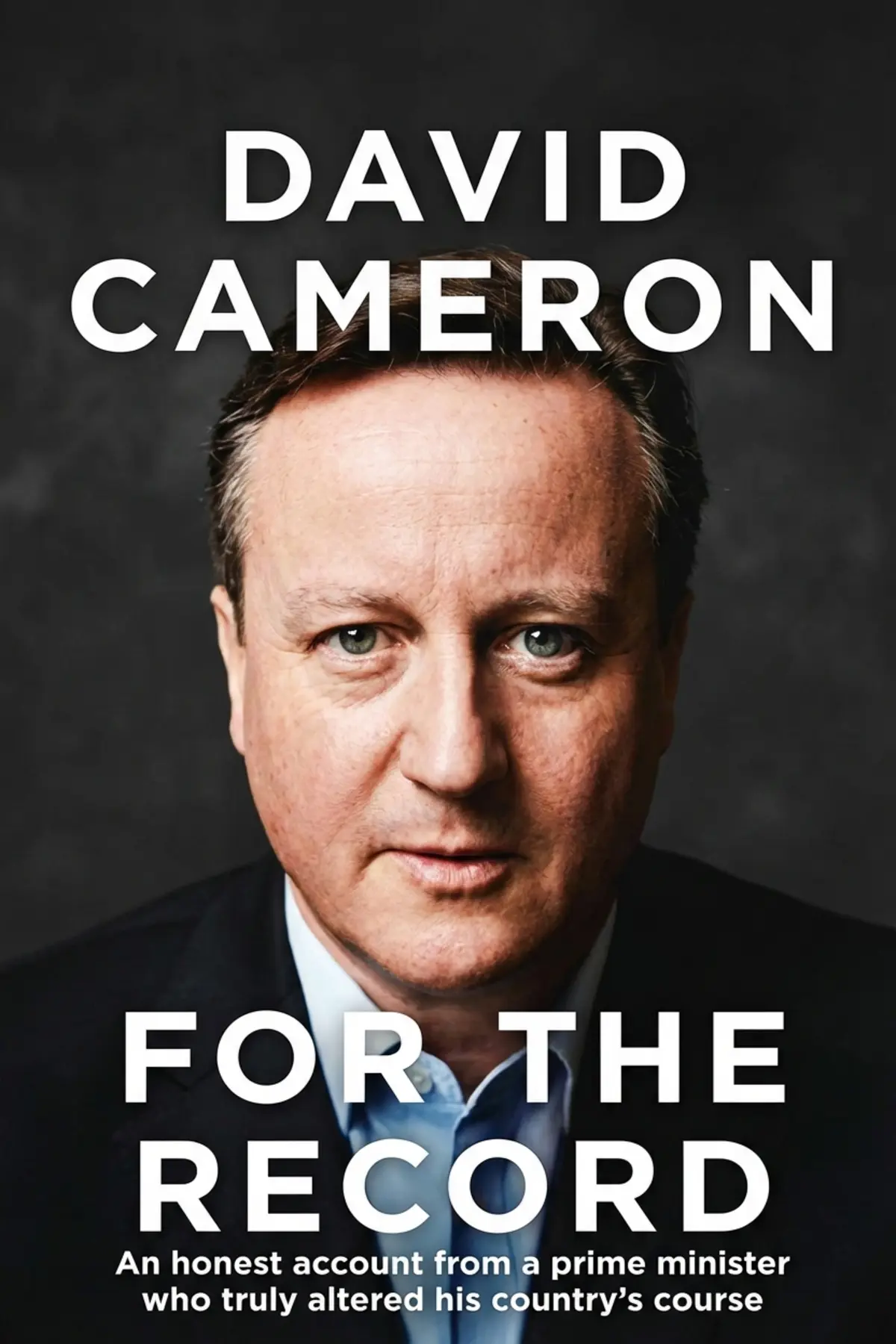
56 sec
If Brexit still puzzles you, the man who called the vote has his own account of it. In For the Record, former British prime minister David Cameron argues that the referendum he lost was no reckless gamble. By his count, every national party had promised voters an in-out vote on Europe at some point between 2005 and 2015.
Cameron led the Conservatives from 2005 to 2016 and governed for six of those years, after pulling an old-fashioned party into modern Britain. His conviction that people deserve to be heard built his success, and it also ended his career. Along the way come a scare at Eton, the loss of his son, weekends with the Queen and a results night that his daughter read correctly before he did. By the end you can explain why the vote happened, and you will have two lessons from his wins and losses about how to persuade people.
1 min 22 sec
A teenager rowing out to a river island to break school rules seems an unlikely future prime minister. The punishment he got, and the one he escaped, changed what he did next.
1 min 43 sec
Cameron’s first team of spokespeople had an awkward imbalance that told him everything about his party. His fix was mostly administrative, and it changed more than the faces on the benches.
1 min 35 sec
A small girl questioned a decorated officer in her own hallway, and a schoolboy swore in front of the monarch. Behind the official doors, Cameron found his steadiest support in unlikely places.
1 min 55 sec
Journalists said they were bored by one phrase, and the party took that as good news. Cameron explains why a dull slogan and a big online budget succeeded where his first campaign had failed.
1 min 40 sec
Critics say Cameron gambled the country’s future to calm rebels in his own party. He tells a longer story, which starts with wartime memory and ends with promises other parties had already made.
1 min 58 sec
Within 48 hours Cameron ate meals in four European cities while chasing one deal. He believed it was a good one, yet the deal left both its critics and the immigration debate unsatisfied.
2 min 05 sec
The experts, the allies and the pollsters were all on his side, and a twelve-year-old saw the result coming first. Cameron’s account of the campaign shows what a correct argument can still lack.
1 min 14 sec
For the Record is the story of what a principle can cost. Cameron wanted his party to keep pace with the people it hoped to represent, and that instinct made him a winner. The same instinct made him promise them a vote on Europe. It gave Britain more diverse benches in Parliament, same-sex weddings and a surprise majority. Then it cost him his job.
He does not regret holding the referendum. He regrets the result, but he accepts that leaving is a legitimate choice and argues that the causes of British doubt about Europe have not gone away. He hopes for a Britain outside the EU that stays close to it on trade and security. His own image is a country that was long an unhappy tenant and should now become a happier neighbor.
Two lessons from his years in power apply well beyond politics. Say one clear thing until you are tired of hearing yourself, because that is when other people start to hear it. And when you argue from facts, give people a reason to feel them, or a simpler story will win. Cameron learned the first lesson in 2015. He met the second in 2016 and tried to answer it during the campaign with a speech about peace.
David Cameron will probably be remembered for one decision: he promised Britain a vote on leaving the European Union, campaigned to stay, and lost. In For the Record he argues that the story is longer and more complicated than that. Cameron describes a privileged childhood and a near expulsion from Eton that changed his direction. He then shows how he pushed an old-fashioned Conservative Party to choose more diverse candidates and back same-sex marriage. Alongside the politics come private chapters: the illness and death of his son Ivan, family life at Downing Street and weekly meetings with the Queen. The second half explains the road to Brexit. Cameron sets out why he thinks British unease about Europe ran deep, why immigration dominated his renegotiation, and how a Leave campaign built on emotion beat a Remain campaign built on economics. Readers get an insider's account of why the referendum happened, and two lessons that apply well beyond politics: say one clear message until people actually hear it, and know that facts alone rarely beat a story people can feel.
Readers who want to understand why Britain voted on leaving the EU, told by the man who called the vote.
Campaigners, marketers and founders who want to see how message discipline worked in practice.
Fans of political memoirs who want the private side of power, from Downing Street to Balmoral.
David Cameron studied at Eton College and at Brasenose College, Oxford. He was elected Member of Parliament for Witney in 2001 and led the Conservative Party from 2005 to 2016. After the 2010 general election he became prime minister, first at the head of a coalition with the Liberal Democrats. He resigned in 2016 after the Brexit referendum he had introduced. He published For the Record in 2019 and returned to government as Foreign Secretary under Rishi Sunak from 2023 until July 2024.
Listeners find this autobiography to be an insightful and comprehensive exploration of life inside Downing Street and the routine responsibilities of a Prime Minister. Although some listeners find the writing at times defensive or excessively lengthy, many value the deep political background and the author’s readiness to offer his take on major history-making moments. Furthermore, they emphasize the work’s vulnerability when discussing family loss, as one listener remarked that the description of his son’s death was "truly, heartbreakingly sad." The audio format is also praised for its earnest delivery and Cameron’s unexpected "gift for mimicry."
Wow, I wasn't expecting to be this moved by a political autobiography. Most of these books are just lists of achievements, but Cameron really opens up about the personal tragedies that shaped his time in office. The chapters concerning his son Ivan are absolutely heartbreaking and written with a raw sincerity that feels entirely authentic. Beyond the personal side, the book offers a masterclass in the complexities of modern governance and the impossible choices leaders face. I chose the audio version, and hearing Cameron narrate his own story added a layer of intimacy that a physical book might lack. His gift for mimicry when describing his interactions with foreign heads of state brought some much-needed levity to the heavier political segments. It’s a massive undertaking at thirty hours, but it’s a phenomenal record of a pivotal era. Truly a must-read for anyone interested in how Britain ended up where it is today.
Show moreA frank and surprisingly humble account of a life in the highest echelons of power. I’ve always viewed Cameron as a somewhat distant figure, but this book changed my perspective significantly. He writes with great clarity about the challenges of the 2008 financial crisis and the difficult path of the Conservative-Liberal Democrat coalition. What struck me most was his willingness to share the emotional toll of his son’s passing; it was a deeply human moment in a book otherwise filled with statecraft. The narrative flows well despite the length, and he manages to explain complex macroeconomic concepts in a way that remains accessible. Frankly, it’s one of the most comprehensive political memoirs I’ve ever encountered. He doesn't shy away from the 'big' questions, even if you don't always agree with his conclusions. This is a vital piece of the puzzle for anyone trying to understand the pre-Brexit landscape of the United Kingdom.
Show moreFinally got around to finishing this, and I have to say it’s a very impressive piece of writing. David Cameron manages to balance the personal and the political with a level of skill that is rare in this genre. I particularly enjoyed the chapters about his upbringing and early career, as they provided a clear picture of the influences that shaped his worldview. The book is admittedly quite self-justifying at points, particularly regarding the referendum, but that’s to be expected from any leader writing their own history. The level of detail regarding his daily duties is mind-blowing and makes you realize why the job is so taxing. I appreciated his honesty about the struggles of balancing a high-pressure career with family life, especially during such a tumultuous period. It’s a serious, factual, and occasionally very funny book that deserves a spot on your shelf. Just be prepared for a long haul.
Show moreThe chapter on the 2015 election victory was absolutely gripping. I remember the shock of that result, and seeing it from Cameron's perspective was a highlight of the book for me. He comes across as a man who genuinely cared about the country, even if his methods were often divisive. The writing is polished and professional, though he occasionally allows his sense of humor to peek through the formal exterior. It’s a very long book, but the short chapters and varied subject matter keep things moving at a decent clip. I found his reflections on the 'special relationship' with the US to be particularly insightful. Whether you’re a fan of his politics or not, you can’t deny that he lived through some incredible historical moments. This is a sincere, well-researched, and ultimately very readable account of those years. I highly recommend the audiobook if you want to hear the nuance in his voice.
Show moreEver wonder what it's actually like to wake up and run a country? This memoir provides a fascinatingly granular look at the day-to-day pressures of being Prime Minister. Cameron describes himself as a 'head under the car bonnet' leader, and that level of detail is present on every single page. I found the sections on the 2010 coalition negotiations particularly enlightening, as they offered context that the news cycles at the time completely missed. It isn't a fast read by any means, and you definitely need a basic grasp of macroeconomics to follow some of his arguments about the deficit. Look, he’s clearly defending his legacy here, but the writing is surprisingly sharp and more engaging than I expected. The audiobook version is especially worth it just to hear his impressions of other world leaders. It’s a dense, serious piece of work that any political junkie will appreciate.
Show moreAs someone who followed the coalition years closely, I found this to be an invaluable resource. Cameron provides a very detailed breakdown of his thought processes during the most controversial moments of his premiership. While it’s true that he exhaustively details his achievements, he also highlights several instances where he felt he erred in his judgment. The book is definitely on the longer side, and the prose can be a bit formal, but the insights into global diplomacy are worth the effort. It was interesting to see how much detailed knowledge a Prime Minister has to absorb on a daily basis. My only real gripe is that he occasionally takes unnecessary cheap shots at his political rivals, which felt a bit petty. Still, it’s a solid, well-researched memoir that offers a unique perspective on a transformative period in British history. It’s definitely not for the casual reader, but for political buffs, it’s great.
Show moreAfter hearing so much about it, I finally tackled this beast of a book over my summer holiday. It’s an informative read, but the pacing is incredibly slow in the middle sections where he gets bogged down in policy minutiae. He tries very hard to present himself as a reasonable, moderate figure, but the self-justification for the Brexit referendum feels a bit hollow in hindsight. I appreciated the insight into the workings of No. 10 and the stresses of the job, yet I wanted more honesty about the internal party divisions. The tone is quite clunky at times, fluctuating between high-level political theory and casual anecdotes about 'George' and 'William.' It’s not a bad book, but it’s certainly not a gripping one either. If you aren't already obsessed with UK politics, you'll probably find yourself skimming large portions of the text. It functions better as a historical document than a compelling narrative.
Show moreNot what I expected from a typical politician’s autobiography. Instead of just a dry list of dates and meetings, Cameron gives us a real sense of the atmosphere inside Downing Street. The way he refers to his colleagues like George Osborne and William Hague by their first names makes the whole thing feel much more personal and immediate. To be fair, the book is quite long and could have used a more aggressive editor to trim the fat. Some of the policy explanations go on for far too long and feel like he's trying to win an argument from five years ago. However, his storytelling ability is quite good, and he has a knack for making even the most mundane administrative tasks sound high-stakes. It’s a thorough, well-written account that provides a lot of much-needed context for the events leading up to 2016. Definitely worth a read if you have the patience for it.
Show moreThis book felt like a 700-page exercise in reputation management rather than a genuine memoir. Cameron spends a vast amount of time trying to explain away the austerity measures and the eventual Brexit fallout, but it rarely feels like he's actually admitting to a mistake. It’s written in a very formal, almost speech-like tone that becomes incredibly tedious after the first hundred pages. While there are some flashes of personality, they often feel manufactured to make him seem more relatable to the average voter. I was hoping for more 'behind the curtain' gossip regarding his cabinet, yet he remains frustratingly diplomatic about people like Boris or Gove. To be fair, the section regarding his son Ivan was genuinely moving and showed a glimmer of the man behind the politician. However, the rest of it reads like a dry policy manifesto that simply goes on for far too long.
Show morePicked this up hoping for a candid reflection on the chaos of the last decade, but I was sorely disappointed. Cameron comes across as incredibly blinkered and arrogant, seemingly unable to grasp the long-term damage caused by his decisions. Every failure is framed as a necessary evil or someone else’s fault, making the entire thing feel like a 700-page campaign brochure. The writing style is pretentious, attempting to be 'artsy' but failing to find a natural rhythm or voice. Not gonna lie, the level of overconfidence on display is staggering considering he essentially gambled the country's future on a referendum he thought he couldn't lose. It’s a tedious, superficial account that avoids any real soul-searching or accountability. I couldn't even finish it because the tone was just too self-serving for my taste. Save your money and read a proper history book instead.
Show moreIt is Cameron’s memoir of his life and his time as Britain’s prime minister. It covers his privileged upbringing, his work to modernize the Conservative Party, his family life and the death of his son Ivan, and his 2015 election victory. Above all, it covers the Brexit referendum: why he called it, how he renegotiated Britain’s EU terms, why Remain lost, and why he resigned the morning after the vote.
Cameron gives three reasons. Many Britons had long felt uneasy about political union with Europe, partly because of how they remember the Second World War. After the financial crisis, the EU’s push for deeper integration made that unease worse, and trust in the EU fell sharply. Every national party had also promised an in-out vote at some point between 2005 and 2015, so he felt the public deserved its say.
He regrets the result but not the decision to hold the vote. He believes the British people had been promised a say on Europe many times and deserved one. He calls leaving a legitimate choice and argues that the causes of British doubt about Europe remain. He hopes Britain can stay close to the EU on trade and security, becoming a happier neighbor instead of an unhappy tenant.
Two stand out. In 2015 Cameron’s campaign kept repeating one plain phrase, Long Term Economic Plan, until reporters grew bored of it, and that clarity helped win a majority. The 2016 referendum showed the opposite danger: Remain relied on economic and technical arguments while Leave appealed to emotion. A clear message matters, and facts without feeling can lose to a simpler story.
He required local associations to choose parliamentary candidates from a more diverse list approved by the central party. As a result, the number of women Conservative MPs rose from 17 in 2005 to 68 by 2015, and 17 MPs were not white. In government he legalized same-sex marriage in 2013, arguing that supporting marriage was itself a conservative value.
Barack Obama

Anthony Pratkanis


Masaji Ishikawa

Ben Macintyre

Yuval Noah Harari



James Shapiro

John Rawls
AUDIO SUMMARY AVAILABLE
Get the key ideas from For the Record by David Cameron, plus 5,000+ more nonfiction titles.









