

59 Seconds: Change Your Life in Under a Minute
Richard Wiseman
 English
Shows how to stop bracing against constant change and start using it, through eight mindset shifts: slowing down, getting lost on purpose, trusting first, defining enough, building a portfolio career and preparing for several futures.
1 min 02 sec
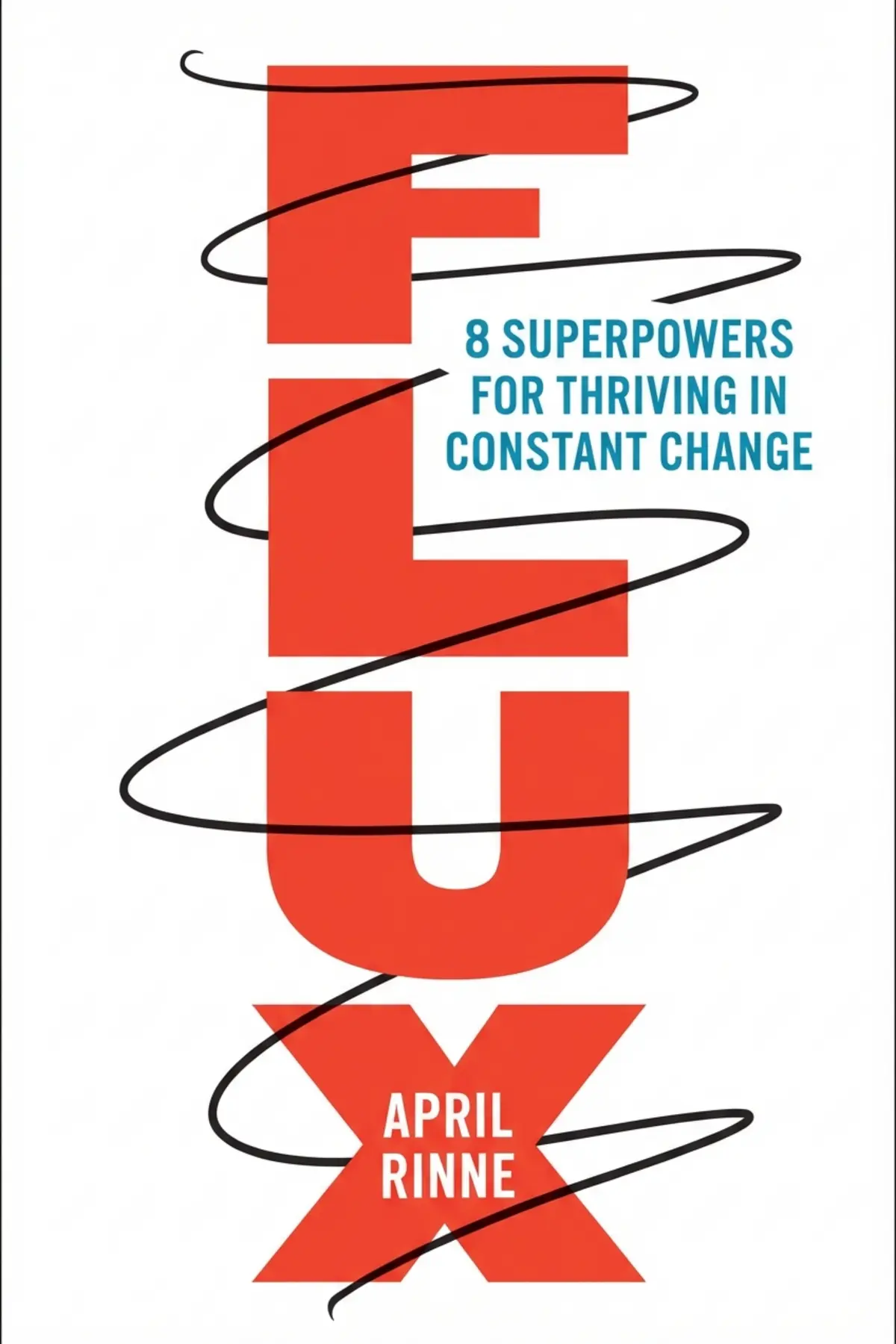
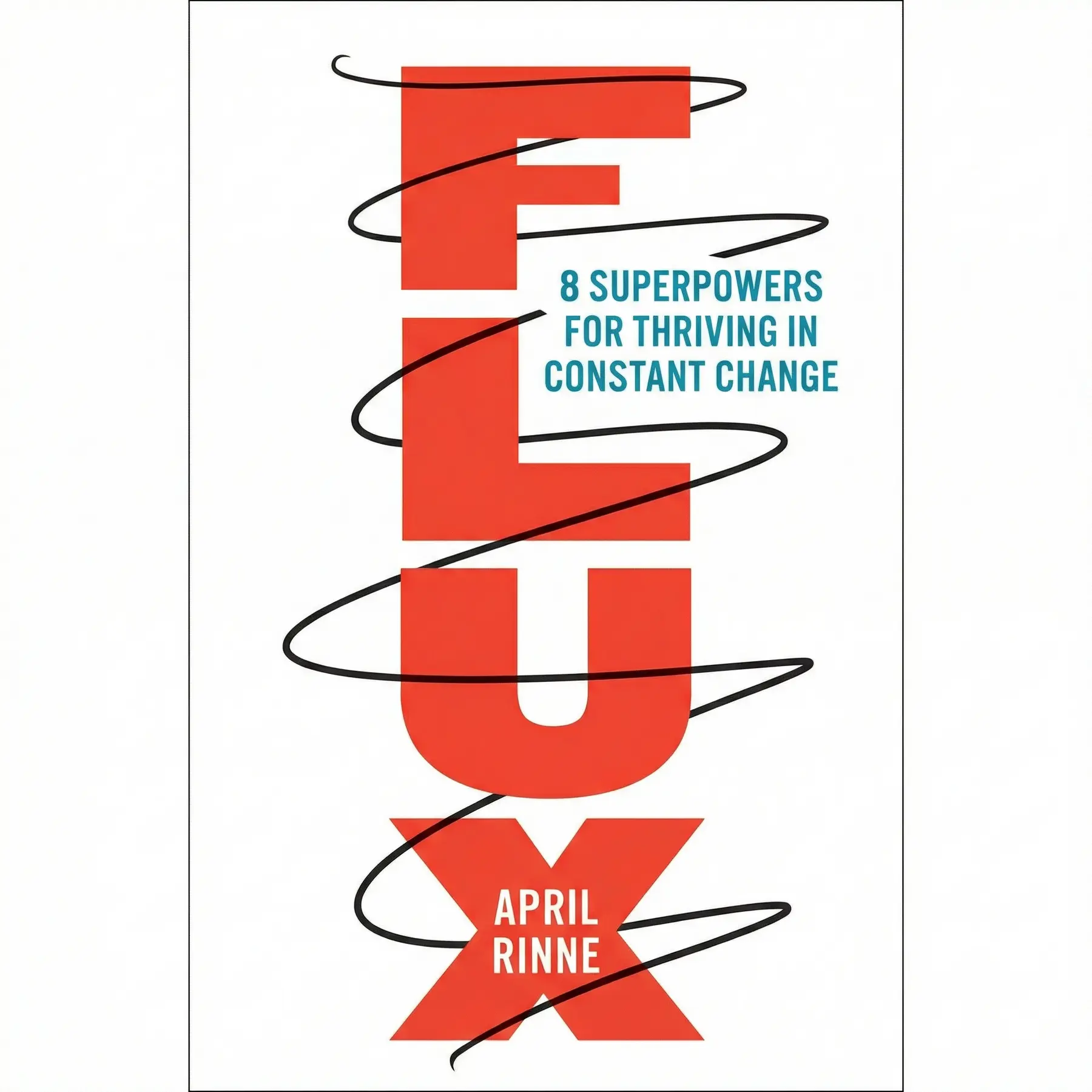
If change keeps arriving faster than you can plan for it, the problem may be the plan itself. In Flux, April Rinne, a Harvard-trained lawyer turned futurist, argues that most of us live by an old script: do well in school, climb one ladder, run faster, collect more. That script assumed a finish line that stays put, and in a world of constant change it keeps moving.
Rinne’s answer is a flux mindset, a way of meeting change as an opening instead of a threat, built from eight habits she calls superpowers. Several sound backward at first: run slower, get lost, trust strangers, let go of the future. Each one replaces a line of the old script with something that holds up when the ground shifts.
Along the way are an elderly Romanian woman, a ride-sharing company that carries more people than Europe’s railways and a list Rinne wrote after the worst phone call of her life, plus small practices to try.
1 min 32 sec
The usual advice for a changing world is to move faster and fit more in. Rinne learned the opposite at 20, after a phone call that ended the life she had planned.
1 min 36 sec
Every culture trains its people to notice some things and miss others. A belief from the Haudenosaunee and a Harvard reading list show how much stays invisible, and what changes once you look.
1 min 27 sec
Being lost usually feels like failure. A wrong turn in Romania, and a word most people have never heard, suggest it may be the best place to begin writing a new plan.
1 min 42 sec
Being told to stay in your lane seems like a small thing. Rinne sees it as part of a much wider loss of trust, and points to companies that grew large by betting the other way.
1 min 33 sec
Envy of those who are further along tends to afflict even people at the very top of their fields. Rinne offers a different scoreboard, and shows how one government applied the same question to a whole country.
1 min 31 sec
One employer, one ladder, one retirement party: that model is breaking. A friend of Rinne’s and a strategist with several roles show what replaces it, and why spreading your work around can be the safer choice.
1 min 36 sec
Screens connect us faster than ever, yet many people feel more alone. Rinne describes a skill most of us were never taught, and the moment it matters most is when someone is grieving.
1 min 28 sec
After her parents died, Rinne sat down and wrote out the lives she might end up living. What she asked about each one is a test anyone facing an uncertain future can use.
1 min 09 sec
Each of Rinne’s superpowers is a trade. A line of the old script that promised security through speed, certainty, suspicion or accumulation gets swapped for one that still works when the ground moves. None of them asks you to predict what is coming. They ask you to be the kind of person who can live with several outcomes, and to build a working life with enough room to absorb a shock.
The book’s own suggestion for starting is modest. Write down everything in your life that is in flux right now, from a change in your daily routine to worries about what comes next. Look for common themes, and notice the feeling each item brings up. Come back to the list over time and see whether your reactions have shifted. Alongside it, five minutes of daily silence and the habit of removing one thing before adding another are small enough to begin tomorrow.
Rinne’s turning point came from the worst news of her life, followed by a slower stretch guiding hiking and biking tours across Italy and a page of futures she could accept. The finish line kept moving. She stopped chasing it and gained the freedom to choose.
Most people still follow a script written for a steadier world: study hard, climb one ladder, move faster, acquire more. April Rinne argues that this script fails when change becomes constant, because the finish line it points to keeps shifting. The result is anxiety about work, family and well-being, and very little room to adapt. Rinne's alternative is a flux mindset, built from eight superpowers. Several sound backward at first: run slower, get lost, trust people, let go of the future. She draws on her own life, including the death of both her parents when she was 20, along with Haudenosaunee beliefs, a Harvard Business School reading list, the ride-sharing company BlaBlaCar and the Swedish government's answer to automation. Readers get a set of small, repeatable practices: five minutes of daily silence, removing one thing before adding another, mapping skills into a portfolio career, asking a grieving friend how to help and writing down several futures they could accept.
Professionals anxious about automation, layoffs or a career that no longer follows a straight line.
People recovering from a loss or a collapsed plan who want a steadier way to face what comes next.
Team leads who suspect mistrust and constant hurry are wearing their people down.
April Rinne is a speaker, investor and adventurer who describes her work as helping people move through change. A Harvard Law School graduate and Fulbright Scholar, she is a World Economic Forum Young Global Leader and has been named among the world's 50 leading female futurists. She has worked as a hiking guide, an international microfinance lawyer and a global development executive, advised companies, governments and nonprofits, and spent nearly four years traveling solo to study how cultures view change.
Listeners find the book packed with actionable advice and value its unconventional methods for handling continuous transformation. They highlight how easy it is to read, with one listener describing it as a vital resource for 21st-century humans. They also appreciate the point of view it offers, as one review characterizes the work as a perspective-shaping guide.
Finally, a guide that actually makes sense for the chaos of the 21st century! April Rinne nails the reality of our volatile world by sharing her own raw, personal experiences with loss and change. This isn't just theory; it's a survival manual grounded in deep empathy. I found the concept of 'seeing what’s invisible' to be a total game-changer for my leadership style, as it forced me to recognize the unseen labor and diverse perspectives within my own team. The writing is incredibly readable and the perspective it provides is genuinely life-altering. We are all control freaks to some extent, but Rinne teaches us how to embrace the unexpected rather than fearing it. I’ve already recommended the 'run slower' chapter to three of my most stressed-out friends. Essential reading for anyone who feels like the world is moving too fast.
Show moreApril Rinne offers a profound perspective-shaping guide that goes beyond mere productivity hacks. This is a deep dive into the soul of how we work and live. I was moved by how she pulls from different cultures and her own travels to show that there are many ways of knowing beyond our Western 'scripts.' The idea that you don't need to be the best if you are 'the only'—the only one with your specific mix of experiences—is incredibly liberating. It changes the way you look at your resume and your value. Not gonna lie, I cried a bit during the 'be all the more human' chapter. In a world obsessed with AI and automation, Rinne’s call to serve other humans and stay present is exactly what we need. This is a 10/10 recommendation for me.
Show moreAs someone currently drowning in a toxic hustle culture where 'breakfast is for wimps,' this book was the breath of fresh air I desperately needed. April Rinne provides a counterintuitive framework that challenges the Gordon Gekko mentality of the past. To be fair, I wasn't sure about the 'Get Lost' superpower at first—fearing disorientation is my default mode—but the author’s argument for curiosity over control is compelling. The chapter on creating a portfolio career was especially insightful, reframing professional success around a unique combination of skills rather than a linear ladder. While some of the more philosophical sections felt a bit repetitive, the practical questions at the end of each chapter kept me engaged. It’s an essential guide for anyone trying to stay human in a world that demands we act like machines.
Show moreHow do we stay grounded when the ground itself is shifting beneath our feet? Rinne’s exploration of the 'Flux Mindset' offers a profound answer to that question. I was particularly struck by the idea of 'letting go of the future'—not as an act of giving up, but as a way to reclaim agency in the present. The book is filled with practical insights that challenge our default scripts about success and stability. My only real gripe is that the language can be a bit flowery at times, which might turn off readers who prefer a more clinical approach. Still, the chapter on starting with trust was a powerful reminder that relational strategies are the only way to thrive in a volatile environment. It’s a perspective-shaping guide that helped me reframe my career as a curated portfolio rather than a rigid path.
Show morePicked this up on a whim after seeing it recommended for burned-out managers, and I’m glad I did. The world is in a constant state of flux, and this book treats that uncertainty as a positive force rather than a threat. I loved the superpower of 'seeing what’s invisible.' It encouraged me to develop better peripheral vision in my personal life and work. Rinne’s background as a futurist shines through, but she keeps the tone accessible and warm. Some chapters definitely dragged more than others—I found the section on 'running slower' much more engaging than the one on digital boundaries—but the overall message is vital. It’s a thoughtful workbook that asks you to sit with uncomfortable questions. If you’re going through a major life transition, this book will be a steady companion.
Show moreEver wonder why we feel so anxious about change even though it's the only constant in life? This book argues that our 'old scripts' are broken. Rinne suggests we need to adopt a 'flux mindset' to survive, and her eight superpowers are a great starting point. I especially appreciated the critique of 'more' in the 'know your enough' chapter. It’s a direct hit to the consumerist culture that keeps us on a hamster wheel. The writing is clear, though a bit repetitive in the middle sections. Personally, I found the workbook questions at the end of each chapter to be the most valuable part. They force you to actually think about how you're living your life. It’s a readable, insightful guide that I’ll likely return to when things get chaotic again. A very strong four stars.
Show moreI came to this book expecting a deep dive into systems thinking, but what I found instead was a self-help guide written from a systems-oriented perspective. Frankly, I felt some initial frustration because the tone wasn't what I anticipated. Once I adjusted my expectations, I began to appreciate the 'Flux Superpowers,' particularly the idea of running slower to gain clarity. However, the book sometimes strains under the weight of its own metaphors, especially the 'old script' terminology which felt a bit overgeneralized. It is a decent read for those navigating big life transitions, but if you aren't a fan of the self-help genre, you might find it a bit underwhelming. The underlying call for more humanity is hard to argue with, even if the delivery didn't always vibe with me.
Show moreTruth is, I have a love-hate relationship with growth books. This one contains plenty of good information and asks the right questions, yet I worry the concepts might slip from my mind now that I’ve finished it. I enjoyed the 'Know your enough' section, which offers a much-needed critique of consumer capitalism and its obsession with more. It's a progressive viewpoint that resonates, though it occasionally feels more like an Eastern philosophical text than a practical business strategy. I appreciate the workbook approach, but I struggled to see how to implement every single superpower simultaneously. If you are ready to do the heavy lifting of changing your entire relationship with uncertainty, you will get a lot out of this. For the casual reader, it might just be another nice set of ideas that are hard to put into practice.
Show moreNot what I expected, but still worth the time. I thought I was getting a tech-heavy futurist prediction book, but it’s much more about internal psychology. The 'Flux Superpowers' are interesting, though eight of them feel like a lot to keep track of. 'Get lost' was definitely the standout for me because it reframes disorientation as a practice in creativity. However, some of the framing felt a bit too 'progressive' for my specific taste, occasionally flattening complex economic realities into simple metaphors. To be fair, the underlying advice about humility and presence is solid. It’s a good 6/10 for me—useful for a mindset shift, but perhaps not the definitive manual on change that some other reviews suggest. It’s a solid choice if you need a nudge to slow down.
Show moreMaybe it was the audiobook format, but this just didn't land for me. I listened at 2x speed and still felt like the author was taking a very long time to say things that felt like common sense. The central premise that we live in a world of constant change is obvious to anyone with a smartphone. While I agree with the ethics and the focus on humanity, the advice felt more like a romanticization of the past rather than a roadmap for the future. Look, I get that we need to 'be human,' but the 'Flux Superpowers' felt more like slogans than actual tools. It lacks the efficiency and practical edge I look for in a professional development book. If you like soft, metaphorical self-help, you might enjoy it, but for me, there was something missing that I just can’t put my finger on.
Show moreRinne argues that the old script for life, built on speed, a single career path and the pursuit of more, breaks down when change is constant because the finish line keeps moving. She proposes a flux mindset that treats change as an opportunity, built from eight superpowers: slowing down, seeing what is invisible, getting lost, trusting, knowing your enough, building a portfolio career, putting humanity first with technology and letting go of the future.
It means setting your own measures of success instead of chasing ever more salary, followers or status. Rinne grounds them in discovery, meaning, relationships, inner satisfaction and helping others, and she separates fleeting happiness from lasting contentment. A practical habit she suggests is removing one thing, such as a newsletter, an invitation or unworn clothes, before adding anything new to your life.
A portfolio career replaces one lifelong path with several roles, either in sequence or at the same time. Rinne’s friend Alex Cole moved through marketing, entertainment and consulting before starting a yoga studio, while Diane Mulcahy combines strategy, finance, writing and lecturing. Rinne argues multiple income sources give more security, and suggests starting by listing your skills and asking what specific work that mix suits.
Rinne offers small practices. Sit in complete silence for five minutes a day. Explore your neighborhood with the GPS off. Before adding a commitment, drop one. When a friend is grieving, ask how you can help instead of sending a short message. Above all, write a list of what is in flux in your life, notice the emotions each item raises and check later whether your responses have changed.
It suits people facing uncertainty at work or at home: those worried about automation or job loss, people rethinking a career that no longer runs in a straight line, and anyone recovering from a loss or a collapsed plan. Team leads will find ideas on building trust through open books and delegation, and anyone tired of screens will find a case for digital intelligence.
Richard Wiseman





William B. Irvine


Andrew D. Thompson


Deepak Chopra
AUDIO SUMMARY AVAILABLE
Get the key ideas from Flux by April Rinne, plus 5,000+ more nonfiction titles.









