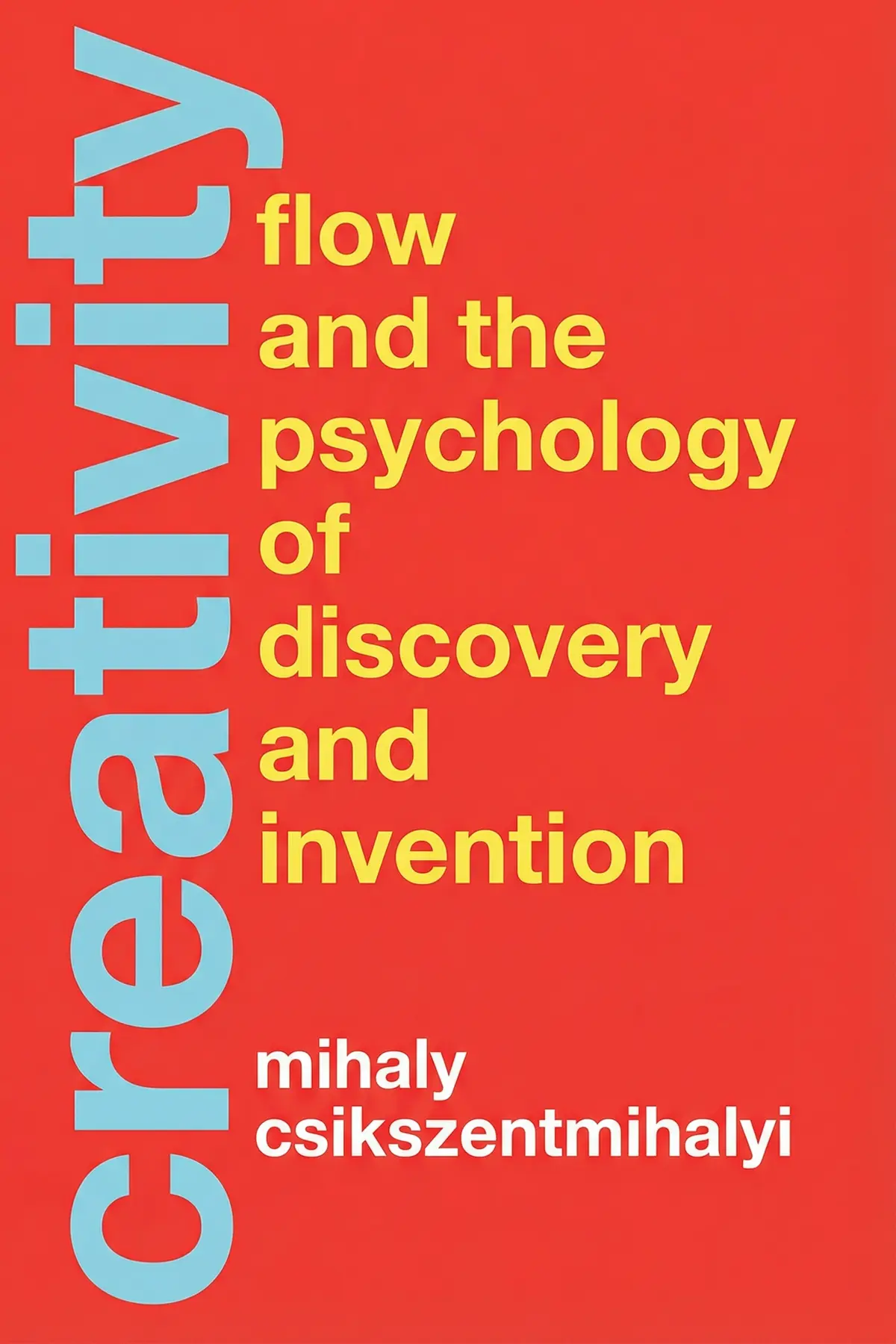
Creativity: The Psychology of Discovery and Invention
Mihaly Csikszentmihalyi
 English
 ไทย
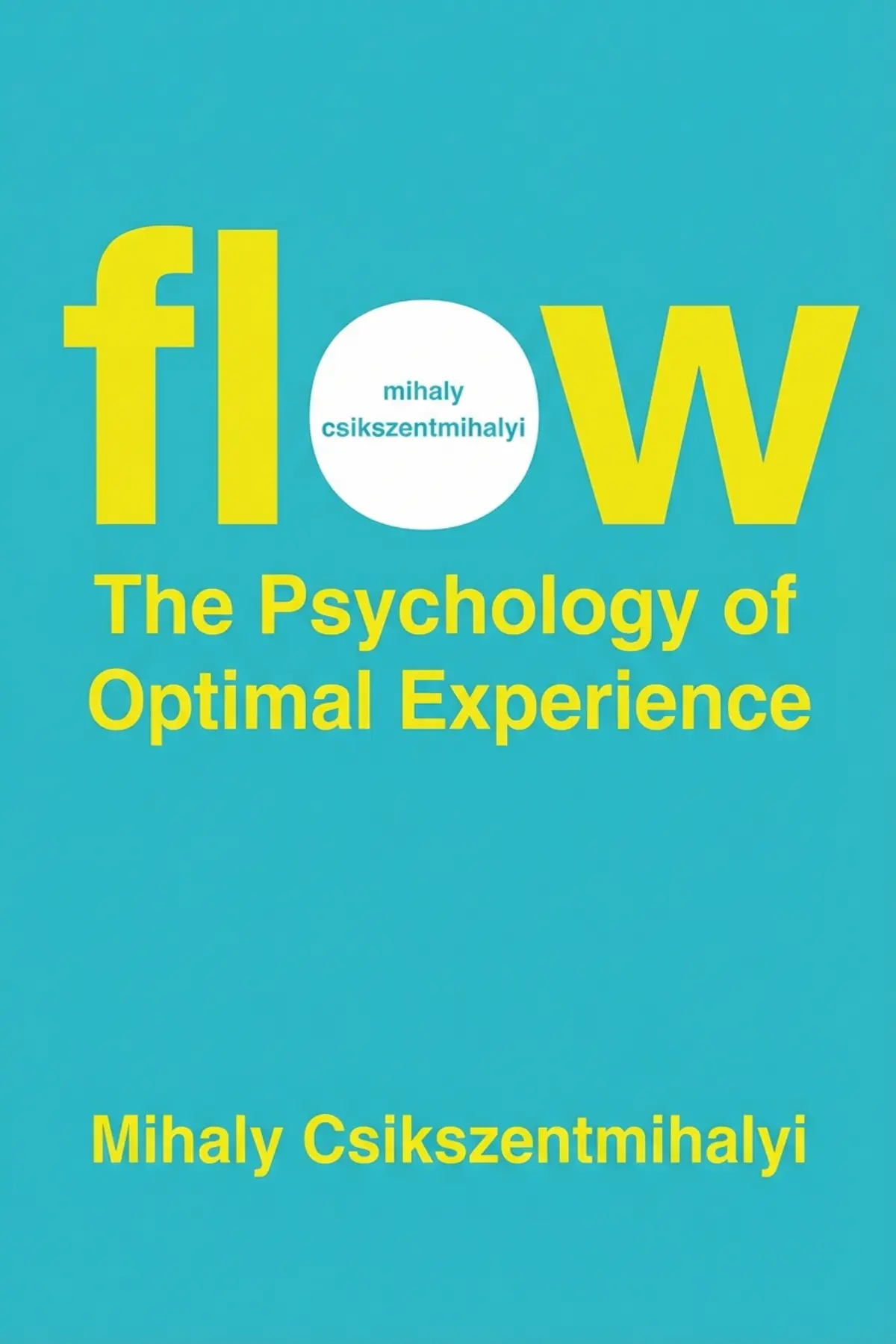
Csikszentmihalyi shows why money and easy pleasure leave people restless, and how to reach flow, the absorbed state where a challenge matches your skill, at work, in leisure, with others and through hard times.
57 sec
Many people spend their days earning rewards and their evenings recovering in front of a screen, and still feel stuck. In Flow, psychologist Mihaly Csikszentmihalyi argues that the best moments of life come from being stretched, fully absorbed in a hard task that fits your skill, with a clear goal and quick signs of progress. He names that absorbed state flow, and he doubts that wealth and comfort can produce it.
The book’s case is that a satisfying life is built from attention you direct yourself, aimed at challenges you set, and that anyone can practice this at work, at home, among friends and even in a prison cell. The people who prove it include a welder who kept turning down promotions and a ceramicist who kept her mind sharp while imprisoned by Stalin’s police. Listen through and you will know how to tune a task so it absorbs you, and how to tell enjoyment from mere pleasure.
2 min 03 sec
Modern life offers conveniences earlier generations could not imagine, yet wealth barely moves how satisfied people feel. The problem lies in where we spend a limited supply of attention, and in a choice most of us make every evening.
1 min 54 sec
Surgeons, rock climbers and blindfolded sailors all describe the same absorbed state. What they share has little to do with talent, and once you can name it, you can start building it into ordinary tasks.
1 min 46 sec
An antique dealer in Naples refused a buyer who was ready to pay his asking price. His odd decision explains why some people keep improving while others stall, even in a prison cell.
1 min 37 sec
Most people hear music without truly listening and solve puzzles someone else made. Aiming attention at what is already within reach turns ordinary moments into practice, and it once helped give the world genetics.
1 min 32 sec
Elderly villagers who rise at five to milk cows said wealth would change nothing for them. A welder who kept refusing promotions points to the reason, and to a way any job can become absorbing.
1 min 32 sec
Time alone gives focus but slides into boredom. The right family, friends and neighbors supply something solitude cannot, and some communities go so far as to abandon thriving villages to keep it.
2 min 03 sec
A frozen computer, a stalled train and a blocked promotion all invite the same complaint. Lindbergh over the Atlantic and Malcolm X in prison show a different response, and how it can shape a whole life.
1 min 02 sec
What Flow offers is a different kind of control. Csikszentmihalyi does not ask anyone to master the world, a belief that failed the Romans. He asks them to master where their attention goes. Once that is in hand, an assembly line, a prison, a stalled train or an evening of music can each become a place to grow, and money and status lose much of their pull.
The practice starts small. Notice when an evening drifts into pleasure that leaves you flat, and trade one of those hours for something that takes skill, alone or with friends. When a task bores you, raise the stakes; when it frightens you, find the opponent just above your level. And when something goes wrong, look closely at what is in front of you, the way Lindbergh studied the welding marks in his cockpit.
The antique dealer in Naples refused to sell because the bargaining mattered more to him than the money. A good life asks the same of us: value the game itself.
Plenty of people do everything expected of them, earn more, buy more, and still feel stuck in a comfortable rut. Psychologist Mihaly Csikszentmihalyi argues that the cause is where we spend our attention. We chase external rewards and other people's approval, and in our free hours we pick easy pleasures like television or alcohol that ask nothing of us and give little back. His alternative is enjoyment, and at its peak a state he calls flow: total absorption in a task with clear goals, quick feedback and a challenge just above your skill. He traces it through surgeons, rock climbers, Melanesian sailors, a bargaining antique dealer in Naples and a ceramicist who trained her mind while imprisoned by Stalin's police. The book then shows how to build flow into everyday life: listening to music on several levels, making your own puzzles, treating a job as a game, investing in family, friends and community, and meeting setbacks with attention instead of anxiety. Readers get a practical test for any hour of their day and a case for choosing a life theme of their own.
Professionals whose jobs feel like clocking in and out and who want their work to absorb them again.
People who end most evenings in front of a screen and wake up feeling flat.
Readers facing a setback, such as a blocked promotion, who want steadier focus instead of worry.
Mihaly Csikszentmihalyi (1934 to 2021) was a psychologist born in Rijeka, Croatia, who moved to the United States at 22. He chaired psychology at the University of Chicago and headed sociology and anthropology at Lake Forest College, and later taught as a professor of psychology and management at Claremont Graduate University. He is best known for identifying and naming flow, a highly focused state of mind that supports creativity, and he also wrote Creativity.
Mihaly Csikszentmihalyi
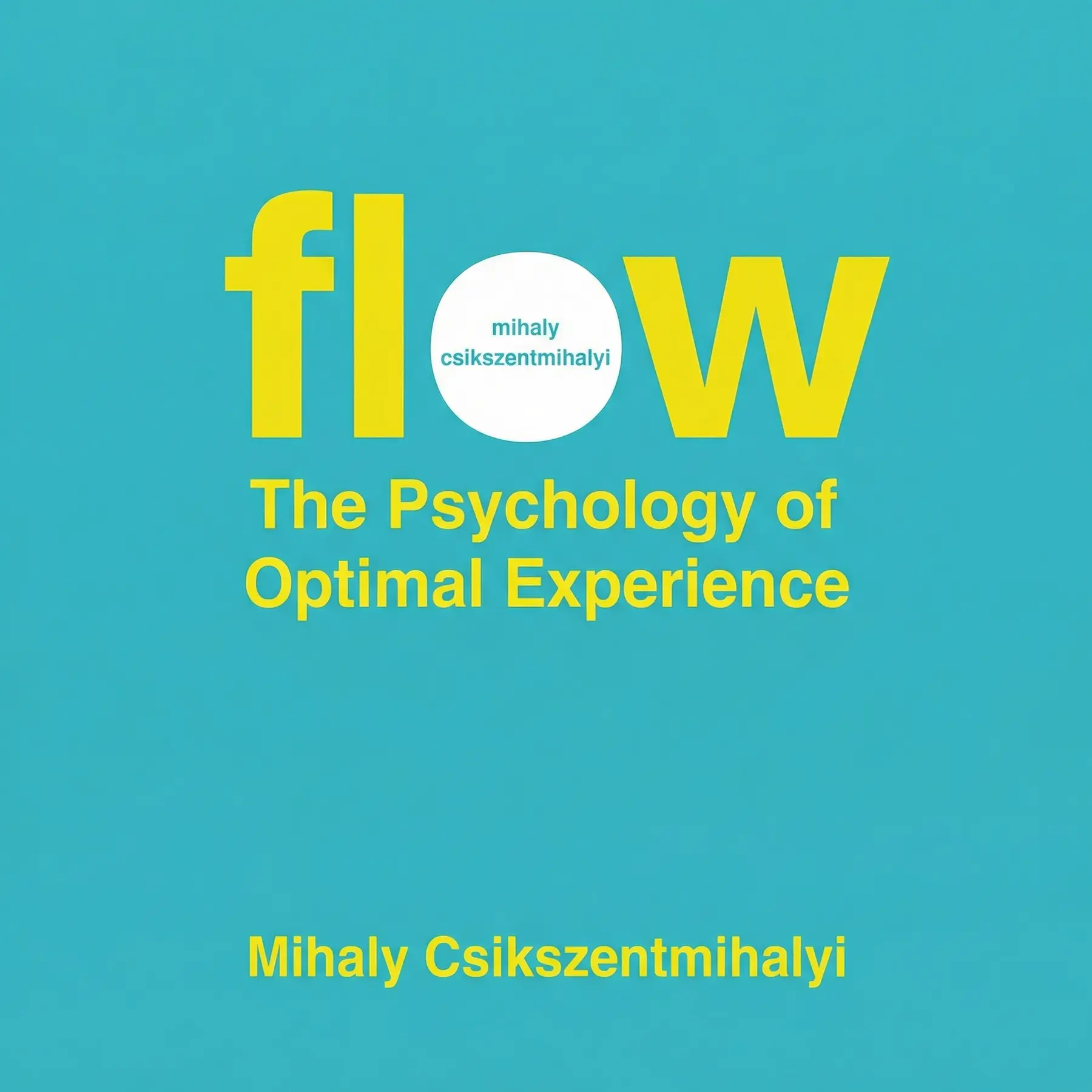
Listeners find this work highly accessible and regard it as mandatory reading for creative professionals, as it offers significant insights into human thought. The concept of flow is met with enthusiasm; one listener depicts it as a beautiful portrayal of the theory, and listeners value the way it clarifies the nature of happiness and improving life quality. Furthermore, the prose is appreciated for being approachable, with listeners noting it's not written like scientific literature. However, reactions to the book's entertainment value are divided, with some calling it engrossing while others find it a chore. Perspectives on the clarity of the material are also split, as some commend the explanations while others suggest they are over-simplified.
This book should be required reading for anyone in a creative or high-performance field. Csikszentmihalyi manages to articulate that elusive 'in the zone' feeling with surgical precision, shifting the conversation from vague luck to a controllable psychological state. I particularly resonated with the idea of the 'autotelic personality'—the notion that we can transform even the most mundane chores into rewarding experiences by setting micro-goals and seeking immediate feedback. The writing isn't overly academic or bogged down by jargon, making it surprisingly accessible for a foundational text in positive psychology. While the examples of 'John' and 'Katie' can feel a bit repetitive, the underlying framework of balancing challenge against skill is a total game-changer. It’s essentially a roadmap for reclaiming your attention from the 'psychic entropy' of modern life. If you feel like your days are slipping away in a blur of passive consumption, this is the wake-up call you need.
Show moreAs someone who works in a creative field, I found the descriptions of 'losing oneself' in a task to be incredibly validating. This isn't just a book about being happy; it's a manual on how to actually live a complex, meaningful life. The author’s research into how people from different cultures and professions achieve this state—from surgeons to assembly line workers—is eye-opening. I loved the distinction between 'pleasure,' which is fleeting and passive, and 'enjoyment,' which requires effort and leads to growth. Not gonna lie, the book demands some concentration, but that ironically puts you into a bit of a flow state while reading it! It helped me understand why my most difficult projects are often the ones I remember most fondly. While it might skip over some of the socioeconomic realities of life, its focus on the 'inner life' provides a sense of agency that I found very empowering.
Show moreWow, what a deep dive into the mechanics of human satisfaction. I was worried this would be another fluffy self-help book, but it’s actually a rigorous psychological study that borders on philosophy. The way it describes the loss of self-consciousness during high-level tasks is exactly how I feel when I’m deep in a coding project. It’s about the joy of the process rather than the reward at the end. I found the sections on transforming adversity particularly moving, even if some of the examples (like the POWs) were a bit extreme. It makes you realize that our quality of life is determined by where we choose to point our attention. If you can get past the somewhat dated tone and the lack of modern citations, there is a wealth of wisdom here about what it means to lead a good life.
Show moreThe chapter on the body and flow was a standout for me, especially the discussion on how even simple acts like walking or eating can be elevated to art forms. This book is a beautiful description of what makes life worth living. It’s not about easy happiness; it’s about the satisfaction of struggle and growth. I loved the idea that goals are just excuses to engage in the process—the 'effort justifies the goal.' While the author’s occasional swipes at organized religion and modern music felt unnecessary and a bit grumpy, they didn't ruin the experience for me. The 'autotelic' framework has helped me reframe my most stressful work days as 'games' to be played rather than burdens to be endured. It’s one of those rare books that actually changes the way you see the world once you put it down.
Show moreEver wonder why time vanishes when you're deeply engaged in a hobby? This book provides the most comprehensive answer I've found yet. It’s a fascinating exploration of how we can order our consciousness to fight off the chaos of daily life. I loved the breakdown of the eight elements of enjoyment, especially the concept that flow occurs in that sweet spot between boredom and anxiety. In my experience, the comparison to Vygotsky’s Zone of Proximal Development is spot on—it's all about that incremental challenge. To be fair, some sections feel like a rambling lecture from a well-meaning but long-winded uncle, and I didn't appreciate the condescending attitude toward watching TV or listening to music. However, the core thesis is robust enough to survive the occasional patronizing tone. It’s not a quick self-help fix, but a serious look at how to find intrinsic value in our work and relationships.
Show moreFinally got around to finishing this classic, and I can see why it’s held in such high regard despite its flaws. The truth is, most of us are terrible at using our free time, and Csikszentmihalyi’s critique of 'passive leisure' really hit home for me. We spend all day wishing for the weekend only to waste it on things that leave us feeling hollow. The book offers a structured way to look at 'optimal experience' through clear goals and deep involvement. I did find the middle chapters a bit tedious as they hammered the same points home using different hobbies like knitting or yoga, but the overall philosophy is sound. Some of the psychological insights into how we process time and self-consciousness are genuinely profound. It’s a bit of a dense read, and you have to ignore some of the more outdated social commentary, but the central idea of the autotelic experience is worth the effort.
Show moreThe concept of the autotelic self is brilliant, even if the delivery is a bit hit-or-miss. I picked this up hoping for a practical guide, and while it’s more philosophical than 'how-to,' the logic is hard to argue with. The book basically posits that we are happiest when we are pushed to the edge of our abilities. I particularly liked the section on how to create a 'flow' environment for children by providing clarity and choice. On the downside, the author can be quite dismissive of anything he deems 'low-brow,' like watching television, which felt a bit elitist. Also, the repetition is real—you’ll hear about 'Miranda the knitter' or 'Sarah the climber' more than you probably want to. Still, the breakdown of the four kinds of play (agon, alea, etc.) was a highlight for me. It’s a foundational text that definitely changed how I view my work-life balance.
Show moreAfter hearing about 'flow' for years in various TED talks and podcasts, it was great to finally read the source material. The writing is clear and avoids the dry, sterile tone of most scientific literature, which I appreciated. It’s essentially a handbook on how to find purpose in the 'now.' I found the chapters on the flow of thought and the 'work as flow' particularly relevant to my own life. To be fair, the author’s tendency to blame the individual for their lack of happiness is a bit much at times, and he certainly has a bone to pick with passive entertainment. However, the central thesis—that we need to take active control of our consciousness to be happy—is hard to ignore. It’s a thought-provoking read that definitely makes you rethink your relationship with your phone and your free time.
Show moreLook, the core message here is life-changing, but the book itself is a total slog. It’s a classic case of a great 30-page paper being inflated into a 300-page book. The author makes his point in the first two chapters and then just repeats it ad nauseam with an endless parade of case studies. It’s also very much a product of its time; the gender roles are frustratingly stereotypical, and the author’s refusal to acknowledge systemic privilege is a major blind spot. He constantly suggests that your environment doesn't matter as long as you have 'inner control,' which feels like a very privileged take. That said, I can't deny that the 'flow' framework is useful for understanding motivation. I find myself using the 'challenge vs. skill' quadrant almost daily to diagnose why I'm feeling restless or overwhelmed. Great ideas, mediocre execution.
Show moreFrankly, I found this incredibly dated and frustratingly narrow in its worldview. The author spends hundreds of pages cycling through repetitive anecdotes about mountain climbers and chess players to prove a point that could have been a long essay. What bothered me most was the total lack of social context; he argues that happiness is purely an internal struggle, even using prisoners and factory workers as proof that you can be 'happy' in any hellscape if you just focus hard enough. It feels incredibly tone-deaf to ignore systemic issues like poverty or toxic work environments while essentially telling the reader that their unhappiness is a personal failure. Plus, the gendered language is straight out of the 1950s—the 'boy hunts' and the 'girl receives.' Oh, and the weird, vague defense of Adolf Eichmann’s 'flow state' on page 270? Absolutely bizarre. There are some decent nuggets about structuring free time, but the elitism and repetition make it a real chore to finish.
Show moreFlow is the state of being so absorbed in an activity that self-consciousness and worry fade and time seems to disappear. Csikszentmihalyi reports that people across languages and cultures describe it in similar terms. It tends to appear when a task has clear goals, gives immediate feedback and offers a challenge that matches your skill, as with a surgeon who can see at once how well an operation is going.
Pleasure, in the book, is simple restoration, like eating when hungry or sleeping when tired, and it includes easy escapes such as television or alcohol. Enjoyment asks for skill and concentration and leaves you changed, the way cooking an unfamiliar dish slowly trains your palate. Csikszentmihalyi argues that most people default to pleasure after work, and that enjoyment is what builds a satisfying life.
Csikszentmihalyi recommends rewards that come from the work itself: beating your usual performance, doing tasks better or faster, and learning as much as you can about every part of the job. His example is a railroad car welder who learned each task on the assembly line, refused promotions to keep the variety, and left work with no need to escape. Popularity or promotion may follow, but they should not be the motive.
It suits people who feel stuck despite comfort or success: workers bored by routine jobs, people whose evenings disappear into screens, and those wanting more from leisure, friendships and family life. It also speaks to readers facing hardship, with cases ranging from Lindbergh focusing on his cockpit over the Atlantic to Malcolm X finding reading and purpose in prison.



Deborah Gruenfeld




Anthony Pratkanis



William B. Irvine
AUDIO SUMMARY AVAILABLE
Get the key ideas from Flow by Mihaly Csikszentmihalyi, plus 5,000+ more nonfiction titles.