



14 min 59 sec
Available in: English
 ไทย
EnglishไทยFiber Fueled: The Plant-Based Gut Health Program for Losing Weight, Restoring Your Health, and Optimizing Your Microbiome
Gastroenterologist Will Bulsiewicz explains how the trillions of microbes in your gut shape immunity, weight and mood, what modern life does to them, and how thirty different plants a week can bring them back.
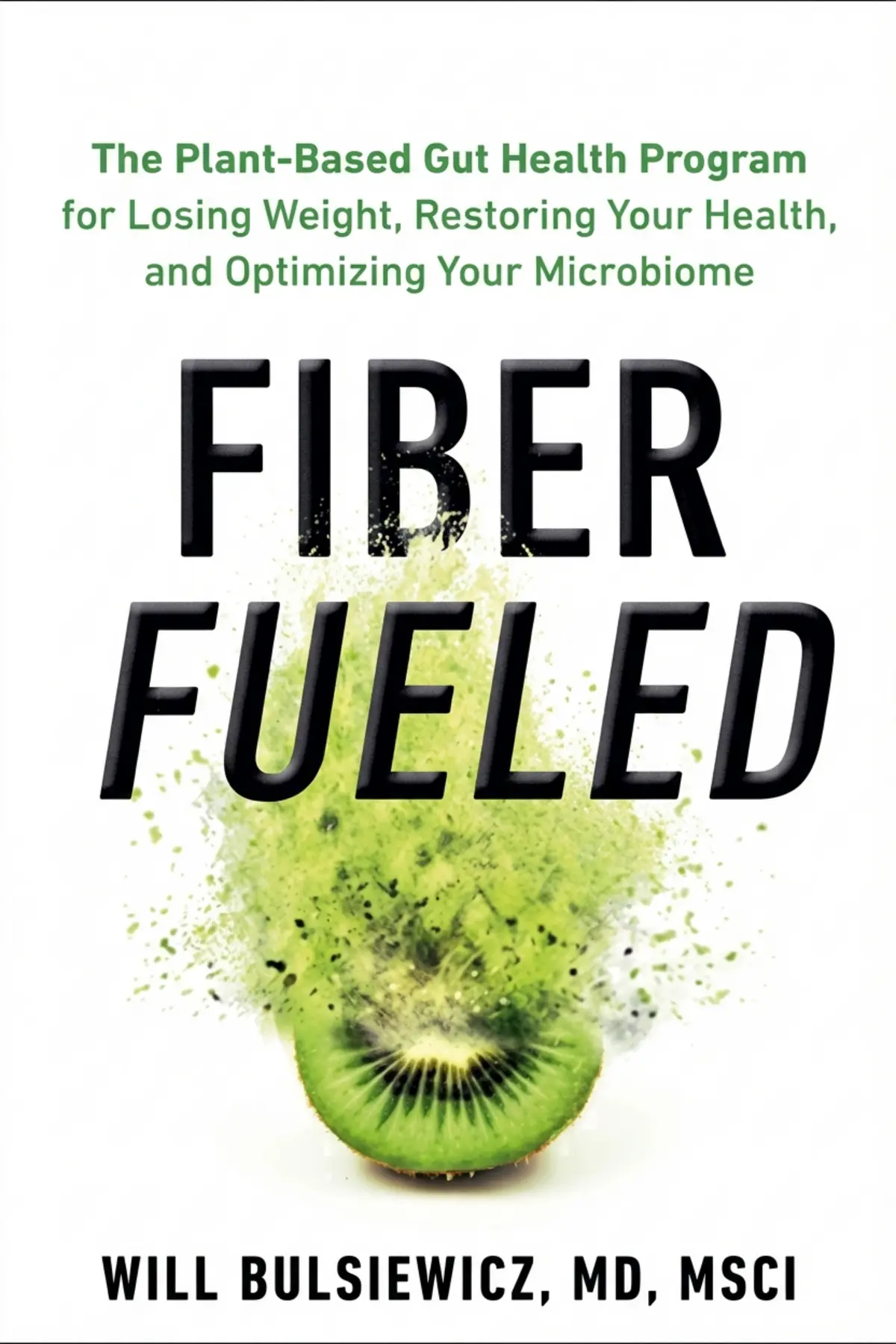
Table of Content
1. Introduction
58 sec
Plenty of people cut out gluten, go Paleo or count carbs and still live with bloating, low energy and extra weight. In Fiber Fueled, gastroenterologist Will Bulsiewicz, known to his patients as Dr. B, points to a population most diets ignore: the roughly 39 trillion microorganisms living in your colon, far more than the 100 billion or so stars NASA counts in the Milky Way.
Those microbes, he argues, help steer your immunity, metabolism, hormones and even your mood, and they eat what you eat. His throughline is simple. Modern food and medicine are starving and thinning out this inner community, and the most direct repair is a wide variety of fiber-rich plants. What follows explains how the gut community works, what damages it, how fiber feeds it, and a short memory aid that makes thirty different plants a week feel ordinary instead of heroic.
2. Treat your gut as your health's command center
2 min 26 sec
Scientists knew of about two hundred kinds of gut bacteria fifteen years ago. The real number is far larger, and what those residents do reaches well beyond digestion, into places most people would never think to look.
3. Spot the modern habits that wreck your gut
2 min 07 sec
One patient had cut gluten, cut beans, tried Paleo and was eyeing Keto, yet her pain, weight and mood kept getting worse. Her story reveals a pattern that a gastroenterologist sees in his clinic over and over.
4. Choose your plate to help the right microbes win
2 min 15 sec
A single day of eating influences dozens of generations of the creatures inside you. Government figures on what people actually eat show which of those creatures most of us are breeding, and the picture is not reassuring.
5. Feed the bacteria that protect you
1 min 52 sec
School taught many of us that fiber passes straight through the body unchanged. A gastroenterologist explains what really happens to it inside the colon, and why a fiber bar from the health food store misses the point.
6. Reach thirty plants a week with one acronym
2 min 22 sec
Thirty different plants every week sounds like a full-time job. A six-letter memory aid, plus two bonus letters, turns that target into something a busy person can check off while shopping or cooking dinner.
7. Get more from plants by combining and sharing
1 min 49 sec
A squeeze of lemon changes what your body takes from a bowl of kale. And the final habit for a healthy gut has nothing to do with food at all, which makes it the easiest one to enjoy.
8. Conclusion
1 min 10 sec
Fiber Fueled asks you to rethink who you are feeding. Every meal reaches a community of trillions, and that community answers back through your immunity, weight, mood and risk of disease. Kristen’s growing list of banned foods and medicines shows what happens when each symptom is treated alone while the community underneath shrinks. Bulsiewicz’s alternative is generous: add plants, and add many different ones.
The first move fits into this week. Count the different plants you eat over seven days and push toward Rob Knight’s thirty, using F GOALS as a checklist when you shop. Look at the balance of your plate too, aiming for a diet that is at least 90 percent plants, with whole foods taking the place of processed ones wherever you can. Keep in mind that medicines, antibiotics above all, carry a cost for your gut, as the ciprofloxacin numbers show. And keep spending time close to people you like.
The book begins with more microbes in your colon than stars in the galaxy. You tend that galaxy every time you sit down to eat, one plate at a time.
About this book
What is this book about?
Many people cut gluten, try Paleo or count carbs and still struggle with bloating, fatigue, extra weight or a growing list of prescriptions. Will Bulsiewicz, a gastroenterologist known as Dr. B, argues that most diets overlook the real patient: the roughly 39 trillion microorganisms living in the colon, which help direct immunity, metabolism, hormones and thinking. He shows how modern habits leave us overfed, undernourished and hyper-medicated. Antibiotics can wipe out a third of gut bacteria in five days, processed food and sugar crowd out healthy species, and almost nobody eats enough fiber. When the gut community falls out of balance, he links the resulting inflammation to obesity, diabetes, heart disease and more. His answer is to feed the microbes instead of fighting symptoms. Readers learn how fiber becomes protective compounds in the colon, why variety matters more than a fiber bar, and how the memory aid F GOALS makes thirty different plants a week realistic, along with tips on combining plants and sharing microbes with the people around you.
Book Information
Who it's for
Bloating and stubborn weight
People with bloating, irregular digestion or weight that diets have not fixed.
Professionals short on time
Busy professionals who want a simple, food-first way to protect their long-term health.
Curious about the microbiome
Anyone curious about the gut microbiome who wants practical steps, not just the science.
About the Author
Will Bulsiewicz
Will Bulsiewicz, known as Dr. B, is an award-winning gastroenterologist recognized for both his clinical work and his research. He has written more than twenty scientific papers and has given keynote talks to audiences including Congress and the United States Department of Agriculture. Fiber Fueled became a New York Times bestseller, and he followed it with The Fiber Fueled Cookbook and Plant Powered Plus. He also co-founded 38TERA with nutrition scientist Simon Hill, where he serves as co-CEO and develops supplements aimed at supporting the gut microbiome.
Ratings & Reviews
Ratings at a glance
What people think
Listeners consider this title essential reading, packed with high-quality data and comprehensive citations for every claim. It is written in an accessible way, featuring great recipes that are straightforward to prepare, and one listener points out that it provides 4 weeks of menus with recipes. The evidence-based perspective is highly valued, as one review mentions how clearly it details the science behind adopting a plant-based diet. Listeners describe beneficial shifts in their dietary patterns and gut wellness, observing better stomach performance and the capacity to enjoy a more diverse range of foods.
Top reviews
Mattanee
Ever wonder why your stomach feels like a disaster zone after every meal? This book provides the scientific roadmap to fixing that internal chaos through the power of plant diversity. Dr. Bulsiewicz introduces the 'FGOALS' acronym, which makes it incredibly simple to remember which food groups to prioritize daily. Truth is, I never realized how much my gut health dictated my overall mood and energy levels until I started the 'slow and grow' method. By gradually increasing my fiber intake rather than jumping in headfirst, I avoided the usual bloating that comes with a diet overhaul. The science is dense but presented in a way that feels like a conversation with a very smart friend. It is a refreshing departure from the usual restrictive diet fads that tell you what to cut out. Instead, this focuses on what to add in to help your 100 trillion microbes thrive.
Show moreGor
Wow, I finally understand what all those 'post-biotics' actually do for my cells on a molecular level. Dr. Bulsiewicz manages to make complex gastroenterology feel accessible and even exciting for the average reader. Unlike other nutrition books that feel like a chore to get through, his writing style is charming and genuinely funny at times. Not gonna lie, I was shocked to learn that we are essentially only 10% human based on our cell count! The emphasis on plant diversity over just 'eating your greens' has completely changed how I shop at the grocery store. I now find myself counting my unique plant points every week to hit that magic number of thirty. If you are looking for a book that bridges the gap between clinical research and practical kitchen application, this is it. It is an absolute must-read for anyone serious about long-term vitality and disease prevention.
Show moreNina
After hearing Dr. B on a podcast, I expected a lot, and this book delivered on the scientific rigor and clinical expertise. The way he breaks down the function of the 100 trillion microbiota in our bodies is nothing short of fascinating. Personally, I was most impressed by the discussion on how our gut bacteria actually communicate with our brain to influence our cravings and mood. This isn't just a weight loss book; it’s a manual for biological optimization. The 4-week protocol is a great way to jumpstart your health, providing shopping lists that take the guesswork out of the transition. I've noticed a massive difference in my skin clarity and digestive regularity since following the FGOALS framework. It’s rare to find a doctor who is this passionate about nutrition and willing to cite every single claim with peer-reviewed research. This is easily my new go-to recommendation for gut health.
Show morePrinya
This book is a must-read for anyone who thinks they are 'allergic' to fiber or has given up on beans forever. Dr. Bulsiewicz explains that your gut is like a muscle that needs to be trained, and his 'slow and grow' philosophy is a game-changer. I used to get so bloated after eating lentils, but following his advice on soaking and gradual introduction has allowed me to enjoy them again. The recipes are vibrant, simple enough for a weeknight, and packed with the plant diversity he advocates for throughout the text. I especially loved the focus on fermented foods like kimchi and miso as functional medicines. This book genuinely changed my life by giving me the tools to heal my own digestive system from the inside out. It is authoritative yet incredibly accessible, making it the perfect gift for family members who are struggling with their health. Truly an excellent resource!
Show moreTeng
As someone who has struggled with IBS for a decade, Dr. B's 'slow and grow' approach finally made sense to me. Most doctors just tell you to avoid certain foods, but this book explains how to actually train your gut to handle fiber again. The distinction between prebiotics and probiotics was particularly helpful, and I loved the deep dive into how cruciferous vegetables like broccoli sprouts work their magic. Frankly, I was skeptical about the recipes at first because they seemed complicated, but the flavors are actually quite impressive once you get the hang of the pantry staples. My only minor gripe is the somewhat heavy-handed dismissal of all dairy, which felt a bit more biased than the rest of the evidence-based sections. Still, the improvement in my digestion after just three weeks is undeniable. It is definitely one of the more authoritative guides on gut health available today.
Show morePla
Finally got around to trying the 4-week meal plan included at the back, and the results were surprisingly tasty and satisfying. The book is essentially a masterclass in how fiber acts as fuel for our microbiome, backed by over 600 scientific studies. I particularly enjoyed the section on aromatic vegetables and the 'chop and stop' rule for onions and garlic. Look, some parts of the book are definitely long-winded, and the author could have made his point in half the pages. But the practical advice on using psyllium and other prebiotics to manage GI issues is worth the price of admission alone. My stomach function has improved significantly, and I no longer feel that afternoon slump that used to plague me. It is a very friendly, upbeat guide that doesn't talk down to you, which I really appreciated. Just be prepared to spend a lot more time in the produce aisle.
Show moreChanikarn
Listening to the audiobook version was a great choice because the narrator’s upbeat energy keeps the science from feeling dry or academic. Dr. Bulsiewicz has a way of making you feel like he's right there in the room, cheering you on as you transition to a more plant-centered lifestyle. I found the FGOALS system to be a brilliant way to structure my meals without feeling like I'm on a restrictive 'diet.' The book does a fantastic job of explaining the role of short-chain fatty acids in preventing chronic inflammation and boosting the immune system. I did find the sections on specific high-priced supplements a bit unnecessary, but he does provide cheaper alternatives like Benefiber for those on a budget. Overall, it’s a very comprehensive summary of modern gut health that feels much more current than other books in the genre. It definitely encouraged me to strive for more variety in my daily salads.
Show moreTaw
The chapter on fermented foods was enlightening, but the book itself suffers from serious bloat and could have used a tighter editor. Many of the core concepts, like eating a variety of plants to increase microbiome diversity, are repeated so often that I started skipping large chunks of text. To be fair, the information regarding short-chain fatty acids is fascinating and well-supported by numerous studies cited throughout the chapters. However, I found the 4-week meal plan at the end to be quite labor-intensive and pricey for a standard family budget. While the author’s voice is cheerful and encouraging, the constant 'rah-rah' tone occasionally felt more like marketing than medicine. It is a solid resource for beginners who are completely new to the plant-based world, but seasoned vegans might find the first half a bit redundant. I appreciated the advice on moderate antibiotic use, though, as it felt more balanced than other health gurus.
Show moreYui
In my experience, if you’ve read more than two books on plant-based eating, you probably won’t find a ton of brand-new information here. The core message is simple: eat a wide variety of plants to feed your gut bugs and avoid processed junk. The author spends a lot of time on the basics of fiber that most health-conscious people already know by heart. That said, the specific focus on the microbiome as an ecosystem is well-explained and offers some fresh perspectives on how we interact with our environment. The recipes are hit or miss; some are delicious, while others require obscure ingredients that I'll likely never use again. I also think the claim that you can eat 'unlimited' plants is a bit misleading for people trying to manage specific weight goals. It’s a good introductory text, but it didn't quite live up to the massive hype I've seen on social media.
Show moreNannapat
Picked this up hoping for a nuanced take on gut health, but I found the author’s bias against dairy and alcohol quite distracting. It pales in comparison to Gregor’s 'How Not to Die' because it lacks that same level of meticulous 'why' behind every single recommendation. While the author claims to be against restrictive dieting, he essentially tells you to eliminate entire food categories while celebrating others as 'bursting with goodness' without much nuance. The meal plan is especially problematic for me because it is expensive and requires a massive amount of prep time that isn't realistic for a working professional. In my experience, telling people to just 'eat more plants' is great, but the way it’s presented here feels a bit shaming toward anyone who isn't 100% plant-based. It felt more like a job of eating rather than a joy of cooking. I ended up scanning most of the later chapters.
Show moreQuestions about this book
What is the main idea of Fiber Fueled?
Will Bulsiewicz argues that the trillions of microbes in your gut help direct immunity, metabolism, hormones and thinking, and that modern life leaves them starved and damaged. Too much processed food, sugar and animal protein, too many medicines and too little fiber shrink the variety of healthy species. His fix is to feed those microbes a wide range of fiber-rich plants, with a diet that is at least 90 percent plant-based.
What does F GOALS stand for in Fiber Fueled?
F GOALS is Bulsiewicz’s memory aid for fiber-rich food groups. F is fruit and fermented foods, G is greens and whole grains, O is omega-3 seeds like flax, chia and hemp, A is aromatics such as onions and garlic, L is legumes, and S is sulforaphane-rich cruciferous vegetables like broccoli and cabbage. Two bonus S letters add mushrooms and seaweed. He suggests eating from each group every day.
How many plants should you eat per week for gut health?
Bulsiewicz cites microbiome researcher Rob Knight, who found that eating 30 different plants each week produces the greatest variety of gut microbes. That includes fruit, vegetables, whole grains, legumes, nuts, seeds, herbs and fermented foods. Variety matters more than quantity of any single item, which is why the author says a fiber bar cannot replace a diverse, colorful plate.
Why is fiber so important for the gut microbiome?
Your own body has only 17 enzymes for complex carbohydrates and none that digest fiber, but gut microbes have more than 60,000 that can. As they break fiber down, they release short-chain fatty acids, which make the colon more acidic and suppress inflammatory bacteria and dangerous strains like E. coli and Salmonella. Yet fewer than 3 percent of Americans reach the recommended daily fiber minimum.
Who should read Fiber Fueled?
It suits people with ongoing digestive trouble, those who have tried elimination diets without success, and anyone who wants to lower long-term disease risk through food. Readers looking for a practical method get the F GOALS checklist and the thirty-plants-a-week target, while those curious about the science get a clear tour of what gut microbes are and what they do.
Readers also enjoyed







AUDIO SUMMARY AVAILABLE
Listen to Fiber Fueled in 15 minutes
Get the key ideas from Fiber Fueled by Will Bulsiewicz, plus 5,000+ more nonfiction titles.
- 5,000+ titles
- Listen as much as you want
- 7-day free trial
- Cancel anytime









