

13 min 44 sec
Available in: English
F#ck Content Marketing: Focus on Content Experience to Drive Demand, Revenue & Relationships
By Randy Frisch
Shows marketers how to get more from the content they already have by organizing it around topics and buying stages, personalizing what people see and leading them into a space the company controls.
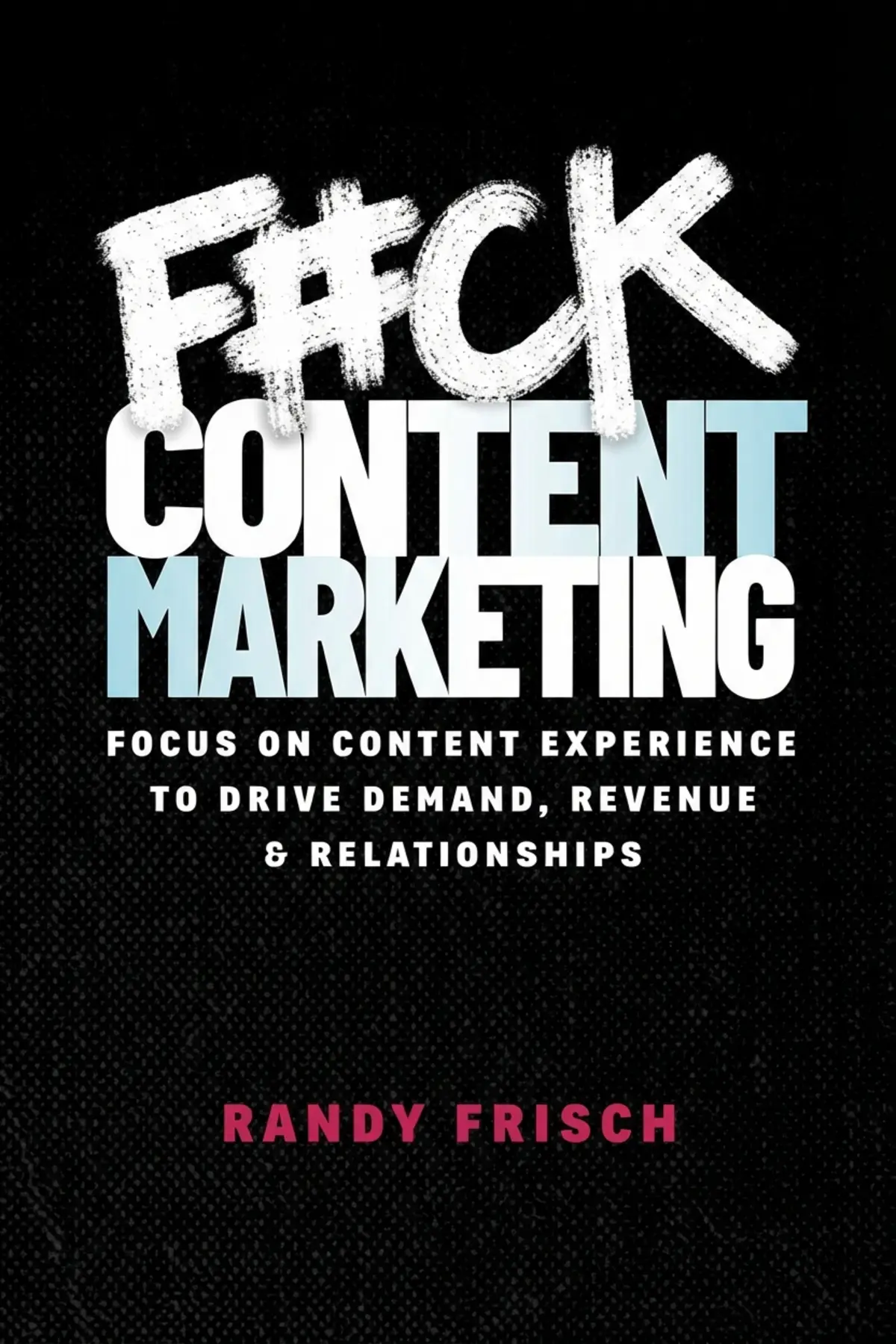
Table of Content
1. Introduction
59 sec
Most companies are not short of content. Content marketer Robert Rose says that a typical company puts out just around one fifth of the material it produces, and most of what remains goes unseen. In F#ck Content Marketing, Uberflip co-founder Randy Frisch argues that the real problem was never volume. It is the experience people have when they meet your material: where they find it, how it looks and whether it leads them anywhere next.
That claim runs through everything here. Marketing works when content is organized around the customer and delivered as one personal, continuing experience. Frisch builds the case on familiar names, from Spotify’s playlists and a follow-up email from Tesla to the way Netflix out-sorted Blockbuster and a cookie brand that turned a stadium blackout into thousands of shares. By the end, the material already sitting in your folders becomes something a buyer can find, enjoy and follow toward a decision.
2. Make every old piece of content a front door
1 min 30 sec
Some of your best marketing may be work you published years ago and forgot. A marketer’s joke about Google explains the risk, and a quick check shows whether old pieces still send strangers anywhere useful.
3. Give each visitor a playlist made for them
1 min 43 sec
A 1990s mixtape held about twenty songs and took days to make. The streaming service that replaced it nearly doubled how many artists people explored, and the reason applies far beyond music.
4. Turn one contact into an ongoing conversation
1 min 41 sec
Social feeds swallow half an hour without asking. A carmaker’s follow-up email, which remembered a relative’s broken leg, shows how a business can borrow the same pull without building a network.
5. Judge your site in the first ten seconds
1 min 36 sec
A visitor you worked hard to attract may decide to leave before reading a single sentence. One study put a number on it, and the fix starts with a plain Google search.
6. Sort content by topic, never by format
1 min 47 sec
The most common way companies organize their websites looks sensible to the team that built it and frustrates almost everyone else. A video rental chain’s collapse shows what better sorting can do.
7. A tagged library shows where buyers lose interest
1 min 42 sec
Most companies cannot say what content they own, let alone where it falls short. A simple spreadsheet and the right labels expose a gap that many businesses never notice until buyers drift away.
8. Show up everywhere buyers look, and move fast
1 min 39 sec
Buyers check stores, reviews and feeds before deciding, and a power cut at a famous football game showed what a prepared team can do with an unexpected half hour.
9. Conclusion
1 min 07 sec
Despite its blunt title, the book does not reject content. It rejects the habit of measuring marketing by how much gets made. Frisch’s examples all point to the moment after someone finds a piece: Spotify choosing the next song, Tesla remembering a broken leg, Netflix putting every Tom Hanks film one tap away. Each one wins by deciding what the person experiences next.
For anyone running a website, a newsletter or a sales pipeline, that changes the first task. Before commissioning anything new, list what already exists in one place and tag each item by the stage of buying it serves. The thin middle is probably where your buyers drift off. Then search for yourself as a stranger would and walk the path they walk, fixing whatever makes you hesitate in those first ten seconds. And make every follow-up personal enough to show you remember the person on the other end.
Somewhere in most companies sits the roughly four-fifths of content nobody published, already paid for and ready to work the day someone puts it in order.
About this book
What is this book about?
Plenty of companies can produce clever posts, videos and podcasts. Far fewer get value from them. Pieces end up in the wrong places, are hard to find or are never published at all. Randy Frisch argues that the fix is not a bigger production line but a better experience for the person meeting the content. Drawing on examples from Spotify, Tesla, Netflix and Oreo, Frisch shows what keeps people engaged: material that feels chosen for them, a setting that looks good and is easy to move through, and a clear next step after every piece. He explains why sorting content by format frustrates visitors, how one central index with good tags exposes the stages of the buying process where material is missing, and why public platforms should lead people back to a space you control. Readers get a practical way to audit their own site as a stranger would, rebuild their content library around topics and buyer stages, and spread their presence across the channels customers actually use.
Book Information
Who it's for
Marketers seeing few leads
Marketers whose teams produce plenty of content but see little engagement or few leads from it.
Founders and business owners
Founders and small business owners deciding how to organize a website, blog or video library.
Wanting lasting buyer interest
Sales and marketing leads who want buyers to stay interested between first contact and purchase.
About the Author
Randy Frisch
Randy Frisch is an entrepreneur and a co-founder of Uberflip, whose platform helps marketers build content experiences for each stage of the buyer journey, and he has served as its chief marketing officer. He has long pushed marketers to look past producing content and consider how people actually encounter it. That work grew into the annual Conex conference, a North American tour and a podcast he hosts. Marketo named him one of the fifty most fearless marketers worldwide.
Ratings & Reviews
Ratings at a glance
What people think
Listeners find that while perspectives differ on whether the book occasionally feels like a sales pitch for marketing software, the majority value its focus on content experience over high production numbers. They appreciate the strategic advice on customizing and structuring current assets to better suit buyer journeys and increase revenue. Furthermore, listeners point to the "Content Experience Framework" as a functional resource for team alignment, with one listener observing how it helps organizations move away from a "volume-first" perspective. They also suggest the book acts as a valuable alert to start viewing content as an engaging, customized path that connects with audiences on a large scale.
Top reviews
Clara
This book is the wake-up call every digital marketer needs right now. We’ve spent years obsessing over SEO and pumping out blog posts that nobody actually reads, and Randy Frisch hits the nail on the head by calling out that volume-first obsession. The core message is that our content lives in a vacuum unless we curate the experience around it. I loved the emphasis on centralizing and organizing assets to drive real revenue instead of just chasing vanity metrics like clicks or shares. To be fair, some parts feel a bit like a manual for a specific software platform, but the strategic framework is solid enough to stand on its own. If you’re tired of the 'content hamster wheel,' this is essential reading for your whole team.
Show moreYaowaluk
The chapter on personalizing content at scale was worth the price of the book alone. Most people think personalization is just 'Hi [First Name]' in an email, but Frisch shows how it’s actually about relevance and context. He challenges us to think like product designers, focusing on user flows and avoiding 'content dead-ends' that kill conversions. I loved the idea of treating your content hub like a curated journey rather than a chronological list of posts. This book helped our team realize we were over-optimizing for robots and ignoring the actual human being on the other side of the screen. If you want to move from vanity metrics to actual pipeline impact, read this immediately. It’s a bold, necessary shift in mindset.
Show moreTar
Ever wonder why your brand produces tons of content that just sits there gathering digital dust? Frisch argues that we shouldn’t just be content creators; we need to be content experience designers. The comparison to how Netflix and Spotify keep users engaged through personalized streams really resonated with me. It’s about moving away from the storage closet mentality and building a digital storefront that guides buyers through their journey. The Content Experience Framework provides a practical map for this transition. My only gripe is that it occasionally veers into 'sales pitch' territory for the author’s company, which can be a bit distracting. Nevertheless, the shift from chronological publishing to thematic journeys is a game-changer for demand gen.
Show moreGrace
Finally got around to reading this, and it’s a refreshing take on a stale industry. The statistic that 70% of organizational content goes unused is a gut-punch that should make any CMO pause. Frisch forces you to look at content as a revenue-driving asset rather than just a top-of-funnel activity. I particularly enjoyed the sections on empowering sales teams with the right assets at the right time. It’s not just about what you say, but where and how the customer encounters it. While the tone is a bit aggressive at times, the underlying logic is sound. We’ve already started auditing our existing assets to see where we can improve the flow instead of just writing another 500-word blog post for the sake of it.
Show moreAurora
Stop obsessing over SEO for five minutes and read this book. It’s a blunt reminder that if your content experience sucks, all that organic traffic you're fighting for won't actually convert into revenue. Frisch provides a solid blueprint for organizing content around themes and buyer stages rather than just date-stamping everything. I appreciated the actionable advice on auditing existing assets; it’s much more efficient to fix what you have than to keep creating from scratch. To be fair, there’s a heavy emphasis on technology that might not be accessible to everyone, but the principles of design and navigation are universal. It’s a great resource for anyone trying to justify a more strategic, less frantic approach to marketing.
Show moreAiden
After hearing so much buzz about 'content experience,' I wanted to see if there was actual meat on the bones. Frisch delivers a compelling argument for why our current production-first mindset is failing. I particularly liked the section on organizational alignment—getting sales, marketing, and customer success to treat content as a shared revenue asset. It’s a bit of a wake-up call for those of us who have been hiding behind pageview counts for too long. Frankly, the book could have been shorter as it repeats its main thesis quite a bit, but the Content Experience Framework is a practical tool that I’ve already started using in my planning sessions. It’s about building a bridge, not just throwing stones into the ocean.
Show moreUbolrat
Not what I expected, but in a good way. I thought this would be another 'how to write better' book, but it’s actually about the architecture of information. It forces you to rethink the entire environment where your content lives, from navigation to sequencing. The focus on 'infinite scrolls' and keeping the user engaged within your own controlled environment is spot on. Gotta say, I’ve noticed a real difference in how I view our landing pages now—they aren't just catch-all buckets anymore. While the author’s voice is definitely strong and sometimes feels like a sales pitch for a specific platform, the strategic value outweighs the marketing fluff. It’s a solid guide for anyone who wants to make their content work harder.
Show moreOwen
As someone who has been in the marketing trenches for a decade, I found myself nodding along to the premise while simultaneously sighing at the reality of it. The truth is, the idea of personalizing every touchpoint and creating 'immersive infinite scrolls' for B2B content is brilliant on paper. However, the book doesn’t quite address the massive technical and political hurdles within a legacy organization. I appreciate the push to stop the noise and focus on quality, but the logistics are a nightmare to manage without a huge budget or specific tools. It’s a bit repetitive in the middle sections, and I felt like I was being sold a platform more than once. Good for high-level strategy, but maybe a bit idealistic for smaller teams.
Show moreCharlotte
Picked this up because our demand gen team was struggling with alignment, and it did offer some useful talking points. The book does a great job of explaining why we need to move away from the 'storage closet' approach to content. It's helpful for getting everyone on the same page regarding the buyer journey. That said, it felt a bit like a one-trick pony; the message about 'content experience' is hammered home in every single chapter. I would have liked more diverse case studies that didn't feel so closely tied to the author's own network. It’s a decent read if you want to understand the modern B2B landscape, even if the implementation feels daunting for those without a massive tech stack.
Show moreEthan
Look, the title is catchy, but the substance didn’t quite live up to the provocative branding for me. It felt more like an elongated white paper for a Content Experience Platform than a comprehensive marketing guide. While I agree that volume isn't everything, the 'framework' presented here feels like common sense wrapped in fancy jargon. If you’ve been in the industry for more than a year, you already know that personalization and user experience matter. I found the writing style a bit grating, and the constant self-promotion of the author's business interests made it hard to take the advice as objective strategy. It’s a quick read, but I was hoping for deeper psychological insights rather than a pitch for a digital hub.
Show moreQuestions about this book
What is F#ck Content Marketing about?
Randy Frisch argues that companies rarely lack content; they lack a good way of delivering it. Citing content marketer Robert Rose, he notes that the average business publishes only about a fifth of what it creates. His focus is content experience: making material easy to find, personal, attractive and connected, so each piece leads people toward the next and into a space the company controls.
What does Randy Frisch mean by content experience?
Content experience is the setting in which people meet your material. Frisch wants it professional, engaging, easy to move through and true to the brand on both desktop and phone. He cites a 2010 study by computer scientist Ryen W. White finding that 38 percent of users leave a site whose content or design does not appeal, often within ten seconds.
What are format buckets and why should you avoid them?
Format buckets are sections that sort content by type, such as one page for videos and another for podcasts. Frisch says visitors care about subjects, not formats, so buckets make them search several places for one topic. He recommends grouping by theme instead, for example a positive psychology category holding every related post, video and podcast, much as Netflix tags titles by actor and director.
How can I apply the ideas in F#ck Content Marketing?
Start by indexing all your content in one place, even an Excel sheet, and tag each item by topic, product, buying stage, author and format. Count items per stage to find gaps, often in the middle. Then search for your own site as a stranger, note what frustrates you and fix it. Finally, spread your presence across many channels and send people back to your own site.
Who should read F#ck Content Marketing?
It suits marketers, founders and sales leads who already create content but see weak engagement from it. Anyone managing a blog, video library or newsletter will find practical steps, from replacing format categories with topics to personalizing follow-ups the way Tesla does after a test drive, and to staying ready for chances like the Oreo tweet during a Super Bowl blackout.
Readers also enjoyed





AUDIO SUMMARY AVAILABLE
Listen to F#ck Content Marketing in 15 minutes
Get the key ideas from F#ck Content Marketing by Randy Frisch, plus 5,000+ more nonfiction titles.
- 5,000+ titles
- Listen as much as you want
- 7-day free trial
- Cancel anytime









