
13 min 55 sec
Available in: English
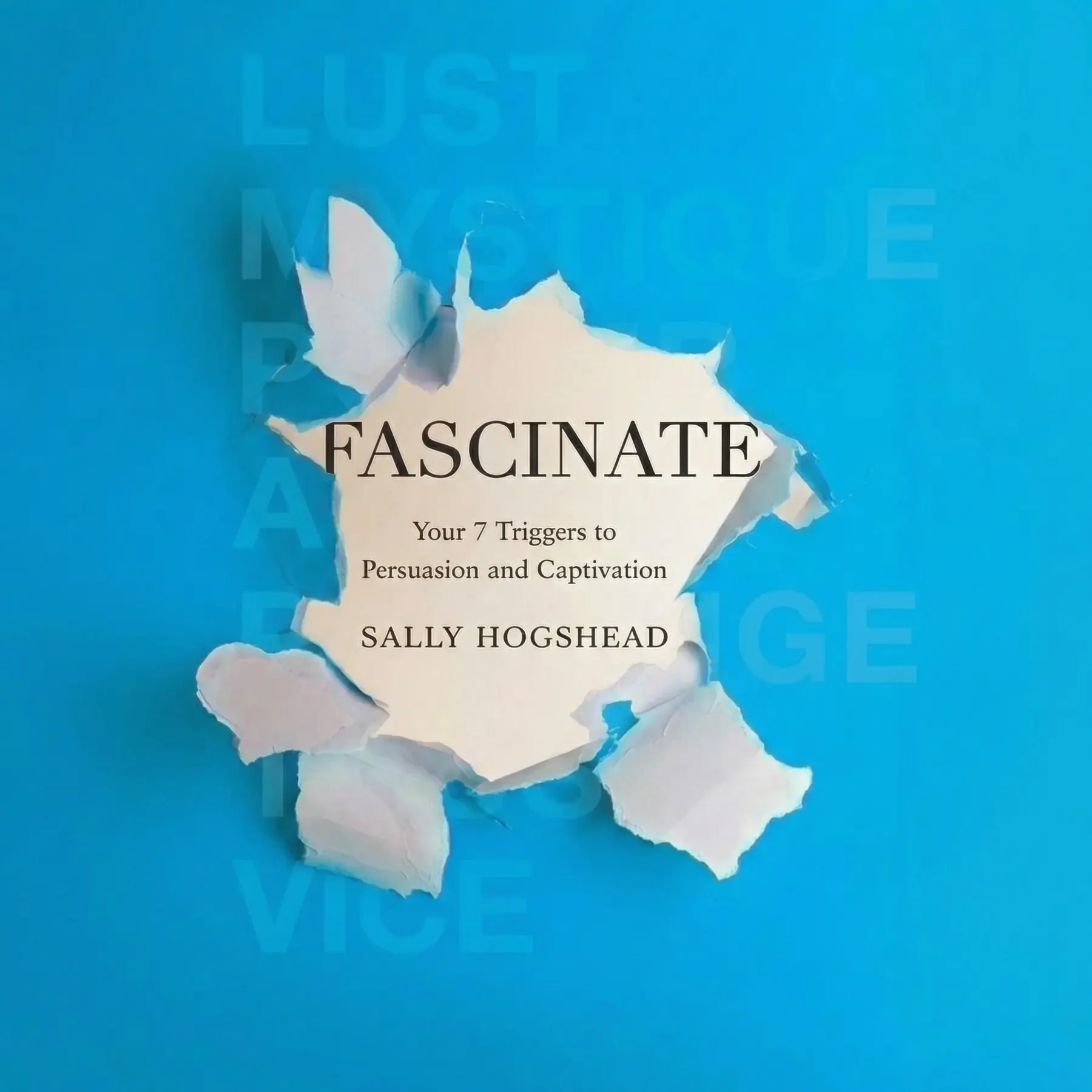
Fascinate: Your Seven Triggers to Persuasion and Captivation
A guide to the seven triggers that capture attention and drive choices, namely trust, vice, power, prestige, alarm, mystique and lust. It also shows how a person or company can find its main trigger and use it on purpose.
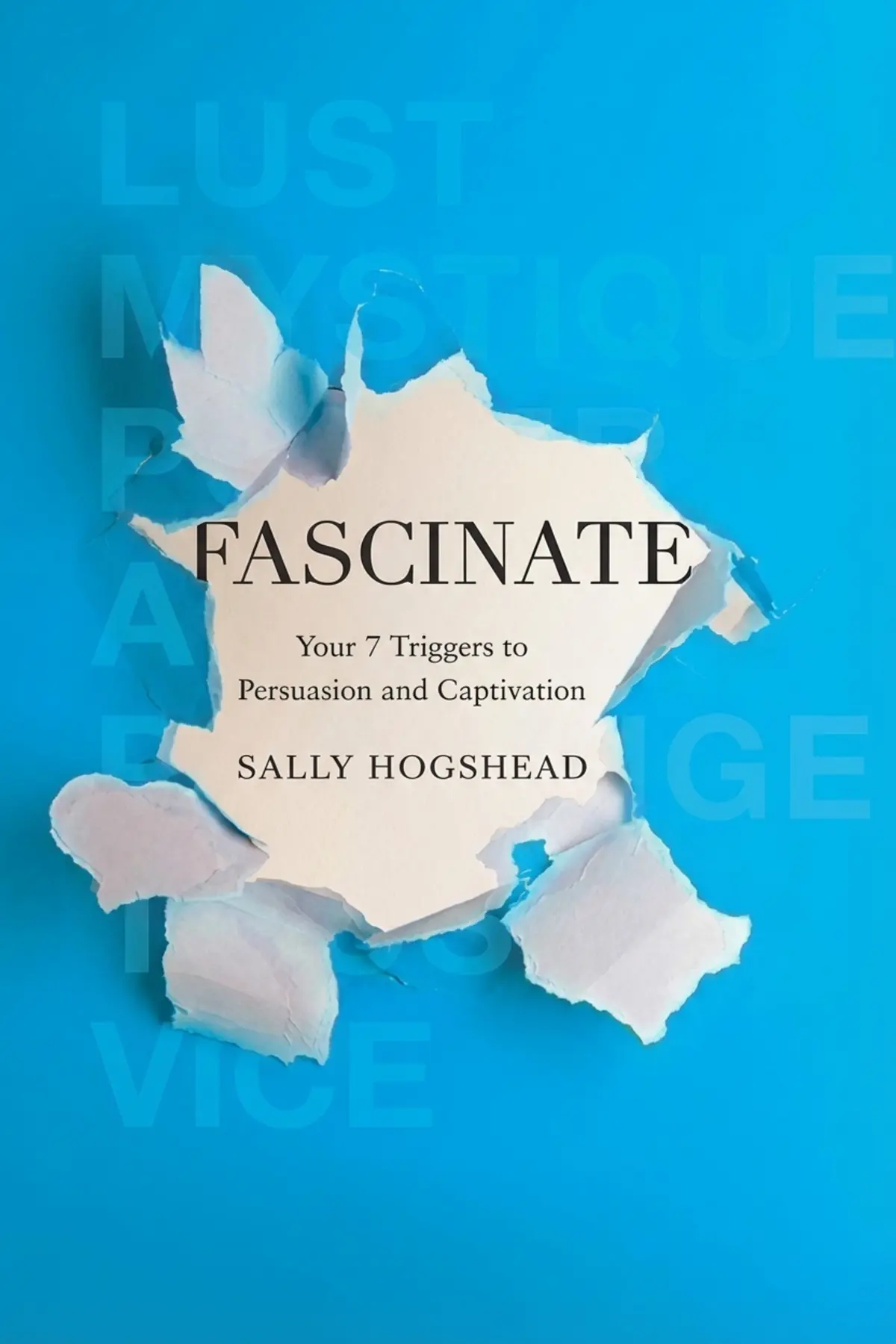
Table of Content
1. Introduction
55 sec
Most of us want to be noticed, remembered and agreed with, and every company wants the same from its customers. In Fascinate, advertising veteran Sally Hogshead argues that this pull is no rare gift. It runs on seven triggers that everyone already uses without knowing it, from trust, vice and power to prestige, alarm, mystique and lust.
Her case is that once you see which trigger you lean on, you can use it on purpose, add a second and turn the pair into a plan with goals you can measure. The examples range from a restaurant that throws out paying diners to a soft drink recipe kept secret for decades, and a road safety campaign that worked only when it stopped talking about death. By the end, you can name the trigger behind your own appeal and decide which one to add next.
2. Use the attention instinct you already have
1 min 11 sec
Peacocks and young babies both show that fascination is no luxury. It is wired in deep. So why do so many people and products still go unnoticed when the ability to hold attention comes built in?
3. Build desire by stretching the anticipation
1 min 21 sec
A last piece of chocolate and a monkey offered a single grape point to an odd fact about pleasure. It explains why a sensible shopper can walk out with one pricey jacket when cheaper ones are on the racks.
4. Keep one secret and people keep talking
1 min 21 sec
A soft drink company and a Los Angeles crab restaurant both hold back something their fans badly want to know. Their refusal keeps fans guessing, and other companies can build similar mystique by limiting access.
5. Warn people about what they actually fear
1 min 23 sec
A campaign full of crash images failed to stop teenagers from driving drunk. A far milder warning succeeded. The difference reveals why so many urgent messages at work get ignored.
6. Earn status and shape the room
1 min 49 sec
A pink Cadillac, an overpriced purse and a restaurant that yells at its diners all play on our hunger for rank and control. Some of the most effective versions are so small that nobody notices them.
7. Forbid something and watch interest grow
1 min 31 sec
Banning alcohol in the United States did not make drinking less attractive. A plain black box and a hidden volume setting show why, and how the same urge can help you ask for a favor.
8. Win loyalty with consistency and fast repair
1 min 34 sec
Children rated identical chicken nuggets differently depending on the wrapper. A juice maker facing a tragedy found a way back. Together they show how trust is built over years and what saves it when it breaks.
9. Turn the triggers into a plan that works
1 min 52 sec
A whisky barrel with your name on it, a waffle iron on a business card and a theme park that mixes comfort with curiosity all point to a method for choosing triggers and proving they pay off.
10. Conclusion
58 sec
Fascinate leaves a simple picture. Each time someone pays too much for a jacket, rushes a form, or picks the familiar logo in a strange town, one of seven triggers is at work. Hogshead’s claim is that you already pull these levers, mostly by accident, and that pulling them on purpose is a skill anyone can learn.
Begin with the trigger people already feel when they deal with you or your company, then find a second to support it, the way Disney pairs trust with its stories. When a message falls flat, check whether it speaks to what your audience truly fears losing, as the license did for teenagers. And keep something in reserve. A recipe nobody has seen has kept people talking for decades.
The peahen was never won over by an argument. She was held by a display, and Hogshead’s seven triggers are a way to choose yours with care.
About this book
What is this book about?
Most people want to be noticed and remembered, and every company wants customers to choose it over the brand next door. Sally Hogshead argues that the pull behind those moments, fascination, is not a rare talent. Humans evolved to fascinate and be fascinated. Most of us already use the skill every day, just by accident and not very well. Drawing on her years in advertising, Hogshead names seven triggers that create fascination, starting with lust and mystique, then alarm, prestige and power, and ending with vice and trust. Each one captures our attention in its own way. Her examples include a secret soft drink recipe, a restaurant that throws out paying diners, a road safety campaign that worked only when it stopped talking about death, and a juice company that won back trust after a tragedy. The book ends with a three-stage method: evaluation, development and execution. Readers learn to identify their primary trigger, support it with a second one, win their team's backing and set narrow goals that show whether the idea is working. It works for a brand, a product or a person who wants to stand out.
Book Information
Who it's for
Wanting their brand noticed
Founders and marketers whose product gets lost among similar brands and who want a clear way to stand out.
Professionals feeling overlooked
Professionals who feel overlooked in meetings, pitches or job searches and want to be remembered.
Team leads
Team leads who need their warnings, ideas and recognition to actually hold people's attention.
About the Author
Sally Hogshead
Sally Hogshead is a New York Times bestselling author, a member of the National Speakers Association Hall of Fame and chief executive of How to Fascinate. She spent her early career in advertising, where she won hundreds of awards for creativity, copywriting and branding. She graduated from Duke University and opened her own agency at 27. Her advertising work is displayed at the Smithsonian's museum of American history. Fascinate has been translated into more than 12 languages.
Ratings & Reviews
Ratings at a glance
What people think
Listeners find this work captivating and simple to navigate, featuring a straightforward prose style that delivers a remarkable array of perspectives. They value its intellectually stimulating nature, and one listener even commented that it is the only book on human motivation they need. The material is dense with specifics regarding fascination triggers and offers real-world utility, with one listener highlighting how it can be used to persuade others.
Top reviews
Pia
Finally got around to reading this, and wow—it's easily the most thought-provoking book on motivation I’ve picked up in years. Sally Hogshead has a way of cutting through the noise with a writing style that is both authoritative and incredibly easy to digest. Unlike other business books that are 300 pages of filler, this is an extraordinary collection of insights that you can actually use the same day you read it. The breakdown of the seven triggers is a masterclass in behavioral marketing. I especially loved the focus on how to stand out in an overstimulated world. If you are serious about personal branding or scaling a business, this is the only book on human motivation you really need on your shelf.
Show moreWorawit
Ever wonder why some people just walk into a room and instantly own it? This book answers that question and then some. It isn't just about selling products; it’s about understanding the primal forces that drive every choice we make. Hogshead's no-nonsense approach is refreshing in a genre often filled with vague platitudes. She provides a detailed roadmap for anyone looking to capture attention in a world where everyone is distracted. The way she explains 'Prestige' and 'Power' triggers changed how I pitch my projects entirely. It’s a fascinating, practical manual for persuasion that I keep going back to whenever I feel my messaging getting stale. Absolutely worth the time.
Show moreManop
Sally Hogshead brings a legendary ad-person's perspective to the table, and the result is nothing short of spectacular. This isn't just another dry business text; it's a witty and vibrant exploration of what makes us tick. I loved how she moved from historical examples to modern-day branding exercises seamlessly. The practical application of the seven triggers is explained so clearly that anyone—from a solo entrepreneur to a CEO—can find value in it. Truth is, we are all in the business of persuasion, and this book gives you the tools to excel at it. It’s an extraordinary collection of insights delivered in a way that is truly, well, fascinating.
Show moreLadawan
After hearing so much hype about the 'F-Score,' I finally decided to dive into this one. It's a remarkably quick read, packed with a no-nonsense writing style that gets straight to the point without much fluff. Hogshead does a great job of breaking down the mechanisms behind why certain brands or people command our attention while others simply fade into the background. I particularly appreciated the sections on how to apply these triggers to your own personal brand. While some of the examples felt a little dated or overly focused on high-end consumer goods, the underlying logic is solid. It’s not a textbook, but it is a highly practical guide for anyone looking to increase their influence and persuade others more effectively.
Show moreSarocha
This book provides an interesting lens through which to view human interaction and marketability. The way Sally Hogshead categorizes the different ways we captivate others is genuinely helpful for self-reflection. I found myself constantly highlighting passages and thinking about how my own business uses (or fails to use) the 'Trust' and 'Mystique' triggers. Look, it’s definitely more of a marketing book than a psychological study, but that’s not necessarily a bad thing. It's designed to be used, not just studied. My only real gripe is that the author can be a bit repetitive, hammering the same points home multiple times. Still, it’s an insightful collection of strategies that helped me rethink my approach to client persuasion.
Show moreWoravit
As someone who works in the creative industry, I found the 'Fascinate' framework to be a refreshing departure from standard marketing jargon. Hogshead writes with the confidence of a legendary ad person, and her witty, fast-paced prose keeps the pages turning. The insights into how 'Alarm' and 'Vulnerability' can actually build brand loyalty were particularly eye-opening for me. Gotta say, I didn't love the early focus on witchcraft as an analogy; it felt a bit forced and distracted from the more practical business advice. However, the rest of the book more than makes up for it. It offers a clear, actionable path toward making your message more compelling without needing a massive advertising budget.
Show moreLeila
The chapter on 'Vice' was worth the price of the book alone. It’s rare to find a marketing expert who is willing to talk so openly about the darker, more taboo triggers that drive consumer behavior. Hogshead manages to be provocative without being unethical, showing how these triggers are used by everyone from luxury brands to political campaigns. Personally, I would have liked a bit more hard data to back up some of the broader claims, as the research feels a bit anecdotal at times. But in terms of sheer creative inspiration, this book is a goldmine. It’s an easy, breezy read that will definitely change the way you look at every billboard and commercial you see.
Show moreYaowares
Picking this up was a bit of a rollercoaster because the premise is absolutely brilliant. Hogshead identifies seven triggers—lust, mystique, vice, alarm, power, prestige, and trust—which provide a useful framework for thinking about branding. However, the execution leaves something to be desired. The author frequently veers off into tangents and long-winded stories that don't always support her primary points effectively. While it’s an easy read with a no-nonsense tone, I found the categorization to be a bit too broad for practical business application. Truth is, the concepts are sometimes so generalized that they lose their utility. It’s a decent introductory text for those new to marketing, but seasoned professionals might find it lacks the granular detail needed for real-world strategy.
Show moreLiam
Is this book fascinating? Occasionally. Is it revolutionary? Not quite. I enjoyed the breezy, fast-paced writing style, and Hogshead clearly has an extraordinary collection of insights from her time in the advertising world. But the deeper I got, the more I realized that much of the advice is fairly common sense wrapped in fancy new terminology. For example, knowing that 'alarm' or 'prestige' motivates people isn't exactly a revelation to anyone who has spent more than five minutes in a boardroom. To be fair, the F-score test was a fun diversion, even if the results seemed a bit contrived. It’s a thought-provoking read if you’re looking for a quick spark of inspiration, but don't expect a comprehensive manual on the complexities of human motivation.
Show moreLek
Frankly, this felt more like a polished sales pitch for a consulting business than a serious piece of non-fiction. While the core concept of 'fascination triggers' sounds intriguing on the back cover, the actual content lacks the intellectual rigor I expect from a book on human behavior. The research methodology is essentially a collection of anecdotes and small sample sizes that wouldn't hold up in any peer-reviewed environment. I found the questionnaire particularly frustrating—the results felt random and didn't align with my actual professional personality at all. It’s written in that breathless, ad-agency style that values punchy slogans over deep analysis or nuanced data. If you’re looking for a rigorous psychological study on persuasion, look elsewhere. This is all glossy surface and very little substance underneath.
Show moreQuestions about this book
What is the main idea of Fascinate by Sally Hogshead?
Hogshead argues that everyone is born able to fascinate others, and that attention and persuasion run on seven triggers: trust, vice, power, prestige, alarm, mystique and lust. Most people and companies use them by accident. By learning how each one works, finding your primary trigger and pairing it with another, you can become more persuasive on purpose, whether you are building a brand or presenting yourself.
What are the seven triggers of fascination?
Lust is the anticipation of pleasure. Mystique is the urge to solve an open question, as with Coca-Cola’s secret formula. Alarm comes from a relevant threat or deadline. Prestige is the wish for higher rank. Power is control, from bold to subtle. Vice is the pull of the forbidden, as Prohibition showed. Trust is the comfort of consistency, which explains the reach of chains like McDonald’s.
How do you apply Fascinate to a business?
Hogshead describes three stages. In evaluation, ask whether customers talk about you, what sets you apart and whether people can take part in your brand, then identify your main trigger. In development, brainstorm ideas for all seven triggers and pair your main one with a second, as Disney pairs trust with mystique. In execution, win your team’s support with concrete plans and track narrow, specific goals.
Why did the drunk driving campaign in Fascinate fail?
An early campaign showed teenagers graphic images of crashes, but dying did not feel real to them, so the alarm never registered. A later campaign warned that driving drunk would probably cost them their license, and it worked much better. Hogshead’s lesson is that the threat that grabs attention is the one most relevant to the audience, not the biggest one.
Who should read Fascinate?
It suits marketers and founders trying to make a product stand out, and professionals who want their ideas and presence to be remembered. Team leads can use its ideas on visible recognition, such as Mary Kay’s pink Cadillac, and on small changes to meeting rooms. Anyone who writes warnings, pitches or requests will find the triggers useful for shaping how people respond.
Readers also enjoyed





AUDIO SUMMARY AVAILABLE
Listen to Fascinate in 15 minutes
Get the key ideas from Fascinate by Sally Hogshead, plus 5,000+ more nonfiction titles.
- 5,000+ titles
- Listen as much as you want
- 7-day free trial
- Cancel anytime









