

14 min 45 sec
Available in: English
Falling Upwards: How We Took to The Air
Richard Holmes shows how a fragile craft at the mercy of the wind spied on armies, entertained Napoleon's Paris, carried messages out of a besieged city and helped two families escape East Germany.
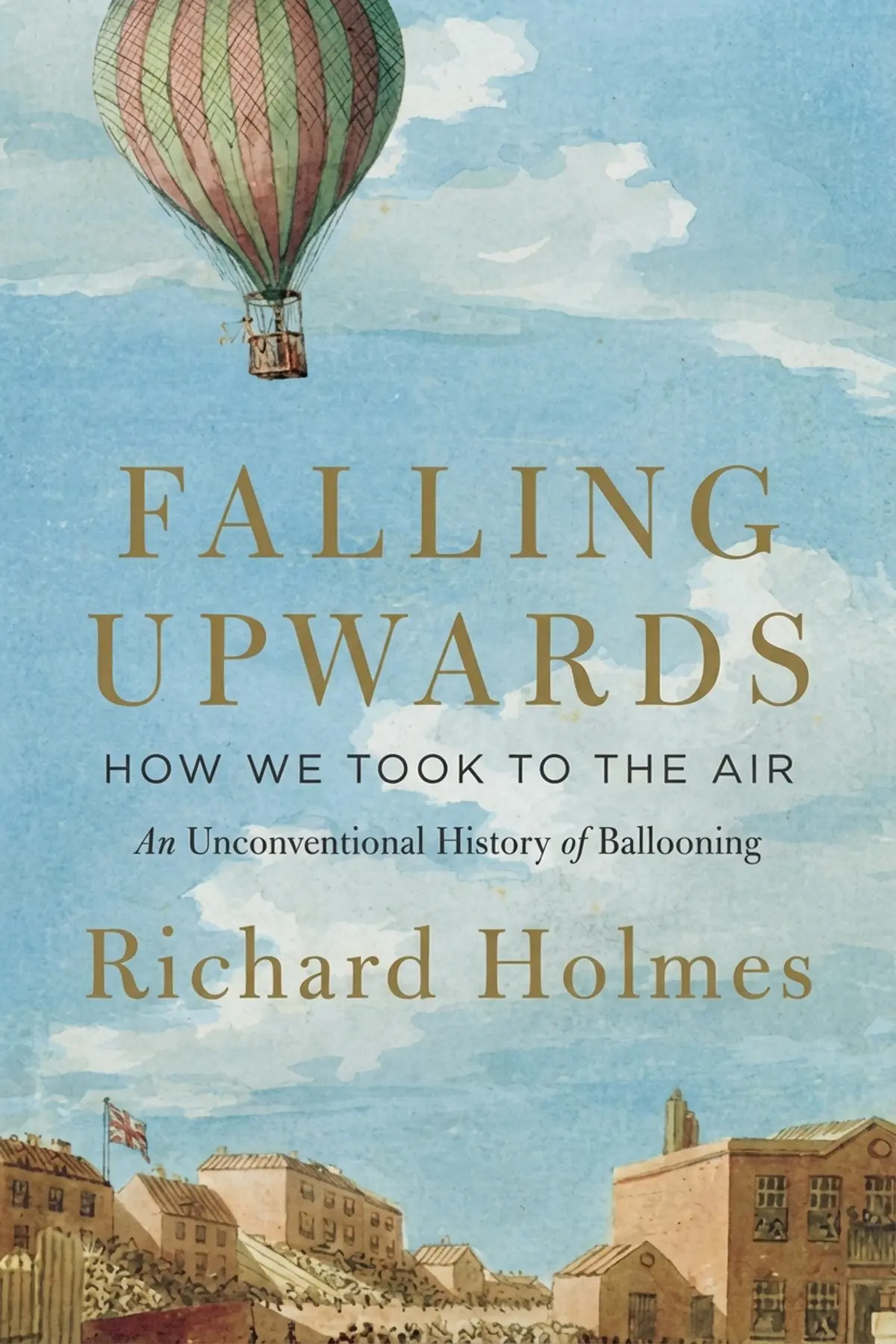
Table of Content
1. Introduction
59 sec
A hot-air balloon now looks like a toy for tourists, yet for its first pilots every climb was a gamble with death. In Falling Upwards, biographer Richard Holmes shows that these fragile bags of gas did far more than drift. They spied on armies, carried a besieged city’s voice to the outside world and helped invent a new kind of story.
His argument is that a craft with no engine and no steering, pushed wherever the wind chose, still changed how people fought, fled, dreamed and saw their own cities, until faster and more controllable machines replaced it. The story runs from Paris in 1783 to a forest near the East German border in 1979. On the way there is a fearless performer in a silver gondola, and two handymen secretly building a balloon in an attic. After this, the next balloon you see over a field will look less like a postcard and more like a piece of history.
2. Respect the risk that still rides every balloon
1 min 28 sec
A priest and an English army major, more than a century apart, both went up to raise money for good causes. Both met the same enemy in the sky, and only one came home.
3. Learn how a hovering balloon broke enemy morale
1 min 39 sec
Within a decade of the first manned flight, a French captain was floating above a battlefield. What he saw helped win, but what the enemy felt may have mattered even more.
4. What a fearless showwoman teaches about risk
1 min 32 sec
On the ground she was shy and frail. In the air she became Napoleon’s favorite performer, standing in a gondola so small it barely reached her knees. Her daring had a price.
5. Discover what made the railway beat the balloon
1 min 45 sec
Balloonists once dreamed of carrying passengers around the globe. A short stretch of English track ended that dream, and an unexpected fuel turned the balloon into something else entirely.
6. See how one balloon tale invented science fiction
1 min 31 sec
A man rises to the moon with a cat, a pigeon and a machine that makes air breathable. The tale was published in 1835, and its realism may have started a whole genre.
7. Hope can fly over a city under siege
1 min 36 sec
Paris was surrounded, cut off and fed enemy rumors. Then someone remembered what was sitting in storage, and a lone pilot rose straight over the guns of the Prussian army.
8. Understand the wing that left balloons behind
1 min 26 sec
For centuries people strapped on wings, jumped and died. The answer was hiding in the curve of a feathered wing, and once it was understood, the balloon had no way to compete.
9. Escape a border with old clothes and persistence
1 min 41 sec
Two handymen in East Germany built a balloon in secret, came down in sight of the border fence, and went home. Their second try ended in a crash, in the dark, somewhere unknown.
10. Conclusion
1 min 08 sec
Falling Upwards is the portrait of a machine that never did what it first promised. The balloon could not be steered, could not keep a timetable and could not beat the wind. Yet in Holmes’s telling it kept changing the world from the side. It unsettled soldiers at Fleurus, made a shy woman Napoleon’s star and showed city dwellers the slums around their churches. It sent Poe’s hero to the moon, carried a besieged capital’s voice past enemy guns and lifted two families out of East Germany.
That record offers a useful habit for judging any new invention. Ask what it changes about how people see, hope and imagine, because those effects can outlast its practical use by a century. Notice, too, how often progress came from people who simply tried again, like Strelzyk and Wetzel with their second, larger balloon.
And remember Father Adelir and Major Money, more than a hundred years apart and caught by the same kind of gust. Airplanes have tamed the sky for passengers. For anyone who rises under a bag of gas, it still belongs to the wind.
About this book
What is this book about?
Today a hot-air balloon looks like a postcard image or a hobby for eccentrics. Richard Holmes argues that for most of its history it was something far braver and stranger: a dangerous machine that changed the world even though it could not be steered. Falling Upwards follows the balloon from its first manned flight over Paris in 1783 to a homemade escape over the East German border in 1979. Along the way it hovers above the Battle of Fleurus, carries the daring performer Sophie Blanchard through Napoleon's celebrations, loses its dream of global travel to the railway, gives city dwellers their first view of the slums around their homes, and inspires Edgar Allan Poe to send a man to the moon. During the siege of Paris it becomes the city's only voice to the outside world. Holmes also explains why the balloon faded. Trains kept timetables, and once people understood how a bird's curved wing creates lift, powered flight took over. What remains is a lively history of courage and stubborn invention, and a reminder that a technology can matter long after its practical use is gone.
Book Information
Who it's for
History buffs
History lovers who want the human story behind the first flights.
Professionals curious about technology
Curious professionals who like to understand how a technology rises, inspires and gets replaced.
Fans of true adventure
Readers of adventure and escape stories who enjoy real courage told with concrete detail.
About the Author
Richard Holmes
Richard Holmes, born in London in 1945, is a British author and academic best known for his biographies. His two-part life of Samuel Taylor Coleridge includes Coleridge: Early Visions, the 1989 Whitbread Book of the Year. The Age of Wonder, about the scientists of the Romantic age, won the Royal Society Prize for Science Books, and seven newspapers named Falling Upwards a book of the year in 2013. He received the OBE in 1992 and became Professor of Biographical Studies at the University of East Anglia in 2001.
Ratings & Reviews
Ratings at a glance
What people think
Listeners consider the work intriguing and thoroughly documented, particularly valuing its historical exploration of ballooning. Furthermore, the narrative caliber and readability earn positive remarks, with one listener pointing out the author's excellent humor and sense of fun. However, the chronological structure gets varied feedback; one listener finds it compelling while another mentions it occasionally drifts.
Top reviews
Emma
Wow. Richard Holmes has a way of turning dusty historical records into something that feels like a breathless adventure novel. While I loved The Age of Wonder, this book feels even more intimate because of the focus on individual courage and the sheer absurdity of early flight. Seeing Sophie Blanchard launching fireworks from a tiny basket is an image that will stay with me forever. It is striking. The prose is lush and evocative, capturing that strange sensation of floating between the earth and the heavens. Truth be told, I didn't expect to be so moved by the story of a few daredevils and their silk bags. It isn't just a dry list of dates. Instead, it's a heartfelt look at the human spirit's desire to transcend limitations. Every chapter offered a new surprise about how these pioneers changed our understanding of weather and geography. If you want a book that makes you feel a little lighter after reading it, this is the one. Simply wonderful.
Show moreRatchanee
After finishing this, I felt a genuine sense of altitude, as if I had been floating along with the pioneers myself. Richard Holmes has crafted a masterpiece of Romantic history that celebrates the marriage of science and imagination. He captures the 'beauty and terror' of the skies with prose that is as elegant as the silk balloons he describes. Each miniature biography, from Thaddeus Lowe to the doomed Salomon Andree, is rendered with such care that you feel their pulse in every line. I was particularly struck by the descriptions of the insects and butterflies seen at high altitudes, adding a surreal touch to the scientific endeavors. Look, there are plenty of books about the invention of the airplane, but this captures a much more poetic era of flight. It’s a book about the right to fly and the courage required to simply let go of the earth. It is, in every sense of the word, an uplifting experience. I absolutely loved it.
Show moreTitiluck
Directly after reading the first chapter, I knew I was in for a treat. This isn't just a history of technology; it's a history of human ambition and the sheer madness of wanting to touch the clouds. Holmes writes with a sense of wonder that perfectly mirrors the subjects he’s documenting. I was captivated by the account of the night flight over industrial Liege, which sounded like something straight out of a steampunk dream. The balance between the thrill of the ride and the cold reality of scientific discovery is handled brilliantly. Even the tragic failures, like the Andree expedition, are told with a dignity that honors the explorers' spirit. In my experience, few historians can make you feel the physical sensation of a cold wind or the thin air of 30,000 feet quite like this. It’s an adventure story of the highest order that also happens to be a great piece of scholarship. I'll be recommending this to everyone I know. Brilliant stuff.
Show moreNoah
As someone who usually finds history books a bit of a slog, I was pleasantly surprised by the humor tucked into these pages. Holmes writes with a distinct sense of fun, treating the eccentricities of early aeronauts with both respect and a wink. The account of the Swedish expedition to the North Pole was a highlight, even if the ending was incredibly somber. It’s fascinating to see how these early flights were less about transportation and more about spectacle or scientific desperation. My only real gripe is that the timeline jumps around in a way that can be slightly disorienting if you aren't paying close attention. Still, the sheer bravery of people like James Glaisher, climbing out of a basket at 30,000 feet, is mind-blowing. This is a solid, informative look at a niche subject that rarely gets this much love in mainstream history. Definitely worth your time if you enjoy stories of Victorian-era exploration. It hits the spot.
Show moreLek
The chapter on the 1870 Siege of Paris alone is worth the price of admission. It tells the incredible story of how sixty balloons were used to escape the Prussian blockade, a feat of ingenuity that feels like something out of a thriller. Holmes manages to balance the high-stakes drama with a deep dive into how these flights birthed the science of meteorology. I appreciated how he focused on women like Sophie Blanchard, ensuring they weren't just footnotes in a male-dominated history. The writing is accessible and never feels like it's talking down to the reader, even when discussing complex atmospheric pressure. Frankly, it’s a refreshing change of pace from the typical military histories that dominate this period. While it's perhaps a bit long in the tooth toward the end, the enthusiasm of the author is infectious. This is a beautifully illustrated and thoroughly researched volume that any history lover would appreciate having on their shelf. A very strong four stars.
Show moreAir
This book provides a wonderful, if slightly indulgent, look at how humans first conquered the air. I had no idea that ballooning played such a significant role in the American Civil War or that early aeronauts were essentially the first meteorologists. Holmes has a talent for picking out the most dramatic moments, like the firework-laden flights that eventually cost Sophie Blanchard her life. While the book is quite long, the chapters are broken up nicely, making it easy to digest in smaller chunks. Some might find the level of detail regarding specific balloon construction a bit tedious, but I found it added to the authenticity. It’s a quirky history that manages to be both educational and entertaining without ever feeling dumbed-down. My only minor complaint is that the North Pole section at the end is such a downer compared to the earlier enthusiasm. Despite that, it's a fascinating journey through a forgotten corner of technological history. Highly recommended for science buffs.
Show moreSomboon
Ever wonder why we chose hydrogen over hot air for so long during the nineteenth century? I picked this up hoping for a bit more technical meat on the bones regarding the physics of coal-gas balloons. Holmes is clearly a biographer at heart, so he prioritizes the 'who' and 'why' over the 'how' in a way that sometimes left me wanting. The anecdotes are certainly colorful, but the book occasionally feels like a collection of loosely connected essays rather than a cohesive narrative. It's well-researched, yet the structure drifts significantly toward the middle. I enjoyed the sections on the Siege of Paris and the American Civil War surveillance balloons, as they showed practical applications for the technology. However, the tone is a bit too whimsical for my personal taste at times. It’s a decent read for history buffs, though it lacks the rigorous flow I expected from such a celebrated author. Not bad, just inconsistent.
Show moreRay
Finally got around to reading this one, but I have mixed feelings. On one hand, the research is impeccable and the subject matter is inherently fascinating to anyone who likes the Victorian era. On the other hand, the book feels like a series of anecdotes that don't quite cohere into a larger argument about the period. Holmes is a great writer, but he seems to get distracted by whatever quirky detail catches his eye next. This results in a timeline that feels more like a zigzag than a straight ascent through history. For example, we jump from rescue missions for orphans to scientific records and then to Civil War surveillance quite abruptly. To be fair, the stories themselves are wonderful, especially the harrowing account of the 1862 world altitude record attempt. I just wish there was a more rigorous through-line connecting these disparate flights. It’s a lovely book for browsing, but a bit frustrating to read cover-to-cover.
Show moreThanakorn
Picked this up because I loved The Age of Wonder, but this didn't quite hit the same heights for me. It’s an intriguing look at 19th-century attitudes toward flight, though the narrative frequently loses its way in the clouds. Holmes is clearly enamored with his subjects, which is great, but it leads to a lot of 'upper middle class twee' storytelling that can grate. The truth is, some of these anecdotes go on for far too long without contributing much to the overall history. I was most interested in the scientific breakthroughs, yet those were often sidelined for more sensationalist stories about daring rescues. The audio version, which I sampled, didn't help matters as the narration felt a bit too breathless for the subject matter. It's still a well-researched book with plenty of merit, but it lacks the tight focus that made his previous work so masterful. Good for a casual read, but don't expect a definitive technical history.
Show moreJob
Not what I expected after hearing so much praise for the author’s earlier work. I found the narrative voice to be somewhat 'upper middle class breathless,' as another reviewer put it, which made it hard to connect with the material. The first chapter felt like an endless string of quotes that didn't really go anywhere, and I struggled to stay engaged. While the stories themselves are objectively interesting—especially the bits about the Napoleonic era—the execution felt scattered and overly indulgent. To be fair, Holmes clearly knows his stuff, but the book reads like he couldn't decide what to cut. It meanders from one anecdote to another without a strong enough thread to pull the reader through the 19th century. I ended up skimming large portions of the later chapters because the pace slowed to a crawl. If you're a die-hard ballooning enthusiast, you might love this, but for me, it just didn't get off the ground. Disappointing.
Show moreQuestions about this book
What is Falling Upwards by Richard Holmes about?
It is a history of ballooning, from the first manned flight over Paris in 1783 to a homemade escape from East Germany in 1979. Holmes argues that balloons, though impossible to steer, shaped war, entertainment, literature and how people saw their cities, before railways and then airplanes pushed them into the role of a hobby.
How were balloons used in war according to Falling Upwards?
At the Battle of Fleurus in 1794, Captain Charles Coutelle observed enemy positions from a French balloon, and the tactic helped France win several battles. Balloons also hurt enemy morale, because soldiers felt watched. During the siege of Paris, pilots such as Jules Duruof flew over Prussian lines to restore contact with the rest of France.
Why did ballooning decline?
Holmes points first to the railway, which from the 1820s and 1830s offered speed, dependability and timetables that balloons could never match. Later, an understanding of how a bird’s curved wing creates lift made powered flight possible, and planes could change course without depending on the wind. By the early twentieth century, ballooning was a sport for the wealthy.
What is the connection between balloons and science fiction?
Holmes argues that balloon exploits inspired early science fiction. His main example is Edgar Allan Poe’s 1835 story about Hans Pfaall, who flies to the moon in a giant balloon. The tale is full of technical detail, from pressure instruments to a machine that condenses air, and Holmes sees it as quite possibly the first story with every feature of modern science fiction.
What can a modern reader take from Falling Upwards?
The book suggests judging an invention by what it changes in people’s imagination and hope, not only by its practical results, since the balloon mattered long after it lost its uses. It also shows the value of persistence: Strelzyk and Wetzel escaped East Germany only after a failed first flight taught them to build a bigger balloon.
Readers also enjoyed
Alexander Hamilton
Ron Chernow

Alexander the Great
Philip Freeman


A History of Iran: Empire of the Mind
Michael Axworthy

A History of the World in 6 Glasses
Tom Standage

A Long Way Gone: Memoirs of a Boy Soldier
Ishmael Beah


AUDIO SUMMARY AVAILABLE
Listen to Falling Upwards in 15 minutes
Get the key ideas from Falling Upwards by Richard Holmes, plus 5,000+ more nonfiction titles.
- 5,000+ titles
- Listen as much as you want
- 7-day free trial
- Cancel anytime









