

16 min
Available in: English
Extremely Hardcore: Inside Elon Musk's Twitter
By Zoë Schiffer
An inside account of Elon Musk's first year running Twitter. It shows how mass layoffs, a paid blue check and selective free speech drove away staff, advertisers and users, and turned the company into X.
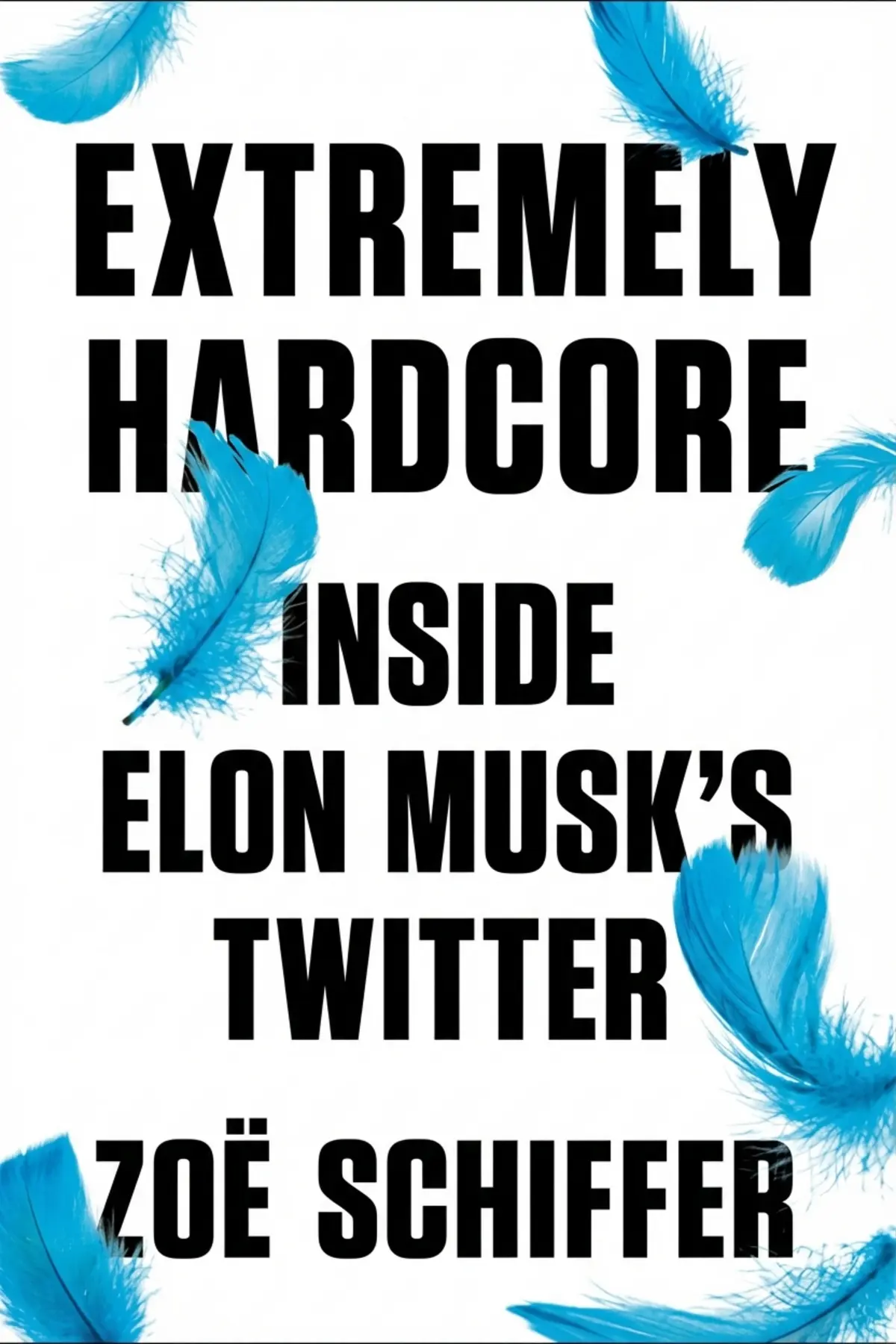
Table of Content
1. Introduction
1 min 05 sec
If you have watched a new boss arrive and tear up how things work, this story will look familiar, only at the scale of a $44 billion company. On the night of the 2023 Super Bowl, Elon Musk saw that President Joe Biden’s tweet cheering on the Philadelphia Eagles was beating his own, and he had Twitter engineers rework the algorithm so his posts would be pushed into more feeds. In Extremely Hardcore, technology journalist Zoë Schiffer uses moments like that one to explain what happened to Twitter after Musk bought it in October 2022.
Her argument, built from conversations with many employees who lived through it, is that the platform came to revolve around one man’s impulses. The teams that kept advertisers’ trust were cut, a respected badge was turned into a product, fear replaced judgment, and the company lost much of its value. What emerges is a clear case study in how not to take over a company, and a sharper sense of what makes a platform worth trusting.
2. Understand the clash that came before the deal
2 min 11 sec
Long before he owned it, Musk had a running grudge with Twitter, and Twitter had a money problem tied to the very thing he disliked. Seeing both histories side by side makes the collision look almost inevitable.
3. Spot the warning signs in an impulsive deal
2 min 05 sec
A board seat, a surging stock and a generous offer made almost everyone happy for a moment. Then the buyer started arguing against his own purchase, and the people inside began to brace for impact.
4. See how the cheapest cuts cost Twitter most
1 min 58 sec
Firing half a company overnight saves money on paper. But some of the teams that disappeared were the reason the biggest customers felt safe spending, and they noticed within days.
5. Ship untested ideas and watch them backfire
1 min 52 sec
A plan to let anyone buy a blue check was meant to replace lost ad money. Within days, a single fake account showed exactly how a trusted signal can be turned against everyone who relies on it.
6. Fear drives out the people you need
1 min 47 sec
One engineer handed Musk an idea that saved real money and won instant approval. What happened to him next says more about the new culture than any memo, and explains why so many chose to walk out.
7. Judge a principle by when it costs something
1 min 40 sec
Musk promised a platform where every voice could stay up. Then an account began posting where his jet was flying, and the journalists who wrote about it found out how far that promise reached.
8. See how a trusted badge lost its value
2 min 06 sec
Stripping blue checks from celebrities was supposed to end an unfair hierarchy and bring in subscribers. The numbers that came back, and the rival that rose at the same time, told a very different story.
9. Conclusion
1 min 16 sec
Musk liked to describe Twitter as a town square where every voice could be heard and argued with. Schiffer’s account suggests the square was rebuilt around a single voice, from the Super Bowl night when engineers boosted his tweets to the badge that came to signal loyalty to him. The costs were concrete: thousands of jobs, advertisers who left, lawsuits over unsafe conditions and deceptive firings, and a company worth far less than the $44 billion he paid.
The story also forced ordinary employees into moral choices about what conditions they would accept and what kind of company they wanted to work for.
Some of it carries straight into your own work. Before cutting a team, find out what trust it protects and who pays for that trust. Before changing what a signal means, picture the first impostor who will use it. And when you hold a principle, watch whether it survives the first time it embarrasses you, because everyone around you is watching too.
Schiffer frames the whole episode as a warning about what happens when one billionaire takes control of a company that shapes politics and culture. A town square only works when its rules also bind its owner.
About this book
What is this book about?
In October 2022, Elon Musk took control of Twitter after a $44 billion deal he had spent months trying to escape. Within weeks, about half the staff was gone, major advertisers had begun pulling back their spending and an impostor with a paid blue check had sent a drug company's stock down 4.37 percent. Technology journalist Zoë Schiffer reconstructs that period through the people who worked inside the company. She follows the overnight firings, the rushed launch of Twitter Blue, the extremely hardcore ultimatum, the reinstatement of banned accounts and the banning of others, and finally the rebrand to X under a new chief executive. Her argument is that the takeover was shaped less by a plan for a better platform than by Musk's own impulses, and that the cost fell on employees, advertisers and users who had trusted Twitter. For readers it works as a case study in leadership and decision making: what happens when a new owner cuts the teams that protect revenue, changes what a trusted signal means and makes pleasing the boss the only rule that counts.
Book Information
Who it's for
Planning big company changes
Founders and executives planning an acquisition, a turnaround or deep cost cuts.
Managers
Managers who want to see how fear and ultimatums change what a team will tell them.
Curious about Twitter's fate
Readers who use social media daily and want to know what really happened to Twitter.
About the Author
Zoë Schiffer
Zoë Schiffer is an American technology journalist, born in 1992. As a senior reporter at The Verge she covered the labor movement in Silicon Valley. She later became managing editor at Platformer, the tech newsletter founded by Casey Newton, where she wrote about Twitter, X Corp. and Elon Musk. She now oversees business and industry coverage at Wired, and her work has appeared in New York Magazine, the San Francisco Chronicle and Vox.
Ratings & Reviews
Ratings at a glance
What people think
Listeners find this work an unputdownable experience from start to finish, highlighting the captivating perspectives and a high-stakes plot that is brisk and clear. Additionally, the author's voice is well-received, and one listener mentions how effectively it explains complicated subjects. Listeners also praise the sensitive depictions and reporting excellence, with one review labeling the narrative as shockingly true.
Top reviews
Suthinee
This book provides a gut-wrenching, front-row seat to the dismantling of a cultural icon. Schiffer’s reporting is deeply empathetic, focusing not just on the billionaire at the top but on the real human beings caught in the crossfire. The narrative is fast-paced and truly feels like a thriller at times, which makes the complex corporate maneuvers surprisingly easy to digest. While some might say it leans too hard into the employee perspective, that’s exactly what makes it feel so authentic and different from the usual tech hagiographies. It’s a shockingly true account that left me reeling about the future of social media.
Show moreLeah
The detail about internal Slack messages and the direct quotes from emails make this feel incredibly intimate and real. Schiffer manages to present complex information about debt structures and content moderation policies without ever slowing down the momentum of the story. It is an irresistible read from start to finish, capturing the sheer absurdity of the transition from Twitter to X with a sharp, journalistic eye. Truth is, the reporting here feels much more reliable than the narratives pushed by Musk's own PR machine. It’s a masterclass in tech journalism that manages to be both informative and emotionally resonant for those of us who loved the platform.
Show moreSau
Schiffer has managed to execute a remarkably detailed account of a historic corporate takeover in an incredibly short timeframe. The reporting is shockingly true and doesn’t shy away from the more outrageous grievances shared by former employees. I loved how she highlighted the role of brand safety—it’s a nuance that many tech reporters miss but is vital to understanding why X is struggling. The writing style is polished and the narrative flow is seamless, making what could have been a dry business book feel like a high-stakes drama. It’s easily the most comprehensive look at the Twitter saga we have so far, and I highly recommend it.
Show moreMattanee
Looking at the tech landscape right now, this book feels like an essential piece of history. Schiffer captures the pivotal moment when the social media era shifted into something much more volatile and person-driven. The way she documents the promises made to employees versus the reality of their lack of severance is particularly biting and well-researched. It’s an engaging and narrative-driven read that doesn’t sacrifice depth for speed. Even if you think you know the whole story from following the news, the way Schiffer pieces it together provides a level of clarity that is truly impressive. It's a meaty, fast read that I couldn't put down.
Show moreYindee
Ever wonder how $44 billion disappears into a rebranding vortex? Schiffer does an incredible job weaving together the chaotic threads of the takeover into a story that's impossible to put down. The pace is electric, and the way she breaks down the brand safety concerns for advertisers was particularly illuminating for me. My only real complaint is that it ends without a clear conclusion, though that’s hardly the author’s fault since the situation is still evolving. It’s a very solid chronicle that feels more grounded and less focused on 'Great Man' mythology than the Isaacson biography. A must-read for anyone interested in tech culture.
Show moreBoy
As someone who followed the Platformer newsletter, I had high expectations for this book, and for the most part, it delivered. The storytelling is incredibly engaging, turning dry board meetings and legal filings into a gripping narrative of power and betrayal. You really feel for the employees who were pushed into 'extremely hardcore' work cycles only to be fired without a second thought. I do wish there was more new information for those of us who followed the news daily, as a lot of it felt like a recap. However, the synthesis of the events is top-tier and provides much-needed context to the madness.
Show moreCaleb
Finally got around to finishing this, and I have to say, the reporting quality is excellent. Schiffer avoids the trap of turning Musk into a cartoon villain, even if the facts of his actions often speak for themselves. The book does a great job explaining why the 'everything app' dream is such a massive uphill battle given the exodus of advertisers and the destruction of institutional knowledge. It's a fast-paced and easy to follow account that makes sense of a very messy year. I would have appreciated a bit more focus on the technical side of the platform’s stability, but the human drama is definitely the star here.
Show moreBo
Picked this up after reading the Isaacson bio to get a different perspective, but I found the two books actually cover a lot of the same ground. Schiffer is definitely more critical of Musk, which is a refreshing change of pace, but the lack of firsthand interviews with the inner circle is noticeable. It reads more like an outsider’s observations based on leaked documents and exit interviews rather than a deep, insider exposé. The writing is snappy and the anecdotes are interesting enough, but I was hoping for more 'aha' moments. It's a decent enough play-by-play, but it lacks the definitive weight I was looking for.
Show moreSai
Frankly, the narrative feels a bit too skewed toward the employees who were let go, which makes it feel more like a hit piece at times than a neutral analysis. While the reporting on the 'hardcore' culture shift is fascinating, the author seems to have a fundamental disagreement with how Musk views productivity and corporate efficiency. It’s a well-written book and certainly a fast read, but you have to take the framing with a grain of salt. If you’re looking for a balanced look at the business necessity of the layoffs, you might find Schiffer’s perspective a bit too sympathetic to the old guard. Still, it's a good chronicle of the timeline.
Show moreSupranee
Not what I expected from a supposedly definitive account of the Musk era. To be fair, Schiffer captures the timeline accurately, but the whole thing reads more like a collection of disgruntled Slack gripes than a serious business analysis. It feels like the author is mourning a 'golden era' of Twitter that never actually existed for the shareholders or the product's health. There’s a distinct lack of direct access to the man himself, which leaves the narrative feeling one-sided and childishly spiteful. If you want a deep dive into the engineering challenges or the actual business strategy, you won’t find much here beyond the surface-level drama.
Show moreQuestions about this book
What is Extremely Hardcore by Zoë Schiffer about?
It tells the inside story of Twitter after Elon Musk bought it in October 2022 for about $44 billion. Drawing on many employees who were there, Schiffer follows the mass layoffs, the failed launch of the paid blue check, the extremely hardcore ultimatum, disputes over free speech and the rebrand to X. Her argument is that Musk’s impulsive leadership drove away staff, advertisers and users and destroyed much of the company’s value.
What does extremely hardcore mean in the book?
It comes from an email Musk sent staff titled A Fork in the Road. Employees had 36 hours to commit to an extremely hardcore way of working or leave with severance. Most did not sign up: only about a quarter of software engineers planned to stay, nearly 1,000 people left, and headcount fell from 7,500 in October to 2,700 in November.
Why did advertisers leave Twitter under Elon Musk?
Twitter earned most of its money from advertisers who relied on its trust and safety and brand safety teams to keep their ads away from hateful content. Musk cut those teams deeply, restored banned accounts including neo-Nazis, and launched a paid blue check that let an impostor pose as Eli Lilly. Brands such as General Motors, Audi and Pfizer pulled back, and by late November 2022 ad bookings had fallen 49 percent.
What happened with Twitter Blue verification?
Musk turned the blue check into a subscription anyone could buy. The first launch drew fewer than 61,000 subscribers and a wave of impostors, so it was pulled. In 2023 he relaunched it and removed old checks from celebrities and journalists. Impersonations returned, stars like LeBron James refused to pay, and internal documents showed only 535,000 subscribers by May 2023.
What leadership lessons does Extremely Hardcore offer?
The book reads as a warning for anyone running a company. Cutting teams that protect your main revenue can cost more than it saves. Changing what a trusted signal means invites abuse. Ultimatums and fear drive out the people you most need, as the firing of engineer Randall Lin after his cost-saving idea shows. And a principle like free speech only earns trust if it holds when it becomes inconvenient.
Readers also enjoyed








AUDIO SUMMARY AVAILABLE
Listen to Extremely Hardcore in 15 minutes
Get the key ideas from Extremely Hardcore by Zoë Schiffer, plus 5,000+ more nonfiction titles.
- 5,000+ titles
- Listen as much as you want
- 7-day free trial
- Cancel anytime









