
14 min 17 sec
Available in: English
 ไทย
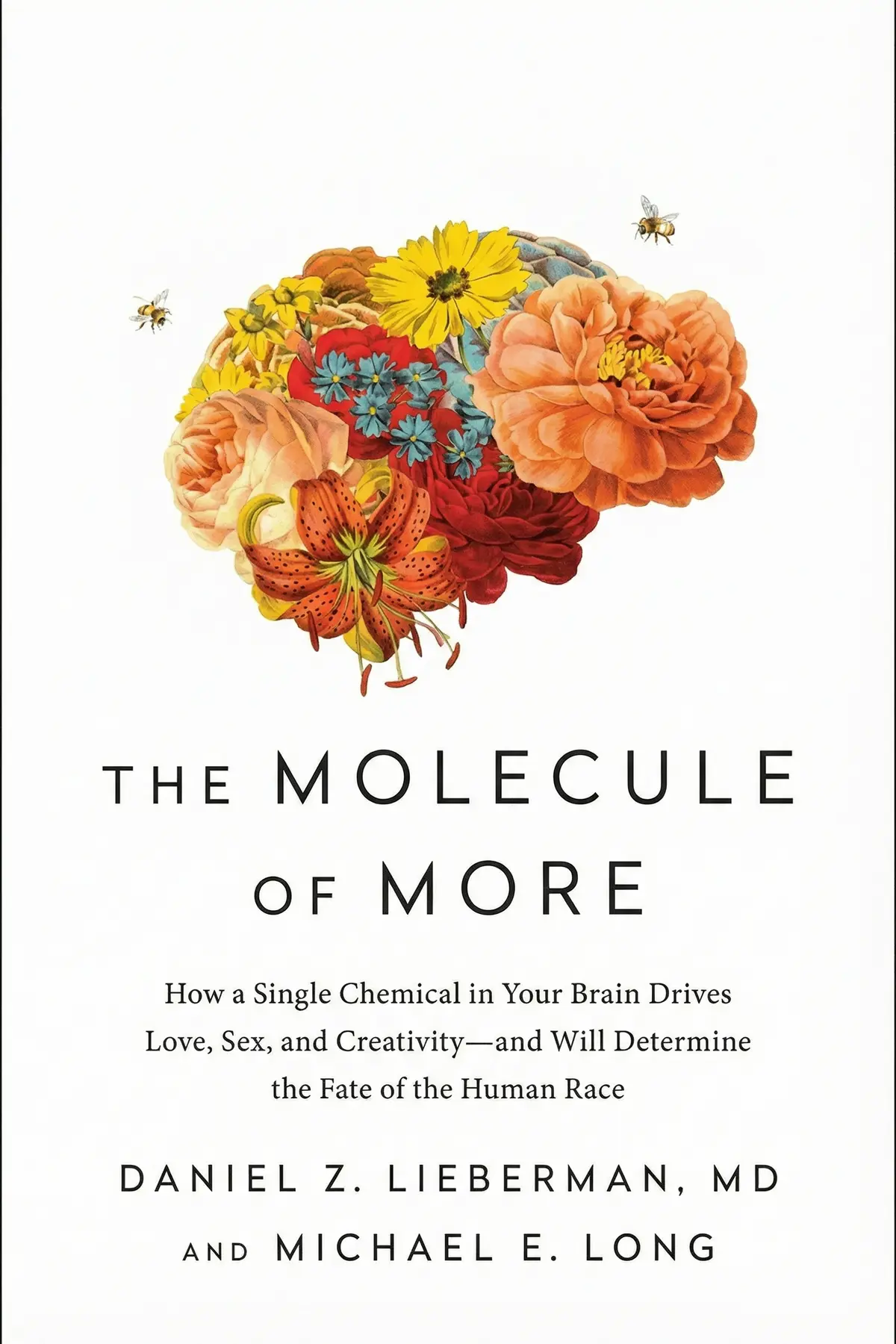
EnglishไทยExercised: Why Something We Never Evolved to Do Is Healthy and Rewarding
Explains why exercise feels so unnatural, tests popular beliefs about sleep, strength, walking and running against evolutionary evidence, and shows how to make regular movement a habit that lasts into old age.
Table of Content
1. Introduction
1 min 05 sec
If you keep promising yourself to exercise more and keep breaking the promise, your character may not be the problem. In Exercised, Harvard evolutionary biologist Daniel Lieberman argues that humans never evolved to exercise at all. Our ancestors moved a great deal, but only when they had to, because spending energy for no reason could cost them dearly.
That one fact explains why the run you planned feels so heavy, and it clears away a good deal of confusing health advice. Lieberman tests popular beliefs about sleep, strength, walking, running and aging against evidence from hunter-gatherer peoples, long-term studies and athletes he followed himself. His throughline is simple: exercise feels unnatural because our bodies were built to save energy, so the way forward is to make movement feel necessary and enjoyable, leaving willpower less work to do. Expect to drop some guilt about your sleep, set realistic goals for strength and weight, and leave with a plan simple enough to keep for decades.
2. Stop treating your reluctance as a flaw
1 min 43 sec
Our ancestors were constantly on the move, so the urge to work out should come naturally. Lieberman explains why it does not, and why that should change how you judge yourself and others.
3. Seven hours of sleep may be plenty
1 min 41 sec
Experts warn of a sleep epidemic in industrialized countries. Then researchers measured how hunter-gatherer, hunter-farmer and rural farming groups actually sleep, and the numbers point in an unexpected direction.
4. Aim for everyday strength, not bodybuilder bulk
1 min 41 sec
Primal fitness fans picture our ancestors as naturally muscular giants softened by office life. Measurements of today’s hunter-gatherers tell a different story, and the reason has to do with the price of every extra pound of muscle.
5. Walk enough to keep the weight off
1 min 42 sec
Brisk walking for two and a half hours a week barely moved the scale in one study. Yet the same research, and what happens after crash diets, suggests walking matters more than its critics admit.
6. Build running mileage slowly and injuries fade
1 min 47 sec
Eight runners set out to cross the United States on foot, about a marathon a day for half a year. What happened to their injuries month by month changes how any beginner should start.
7. Keep moving to stay capable into old age
1 min 53 sec
Hunter-gatherers without modern medicine rarely develop heart disease, type 2 diabetes or Alzheimer’s. A long-running study of older amateur runners at Stanford suggests similar benefits are available far from Tanzania.
8. Make exercise feel necessary, social and fun
1 min 34 sec
If evolution taught us to avoid unneeded effort, the fix is to make exercise feel needed. Lieberman borrows tools from race organizers, trusted friends and hunter-gatherer foraging trips to get there.
9. Conclusion
1 min 11 sec
Exercised rests on an odd premise: the healthiest habit most of us could adopt is one our species never evolved to practice. Lieberman’s ancestors moved because survival demanded it and rested whenever it did not. That mismatch explains the guilt around skipped workouts, and his evidence, from the Hadza to the Stanford runners to a team crossing a continent on foot, removes several fears. Six or seven hours of sleep can be normal. Ordinary strength is enough. Running need not wreck your knees, and walking earns its place by keeping weight off.
His final advice is strikingly plain. Stop agonizing over the perfect program. Move a lot, mostly cardio with some weights, and keep at it as the years pass. Rest well and raise your load slowly so you do not overtrain. Then take the choice away where you can: pay for a race, tell someone you respect what you intend, and find people to move with.
The urge to sit down is ancient and will not go away. A body built to save energy can still be persuaded to spend it, especially in good company.
About this book
What is this book about?
Nearly everyone means to exercise more, and nearly everyone finds it hard. The advice does not help much: run, but protect your knees; sleep eight hours, though you keep waking after seven. Harvard evolutionary biologist Daniel Lieberman starts from a surprising claim. Humans evolved to be physically active when survival demanded it, but never to exercise, meaning to move voluntarily when nothing requires it. From that starting point, Lieberman checks familiar health beliefs against evidence from hunter-gatherer peoples such as the Hadza of Tanzania, sleep research, long-term studies of older runners and his own observation of athletes running across the United States. Several fears shrink. Seven hours of sleep can be normal, everyday strength is what our bodies were built for, and running need not ruin your joints. Readers get a kinder explanation for their reluctance to move and a plain plan for acting anyway: walk and run a lot, add some weights, increase effort slowly, keep going as you age, and make exercise both necessary and enjoyable by bringing in money, accountability and other people.
Book Information
Who it's for
Busy professionals
Busy professionals who feel guilty about skipped workouts and want a simple plan that lasts.
Beginners worried about injury
Beginner runners and walkers worried about injuries, knees or slow weight loss.
In midlife
People in midlife thinking about how to stay strong and independent into old age.
About the Author
Daniel Lieberman
Daniel E. Lieberman is the Edwin M. Lerner II Professor of Biological Sciences in Harvard University's Department of Human Evolutionary Biology, and a member of the American Academy of Arts and Sciences. He is best known for research on running and the human body, including a 2004 paper with Dennis Bramble proposing that humans evolved to run long distances. A keen marathon runner who often runs barefoot, he also wrote The Story of the Human Body.
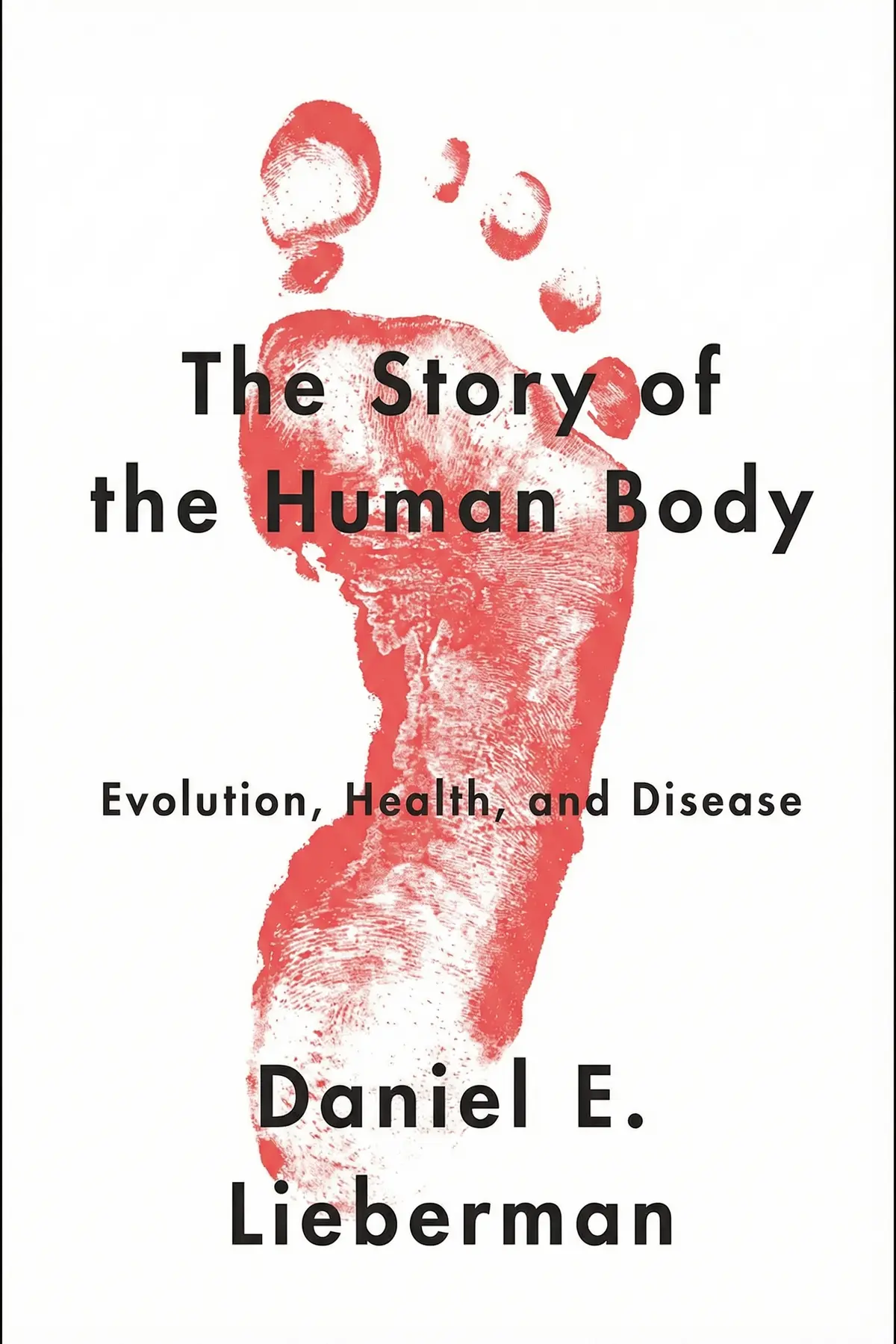
The Story of the Human Body: Evolution, Health, and Disease
Daniel Lieberman
Ratings & Reviews
Ratings at a glance

What people think
Listeners find the book thoroughly researched and informative, with one listener highlighting its detailed presentation of data. The writing is engaging and accessible, offering an objective look at exercise and health from an evolutionary standpoint. Listeners appreciate the kind tone, with one noting the absence of shaming or guilt, while another says it facilitates sensible life adjustments. Listeners feel the book is beneficial for all audiences, with one review specifically mentioning its practical utility.
Top reviews
Nit
Daniel Lieberman has written a profound antidote to the toxic 'no pain, no gain' culture that dominates our social media feeds. Instead of pushing expensive fads or making you feel guilty for being lazy, he uses evolutionary biology to explain that our bodies are actually hardwired to conserve energy. This isn't just another 'bro science' manual; it's a deeply researched look at how hunter-gatherers like the Hadza actually live and move. I loved the section on how our ancestors only exercised when it was necessary or fun, which completely reframes the way I look at my morning jog. Frankly, it’s a relief to know that my instinct to sit on the couch isn’t a character flaw, but a survival mechanism. The writing is accessible despite the heavy data, and the focus on anthropology makes the science feel human. It’s an essential read for anyone who struggles with the modern fitness industrial complex.
Show moreCaleb
Ever wonder why you’re the only person at the gym who isn’t smiling? Exercised answers that question by showing how physical activity for health's sake is a completely modern, alien concept to our species. Lieberman takes us on a journey from the Harvard labs to the African savanna to show how our resting metabolic rate dictates our lives. I found the discussion on the 'active grandparent' hypothesis incredibly moving because it gives such purpose to staying fit as we age. It’s not just about looking good in a swimsuit; it's about being a functional part of a human community. The book is packed with specific data points, yet the tone remains engaging and conversational throughout the whole thing. It’s one of those rare science books that actually changed how I behave on a daily basis.
Show moreMilk
I was skeptical about another Harvard professor telling me how to live, but Lieberman won me over with his humility and his own 'reluctant exerciser' persona. He treats the reader like a peer, sharing stories of his own marathon struggles alongside rigorous evolutionary data. The book does a masterful job of explaining why we have back pain and why running doesn't necessarily ruin your knees if you do it correctly. It’s an objective, myth-busting tour de force that should be required reading for anyone in the medical or fitness fields. Looking at our bodies through the lens of anthropology provides a clarity that you just can't get from a standard physiology book. It’s long, yes, but every chapter provides a 'lightbulb' moment that makes you reconsider what it means to be a modern human.
Show moreAdam
Not what I expected at all, but in the best way possible! I thought this would be a how-to guide for running, but it’s actually a sweeping history of the human body and our relationship with effort. Lieberman’s writing is sharp and his arguments are backed by years of fieldwork and laboratory research. I especially liked the 'mismatch' theory—the idea that our bodies are still living in the Stone Age while our environment has become hyper-industrialized. It explains so much about our current health crisis without being alarmist or overly cynical. Gotta say, the way he breaks down the calorie math of walking versus resting was eye-opening and helped me set more realistic fitness goals. This is easily one of the best science books I’ve read in the last few years.
Show moreTalia
Finally, a fitness book that doesn't try to sell me a supplement or a complicated six-week program. Lieberman’s central thesis—that we never evolved to 'exercise' in the modern sense—is absolutely fascinating and makes so much sense when you look at our history. The chapters on walking and running are particularly strong, drawing on his expertise in biomechanics without becoming too academic or dry. I did find the myth-busting structure of every single chapter a bit repetitive toward the end, and some of those myths felt like straw men. However, the takeaway that we should move for health rather than just aesthetics is a powerful one. It’s compassionate, objective, and provides a much-needed perspective on why it's so hard to stay active in a world built for comfort. If you want to understand the 'why' behind human movement, this is the place to start.
Show moreSebastian
As someone who is hitting their fifties and starting to feel the creaks and groans of aging, this book was a total game-changer. Lieberman doesn't just tell you to exercise; he explains why your body requires it to maintain its repair mechanisms as you get older. The way he frames movement as a way to keep our physiological systems from degrading is much more motivating than any 'fitspo' post I’ve ever seen. I appreciated that he didn't shy away from the complexity of weight loss, admitting that walking five miles won't magically melt fat if you eat a granola bar right after. My only gripe is that the prose can be a bit wordy, and he sometimes gets bogged down in the minutiae of bone density. Overall, it’s a smart, evidence-based look at the long-term benefits of staying active without the usual hype.
Show moreGabriel
The most refreshing thing about Lieberman's approach is the complete lack of shame or judgment throughout the entire narrative. He acknowledges that exercise is often unpleasant and that it’s perfectly natural to want to avoid it because our ancestors needed to save every calorie. This perspective makes the advice feel much more attainable because it works with human nature instead of fighting against it. I loved the specific suggestions for making exercise 'necessary and fun' by turning it into a social activity like dancing or sports. While the book is a bit heavy on the biology side for a casual reader, the real-world applications are clear and sensible. It helped me stop beating myself up for missing a workout and instead focused me on finding ways to move that I actually enjoy.
Show moreSamira
After hearing Daniel on a podcast, I knew I had to grab his latest book to get the full story on human movement. It is a fantastic deep dive into the evolution of physical activity, covering everything from why we sweat to why we sleep the way we do. To be fair, I think he could have been a bit more concise with the sections on weight training, which felt a little disconnected from the endurance running focus. But the chapter on dancing as a tribal fitness tool was fascinating and totally unexpected. It’s a very well-researched volume that manages to stay readable without sacrificing scientific integrity or oversimplifying complex biological processes. If you’re tired of 'bro science' and want to know what the evidence actually says, buy this book.
Show moreChanida
While the core message of this book is undeniably important, the actual reading experience felt a bit like a slog at times. Lieberman is clearly brilliant, and his research on evolutionary biology is top-tier, but he tends to repeat his main points far too often. Truth be told, I felt like the entire 400-page book could have been condensed into a long-form essay without losing much of the practical advice. He spends a lot of time debunking 'myths' that I'm not even sure people still believe, like the idea that we were born to be supernaturally strong. That said, the section on how grandparents helped drive our evolution through physical activity was a genuine highlight for me. It’s a solid book for those who love deep-diving into data, but if you’re looking for a quick motivational guide, this might be too dense.
Show moreChan
Picked this up because I’ve always been curious about the 'sitting is the new smoking' headlines, and I wanted a more nuanced take. Lieberman definitely delivers on the nuance, explaining that sitting itself isn’t the problem, but rather the way we sit in modern, overly comfortable chairs for hours on end. In my experience, the book is at its best when it sticks to the anthropology of the Hadza and our ancestors. However, the later chapters on specific diseases like Alzheimer’s and cancer felt a bit rushed compared to the earlier sections. It started to feel more like a standard health textbook toward the end, which was a bit of a letdown after such a strong opening. Still, it’s a valuable resource for anyone who wants to cut through the noise of the fitness world and get to the real facts.
Show moreQuestions about this book
What is the main idea of Exercised by Daniel Lieberman?
Lieberman argues that humans evolved to be active only when survival required it, never to exercise voluntarily. Because energy was scarce for most of history, our instincts push us to rest. That explains why working out feels hard. His solution is to accept the instinct without shame and plan around it, making movement feel necessary and enjoyable, building up gradually and staying active throughout life.
Does Exercised say we need eight hours of sleep?
No. Lieberman points out that the eight-hour rule has unclear origins and may trace back to a nineteenth-century workers’ slogan. Research by Jerome Siegel’s UCLA team found that hunter-gatherer and hunter-farmer groups average about six and a half hours a night. Other studies suggest people sleeping around seven hours tend to live longest. Daytime exercise, he notes, helps people who feel short of sleep.
Can walking help you lose weight, according to Lieberman?
Yes, but it takes a lot of it. In one study, walking 150 minutes a week without diet changes produced almost no weight loss, while 300 minutes a week led to an average loss of six pounds after twelve weeks. Lieberman stresses that exercise matters most for keeping weight off, since people who avoid it after crash diets tend to regain much of what they lost.
How can I apply the ideas in Exercised?
Keep it simple: do plenty of exercise, mostly cardio plus some weights, and keep going as you age. Increase distance or speed by no more than ten percent a week to avoid injury. To make exercise more necessary, pay for a race in advance or have a person you respect review how you are doing, and to make it more fun, train alongside friends, join a team or hire a trainer.
Readers also enjoyed

A Short History of Nearly Everything
Bill Bryson

A Thousand Brains: A New Theory of Intelligence
Jeff Hawkins




Alien Earths: The New Science of Planet Hunting in the Cosmos
Lisa Kaltenegger



Ali: A Life
Jonathan Eig
AUDIO SUMMARY AVAILABLE
Listen to Exercised in 15 minutes
Get the key ideas from Exercised by Daniel Lieberman, plus 5,000+ more nonfiction titles.
- 5,000+ titles
- Listen as much as you want
- 7-day free trial
- Cancel anytime









