Exercised: Why Something We Never Evolved to Do Is Healthy and
Daniel Lieberman
 English
Explains how millions of years of evolution built a body for walking, chewing and scarcity, and why cheap food and sitting now make it sick, plus how changing your surroundings can help.
59 sec
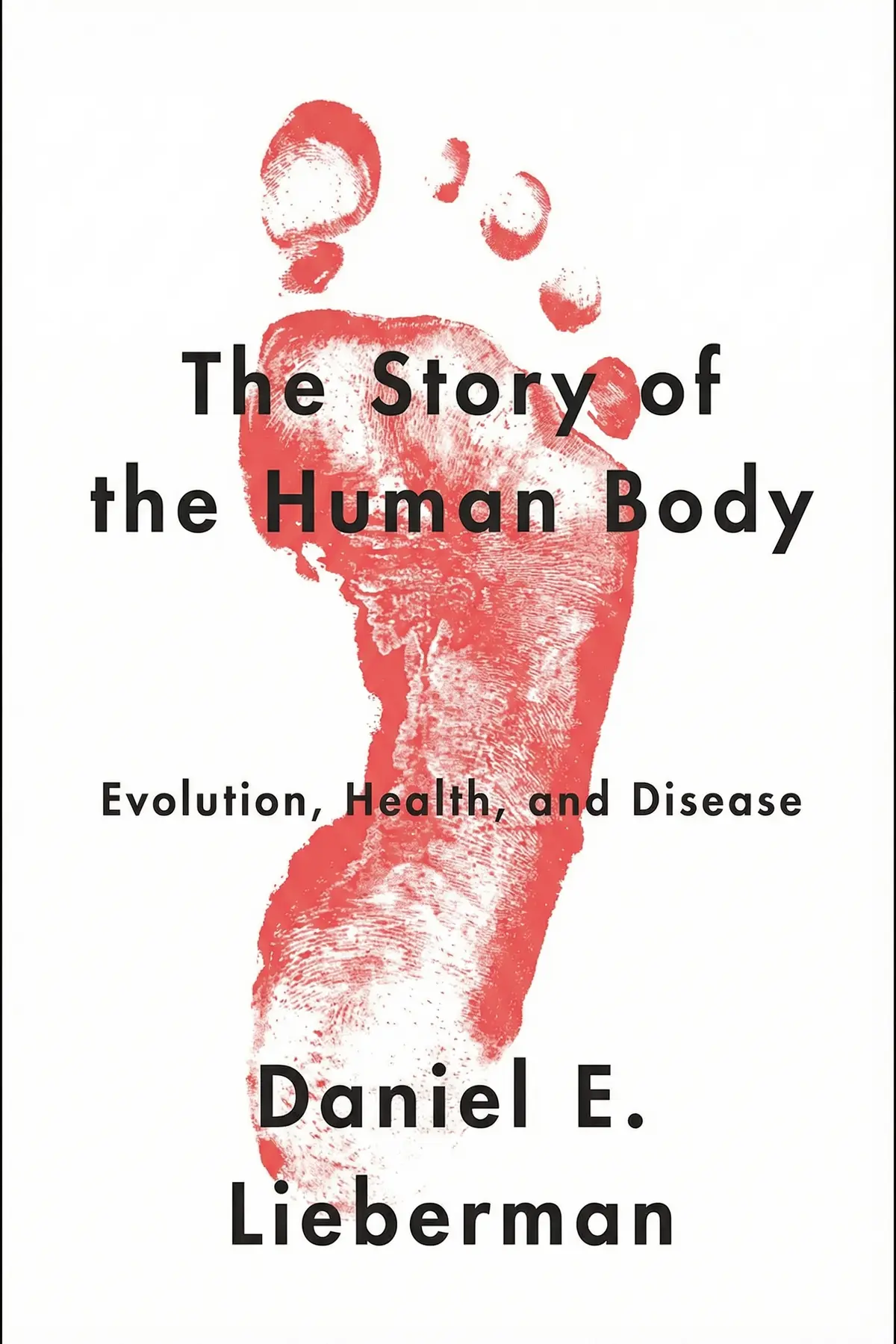
If you sit most of the day and struggle with your weight, your back or your blood sugar, the cause may be older than any diet. In The Story of the Human Body, Harvard evolutionary biologist Daniel Lieberman argues that our bodies were shaped over millions of years for walking far, chewing tough food and surviving lean times. Since industrialization, the world has changed much faster than those bodies can. That gap, which Lieberman calls mismatch, sits behind much of the obesity, type 2 diabetes and osteoporosis rising in the richest countries.
His case is that staying healthy means knowing what the body was built for, then shaping our surroundings so we use it that way. The story runs from an upright ape in drought-stricken Africa to the office chair. Along the way, a sweet tooth, brittle bones and even crowded wisdom teeth start to look like clues, and each one comes with a practical answer.
1 min 52 sec
Next to a chimpanzee, a human is slow, weak and clumsy. Yet one change in how our ancestors moved gave them an edge in hard times, and it still shapes what your body needs today.
2 min 03 sec
Chimps spend half their waking lives chewing and never share a meal. Our ancestors broke both habits, and the body that resulted was built for a way of life very different from yours.
2 min 01 sec
The stubborn layer so many people fight to lose was once a lifesaver. A long freeze, a hungry organ and a slow childhood explain why the body guards its reserves so fiercely.
2 min 09 sec
Crops fed billions and science added decades to our lives. Yet each leap forward also brought new ways to fall ill, and the latest one explains why longer lives are not always healthier ones.
1 min 47 sec
For most of human history, the danger was too few calories. Now the cheapest food in the store sets off a chain reaction inside the body that ends at the liver.
1 min 46 sec
Astronauts come home unable to walk safely, and many teenagers lose their wisdom teeth to the dentist. Both stories point to the same rule about what the body keeps and what it lets go.
1 min 51 sec
Most chronic illness could be prevented, and a health course seems the obvious fix. One study showed how little people change after weeks of advice, which points to a different place to make the change.
1 min 01 sec
The Story of the Human Body reads like a family history with a medical file attached. Every trait it describes once solved a problem: legs that went 12 kilometers on a chimp’s energy budget, a hungry brain that needed fat in reserve, a craving for sugar when calories were rare. Those solutions still run. They now meet office chairs, soft food and cheap sweets, and that meeting is what makes us ill.
Lieberman’s message is hopeful in a practical way. If the trouble lies in the gap between body and world, much of it can be closed by shaping the world. Arrange your days so walking and stairs happen without a decision. Keep the cheapest, fastest carbohydrates out of easy reach. Give children room to run and food worth chewing. If you run, try a short stretch barefoot and feel your stride change.
Your body was finished long before the first city. It still works best when you use it the way it was built.
Obesity, type 2 diabetes and osteoporosis keep rising in the wealthiest countries, even though people live longer than ever. Daniel Lieberman, a Harvard evolutionary biologist, argues that the cause is a clash between bodies shaped over millions of years and a world that has changed in a few centuries. He tells the story of that body from the start. An ape stood up during an age of drought. Early humans dug for tubers, hunted, ran and shared food. Ice Age ancestors grew big brains and stored fat. Then came farmers and factory workers, whose societies fed billions but brought famine, crowd diseases and sitting all day. Along the way, Lieberman explains mismatch diseases, the illnesses that appear when a prehistoric body meets cheap sugar, soft food and little movement. Readers learn why cravings, fat storage, brittle bones and even crowded wisdom teeth make evolutionary sense. They also learn why education and medicine alone struggle to prevent these illnesses, and how changing the environment around us, from school soda bans to buildings that invite stair use, can help.
Desk workers fighting weight gain, back trouble or rising blood sugar who want to understand the cause.
Parents wondering how much movement and real chewing their children need.
Curious readers who want human evolution told as a story with practical health lessons.
Daniel E. Lieberman is the Edwin M. Lerner II Professor of Biological Sciences in Harvard's Department of Human Evolutionary Biology. He has been a professor there since 2001, after teaching at Rutgers and George Washington University. Educated at Harvard and Cambridge, he is a member of the American Academy of Arts and Sciences. He is known for research on running, the human head and the human body, including a 2004 paper with Dennis Bramble arguing that humans evolved for long-distance running. A keen marathoner, he often runs barefoot. He also wrote Exercised.
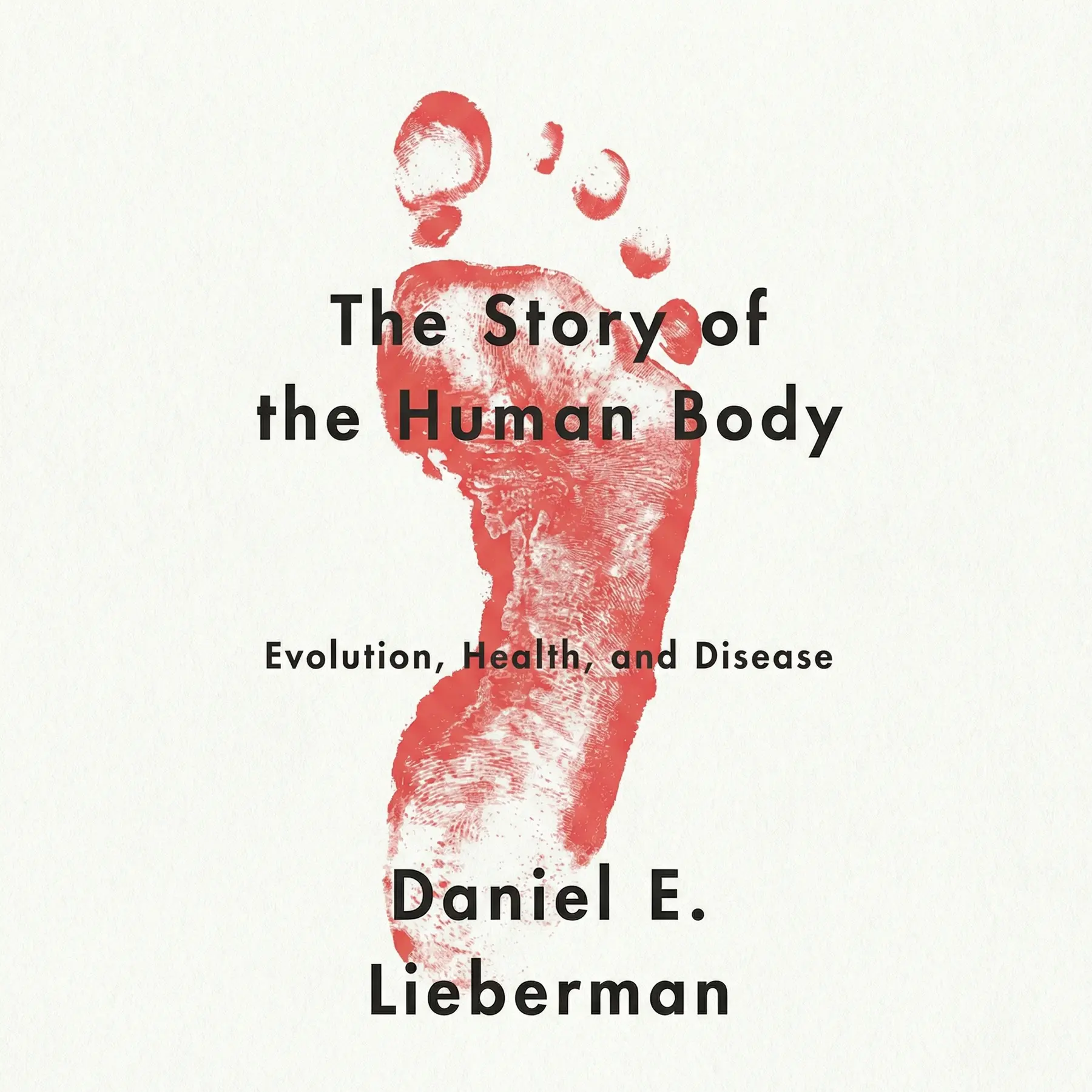
Listeners find the book captivating and skillfully written, featuring lucid explanations grounded in scientific research. Furthermore, the work delivers a superior chronicle of human health and evolution, presenting fresh perspectives on exercise and dietary habits. They also value the narrative approach, with one listener mentioning it reads like an adventure tale, while another points out that the biocultural perspective is effective for framing evolutionary shifts.
Lieberman has crafted a fascinating narrative that traces our journey from forest-dwelling apes to modern humans. Walking upright is complex. The author manages to make the mechanics of bipedalism feel like a high-stakes adventure through deep time. It’s not just a history lesson, though. The second half shifts into a compelling, often frightening analysis of how our current lifestyles clash with our biological heritage. This leads to what he calls 'mismatch diseases.' Truth is, I’ll never look at a flight of stairs or a sugary snack the same way again. The science is robust. However, it remains incredibly accessible for those without a PhD in biology. This is essentially a user manual for the human species that explains why we struggle with obesity and back pain in an age of abundance.
Show moreEver wonder why it's so incredibly easy to gain weight but such a monumental struggle to lose it? Lieberman answers this by diving deep into our evolutionary history. He explains how we were selected to store fat for survival during lean times. The book reads like an epic detective story, piecing together fossil evidence to show how we became the 'marathon monks' of the animal kingdom. I loved the focus on calorie consumption and the trade-offs involved in growing massive brains. While some might find his critique of modern agriculture harsh, I found it eye-opening and scientifically grounded. It’s rare to find an academic who writes with such clarity and verve. This should be required reading in every high school health class. It explains our bodies perfectly.
Show moreDaniel Lieberman has written a masterpiece that manages to bridge the gap between complex evolutionary biology and practical health advice. The way he describes the evolution of the human brain as a hungry organ requiring a massive caloric budget was a total 'lightbulb' moment for me. It explains so much about our innate drive for high-energy foods. Unlike many science books that dryly list facts, this one weaves a coherent story about who we are and why we are built this way. I was fascinated by the discussion on how our feet changed for bipedalism and what that means for modern footwear. It’s a profound reminder that we are essentially Stone Age bodies living in a Space Age world. Engaging, well-researched, and ultimately very empowering for anyone trying to get healthy.
Show moreWow. This is one of those rare books that actually changes the way you live your life. I’m now much more conscious of how I move and eat, thanks to Lieberman's clear-eyed look at our evolutionary needs. The transition from bipedalism to the industrial revolution is handled with such narrative skill that it almost feels like reading an adventure novel. I was particularly interested in the concept of 'libertarian paternalism' he suggests for public health; it’s a practical way to address the mess we’ve made of our environment. The book is packed with 'did you know?' facts that I kept sharing with my friends. It’s a long read, but every page feels necessary to understand the full scope of our biological story. Highly recommended for any curious mind.
Show moreAfter hearing so much buzz about this on various podcasts, I finally dove into Lieberman’s exploration of biocultural evolution. The first few chapters are absolute gold. I was especially struck by the parts detailing how our ancestors transitioned to a non-fruit-based diet to support larger, energy-hungry brains. However, I have to admit the section on the industrial revolution felt a bit repetitive compared to the fresh insights of the earlier archaeological chapters. He makes a strong case for 'dysevolution,' where we treat symptoms rather than causes. It really makes you think about our failing healthcare system. It’s a bit depressing at times to realize how much our environment works against us, but the 'nudge' theory at the end provides a glimmer of hope. Definitely a solid read.
Show morePicked this up on a whim and was pleasantly surprised by how much it changed my perspective on daily exercise. Lieberman doesn’t just tell you to run; he explains why we evolved to be endurance athletes. Our sedentary culture is literally making us sick. The chapters on 'mismatch' conditions like Type II diabetes and osteoporosis were particularly enlightening, if a bit scary. I did feel like he spent a lot of time dunking on the agricultural revolution, which felt a bit lopsided at times. Still, the way he connects our ancient past to our current health crises is brilliant. It’s a chunky book, but the prose flows well enough that you don't feel bogged down in jargon. A very thought-provoking look at the biological cost of our modern comforts.
Show moreAs someone who has always struggled with chronic lower back pain, the section on the evolutionary trade-offs of walking upright was a revelation. Lieberman explains that our spines didn't necessarily evolve for comfort, but for efficiency in a very different environment. Gotta say, the book does a great job of explaining the 'mismatch' between our ancient cravings and our modern grocery stores. I appreciated the nuance he brought to the discussion of 'dysevolution.' We keep passing on traits that lead to sickness because we've become so good at treating symptoms rather than causes. The writing is clear, though I'll admit the middle section on the transition to farming dragged a bit for me. Overall, it’s a very informative read that offers a unique lens on the obesity epidemic.
Show moreFinally got around to reading this classic, and it lives up to the hype for the most part. Lieberman is a fantastic guide through the millions of years of our history. He makes the shift from the forest floor to the savannah feel incredibly vivid. He treats our ancestors as creatures perfectly adapted to their specific niches. They weren't just 'lesser' humans. The transition to the second half is jarring. My only real gripe is that he can be quite repetitive with his 'mismatch' thesis. We get it. Still, the science is top-notch and his passion for the subject is infectious. It’s an essential piece of the puzzle for understanding the human condition and why our modern world makes us so sick.
Show moreThis book provides a decent introduction to human evolution, but if you’ve already read Diamond or Harari, a lot of this will feel like treading familiar ground. To be fair, Lieberman’s specific focus on the body’s mechanics—like the development of the arched foot and the gluteus maximus—is quite detailed. I loved the arched foot section. However, I found the tone in the latter half to be a bit overly pessimistic regarding modern technological progress. He seems to pine for a hunter-gatherer lifestyle. That just isn't feasible for eight billion people. The concept of 'mismatch diseases' is vital, yet the book glosses over recent developments in epigenetics that could have added more depth. It’s a fine starting point for a novice, but seasoned science readers might find it redundant.
Show moreNot what I expected based on the glowing reviews. While the first third of the book offers a competent overview of early hominids and bipedalism, the rest of the text devolves into a repetitive lecture on how terrible modern life is. Lieberman’s romanticization of hunter-gatherer societies felt naive. They faced high infant mortality and lacked modern medicine. Frankly, the constant focus on 'mismatch diseases' felt more like a health manifesto than a rigorous scientific history. I was looking for a deep dive into evolutionary biology, but instead, I got a lot of advice on standing desks and barefoot running. It’s well-written, sure, but the agenda-driven tone really put me off. If you want a balanced view of human progress and cultural evolution, you should probably look elsewhere.
Show moreDaniel Lieberman argues that the human body was shaped over millions of years for walking long distances, chewing fibrous food and surviving scarcity. Farming and especially industrialization changed our world far faster than evolution can follow. The result is mismatch diseases such as obesity, type 2 diabetes and osteoporosis, which arise when a prehistoric body meets cheap calories and little movement.
They are illnesses caused by the clash between bodies adapted to ancient conditions and modern environments. Examples in the book include obesity, type 2 diabetes linked to visceral fat and fatty liver, osteoporosis from too little exercise and calcium or vitamin D, and crowded wisdom teeth caused by soft, processed food that gives jaws too little work as they grow.
During the Ice Age, human brains grew to three times the size of a chimpanzee’s. The brain needs a constant supply of blood sugar, and even a minute or two without it can cause catastrophic damage. Bodies that stored spare energy as fat had an advantage, so humans evolved to be fatty animals, a trait that now works against us when calories are cheap.
Lieberman suggests changing your surroundings rather than relying on willpower, since studies show health courses change behavior only slightly. Build walking and stair climbing into your routine, keep cheap sugary and starchy foods out of easy reach, and give children plenty of active play. He also suggests trying barefoot running, which encourages landing on the balls of the feet and softens impacts.
It suits readers who want a clear story of human evolution, from walking upright to the Industrial Revolution, tied to everyday health. Lieberman, a Harvard evolutionary biologist, explains why we crave sugar, why bones weaken and why prevention matters, with figures such as a 1995 study in which getting unfit Americans into shape halved their rate of cardiovascular disease.

Carl Zimmer

Bill Bryson

Jeff Hawkins




Lisa Kaltenegger


AUDIO SUMMARY AVAILABLE
Get the key ideas from The Story of the Human Body by Daniel Lieberman, plus 5,000+ more nonfiction titles.