


15 min 01 sec
Available in: English
Executive Presence: The Missing Link Between Merit and Success
Shows why strong results alone rarely win the top job. It explains how gravitas, communication and appearance shape the way others judge your readiness to lead, and how to improve each one.
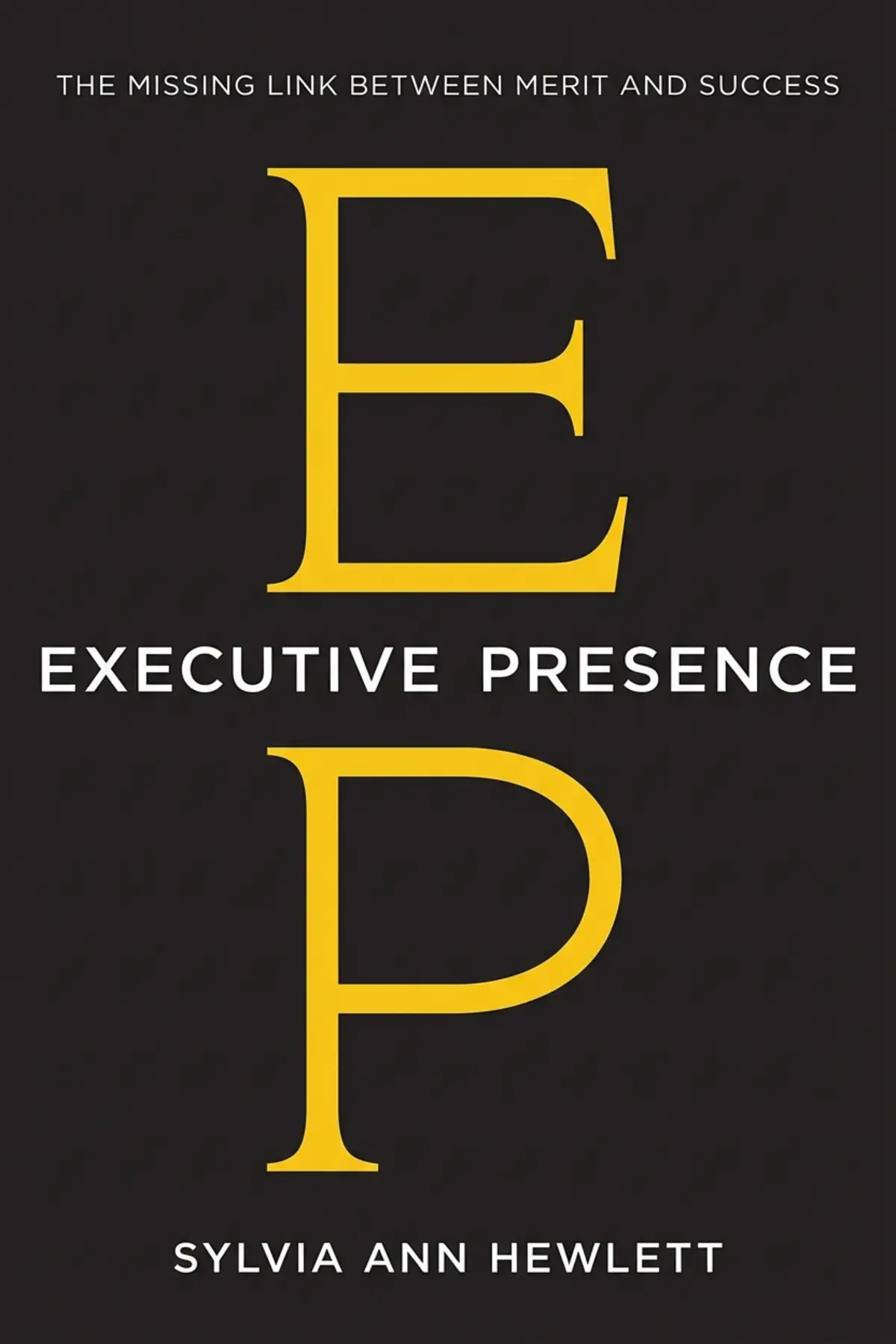
Table of Content
1. Introduction
1 min 04 sec
Plenty of capable people stall one step below the top, with the degrees and the results, while someone else gets the role. In Executive Presence, economist Sylvia Ann Hewlett argues that the missing piece is how others read you: whether you look, sound and act like someone who belongs in charge. One finding from music makes the point sharply. People who watched silent videos of pianists picked the competition winners better than people who could also hear them play.
Hewlett, who founded the Center for Talent Innovation, treats presence as a skill resting on three pillars: gravitas, communication and appearance. Her claim is that merit gets you considered, presence decides whether you are chosen, and a sharp appearance, at least, is something you can learn. What follows is a working map of all three, from holding steady when a crisis breaks to lowering a strained voice, reading a boardroom in seconds and dressing for the people you are about to meet.
2. See what decides between equally skilled rivals
1 min 54 sec
Twelve brilliant young musicians reach a final, and every one of them can play. What tips the jury turns out to be something viewers could judge better with the sound switched off.
3. Turn a crisis into proof of your gravitas
1 min 51 sec
Two leaders at the same company were caught up in the same disaster. One wrecked public opinion with a single careless sentence, and the other earned respect by staying calm and answering every question put to him.
4. Pair bold decisions with real empathy
1 min 52 sec
A chief executive made a tough call that won praise from some famous leaders and scorn from others. The criticism that stuck had nothing to do with toughness, and it holds a warning for anyone who manages people.
5. Win trust by mastering how you sound
1 min 49 sec
An analysis of financial spokespeople found that the words themselves rarely decided who persuaded the audience. A university lab, meanwhile, pinned down a voice frequency listeners seem built to prefer.
6. Win an audience in five seconds, then hold it
1 min 46 sec
A choral conductor gives speakers a tiny window to connect, and an executive at Sodexo threw out her prepared pitch at the boardroom door. Both show what separates speakers who command a room from those who simply fill it.
7. Let grooming signal that you are in control
1 min 50 sec
A Memphis lawyer who once marched with Martin Luther King, Jr. made a surprising admission about how he stayed so youthful. His reasoning reveals why looks shape how people hear everything else you say.
8. Dress and stay fit for the role you want
1 min 43 sec
A pharmaceutical representative sent a team member home before a hospital presentation, and the reason was a single outfit choice. Fitness and clothing, Hewlett argues, tell decision makers whether you can carry a demanding job.
9. Conclusion
1 min 12 sec
Hewlett’s book takes something many people put down to luck or charm and breaks it into parts. Presence, in her account, is a set of signals others read long before they check your results: whether you hold steady when oil is spilling and cameras are rolling, whether your voice makes people want to keep listening, whether your clothes suit the hospital meeting you walk into. She calls it a mix of confidence, poise and authenticity, and she treats it as no less important than your skills. Merit earns the audition. Presence decides who gets the part.
Because those signals are visible to everyone except you, her most practical advice is about feedback. A vague question such as how am I doing brings back a vague answer. Pick one recent moment that demanded presence, a meeting with a key client or a powerful leader, and ask someone senior to judge it in detail: your body language, your speech and delivery, your command of the room. Ask a mentor or coach about your voice too, since your own skull misleads you.
Remember the pianists. Viewers picked the winners with the sound off. Someone in your next meeting is judging you the same way.
About this book
What is this book about?
Many capable professionals stall just below the top. They have the education, the results and the right resume, and still someone else gets the role. Sylvia Ann Hewlett argues that the missing link is executive presence: the signals that tell others you are in command, or deserve to be. Drawing on a national survey by her team at the Center for Talent Innovation, Hewlett breaks presence into three pillars. Gravitas is how you act, especially in a crisis and when hard decisions are needed. Communication is how you speak and how well you read and hold a room. Appearance is how you look, and it filters how people judge the other two. Her examples range from a music competition where silent videos predicted the winners, to Bob Dudley facing the press during the BP oil spill, to Marissa Mayer's office mandate at Yahoo and a boardroom where Sodexo's Rohini Anand threw out her prepared pitch. Readers get a clear picture of what decision makers notice, plus practical steps on voice, storytelling, grooming, fitness, clothing and asking for feedback that actually helps.
Book Information
Who it's for
Strong performers passed over
Professionals with strong results who keep getting passed over for leadership roles.
First-time managers
New managers who freeze in a crisis, ramble in meetings or are unsure how to dress for senior rooms.
Curious what leaders notice
Women and others in workplaces that once excluded them, looking for a clear picture of what decision makers notice.
About the Author
Sylvia Ann Hewlett
Sylvia Ann Hewlett is an economist and author who founded the Center for Talent Innovation and Hewlett Consulting Partners. Her work on talent management focuses on women, minorities and other groups once shut out of the workplace. A Kennedy Scholar at Cambridge with a PhD in economics from London University, she has taught at Cambridge, Columbia and Princeton, and was the first woman to lead the Economic Policy Council. Her earlier book When the Bough Breaks won a Robert F. Kennedy Memorial Book Award.
Ratings & Reviews
Ratings at a glance

What people think
Listeners consider this an outstanding resource for recent graduates, valuing the useful insights and impactful guidance provided. The author's prose is skillfully written, making the material both accessible and straightforward to digest. Additionally, the text offers actionable critiques for building a professional persona and functions as a great framework for mentoring future leaders. Nevertheless, opinions on the tempo vary; while some listeners don't find it overly dull, others feel the material is becoming a bit old-fashioned.
Top reviews
Prapaiwan
Picked this up on a recommendation from a mentor, and it has completely changed the way I prepare for high-stakes presentations and board meetings. The concept of Executive Presence is often treated like some mysterious 'X-factor,' but Hewlett demystifies it by showing it is actually a set of skills that can be learned. I found her insights into 'situational awareness' and the ability to read a room to be the most helpful parts of the entire book. It's not just about wearing the right suit; it's about the confidence you project through your posture and the weight of your words. To be fair, the book acknowledges that the hurdle is higher for women and minorities, which is a harsh but necessary reality to discuss. The writing style is engaging and the stories of real-life executives making and fixing mistakes kept me turning the pages. This is an essential read for anyone who is serious about their professional development and moving into senior leadership.
Show moreElla
As a recent graduate entering the workforce, I found this to be an invaluable guide to navigating the complexities of professional life. It covers all those 'invisible' things they don't teach you in college, like how to handle a vocal slip-up or how to dress for the job you want. The author’s focus on authenticity for people of color was a high point for me, as she acknowledges the extra layer of difficulty we face in these environments. I appreciated the specific, actionable advice on everything from eye contact to the way you structure your responses during a Q&A session. Some might find the focus on appearance shallow, but I think it’s better to be aware of these biases so you can manage them effectively. It’s a quick, easy read that feels like a long-form conversation with a very successful, slightly blunt aunt who wants you to succeed. I’ve already recommended it to several of my peers who are looking to make a strong impression in their first roles.
Show moreKom
Frankly, this is exactly the kind of feedback that most managers are too afraid to give their employees in the current corporate climate. We all know that things like hygiene, tone of voice, and body language matter, but nobody wants to be the one to tell a colleague they need to fix them. Hewlett steps into that gap and provides the candid, research-backed advice that we all actually need to hear if we want to advance. The sections on how to build trust and demonstrate emotional intelligence were particularly strong and felt very relevant to modern collaborative workspaces. I didn't find the tone to be toxic at all; rather, it felt like a pragmatic look at the world as it is, not as we wish it would be. If you want to move from being a 'doer' to being a 'leader,' you need to understand the principles laid out in this book. It is a masterful tool for personal branding and career longevity that I will be revisiting many times.
Show moreOmar
Ever wonder why some people just seem to command a room the moment they walk in? This book does a fantastic job of breaking down that invisible 'aura' into three tangible pillars: gravitas, communication, and appearance. As someone working in finance, I found the research on how women are perceived particularly validating, especially the frustrating reality that our 'band of acceptability' is so narrow. Hewlett doesn't sugarcoat the fact that appearance matters, which might upset some readers, but I appreciated her honesty about how the world actually works. The advice on 'showing teeth' and maintaining situational awareness is something I started applying in my meetings immediately with noticeable results. To be honest, some of the examples feel a bit dated now, and the focus on physical traits can be a bit much at times. However, if you can look past the occasionally rigid suggestions, there is a lot of practical value here for anyone looking to level up their career.
Show moreKai
Finally got around to reading this career classic, and I must say the framework for 'EP' is incredibly intuitive and easy to follow. The way the author distinguishes between having the goods and actually looking like you have the goods is a crucial lesson for anyone aspiring to the C-suite. I especially liked the sections on 'communication'—reminding us that it's not just what you say, but how you project your voice and handle eye contact. It is a bit of a wake-up call regarding how much we are judged on first impressions, even if we wish that wasn't the case. My only real gripe is that the book spends a lot of time on the author’s own experiences, which can feel a bit self-indulgent after a while. Still, as a tool for having honest conversations with mentees about their professional image, this book is excellent. It provides a shared language to discuss those tricky, subjective qualities that often determine who gets promoted and who stays put.
Show moreTakeshi
The chapter on 'gravitas' alone makes this book worth the purchase price for anyone who feels they are being overlooked in their current role. Hewlett defines it as the most important pillar of presence, and her breakdown of grace under fire and decisiveness really hit home for me. I’ve read a lot of leadership books, but this one focuses on the 'performative' aspect of the job in a way that feels very practical and actionable. While I agree with other reviewers that some of the advice on appearance feels a bit restrictive, it's hard to argue with the data she presents. The reality is that people make split-second judgments, and this book gives you the tools to ensure those judgments work in your favor. It’s a well-crafted guide that is particularly useful for those of us who weren't born with natural charisma. I would recommend this to any young professional who wants to understand the unwritten rules of the corporate world.
Show moreSiriphen
While the data is undeniably interesting, the book suffers from a strange lack of grit when it comes to the truly controversial aspects of corporate life. It presents a world where everyone shares a uniform ethical code, which feels incredibly naive compared to the reality of office politics. I appreciated the discussion on the 'Goldilocks syndrome' where women are either too bossy or too passive, but the book doesn't offer a real solution beyond 'be better at navigating it.' The sections on diversity felt a bit forced, almost like they were added to check a box rather than to provide deep, uncomfortable insights into systemic exclusion. It’s like a version of Cialdini’s 'Influence' but without any of the clever, manipulative tricks that actual leaders often use to get their way. It serves as a decent introductory tool for new graduates who need to understand the basics of professional perception, but it lacks the depth required for seasoned executives.
Show moreNatnicha
To be fair, there are a few nuggets of wisdom regarding non-verbal communication, but they are buried under mountains of repetitive fluff. This could have easily been a concise ten-page article rather than a full-length book that drags on and on. I found the advice to be incredibly shallow, focusing almost entirely on looking your best and speaking with a specific cadence rather than actual substance. Some of the suggestions, like endorsing plastic surgery or recommending specific makeup brands to appear 'trustworthy,' felt incredibly out of touch with today's workplace values. The author uses Angelina Jolie as a primary example of leadership presence, which felt like a strange and irrelevant choice for a business book. If you are looking for deep insights into leadership, you won't find them here; it's all about the performative side of the job. I struggled to finish it because the pacing was so slow and the anecdotes felt increasingly dated.
Show moreNannapat
After hearing so much about the concept of 'Executive Presence,' I expected a rigorous analysis of leadership traits, but this was a major letdown. The book feels like a guide on how to work within a broken system instead of trying to fix the underlying biases that hold people back. Hewlett argues that you should never try to be someone you aren't, but then she immediately lists a dozen ways you should change your appearance and voice. It felt like a constant contradiction that left me feeling more frustrated than empowered. Her focus on 'showing teeth' and maintaining a specific weight to be taken seriously is just a rehash of the same old tired tropes we've been trying to move past. While the research from her institute is cited frequently, the conclusions she draws from that data feel narrow and one-sided. I wanted to like this, but the heavy focus on conformity made it a very difficult pill to swallow.
Show morePrasarn
I was genuinely shocked by the blatant fatphobic language and the regressive advice sprinkled throughout these pages. Sylvia Ann Hewlett claims she wants to help women succeed, yet she suggests that gaining weight during pregnancy is a 'shame' and that we should essentially rewire our personalities to please the men in the room. Telling women to go to a vocal coach to sound more 'masculine' or suggesting that we need heavy makeup to look competent is insulting to any modern professional. Instead of challenging a biased system, this book provides a manual on how to surrender your authenticity just to fit into a toxic corporate mold. The constant obsession with the word 'gravitas' doesn't mask the fact that the author is essentially telling minorities to act more like white men to get ahead. It is a deeply demoralizing read that feels more like a relic from the 1950s than a modern career guide.
Show moreQuestions about this book
What is executive presence according to Sylvia Ann Hewlett?
Hewlett describes executive presence as the mix of qualities that show you are in command, or deserve to be. Her team’s national survey at the Center for Talent Innovation found it rests on three pillars: gravitas, meaning how you act; communication, meaning how you speak; and appearance, meaning how you look. She calls it a combination of confidence, poise and authenticity that matters as much as skills and qualifications.
Which pillar of executive presence matters most?
Gravitas. Well over half of the leaders Hewlett surveyed placed it at the core of executive presence, and most senior executives linked it to confidence and grace under pressure. Communication comes next, and appearance ranks third. Hewlett still argues appearance matters, because people judge your gravitas and communication through it, and a sloppy look can stop them from assessing the rest at all.
How can I improve my speaking voice for leadership?
Hewlett reports that executives are put off by filler words, poor grammar, unclear speech and a shrill or grating pitch. Scientists at Duke University found the most pleasing speaking frequency is around 125 Hz, a low tone, and people listen longer to soothing voices. Since the bones of your head distort how you hear yourself, she recommends asking a mentor or speech coach for honest feedback.
How do you apply the ideas in Executive Presence?
Stay calm and answer hard questions in a crisis, as Bob Dudley did at BP. Make tough calls while showing you understand who bears their cost. Open talks with a brief human connection, tell stories and adjust to the room’s mood. Dress for the audience and stay fit. Then ask a superior for specific feedback on one recent high-stakes meeting, covering body language, delivery and command of the room.
Who should read Executive Presence?
It suits professionals whose results are strong but who are not being picked for leadership roles, new managers facing their first crises and big meetings, and anyone unsure what senior decision makers notice. Hewlett’s work has long focused on women, minorities and other groups once excluded from the workplace, and the book reports that executives she interviewed singled out shrill voices, especially in women, as something that can cost leadership opportunities.
Featured in
Readers also enjoyed



A Year with Peter Drucker: 52 Weeks of Coaching for Leadership Effectiveness
Joseph A. Maciariello



60 Seconds & You’re Hired!
Robin Ryan

Acting with Power: Why We Are More Powerful Than We Believe
Deborah Gruenfeld


All In: How Great Leaders Build Unstoppable Teams
Mike Michalowicz
AUDIO SUMMARY AVAILABLE
Listen to Executive Presence in 15 minutes
Get the key ideas from Executive Presence by Sylvia Ann Hewlett, plus 5,000+ more nonfiction titles.
- 5,000+ titles
- Listen as much as you want
- 7-day free trial
- Cancel anytime









