

59 Seconds: Change Your Life in Under a Minute
Richard Wiseman
 English
Shows how the South African philosophy of ubuntu, the belief that all people are deeply connected, can replace comparison and loneliness with respect, empathy, hope and forgiveness in ordinary daily life.
1 min 14 sec
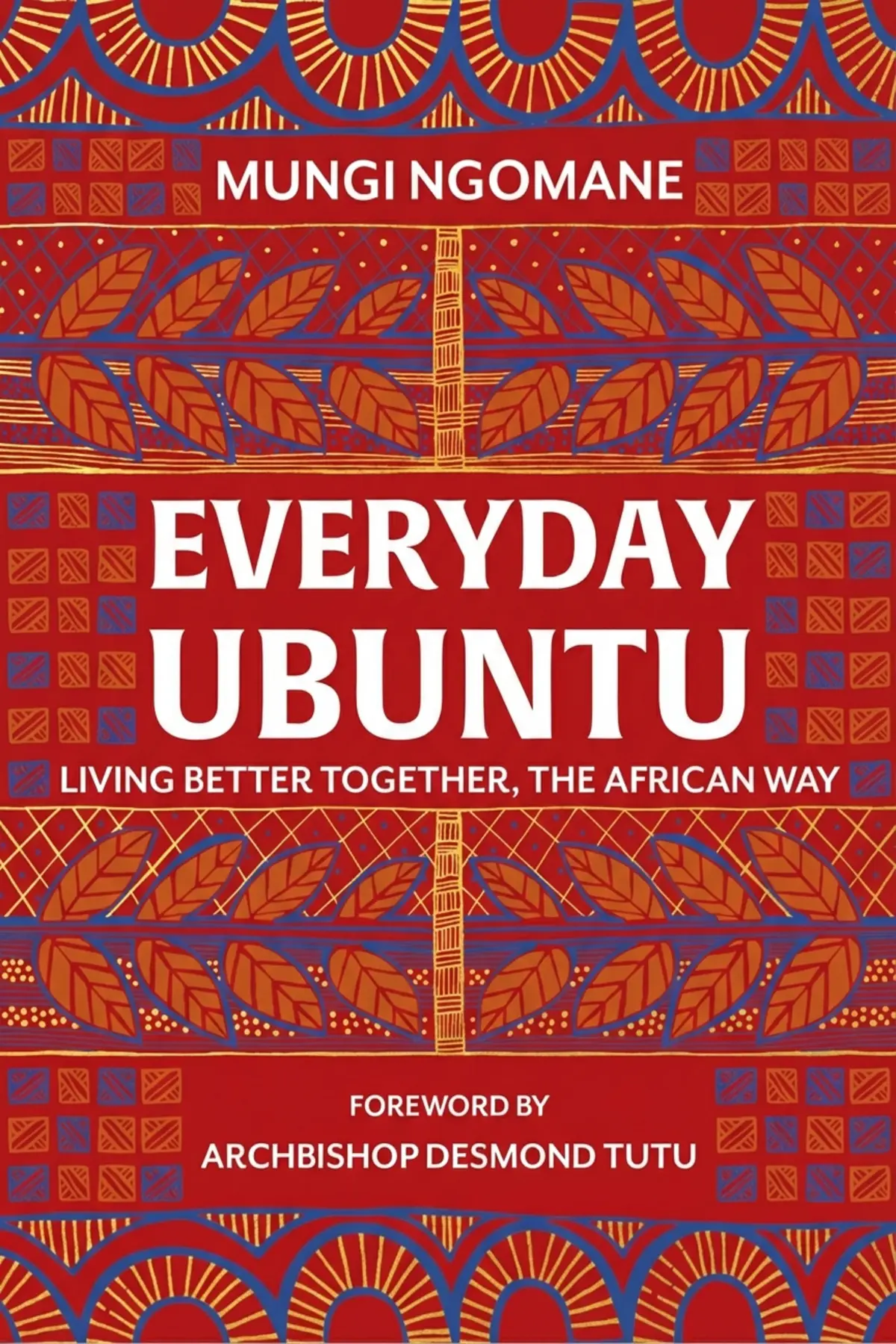
If your days pass in a blur of emails, earbuds and scrolling, and you end them feeling oddly alone, the fix may not require a new job, home or partner. In Everyday Ubuntu, Mungi Ngomane, granddaughter of Archbishop Desmond Tutu, offers a South African philosophy built on one idea: every person is deeply connected to every other, so your own humanity grows when you honor someone else’s. Ubuntu rests on respect, and Ngomane shows how it reshapes ordinary moments, from paying for groceries to confronting someone who stole from you.
Her argument is simple and demanding. Belonging does not come from measuring ourselves against others but from recognizing their worth, and that recognition can be practiced every day through respect, empathy, hope, forgiveness, honesty and attention. The stories come from her family and from South Africa’s hardest years: a priest who lifted his hat, Nelson Mandela’s surprising dinner guest, a woman who sat across from one of her attackers. Each one ends in a habit to try tomorrow, and most of them cost nothing.
1 min 41 sec
Thousands of followers and a steady stream of likes can still leave a person feeling completely alone. A South African philosophy suggests the problem lies in where we point our attention, and offers a tiny fix for the supermarket.
1 min 37 sec
A student is certain she knows which housemate stole a friend’s jewelry, and she is right. What happens when she holds back her anger reveals something nobody in the house had suspected.
1 min 50 sec
A gesture lasting a few seconds on a Johannesburg street stayed with a future Nobel laureate for life. Years later, a prisoner on Robben Island used the same principle to transform the young man guarding him.
1 min 43 sec
Hope and optimism sound like the same thing, and most of us use them that way. Ngomane separates them sharply, and a study of children growing up in poverty shows why the difference matters.
1 min 48 sec
Four men attacked Ingrid von Stein, went to prison, and still she found no peace. A meeting arranged ten years later produced a feeling she had believed was impossible.
1 min 41 sec
A labor union, a lawyers’ association, a business confederation and a human rights group seem unlikely partners for anything. In Tunisia they achieved what politicians could not, and their strength came from treating their diversity as a tool rather than a source of conflict.
1 min 38 sec
South Africa’s truth commission made a discovery so terrible it could easily have been buried. What Desmond Tutu chose to do instead shows why admitting pain is what lets people heal together.
1 min 10 sec
Ubuntu can sound like a philosophy for grand settings, prison islands and truth commissions. Ngomane’s point is that it lives in small moments: a hat lifted on a township street, a house meeting held in place of an accusation, a dinner invitation to a former jailer. Each rests on the same recognition. Other people are part of what makes you human, and honoring them restores something in you too. That is where the belonging missing from a day of emails and scrolling comes back.
The practices are modest. Look the cashier in the eye. Before condemning someone who hurt you, ask what brought them there. When optimism collapses, choose hope and turn it’s pointless into it’s possible. And when something embarrassing happens, Ngomane suggests calling the friend with the most infectious laugh and telling them the whole story. Laughing together turns shame into humor and brings you closer, and your friend will probably have a similar story to share.
None of it costs anything. It only asks you to look up from your own bubble and notice who is already there.
Many people end their days feeling flat and alone, even after hours of messages, feeds and meetings. Mungi Ngomane, granddaughter of Archbishop Desmond Tutu, argues that the fix needs no new job, home or partner. It needs a different way of seeing the people around us. Her guide is ubuntu, a South African philosophy that holds all humans are deeply interconnected and built on respect. Ngomane shows how it changes everyday behavior: noticing what others contribute rather than comparing ourselves with them, imagining the circumstances behind someone's hurtful act, choosing hope over fickle optimism, forgiving people who have caused real harm, valuing difference and listening with full attention. The lessons come from her family and from South Africa's hardest years. A white priest lifts his hat to a young Desmond Tutu's mother. Nelson Mandela invites his former prison guard to his inauguration dinner. A woman meets one of the men who attacked her and finds compassion. Each story ends in a small practice readers can try right away, most of them costing nothing at all.
Professionals who end busy, screen-filled days feeling disconnected and want warmer daily contact with people.
Anyone holding a grudge or struggling to forgive a serious hurt.
Team leads and community builders who want respect and real listening to shape how a group works.
Mungi Ngomane, whose full first name is Nompumelelo, is the granddaughter of Archbishop Desmond Tutu and a youth patron of the Tutu Foundation UK. She has worked on conflict resolution in the Middle East and on the advancement of women and girls for several leading advocacy organizations. She also coordinated Millions of Conversations, a national, bipartisan US campaign against Islamophobia and discrimination, and holds a master's degree in diplomacy and international studies from the University of London's School of Oriental and African Studies.
Listeners find this work highly readable and articulate, featuring lovely illustrations that clearly convey the Ubuntu philosophy. They admire its uplifting material, as one listener points out the life-changing words of wisdom and another observes its contemporary, straightforward tales regarding social healing. The text earns praise for its kind-hearted perspective, with one review particularly citing its values for all humankind. Listeners cherish the book’s depth, with one remarking on how it seamlessly integrates actual life experiences.
The physical beauty of this edition is what first caught my eye, but the message inside is what truly stayed with me. Mungi Ngomane brings the spirit of Ubuntu to life through her unique lineage, making the ancient philosophy feel incredibly urgent. Phrases like 'A person is a person through other persons' are explored with such warmth that you can't help but feel a deeper connection to everyone around you. It focuses heavily on human connection and social healing, offering a compassionate look at how we can bridge our many divides. Truth is, in a world that feels increasingly polarized, this well-written guide serves as a necessary anchor for the soul. The artwork throughout the chapters is vibrant and perfectly complements the text's hopeful tone. I found it to be a life-changing collection of wisdom that I will likely revisit whenever I feel my patience thinning.
Show moreThis book genuinely changed how I approach my difficult neighbors and coworkers. The 'I see you' concept is so simple yet so profound when you actually put it into practice during a heated moment. I loved how the author blended real-life instances of horrific experiences with the overarching Ubuntu philosophy to show that forgiveness is a power, not a weakness. It’s not just about being 'nice'; it’s about acknowledging our shared reality and choosing to see the wider perspective. Every page breathes compassion and makes you want to be a better version of yourself through your interactions with others. The illustrations are a highlight, turning each lesson into a visual meditation. This is a must-read for anyone who believes that our strength lies in our unity rather than our divisions.
Show moreWow, what a timely and important read for anyone feeling disconnected in this loud, digital age. Mungi Ngomane has a gift for taking big, abstract concepts and making them feel intimate, urgent, and deeply personal. The lesson on 'choosing hope over optimism' really resonated with my current life situation and gave me a new vocabulary for my struggles. This isn't just a book you read once; it’s a practice you inhabit every single day through your choices. Between the gorgeous illustrations and the life-changing words of wisdom, it’s a masterpiece of social philosophy for the modern reader. Frankly, I think this should be required reading in schools to help foster a sense of global empathy. It perfectly melds real-life instances with profound spiritual truths in a way that feels both accessible and transformative.
Show moreFinally got around to reading this after seeing it recommended for its insights into social healing. Not gonna lie, I expected a dense philosophical text, but I found a very readable manual for kindness instead. The artwork is stunning and adds a layer of calm to the reading experience that matches the author’s compassionate tone. I particularly enjoyed the section on forgiveness and finding humor in our shared humanity, which felt very grounded in real-world application. It bridges the gap between ancient African wisdom and modern struggles quite effectively, even if some parts feel a bit repetitive. Ngomane has a gift for storytelling, using her family history to illustrate how we can choose hope over simple optimism. It’s a beautiful manifest for anyone wanting to live a more collective, less individualistic life.
Show moreAs someone who has always been fascinated by African philosophy, I found this to be a refreshing and modern take. Ngomane translates the phrase 'I am because you are' into practical, everyday steps that anyone can implement regardless of their background. The stories are heartwarming and provide a much-needed perspective on how we view community in an era of digital isolation. While some chapters are definitely stronger than others, the overarching emphasis on dignity and respect for all humankind is very timely. It’s the kind of book you keep on your coffee table to dip into when the news cycle gets too heavy. My only minor gripe is that the structure can feel a bit formulaic after the first few lessons, but the wisdom remains sound. I finished it feeling much more mindful of how my actions ripple out to affect others.
Show morePicked this up during a particularly stressful week and it was exactly the balm I needed for my weary mind. The focus on social healing through small, intentional acts is very powerful and feels achievable for the average person. I appreciate that Ngomane doesn't pretend that this path is easy; she openly admits that our progress isn't linear and we will inevitably fail. Look, we all need a reminder to listen more and judge less, especially in our current social climate. The artwork is beautiful and mirrors the vibrant, interconnected message of the text perfectly. While some of the lessons felt a bit like 'filler,' the overall impact was one of peace and renewed purpose. It is a gentle, compassionate book that encourages you to look outward rather than just inward.
Show moreThe chapter on 'finding humor in our humanity' was my absolute favorite part of this entire book. It’s so easy to get bogged down in the heaviness of the world, but this text offers a lighter, more compassionate way forward. By using examples from her grandfather, Desmond Tutu, Ngomane makes these high ideals feel attainable for regular people. It’s well-written and flows smoothly, though a few sections felt like they were repeating the same core point over and over. Still, it’s a beautiful manifesto for collective living and a great reminder that we are all fundamentally connected. The physical quality of the book—the paper, the font, the colors—makes the reading experience feel like a special treat. I’ve already recommended it to several friends who are struggling with feeling isolated lately.
Show moreEver wonder if complex philosophies can be boiled down into simple, bite-sized lessons? This book attempts exactly that through 14 distinct chapters, but the results are somewhat mixed. While I appreciate the core message of interconnectedness, many of the exercises—like 'really listening' or 'standing in someone else’s shoes'—felt like basic common sense I already practice. The stories about Nelson Mandela and Archbishop Desmond Tutu are undeniably moving, yet they often felt shoehorned into specific lessons where they didn't quite fit perfectly. Personally, I was hoping for more academic depth regarding the origins of Ubuntu rather than a self-help format. The book is undeniably gorgeous to look at, and the sentiment is pure, but it lacks the intellectual 'meat' I was craving. It is a decent introductory text for those new to the concept, but seasoned readers might find it a bit underwhelming.
Show moreNot what I expected, as I was looking for a more rigorous and scholarly exploration of Ubuntu. What I got instead was a series of 14 lessons that felt more like a standard self-help guide than a philosophical deep dive. The writing is very clear and the layout is undeniably gorgeous, but the depth is lacking for anyone already familiar with the work of Tutu or Mandela. Some stories felt a bit forced into the 'lesson' framework, which made the narrative flow feel disjointed at times. However, the anecdotes regarding the Truth and Reconciliation Commission remain incredibly powerful and provide necessary context for the philosophy. If you want a quick, inspiring read that looks great on a shelf, this is it. Just don't expect a complex breakdown of African social structures or historical development.
Show moreTo be fair, the core message here is wonderful, but the actual execution left me feeling quite cold and frustrated. It felt more like a collection of random feel-good anecdotes that didn't always connect back to the specific lesson being taught in the chapter. I found the constant references to the author's famous relatives a bit much after a while, making the whole thing feel more like a foundation brochure than a transformative philosophical guide. Honestly, most of these exercises are things we learned in primary school, and I didn't feel I gained any new perspective on the African philosophy itself. The book is beautiful to hold, with thick paper and lovely colors, but that doesn't make up for the lack of depth in the writing. I was looking for a serious treatise and got a shallow 'live, laugh, love' version of a profound cultural concept.
Show moreMungi Ngomane presents ubuntu, a South African philosophy holding that all humans are deeply interconnected and that respect is the foundation of a good life. She argues that loneliness and constant comparison fade when we focus on what others contribute to our lives, and she turns the idea into daily practices: respect, seeing other perspectives, hope, forgiveness, embracing difference, honesty about pain and deep listening.
Ngomane describes optimism as a feeling of confidence that something you want will happen, which easily flips into pessimism when it does not. Hope is a choice you can keep making regardless of events, a faith in yourself and in the goodness of others and the world. She cites a study by Dr. Valerie Maholmes in which hopeful children growing up in poverty went on to education and stable work.
Forgiveness starts by acknowledging that the person who hurt you is human and shaped by their circumstances. Ngomane tells the story of Ingrid von Stein, who met one of her attackers through a prison reconciliation program, learned of his abusive childhood and felt compassion. Ngomane calls forgiveness an act of self-love and a process you may need to recommit to several times.
Ngomane offers small steps. Look people in the eye when they serve you. Before judging someone, imagine their circumstances. Watch your language for stereotypes. Turn negative thoughts like it’s pointless into it’s possible and keep a daily gratitude list. Listen with full attention and your phone away. When you are struggling, admit it and ask for help, and share embarrassing moments with a friend who laughs easily.
It suits people who feel disconnected despite being constantly online, anyone carrying resentment toward someone who hurt them, and leaders who want more respect and listening in their teams or communities. Readers interested in Desmond Tutu, Nelson Mandela and South Africa’s reconciliation after apartheid will also find personal stories from Tutu’s family.
Richard Wiseman





William B. Irvine


Andrew D. Thompson


Deepak Chopra
AUDIO SUMMARY AVAILABLE
Get the key ideas from Everyday Ubuntu by Mungi Ngomane, plus 5,000+ more nonfiction titles.









