

14 min 59 sec
Available in: English
Evergreen: Cultivate the Enduring Customer Loyalty That Keeps Your Business Thriving
By Noah Fleming
Shows how to build a business customers stay with for years: a clear character, a real community and a better experience, plus practical ways to track, reward, keep and win back the right buyers.
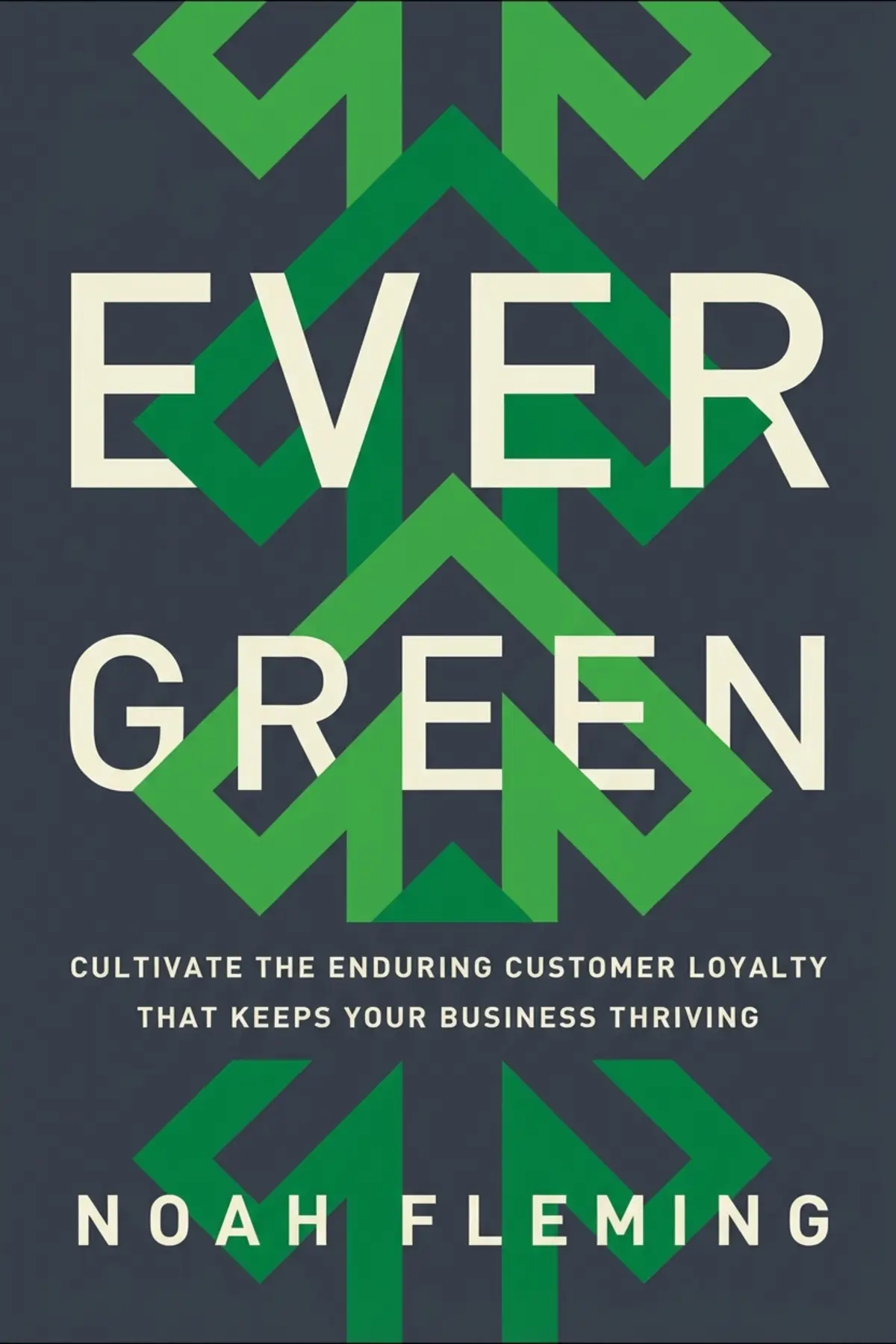
Table of Content
1. Introduction
1 min 02 sec
If your customers buy once and drift away, every month starts from zero, and growth feels like filling a bucket full of holes. In Evergreen, business consultant Noah Fleming argues that the fix is to tend the customers you already have before chasing new ones. He builds his case on three Cs. Character is who your company is, community is the group of people it brings together, and content is everything a customer gets, from the product to the experience around it.
On that base he builds a practice: know customers as individuals, reward the ones who could become regulars, let go of the ones who drain you, and keep the rest from slipping away. His examples include a bakery that lost nearly a year’s profit to one busy day and a mailing to former customers that brought in $50,000 on a $3,000 cost. What you get is a simple way to sort your customers, notice who is about to leave and decide who deserves your best offer.
2. Give your company a character customers can describe
1 min 35 sec
A tablet loaded with impressive technology failed to sell in 2011, while a rival’s two-word slogan told buyers exactly what they were paying for. The gap between them lies in a question most companies never ask.
3. Turn buyers into a community that spreads your name
1 min 40 sec
One fitness brand grew from a single gym to thousands while giving its most popular product away. A struggling motorcycle maker recovered the same way. Both relied on something customers value more than a good deal.
4. Make an ordinary product feel worth returning for
1 min 43 sec
Most restaurants believe they are in the food business, yet food is rarely what diners notice first. A burrito chain and a ride app show where the real value of a product often hides.
5. Know your customers as people instead of averages
1 min 35 sec
Many companies build their plans around an imaginary customer who has 2.5 kids and owns 1.2 cars, someone who does not exist. A free lunch draw and a three-column spreadsheet offer a much sharper picture.
6. Give your best loyalty perks to almost-regular customers
1 min 44 sec
Airline points so weak that flyers mock them, a coffee chain that gives its biggest fans fewer perks, and a bar that charges for membership. Only some of these programs actually make customers more loyal.
7. Fire the customers who cost more than they bring
1 min 33 sec
Some customers will never pay back what they take, and two large companies have closed accounts to prove the point. Deciding who to let go turns out to reveal what good service really means.
8. Catch leaving customers early and win back the rest
1 min 37 sec
A publisher kept losing subscribers for a reason almost too small to notice, and one mailing to former customers paid for itself many times over. Keeping buyers costs far less than most owners assume.
9. Welcome new customers without sinking your business
1 min 32 sec
A bakery gained 8,500 new customers in a single day and paid for it with nearly a year’s profit. Its story changes what you should do in the minutes after anyone buys from you.
10. Conclusion
58 sec
Evergreen changes what a company counts as success. The figure that matters most is the number of people who stay, come back and bring others along. Fleming’s three Cs give that idea its shape, and his plainest tool carries much of the weight: a spreadsheet showing when each person last bought, how often and how much.
That sheet tells you where to start. It points to the occasional buyers your best offers should target, the regulars whose silence is an early warning, and the lapsed customers a modest mailing might bring home. It also flags regulars whose visits have suddenly dropped off, giving you a chance to reach out with an offer before they drift away.
Keep the bakery in mind, the one whose single-day Groupon rush swamped its small staff and ended up costing it almost a year of profit. A business stays green through winter the way a tree does, by holding on to what it has already grown.
About this book
What is this book about?
Many businesses pour money into winning new customers while existing ones slip away without a word. Noah Fleming argues that lasting companies work the other way around. Like trees that stay green through winter, they keep their customers close year after year. His model rests on three Cs. Character is a company's personality and the reason it exists, shown through Apple's think different identity and Zappos' staff-made product videos. Community is the group a brand brings together, as CrossFit and Harley-Davidson did. Content is the product plus the experience around it, the lesson of Chipotle and Uber. From there Fleming turns practical. He shows how to replace the idea of an average customer with real data, track when, how often and how much each person buys, design loyalty programs that reward the right people, fire customers who cost more than they bring, catch those about to leave and win back the ones who already have. Readers get a clear case for spending less energy on acquisition and more on the relationships they already have.
Book Information
Who it's for
Owners with one-time customers
Small business owners who win customers easily but rarely see them a second time.
Managers weighing loyalty costs
Marketing and service managers deciding which loyalty perks and which accounts are worth the cost.
Founders wanting steadier growth
Founders tempted by big discount deals who want a steadier, cheaper way to grow.
About the Author
Noah Fleming
Noah Fleming has served as CEO of Fleming Consulting & Co, where he has coached and advised business owners, executives and individuals. His clients have included Michael Kors and The Washington Capitals. He has blogged for Fast Company and written as a guest for The Globe and Mail, and Evergreen is one of three books he has written about customers and loyalty.
Ratings & Reviews
Ratings at a glance

What people think
Listeners find the book simple to navigate and a vital resource for entrepreneurs, with one listener remarking that it is loaded with actionable techniques. Furthermore, the work is commended for its professional utility, as one listener draws attention to its concentration on current clients. The prose also earns high marks, and listeners value the impactful metaphor and informal, accessible tone.
Top reviews
Air
Finally got around to reading Fleming’s take on sustainability, and the '3 Cs' framework really stuck with me. Character, community, and content seem like buzzwords until you see how he connects them to actual profit margins. Most businesses are obsessed with the 'chase'—that high of landing a new lead—but this book argues for the slow burn of keeping the people you already have. It’s written in a very approachable way, almost like a conversation over coffee. My only gripe is that it drags slightly in the middle chapters when discussing the 80/20 rule, which most people already know. Still, the section on the 'Roach Letter' was a hilarious and insightful look at corporate accountability. If you’re tired of the constant grind for new traffic, this provides a solid roadmap for building something that actually lasts.
Show moreMattanee
As someone who has spent years in sales, the perspective here was refreshing. Fleming challenges the status quo of constantly hunting for new leads and instead highlights the goldmine that is your existing database. The 'stick letters' and 'snail mail' strategies he mentions are great examples of how to stay top-of-mind without being annoying. I especially liked the 5-steps to build a company’s character; it’s rare to see a business book tackle 'ethics' in a way that feels profitable rather than just preachy. The writing is punchy and the author’s voice is distinct. You can tell he’s been in the trenches with big companies like Zappos and Amazon. It’s a practical guide that moves past theory and gives you actual steps to improve your retention rates by focusing on the human element and building real community.
Show moreSomchai
Picked this up on a whim after seeing it mentioned in a marketing group, and I’m glad I did. The focus on 'Content' as one of the 3 Cs was especially relevant for my current project. Fleming argues that content isn't just about selling; it’s about building a relationship and reinforcing the brand’s character. I loved the stories about Ben & Jerry's and Lego—they really illustrate what it means to be a 'Creator' in your space. The writing is incredibly easy to follow and the tone is encouraging without being overly 'rah-rah' corporate. It’s a dense book, but it’s packed with strategies like the Pareto Principle applied to customer loyalty. I highly recommend this to anyone who feels like they’re on a treadmill of endless acquisition with no real growth to show for it.
Show morePong
Ever wonder why your marketing budget feels like a leaky bucket? Noah Fleming explains it perfectly by comparing our obsession with new customer acquisition to a literal addiction. We ignore the loyalists right in front of us because we’re too busy hunting for the next big score. I found the 'Messy Closet Theory' to be a brilliant metaphor for internal business chaos that confuses the customer experience. The book provides a lot of practical diagnostic tools, including the RFM model, which I plan to implement with my marketing team immediately. Truth is, it’s a bit longer than necessary to make its point, but the substance is there. It’s essential reading for anyone in a leadership role who wants to move beyond transactional relationships and start building a real community around their brand.
Show moreJob
The chapter on the 'Roach Letter' was worth the price of admission alone. It’s a hilarious but poignant look at how companies handle complaints and feedback, or more often, how they fail to. Noah Fleming does a great job breaking down the Japanese concept of Omote-Ura, helping readers understand the difference between a company’s public face and its private reality. This book is full of these little gems that make you rethink your entire customer service policy. While it’s marketed toward medium and large organizations, I think even a solo entrepreneur could find value in the loyalty program insights. My only criticism is the length—I think the same message could have been delivered in about fifty fewer pages. Regardless, the actionable strategies like the RFM model make it a worthwhile addition to any business library.
Show moreLadawan
Noah Fleming writes with a specific kind of clarity that is rare in the business world today. Instead of hiding behind jargon, he uses powerful metaphors to show why we’re failing our best customers. I was particularly struck by the 'Messy Closet Theory'—it’s such an accurate description of how internal disorganization spills over into the client experience. The book isn't just about 'being nice' to customers; it’s a strategic look at Customer Lifetime Value and how to maximize it through character and community. I’ve already started drafting a new customer service policy based on the 'Stick Letters' concept. There’s a lot of substance here if you’re willing to sit through the longer chapters. It’s a solid read, mainly because it really emphasizes the importance of that 10% of 'Evergreen' companies we should all strive to be like.
Show moreSomrutai
To be fair, the primary concepts in Evergreen are incredibly sound, but the execution felt a bit bloated to me. The 3 Cs of character, community, and content are a fantastic North Star for any organization, yet I felt the author spent too much time on anecdotes that didn't always add new value. That said, I did appreciate the deep dive into Customer Lifetime Value (CLV). It’s a metric we often ignore in favor of quick wins, and Fleming does a great job illustrating why that’s a mistake. The tone is professional yet accessible, making it an easy weekend read for a busy executive. It didn't reinvent the wheel for me, but it served as a much-needed reminder to value the customers we’ve already worked so hard to earn. It is a decent book with good intentions.
Show moreSatit
Look, the core message of this book—focus on the people you already have—is something every business owner needs to hear. We get so caught up in the marketing hunt that we forget the actual human beings on the other side of the transaction. Fleming’s 3Cs (Character, Community, and Content) offer a sturdy framework to fix that. I found the 'Employee Empowerment Policy' section particularly useful, as your staff is often the first touchpoint for building that community. The prose is conversational and easy to follow. However, I did find myself skimming through some of the longer case studies. Many of the examples felt like they were treading familiar ground if you’ve read other business bestsellers recently.
Show moreRungtip
While I appreciate the sentiment of putting customers first, this book felt a bit lopsided. The author’s premise is that we are 'addicted' to new customers, which is a strong hook, but the solution—focusing on Character, Community, and Content—feels a bit abstract in practice. To be fair, there are technical models like the RFM and the 80/20 rule included, which help ground the theory. I just found the 'Archetypes' and 'Indoctrination' sections a little too theoretical for my taste. The book is well-written and the conversational style makes it go by quickly, but I struggled to see how some of these high-level concepts would translate to a smaller, more traditional business model. It’s a decent resource for the insights on customer retention, but it might be a bit too 'big picture' for some readers.
Show morePita
This could have been a blog post. Frankly, while the 'Evergreen' concept is vital, the book feels like it’s stretching a single good idea across a marathon. The 3 Cs are smart, and the 'addiction' metaphor for acquisition is clever, but once you get past the first few chapters, it feels like it’s running in circles. I was hoping for more granular, technical data on customer retention, but instead, I got a lot of anecdotes about companies like Chipotle and Apple that we’ve all heard before. There are some useful bits, like the RFM model and the diagnostic tools, but they are buried under layers of filler. If you have a lot of time on your hands, go for it, but for a busy manager, you might find yourself frustrated by the slow pace and repetitive nature of the narrative.
Show moreQuestions about this book
What is the main idea of Evergreen by Noah Fleming?
Fleming argues that lasting businesses grow by keeping the customers they already have, not by chasing endless new ones. He builds this on three Cs: character, the company’s personality and reason for existing; community, the group of people a brand brings together; and content, the product plus the full experience around it. He then shows how to track, reward, keep and win back customers, and when to let unprofitable ones go.
What are the three Cs in Evergreen?
Character is the brand’s identity, defined by why it does what it does, as Apple did with its think different campaign. Community is a group of like-minded customers who connect with each other, as with CrossFit’s free daily workout or Harley-Davidson’s public events. Content is the product together with the experience, service and intangibles around it, illustrated by Chipotle’s customizable orders and Uber’s app-based rides.
What is RFM and how does Evergreen suggest using it?
RFM stands for recency, frequency and monetary value: when a customer last bought, how often they buy and how much they spend. Fleming suggests tracking it in something as simple as a spreadsheet. Frequent buyers can receive promotions, while a drop in recency, such as a monthly shopper missing two months, works as an alarm that lets you reach out with an offer before the customer is gone.
Should a business really fire some customers?
Fleming says yes when customers consume more time and resources than they will ever bring in. Amazon closes accounts of people who return excessive numbers of items, and Sprint shut down 1,000 accounts whose owners kept calling to get fees refunded. In his view good service means setting and meeting expectations, as Southwest Airlines does, and the customers worth keeping are those who fit the company’s character and community.
Readers also enjoyed

AUDIO SUMMARY AVAILABLE
Listen to Evergreen in 15 minutes
Get the key ideas from Evergreen by Noah Fleming, plus 5,000+ more nonfiction titles.
- 5,000+ titles
- Listen as much as you want
- 7-day free trial
- Cancel anytime









