

59 Seconds: Change Your Life in Under a Minute
Richard Wiseman
 English
A Navy SEAL veteran's method for turning pain, stress and failure into growth. Anchor your actions in clear values, practice a little discomfort every day and plan your goals the way a SEAL team plans a mission.
1 min 00 sec
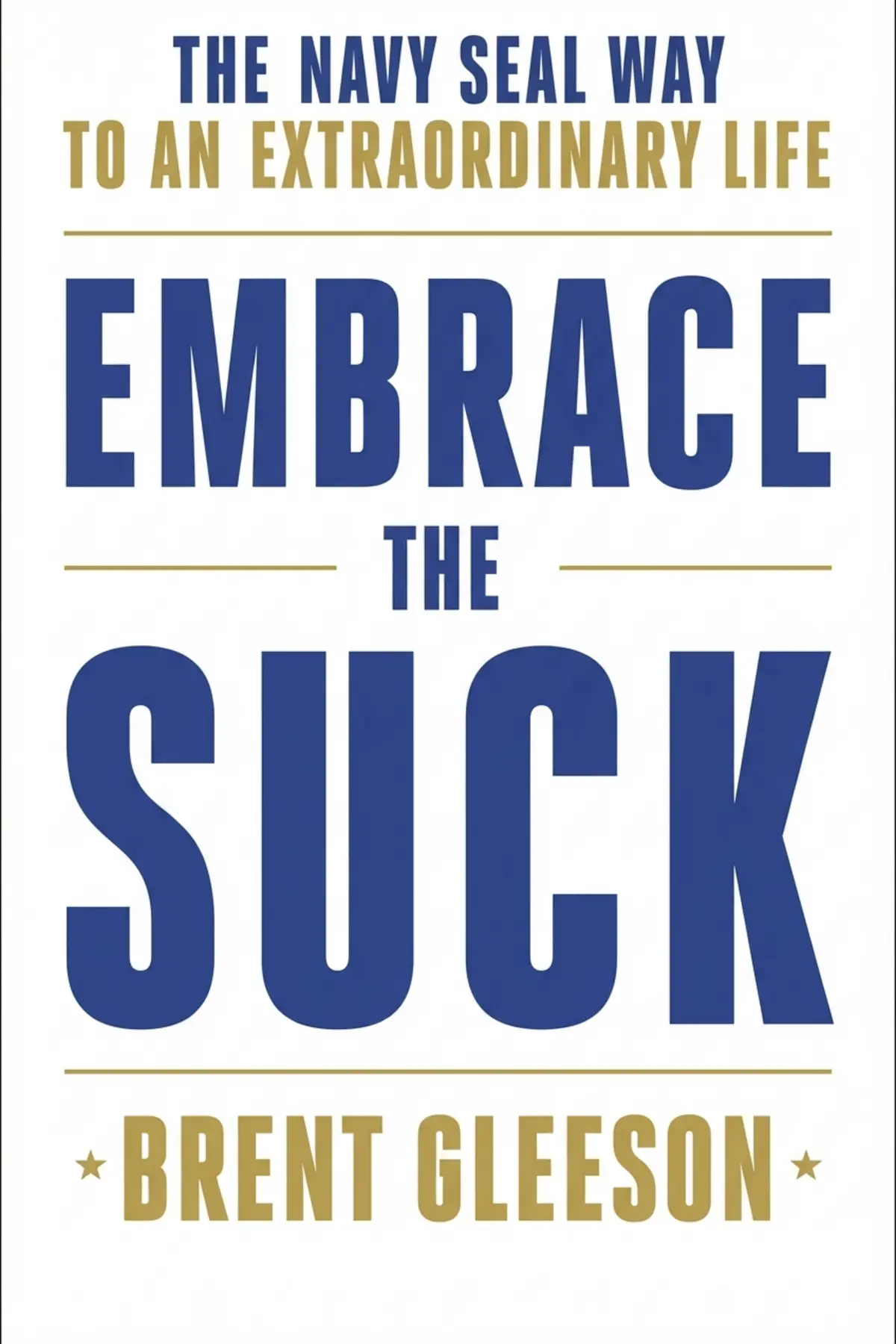
Most people spend part of every day hoping a hard thing will go away: the difficult project, the workout, the conversation they keep putting off. In Embrace the Suck, Navy SEAL combat veteran Brent Gleeson argues that this wish is the real obstacle, because the pain we dodge is what we grow from. He starts with SEAL selection, which 70 to 80 percent of candidates fail. The few who make it share one trait: they accept the misery and use it as motivation.
His central claim is simple. You cannot choose your hardships, but you can choose your response. When that response rests on clear values, a routine for handling stress, a daily habit of discomfort and careful planning, pain turns into fuel. Gleeson builds this into a working method: a short list of values with behaviors attached, three steps for handling stress, and a mission-style way to plan goals and finish them.
1 min 47 sec
Most candidates who quit SEAL selection are not beaten by the gunfire or the explosions. A trainee’s real test turns out to be something quieter, and a wounded veteran’s hospital room shows what passing it looks like.
1 min 41 sec
Pain without a purpose just hurts. Gleeson’s first exercise needs only a pad of sticky notes, and it turns vague good intentions into something you can actually check off by the end of the week.
1 min 40 sec
Good intentions on a sticky note rarely survive a week of deadlines. Gleeson’s fix for that is simple, but the part most plans skip is what he asks you to do on the day you fail.
1 min 52 sec
A blown tire, stubborn goats, waist-deep mud and a $300,000 car stripped bare: one SEAL operation in Iraq went wrong at nearly every step. The book then asks why the whole team stayed so calm.
1 min 47 sec
Stress usually feels like the thing standing between you and good work. Two psychologists offer a three-step routine that reverses the relationship, and you can try it the next time a deadline tightens your chest.
1 min 45 sec
Comfortable routines feel harmless, which is exactly why they last for years. Gleeson’s answer is a small daily dose of chosen discomfort, written straight into your goals so it can’t take you by surprise.
2 min 00 sec
Elite teams never start with action, and they expect the plan to break. Their planning sequence, a seven-word training motto and two simple tricks against temptation can carry a stalled personal goal to the finish.
1 min 14 sec
What Gleeson offers is a new question to ask when something hurts. Instead of asking how to make the pain stop, you ask what it can be used for. The trainees in the freezing surf, Jason Redman in his pity-free hospital room and a SEAL team coming back to find a $300,000 car stripped for parts all faced pain they did not choose. What they did choose was their reaction, and the book argues that reaction can be trained.
The training is ordinary and daily. It begins with a few values on sticky notes, each tied to behaviors you can measure and keep in view. It continues when stress arrives and you see it, own it and use it. It continues when a slip becomes something to study and not a reason for shame. It grows through one deliberately uncomfortable act each day. And it pays off when goals are planned like missions, with a backup for when things break, and carried out slowly and smoothly.
Brain calluses do not form in a weekend. They form the way the survivors got through Hell Week: one cold wave at a time, deciding each time not to ring the bell.
Most people spend a lot of energy hoping hard things will go away: the stalled project, the workout, the setback that keeps replaying. Brent Gleeson, a Navy SEAL combat veteran, argues that this wish holds people back. The pain we try to avoid, in his view, is exactly the material we grow from. Gleeson draws on SEAL selection, where most candidates fail, on fellow SEAL Jason Redman's recovery after being shot seven times, and on a mission in Iraq where nearly everything went wrong. From these he builds a practical method. You write down a handful of core values and tie each one to behaviors you can measure. You keep those behaviors where you will see them. You treat stress with a three-step routine borrowed from psychologists Alia and Thomas Crum: see it, own it, use it. And you do one uncomfortable thing every day. The last part of the book borrows the SEAL approach to execution: plan goals like missions, with contingencies, and build the self-discipline to carry them out steadily. Readers get a clear way to stop avoiding difficulty and start using it.
Professionals who keep postponing hard tasks and want a method that does not rely on motivation.
People stuck in a comfortable but unfulfilling job or routine who want to start pushing their limits.
Anyone who takes failure and stress personally and wants a calmer way to learn from them.
Brent Gleeson is a Navy SEAL combat veteran, entrepreneur and author who moved from elite military service into business and leadership work. He founded TakingPoint, a consulting firm that works on organizational transformation, leadership development and high-performance teams. His earlier book, TakingPoint, became a best seller. In Embrace the Suck he turns what SEAL training taught him into a method anyone can use.
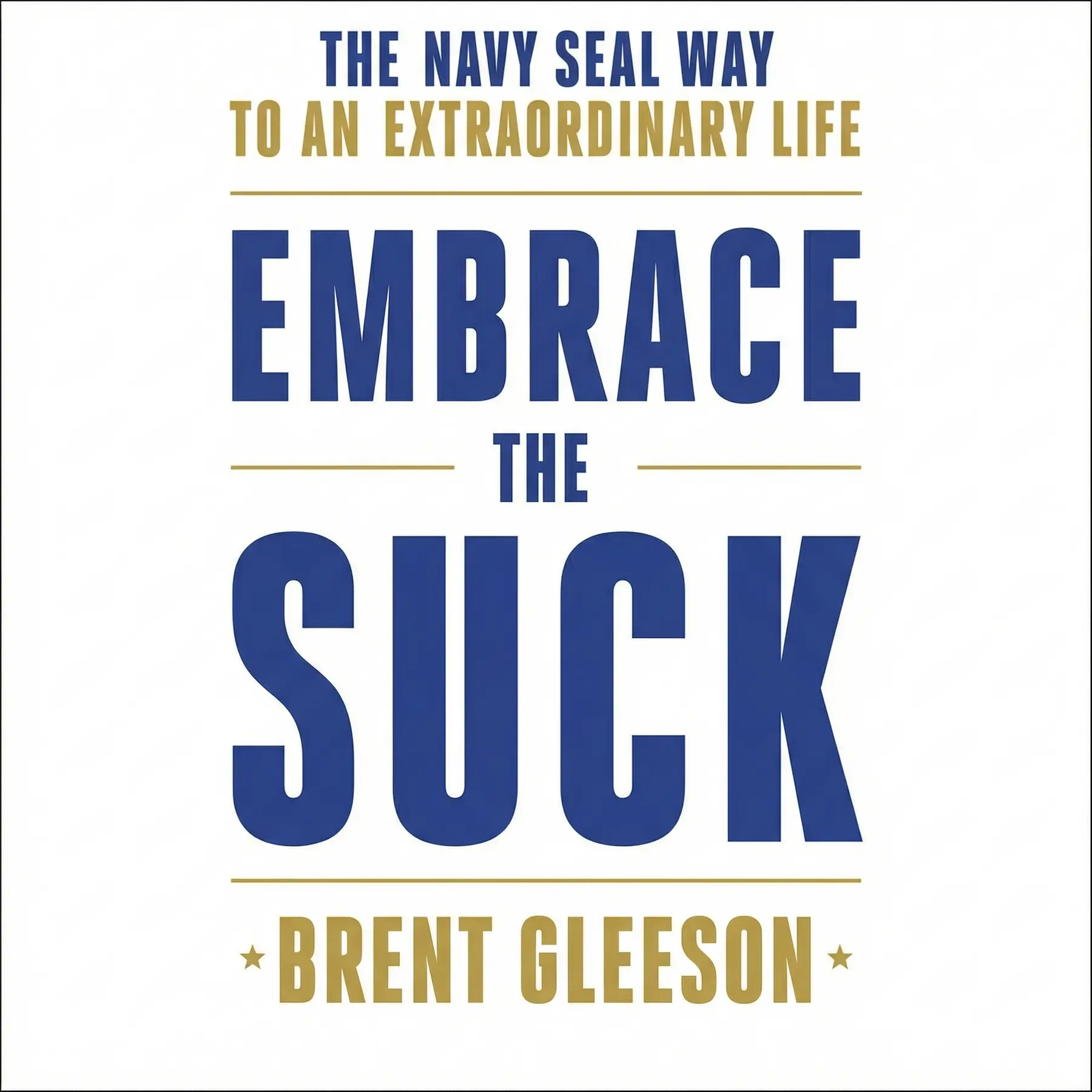
Listeners view this book as essential reading, praising the high-quality writing and direct, no-nonsense style. It delivers practical tactics and useful observations, with one listener noting how it facilitates an inventory of personal belief systems. Listeners appreciate the relatable anecdotes and inspiring material, as one individual mentions how it encourages constant daily growth. They also prize the focus on building resilience, with one review highlighting the way it shifts a person’s perspective on hardship.
Finally got around to reading Gleeson’s work, and it’s a total game-changer for anyone stuck in a rut. While some might say the advice is simple, the 'See it, Own it, Use it' model provides a concrete framework that many other motivational books lack. I particularly loved the section on identifying core values using Post-it notes; it forced me to take a hard inventory of my current lifestyle versus my stated beliefs. The SEAL anecdotes, especially the story about the botched mission in Iraq involving the stripped Mercedes, are both hilarious and humbling. It reminds you that even the most elite teams face chaos, and the only thing you can control is your reaction to the mess. Frankly, we all need a bit of a kick in the pants sometimes to stop seeking the easy path. If you want to turn your anxiety into fuel for performance, this is the manual you need.
Show moreWow, the final chapter really hits you where it hurts and makes you re-evaluate what kind of legacy you’re actually leaving behind. Gleeson’s concept of the 'death song' is a hauntingly beautiful way to frame personal accountability and long-term goal setting. I’ve read a lot of mindset books lately, but the way he blends military grit with actionable business strategies—like evaluating mission feasibility—really stood out to me. The writing is straightforward and punchy, making it an easy read that you can finish in a few sittings. I found myself highlighting dozens of quotes, especially the one from Marcus Aurelius about power over the mind. This isn't just about physical fitness; it's about building the mental fortitude to handle the 'suck' that life inevitably throws at everyone.
Show moreEver wonder what separates those who ring the bell from those who make it through the freezing surf of Hell Week? Brent Gleeson dives deep into that psychological divide, offering a roadmap for us mere mortals to adopt that same elite mindset. This book is a masterclass in reframing obstacles as opportunities for growth rather than roadblocks. I loved the practical advice on creating supporting behaviors for your core values—it’s not enough to just say you value health; you have to define exactly what that looks like in action. The prose is high-energy and keeps you engaged from start to finish. I’ve already recommended this to several coworkers who are struggling with burnout. It’s a powerful reminder that the only way out is through, and you might as well learn to enjoy the journey.
Show moreAfter hearing so many people rave about this, I finally sat down with it and I was not disappointed. The author's personal story of losing a teammate during training is gut-wrenching and truly illustrates the stakes of the SEAL mindset. Some might find the advice familiar, but the way he applies military strategic planning to personal goals is incredibly fresh. The formatting is excellent, and the summaries at the end of each chapter are great for quick reference when you need a boost. It’s a solid choice if you need a motivational pick-me-up that actually provides a roadmap for execution. This book doesn't just ask you to change your mind; it asks you to change your life through deliberate, painful action. It is definitely one of the better 'warrior-philosopher' books out there.
Show moreThis book doesn't just tell you to be better; it hands you the shovel and tells you where to dig. Gleeson takes the terrifying lessons of combat and BUD/S and translates them into a language that anyone can use to improve their career or personal life. The 'See it, Own it, Use it' model has become a daily ritual for me when dealing with workplace stress. I found the tone to be incredibly motivating rather than preachy, as the author is very open about his own mistakes and the times he fell short. The emphasis on being comfortable with being uncomfortable is exactly what I needed to hear to finally start my side business. If you are tired of fluffy, feel-good self-help and want something with actual teeth, this is definitely the book for you.
Show moreAs someone who consumes a lot of military-led self-help, I found the core principles here solid even if the delivery felt familiar. Gleeson leans heavily on his BUD/S training and his relationship with David Goggins, which provides a high-octane backdrop for his lessons on resilience. To be fair, some chapters do get a bit repetitive, hammering the same 'embrace discomfort' message until it feels a little worn out. However, the 'Taming Temptation Tiger' model and the focus on 'brain calluses' offer practical ways to build discipline that actually work in the real world. I appreciated the questions at the end of each chapter, as they turn the book from a passive read into an active workbook for self-improvement. It might not reinvent the genre, but it’s a powerful reminder to stop complaining and start executing.
Show morePicked this up on a whim after seeing Goggins wrote the foreword, and I’m glad I did despite some of the critiques. The 'slow is smooth, and smooth is fast' mantra is something I’ve started applying to my daily workflow, and the results are surprisingly noticeable. Gleeson does a great job of explaining that discipline isn't just about white-knuckling your way through life; it’s about setting up your environment to avoid temptation entirely. I liked the focus on small, incremental steps outside the comfort zone rather than demanding an overnight transformation. My only gripe is that the writing style is a bit simplistic at times, and some of the SEAL lingo feels a little forced for civilian applications. Overall, it’s a motivating read that encourages you to do something that sucks every single day.
Show moreThe chapter on self-discipline and identifying triggers was worth the price of admission alone for me. Gleeson’s approach to 'brain calluses' is a fantastic metaphor for how we can gradually build up our tolerance for stress and adversity. I found his 'Five-Step Root Cause Analysis' particularly helpful for dissecting my own failures without falling into a spiral of self-pity or helplessness. Truth is, the book is a bit rigid and dogmatic, which I know isn't for everyone, but I personally thrive on that no-nonsense, military-style coaching. It forced me to stop making excuses for my lack of progress in certain areas of my life. While it doesn't offer a ton of 'new' science, it packages existing psychological concepts into a format that is highly digestible and immediately applicable.
Show moreLook, I appreciate the author's service and his undeniable toughness, but this felt like a lighter version of David Goggins' work without the raw edge. If you’ve already read 'Can't Hurt Me', you probably won’t find many groundbreaking insights here that haven't been covered elsewhere. The tone can also drift into being slightly preachy, which might alienate readers looking for a more empathetic approach to personal growth. That said, the breakdown of resilience into challenge, commitment, and control is a useful mental map for beginners. The stories are engaging enough, but I found myself skimming through the parts that felt like standard self-help fluff about goal setting. It’s a decent introductory text for those new to the 'tough love' style of motivation, but seasoned readers might find it a bit underwhelming.
Show moreNot what I expected based on the hype; it felt more like a collection of generic blog posts than a cohesive book on resilience. The author spends a significant amount of time reminding us that he’s a Navy SEAL, which is impressive, but it doesn't automatically make the writing insightful or the advice original. I found the book incredibly repetitive, with the same three or four points being recycled under different chapter headings. To be honest, I felt like the best parts of the book were the quotes from other famous figures like Bruce Lee and Martin Luther King Jr. rather than Gleeson's own commentary. It lacks the deep storytelling and emotional vulnerability that makes other books in this genre so compelling. If you want real substance on mental toughness, there are much better options on the market.
Show moreBrent Gleeson argues that you cannot choose your hardships, but you can choose how you respond to them. Instead of avoiding pain, he says you should use it to grow. His method combines written core values with measurable behaviors, a three-step routine for stress, a habit of doing something uncomfortable every day and SEAL-style mission planning backed by self-discipline.
It means accepting that a situation is hard and using that difficulty as motivation instead of fighting it or running from it. Gleeson saw it in SEAL selection, where 70 to 80 percent of candidates fail and the survivors accept the misery. He also points to retired SEAL Jason Redman, who was shot seven times, declared his hospital room a pity-free zone and made a full physical recovery.
It is a three-step approach to stress from psychologists Alia and Thomas Crum, which Gleeson recommends. First, see it: notice the stress, treat it as a chance to grow and look for its causes. Second, own it: accept that your reaction is your choice. Third, use it: point that negative energy at constructive action so the stress helps you grow.
Write four to six core values on sticky notes and attach specific, measurable behaviors to each one. Keep those behaviors visible in a calendar, an app or on a wall. Do one thing that sucks every day. When you slip, review which behavior failed instead of blaming yourself. For bigger goals, plan like a mission, with clear roles, outside advice and backup plans.
It suits people who tend to avoid hard things, who feel stuck in comfortable but unfulfilling routines, or who take stress and failure badly. Its tools are simple and personal, such as sticky notes with your values, a daily uncomfortable act and practical discipline moves like keeping alcohol out of the house or muting your phone. That makes it useful outside the military too.
Richard Wiseman





William B. Irvine


Andrew D. Thompson


Deepak Chopra
AUDIO SUMMARY AVAILABLE
Get the key ideas from Embrace the Suck by Brent Gleeson, plus 5,000+ more nonfiction titles.









