

11 min
Available in: English
Email Marketing Demystified: Build a Massive Mailing List, Write Copy that Converts and Generate More Sales
Shows how to choose email software, turn website visitors into subscribers with a useful free offer, plan the messages they receive, earn from the list honestly and reach niche buyers with personal cold emails.
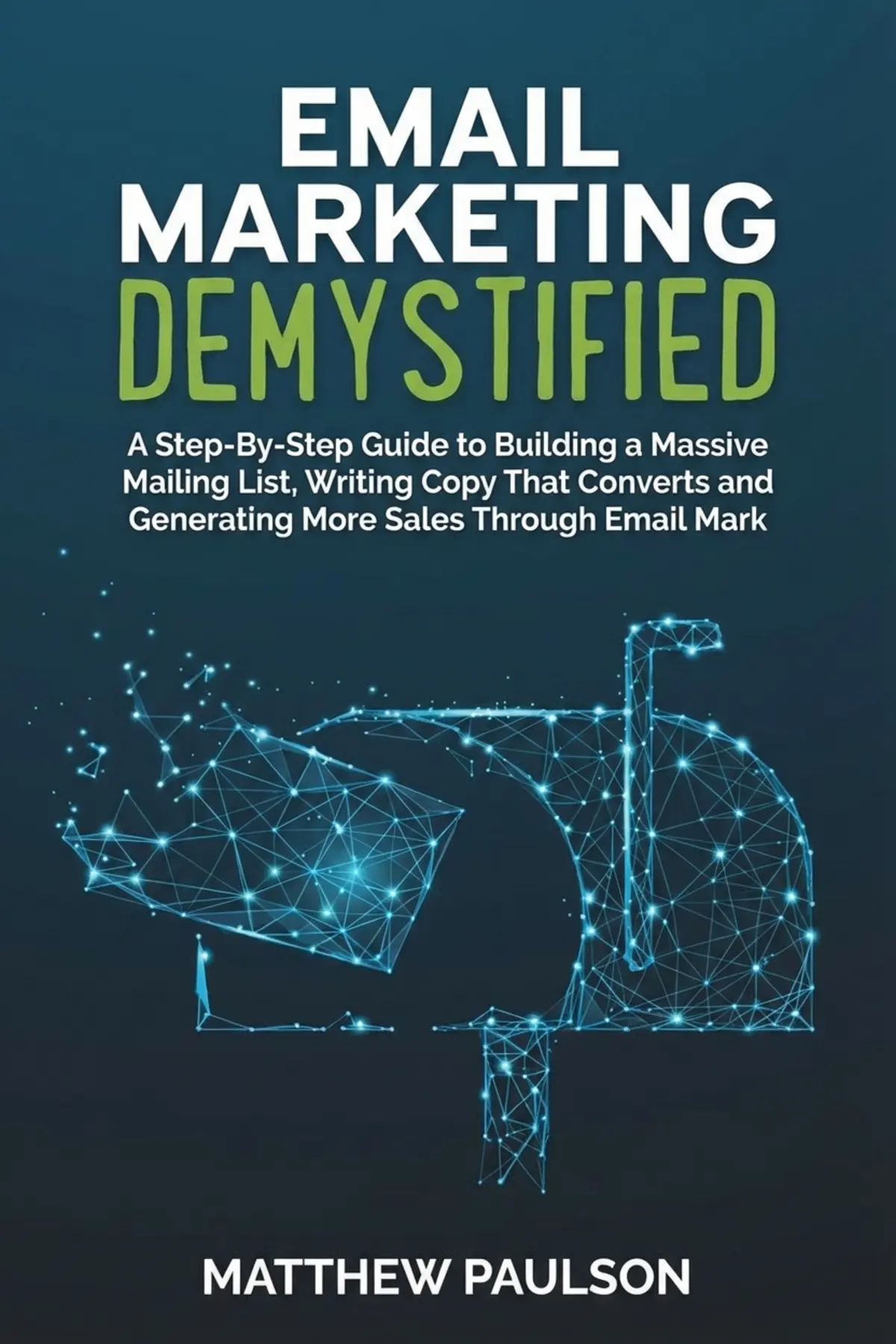
Table of Content
1. Introduction
1 min 01 sec
Most businesses that try email end up with a list of addresses that nobody reads and nobody buys from. In Email Marketing Demystified, Matthew Paulson, whose company MarketBeat grew to more than 2.5 million email subscribers, argues that the fix begins before the first send: each address should be earned with something of real value, so the people on the list actually want to hear from you.
From there his method works as a chain. Choose software built for bulk email. Trade a useful gift for every sign-up. Greet newcomers with a planned sequence of messages. Sell in ways that keep their trust. And if your market is tiny, write to prospects one at a time.
One thread holds it together: a list pays off only when it behaves like a relationship. What follows is a working plan for each link, from the opt-in box on a homepage to the short cold email a niche seller sends to a single buyer.
2. Pick the email tool that fits your business
1 min 48 sec
Sending to hundreds of people from a personal inbox seems harmless until the messages stop arriving. The software behind your list decides more than most beginners expect, and the most expensive option is not automatically the right one.
3. Turn website visitors into subscribers with a fair trade
1 min 48 sec
People who already like your website still hesitate to type in their email address. Paulson explains what that hesitation is really about, and why the offer, the words around it and its position on the page all change the outcome.
4. Make new subscribers glad they joined from day one
1 min 42 sec
The welcome email is your first contact with a new subscriber, and it sets the tone for everything that follows. Paulson shows what that first message must accomplish, and how the months that follow decide whether a newcomer becomes a reader or an unsubscribe.
5. Earn from your list without losing its trust
1 min 46 sec
A big list can sit on a company’s books for years without paying for itself. Paulson lays out several ways to turn readers into revenue, and explains why affiliate promotions demand transparency and honest endorsement to keep subscribers’ trust.
6. Win niche customers with short, personal cold emails
1 min 46 sec
When your pool of possible buyers is small and finite, a sign-up box alone will not fill your calendar. Paulson describes a different routine for small, high-value markets, and it depends on a weekly habit more than on a big audience.
7. Conclusion
1 min 09 sec
Paulson’s method can look like a pile of separate tactics, from software choices to cold emails. Each one answers the same question: why should this person want the next message? The ESP makes sure the message arrives. The lead magnet earns the address honestly. The welcome and the autoresponder series turn a stranger into a reader. Respectful selling turns some readers into customers, and personal outreach does the same job where the market is too small to wait for sign-ups.
If you already have a list, start with the first email a new subscriber receives. Make sure it thanks them, tells them what to expect and asks them to add you as a safe sender. Then look hard at your lead magnet and check that it solves a problem your visitors actually have. If your buyers are few and valuable, block out time each week for a small batch of short, personal emails, and follow up on every one.
A list is only names until people have a reason to open what you send. Paulson’s argument is that when every message gives them that reason, the sales follow.
About this book
What is this book about?
Plenty of businesses collect email addresses. Far fewer build a list that people open, read and buy from. Matthew Paulson, whose financial media company MarketBeat has more than 2.5 million email subscribers, lays out the full chain from first sign-up to sale. He starts with the infrastructure: picking an email service provider that delivers reliably, tracks results and automates sequences. He then turns to growth, using lead magnets, careful wording and well-placed opt-in forms to win addresses from website visitors. The core of the book covers what to send: a welcome email that sets expectations, an autoresponder series over several months and planned broadcast emails. From there Paulson explains how to turn readers into revenue, mainly through your own products, with affiliate offers and list rental as further options. For businesses with few possible buyers, he adds a separate method: short, personal cold emails sent in small weekly batches and tracked through a pipeline. The result is a practical plan for anyone whose list has stalled or who has never started one.
Book Information
Who it's for
Small firm owners
Small business owners whose mailing list has stalled or who have never started one.
Marketers wanting clear sequences
Marketers who want a clear sequence from opt-in form to welcome email to sales offer.
Niche or high-price sellers
Sellers in niche or high-price markets who need a routine for personal cold outreach.
About the Author
Matthew Paulson
Matt Paulson founded MarketBeat, a financial media company that provides equity investors with market data, analysis and stock research tools, and that has more than 2.5 million email subscribers. He helped create Falls Angel Fund in 2016, founded Startup Sioux Falls in 2019 and co-founded the venture capital firm Homegrown Capital in 2021. The Small Business Administration named him its Small Business Champion in 2020. He has written eight books on entrepreneurship and investing and lives in Sioux Falls, South Dakota.
Ratings & Reviews
Ratings at a glance
What people think
Listeners find that this guide offers a sequential approach to email marketing, delivering plenty of useful pointers and tactical suggestions. They value the thoroughness of the content, with one listener observing that it spans everything from list building to cold outreach.
Top reviews
Phu
After hearing Paulson on a podcast, I decided to grab this to see if he could back up those massive revenue claims. The truth is, his approach to monetizing a mailing list is pure gold for anyone looking to scale a digital business. I particularly liked how he breaks down the psychology of copy that converts without sounding like a sleazy late-night car salesman. It’s a very concise read, which I prefer over those four-hundred-page fluff pieces that dominate the business section. The strategy for generating more sales through consistent engagement is something my team implemented immediately with great success. My only small gripe is that I wish there were more screenshots of actual email templates to follow. Still, the ROI on this small purchase has already been significant for our fourth-quarter outreach campaign and overall lead generation.
Show moreLadawan
The chapter on cold outreach alone makes this book worth every penny for B2B founders and sales teams. Most people get this wrong and end up in the spam folder, but Matthew provides a clear strategy to avoid those common pitfalls. It’s great to read something from an author who actually practices what he preaches instead of just selling "how-to" information to vulnerable beginners. In my experience, the hardest part of email marketing is the initial list building, and this book breaks that down into manageable daily tasks. The tone is encouraging but realistic, never promising that you'll wake up with a million dollars tomorrow morning. It’s required reading for my marketing department because it sets a high standard for how we should treat our subscribers. This is a brilliant resource for anyone serious about growth.
Show moreWanida
Finally got around to reading this after a colleague swore by it for months during our weekly meetings. Honestly, it’s one of the most practical business books I’ve picked up this year, and I read a lot of them. It moves fast, covering everything from the technical setup to the nuances of subject lines that people actually want to click. I’ve read a lot of these guides, and many of them are just long-form sales letters for the author’s own software or consulting. Matthew isn't doing that here; he’s just sharing the blueprint that helped him build a multi-million dollar business from his basement. The section on monetizing your list was particularly eye-opening for me, as I hadn't considered several of the revenue streams he mentioned. It’s a concise, powerful tool for digital growth.
Show moreDuangjai
Wow, this really simplified things for my startup's outreach strategy during a very chaotic launch period. I used to think email marketing was just about blasting coupons to everyone, but Paulson shows it’s really about building a relationship. The step-by-step guide on how to provide genuine value to your audience changed the way I write my weekly updates. My subscribers are actually responding to me now, which has never happened before in my three years of business! It’s an amazingly good book that stays focused on the goal of generating more sales without being annoying to the reader. I purchased copies for my entire team so we could all be on the same page regarding our strategy moving forward. If you’re looking for a clear, no-nonsense path to mastering your inbox, this is it.
Show moreDen
Matthew Paulson’s guide is a solid roadmap for anyone feeling lost in the weeds of digital communication. It doesn’t just toss theories at you but provides a tactical, step-by-step framework that actually feels achievable for a solo founder. Frankly, I appreciated that he isn't trying to upsell some expensive Masterclass on every other page of the text. The tone is refreshingly direct, focusing on list building and cold outreach strategies that most beginners completely overlook. While some of the technical advice might feel a bit dated depending on your specific software, the core principles of value-first marketing are truly timeless. It’s essentially a condensed version of a hundred blog posts, saved me hours of pointless Googling. If you want to stop guessing and start seeing actual conversion numbers, this belongs on your desk as a permanent reference tool for your marketing team.
Show moreWitthaya
Picked this up during a slump in my newsletter growth, and it gave me the kick in the pants I needed to move forward. Not gonna lie, I was skeptical about the "demystified" title since everyone uses that branding these days to sell mediocre products. However, the author provides genuine value by explaining how to build a list from scratch without spending a fortune on digital ads. The writing style is very approachable, almost like having a coffee with a mentor who actually wants you to succeed. I’ve started applying the "value-first" method he mentions, and my open rates are finally creeping back up toward thirty percent. I would have liked more depth on segmenting complex audiences, but for a general guide, it hits most of the high notes. It is a solid investment for any small business owner.
Show moreKom
As a small business owner, I often feel overwhelmed by all the "must-do" marketing tactics thrown at us daily. This book actually helped me breathe because it focuses on the one thing we actually control: our email list. Truth is, social media algorithms change every week, but your list is yours forever, and Paulson hammers that point home beautifully. I took several pages of notes on how to structure my autoresponders to generate more sales during my off-season. There were a few chapters that felt a bit like filler, especially the parts about generic business philosophy. Regardless, the tactical suggestions for list growth are practical and easy to implement even with a very small marketing budget. I’d recommend this to any entrepreneur who feels like they are currently shouting into the void on Facebook or Instagram.
Show moreAnucha
Is this the holy grail of marketing? Not quite, but it’s a decent starting point if you’re absolutely green to the industry. Much of what’s discussed here—like the importance of owning your list—is common knowledge if you’ve been in the digital space for more than a month. To be fair, Paulson organizes the information well, making it a handy reference for training new hires who don't understand lead magnets yet. I found the section on cold outreach a bit thin, especially considering how complex the legalities and spam filters have become recently. It’s worth the price of admission for the organization alone, but don’t expect any revolutionary "secret" tactics that aren't already available for free on marketing blogs. It is a functional, basic manual for the uninitiated that covers the essentials without too much unnecessary filler.
Show moreJeeranan
To be fair, the basics of email are all here, but the book feels a little dated in the current landscape. The world of deliverability and privacy laws has changed significantly since this was first released to the public. Got to say, I appreciated the focus on "copy that converts," though I wish there were more modern examples of mobile-first design. It functions well as a foundational text, but you’ll definitely need to supplement it with current blogs to handle the technical side of modern authentication. It’s a three-star read for me because while the overarching strategy is sound, the execution feels a bit like a time capsule from several years ago. Still, for a few bucks, you could do a lot worse if you need a quick primer on the fundamentals of the craft.
Show moreChokdee
Look, I expected more than just a surface-level summary of things I already knew from a simple Google search. While the book claims to be an all-inclusive guide, it feels more like an introductory pamphlet for someone who just discovered the internet yesterday. The advice on writing copy that converts is pretty generic—basically just telling you to be clear and use a call to action. Personally, I found the lack of advanced automation strategies to be a major letdown for a book published by such a successful entrepreneur. If you are totally new to the concept of a mailing list, this might help you get started, but for anyone else, it’s a lot of repetition. It’s not a poorly written book, just very basic and lacking the "meat" I was hoping for after seeing the rave reviews online.
Show moreQuestions about this book
What is Email Marketing Demystified about?
Matthew Paulson sets out a full plan for email marketing: choosing an email service provider, growing a list from website visitors with lead magnets, planning a welcome email, an autoresponder series and broadcast emails, and turning subscribers into revenue. He also covers email prospecting, a personal outbound method for businesses with few possible customers. His running theme is that a list only pays when subscribers are glad to receive what you send.
What is a lead magnet in email marketing?
A lead magnet is something valuable offered in exchange for an email address, such as a free report, an educational video, a software trial or a discount. Paulson’s examples include a guide to Facebook ad campaigns, a roundup of budgeting tools and a first-purchase discount. It should feel like a fair trade, overcome the visitor’s fear of spam and match what the audience came to the website for.
What should a welcome email include according to Matthew Paulson?
Paulson says the welcome email should warmly thank the new subscriber, explain what type of emails they will get and how often, invite them to put the sender on their safe sender list, and finish with a forceful call to action that points them to what to do next. It sets the tone for everything after it, including an autoresponder series that runs for three to five months.
How can I make money from my email list?
Paulson’s main route is selling your own products and services to subscribers, or creating a course or guide if you have none. Build offers into your autoresponder series, run limited-time sales, relaunch or bundle products and add new ones. Affiliate marketing works when products fit your audience and you endorse them honestly. Larger lists can also be rented to advertisers or used to drive ad traffic to your website.
When should a business use email prospecting instead of list building?
Paulson recommends email prospecting for businesses with a narrow market or a high price, such as a local farm equipment dealer with a limited number of potential buyers. Instead of waiting for sign-ups, you find specific prospects on networks like LinkedIn, Facebook and Twitter, send short personal cold emails focused on their needs, follow up politely and track each prospect’s stage in your sales pipeline.
Featured in
Readers also enjoyed






AUDIO SUMMARY AVAILABLE
Listen to Email Marketing Demystified in 15 minutes
Get the key ideas from Email Marketing Demystified by Matthew Paulson, plus 5,000+ more nonfiction titles.
- 5,000+ titles
- Listen as much as you want
- 7-day free trial
- Cancel anytime









