

14 min
Available in: English
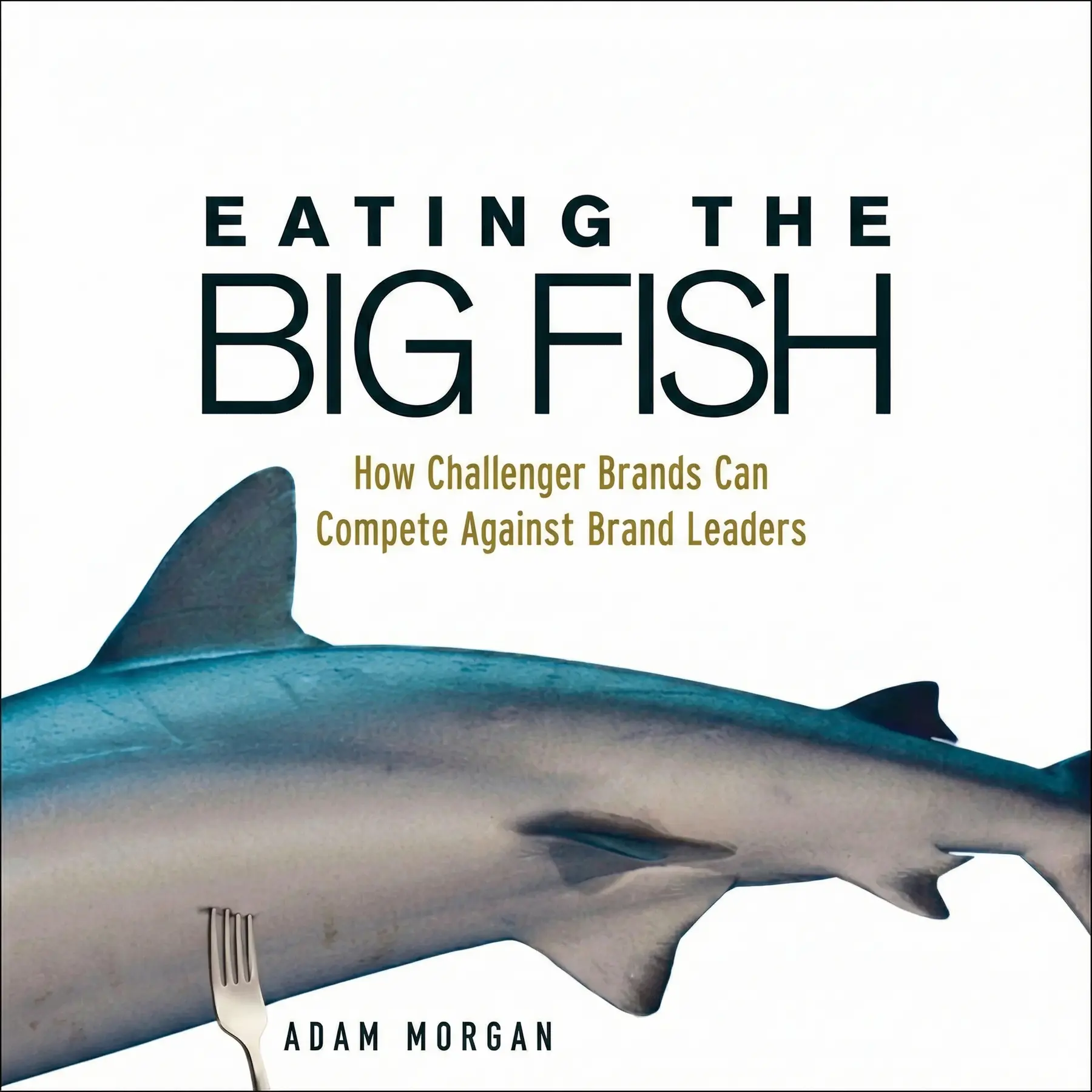
Eating The Big Fish: How Challenger Brands Can Compete Against Brand Leaders
By Adam Morgan
Shows how smaller brands can beat market leaders with far bigger budgets by questioning category rules, standing for a clear belief, breaking shoppers' buying habits and concentrating limited money on a few ideas pursued hard.
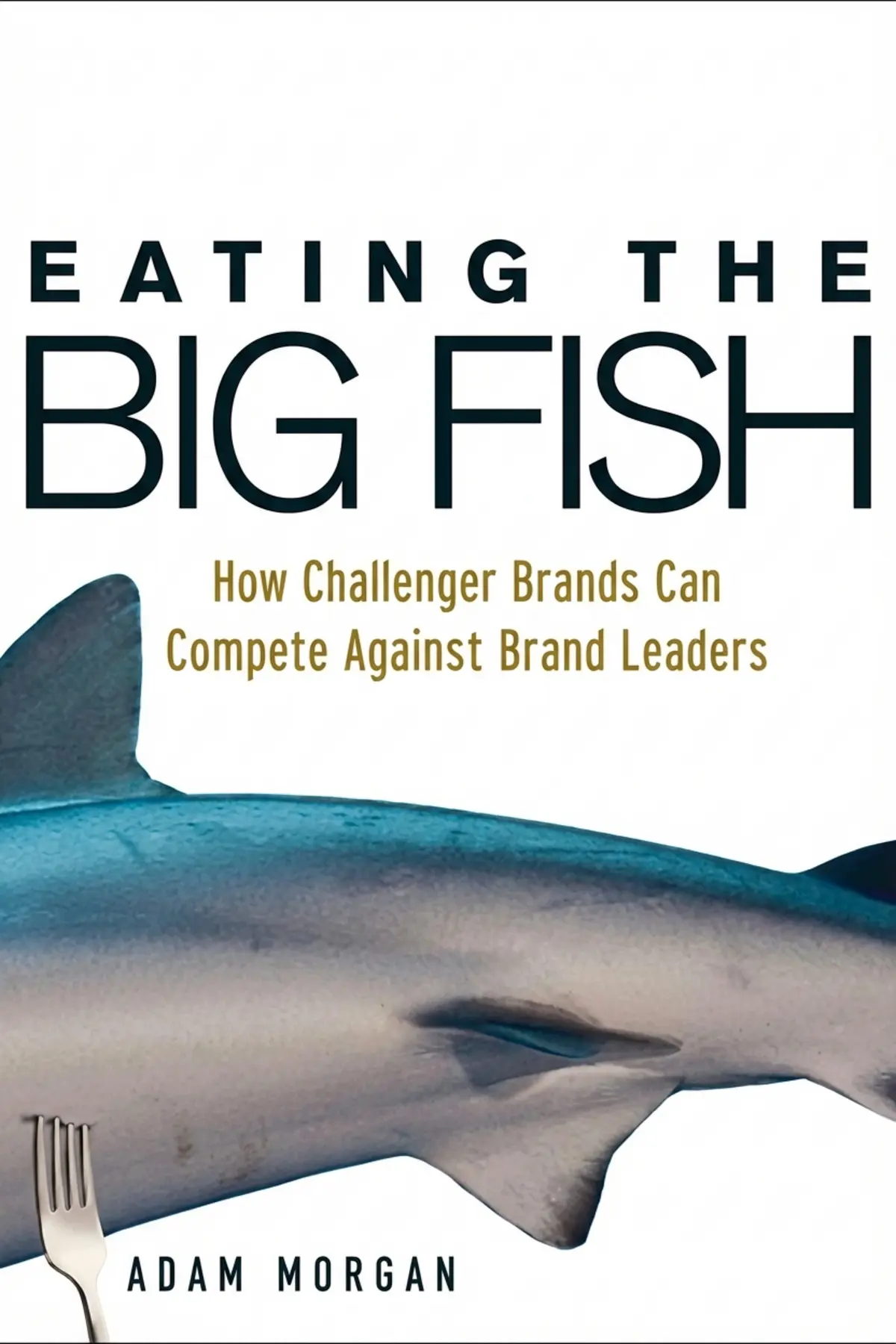
Table of Content
1. Introduction
1 min 05 sec
Being number two, three or ten in a market can feel hopeless, because the leader earns more on each dollar it spends and so can always spend more. In Eating The Big Fish, Adam Morgan, founder of the marketing consultancy eatbigfish, argues that the leader’s invulnerability is an illusion that lasts only until a smart, focused challenger goes after it.
His evidence comes from forty fast-growing brands that became famous on small budgets. What they shared was a way of behaving. They questioned their category like outsiders, stood for a clear belief, jolted shoppers out of habit and poured scarce money into a few ideas with unusual intensity. That is the case the following ideas build, one move at a time.
Along the way come a cleaning spray in a designer bottle, a shoe brand that told people to slow down, a discount store that ended up in an art museum, and an exercise for cutting a marketing plan down to the two actions that carry most of its results.
2. Market leaders only look unbeatable, so challenge them
1 min 55 sec
Leaders earn more on every dollar and spend less to grow. Yet a car rental firm near the bottom of its industry found a way up, and its story hints at where a giant’s strength runs out.
3. Earn attention from tired, doubting customers
1 min 52 sec
Your customers are distracted, exhausted and far less trusting than they were a decade earlier. Worse, your real competitors may not even sell what you sell. A photo site used to research hotels shows how.
4. Turn your inexperience into your sharpest tool
1 min 58 sec
A man who knew nothing about cleaning products built one of the fastest-growing packaged goods in America. His lack of expertise was the reason it worked, and it points to a test any team can run.
5. Stand for a belief customers can steer by
2 min 02 sec
Solving a customer’s problem is what every brand does, which is why it rarely wins. A shoe company from a slow-paced island found a stronger pull, and it had little to do with shoes.
6. Wake up shoppers who buy on autopilot
1 min 58 sec
Most purchases are not decisions at all, just repeats of last week’s. A discount retailer broke that spell with a move so unexpected that shoppers had to look at it again.
7. Win with fewer, bolder bets
1 min 51 sec
A challenger’s budget cannot do everything, and trying to is how most of it gets wasted. A simple cutting exercise reveals which two efforts deserve the money, and why doing them harder matters as much.
8. Conclusion
1 min 19 sec
What Morgan offers, in the end, is a new way of looking at the leader. Its higher returns and familiar name are real, yet they rest on shoppers choosing by habit and rivals competing by the leader’s rules. A challenger that asks naive questions, stands for a belief, gives people a reason to look again and bets heavily on a few ideas changes those rules in its own favor, as Method, Zipcar, Camper and Target each did.
The lesson does not expire with success. Morgan argues that staying number one now means thinking like a number two, and that a leader’s most dangerous big fish is its own success. He warns that growing challengers often slow themselves down when new hires add review stages and formal processes, making them as cautious as the giants they beat.
So begin with something small and specific. Write the belief your brand stands for in a sentence a customer could repeat. Look for the one act that would make people say they had you wrong. Then cut your plan to the two actions that carry most of the result, and do them harder than feels comfortable.
The big fish stays big only as long as the smaller ones swim where it expects them to.
About this book
What is this book about?
Market leaders look impossible to catch. They earn higher returns on what they invest, their buyers purchase more often, and every extra point of share costs them less than it costs anyone else. Meanwhile, the customers a smaller brand needs are distracted, tired of ads and far less trusting of marketing than they used to be. Adam Morgan argues that the leader's strength holds only as long as everyone else competes on its terms. Drawing on forty brands that grew fast and became famous despite small budgets, he sets out the credos successful challengers share, among them intelligent naivety, a lighthouse identity, thought leadership, symbols that make shoppers look again, sacrifice and overcommitment. Readers get the reasoning behind each move and the cases that show it working, from Avis climbing to second place behind Hertz to Method turning household cleaner into a design object and Target staging a museum show. The practical close is a discipline: narrowing a marketing plan to the two actions that matter most and carrying them out with more intensity than any leader would.
Book Information
Who it's for
Outspent founders and marketers
Founders and marketers at second-ranked brands facing a leader with a far bigger budget.
Managers of overlooked staples
Brand managers whose product is bought out of habit and ignored the rest of the time.
Teams at established companies
Teams inside established companies that want to think like a hungry newcomer again.
About the Author
Adam Morgan
Adam Morgan is the founder of eatbigfish, a marketing consultancy that helps clients from Helsinki to Hanoi shape marketing strategies of their own. His book Eating The Big Fish became an international best seller and introduced marketers to the idea of the challenger brand, the smaller player that sets out to take on the market leader.
Ratings & Reviews
Ratings at a glance
What people think
Listeners rank this marketing guide among the top five business marketing books, and one listener identifies it as the best resource on challenger brands. The work offers useful insights, with one listener noting it contains numerous examples from various industries. Listeners appreciate the marketing content provided, with one listener describing the book as a seminal text.
Top reviews
Pang
This belongs in the top five marketing books of all time, no question. Morgan’s exploration of how second-rank brands can use 'Mechanical Advantage' to outmaneuver the establishment is brilliant. It pairs perfectly with 'Blue Ocean Strategy' but offers much more tactical advice on the mindset required to stay hungry. I especially appreciated the section on 'Symbols of Reevaluation' and how brands like Target used design to completely shift consumer perception from cheap to fashionable. Not gonna lie, the book requires some effort to get through because it’s packed with information, but the payoff is worth it. It’s not just about being smaller; it’s about thinking differently and having the courage to sacrifice secondary messages for a single, powerful identity. If you are serious about branding, this is mandatory reading. It transformed how I view our competition and our own internal 'Lighthouse' values. Truly the best resource on challenger brands.
Show moreTaw
What struck me most was the framework of 'Mechanical Advantage'—getting a greater output from a smaller input. In an era where we are all drowning in consumer skepticism and distractions, this approach is more relevant than ever. Morgan breaks down how to stop being consumer-centered and start being ideas-centered, which is a provocative but necessary shift. The writing can be a bit 'textbook-ish' at intervals, but the eight credos provide a roadmap that is hard to find elsewhere. I’ve recommended this to several colleagues already. It’s not a quick read, but the case studies from various industries still offer lessons that apply to the digital age. Success isn't about having the biggest budget; it's about the quality of the ideas and the willingness to overcommit to a distinct identity. Truly a top-tier resource for anyone in brand planning who wants to avoid being an invisible part of the landscape.
Show morePla
Look, most business books are fluff, but this is a deep dive into the psychology of competition. Morgan understands that in a world of information overload, a brand must be 'highly intrusive' just to be noticed. The section on 'Thought Leadership' alone changed my perspective on what it means to lead a category. You don't have to be the biggest to be the one everyone is talking about. I loved the study insight about how people multitask while watching TV; it really hammers home why traditional marketing is failing. This is a seminal text for a reason. It’s dense, yes, and some parts feel a bit like a lecture, but the strategies for building a 'Lighthouse Identity' are irreplaceable. If you're a challenger brand, this is basically your bible. Just don't expect a fast, easy read—it’s a commitment that pays off in strategic clarity and bold thinking.
Show moreManika
How does a small brand actually stand a chance against a global titan? That is the core question Adam Morgan tackles here, and he does it with a lot of grit. I was particularly fascinated by the concept of 'Lighthouse Identity'—the idea that you need to stand for something so clearly that consumers can find you amidst the fog of information overload. The book is filled with great industry examples, like Avis or the shoe brand Camper, which help ground the theoretical credos in reality. While some of the references feel a bit dated now, the universal principles regarding 'Sacrifice' and 'Overcommitment' still ring true today. You can't be everything to everyone, and this book gives you the permission to narrow your focus. It’s a bit of a dense read, but if you’re a 'challenger' in your market, the strategic roadmap provided is genuinely valuable for your business.
Show moreRodrigo
Finally got around to reading this seminal text on challenger brands after hearing about it for years. It’s easy to see why it’s considered one of the top business marketing books out there; the depth of the research into brand planning is impressive. I loved the idea of 'Intelligent Naivety'—how not knowing the 'rules' of an industry can actually be a massive advantage for a newcomer like Eric Ryan at Method. The chapter on building emotional connections through strong values was a highlight for me. However, I will say the book is quite long. It feels like a 'fat tome' at times, and some of the case studies could have been trimmed down without losing the impact of the point. Still, for any entrepreneur trying to disrupt a category, the '8 Credos' offer a solid foundation. It’s definitely more of an advanced brand planning guide than a light business read, so bring a highlighter and a coffee.
Show moreYindee
As an entrepreneur struggling to find a niche, I found Morgan's insights quite refreshing. The book describes perfectly how to find your share in a market that's already dominated by a big fish. I was pleasantly surprised by the universal principles discussed, especially the idea that our own success can be the thing that eventually eats us if we stop being hungry. The Avis example really resonated with me—positioning yourself as second-best is such a bold, creative move. My only gripe is that the book is quite long and sometimes feels like it’s stating the obvious in very complex ways. But, once you get past the academic tone, the actionable insights on prioritization and efficiency are gold. It’s helped me list my marketing goals and aggressively eliminate the ones that don't align with my core brand. Great for those in an uphill battle against major franchises.
Show moreEnd
The chapter on 'Symbols of Reevaluation' was worth the price of admission alone. I’ve always wondered how brands like Target successfully shed their 'cheap' image, and Morgan’s analysis of their Michael Graves partnership was spot on. This book provides a fantastic framework for anyone trying to navigate a market where they aren't the leader. It’s full of diverse examples from various industries, which I loved, although some of the data feels a bit ancient in the age of social media. Still, the core advice about building emotional connections rather than just pushing product features is timeless. Personally, I think every brand manager should have a copy of this on their shelf, even if they only dip into it for specific strategies. It’s a strong, analytical look at what it takes to actually win when you're the underdog. Definitely worth the read for the strategic depth, even if it is a bit of a slow burn.
Show moreNathan
If you're looking for a crash course in branding, this works as a standard textbook, but don’t expect a thrilling ride. I went in expecting something on the level of 'The Origin of Brands,' but the writing style is quite dry and academic. It covers the basics of how a niche company can grow in a space dominated by a big fish, providing a decent framework for those new to the field. However, if you have a marketing degree or a few years of experience, you’ll likely find yourself nodding along to things you already know. The examples are varied, which is nice, but the overall tone is a bit heavy-handed. It’s useful as a reference, I suppose. Just be prepared for a lot of long-winded explanations for concepts like 'differentiation' and 'sacrifice' that could have been summarized in half the page count. It’s an okay read for a flight, but not the life-changing experience some claim.
Show moreNatnicha
To be fair, the concepts are solid, but for a seasoned marketer, it feels like a long-winded review of stuff we already do. I’ve been in the field for over a decade, and while I appreciate the '8 Credos,' I didn't find much that was revolutionary. It’s a well-organized textbook, no more, no less. The idea of 'sacrifice' in marketing is a cornerstone of the industry, yet it’s treated here like a brand-new discovery. I think this book is better suited for entrepreneurs or non-marketers who need a structured way to think about brand identity. The writing is okay, but it lacks the punch and engagement of more modern business books. It’s a 'fat tome' that could have been a very impactful 50-page essay. If you have the time to kill, go for it, but don't expect to be blown away if you already know your way around a brand deck and understand differentiation.
Show moreSoontorn
Stop right there. Unless you enjoy wading through hundreds of pages of common sense masquerading as 'breakthrough strategy,' skip this one. It’s a fat tome that takes forever to tell you that you need to be different. Really? No kidding. Mr. Morgan presents himself as this radical challenger, but he’s essentially just repackaging basic marketing principles in longer, more pretentious words. I felt like I was being lectured on the alphabet by someone who thinks they invented the letter 'B.' For a book about being a challenger, it feels remarkably safe and bloated. Frankly, you’re better off spending your weekend with your family or doing something you actually enjoy. It’s not that the advice is wrong, per se—it’s just painfully obvious to anyone who has spent more than five minutes thinking about business. Don't believe the hype; it’s just another oversized marketing textbook that states the bleeding obvious.
Show moreQuestions about this book
What is the main idea of Eating The Big Fish?
Adam Morgan argues that market leaders only look unbeatable. Their size brings higher returns and cheaper growth, but that strength depends on rivals competing on the leader’s terms. Challengers that win, he finds after studying forty fast-growing brands with small budgets, behave differently: they question their category like outsiders, stand for a clear belief, break shoppers’ habits with bold symbols and concentrate limited resources on a few ideas pursued with great intensity.
What are the eight credos of challenger brands?
Morgan’s credos are intelligent naivety, building a lighthouse identity, taking thought leadership of the category, creating symbols of reevaluation, sacrifice, overcommitment, using communications and publicity to enter social culture, and being idea-centred rather than consumer-centred. Together they describe how successful challengers think and act, from questioning a category’s conventions to narrowing their focus and then executing their chosen ideas harder than a leader would.
What is a lighthouse identity in marketing?
A lighthouse brand states a clear belief about how the world should be, explains why it holds it, and invites customers to steer by it, instead of simply reflecting what consumers already want. Morgan names four elements: a point of view, intensity, salience and an undeniable product truth. The Spanish shoe brand Camper built one around slow living with its motto, Walk, don’t run.
How can a small brand apply the ideas in Eating The Big Fish?
Start with the book’s cutting exercise. List next year’s marketing goals and remove the least important one at a time until two remain, then do the same with your planned activities. Morgan’s advice holds that one or two actions usually produce about 80 percent of marketing success. Then commit to those two with more intensity than seems necessary, and look for one bold symbol that makes customers rethink you.
Is the challenger approach only for small brands?
No. Morgan argues that staying number one now requires thinking and acting like a number two, because a leader’s biggest threat is its own success. He also warns that successful challengers can lose their edge when new processes and review stages make them slow and cautious. The mindset of questioning the category and focusing hard on a few ideas applies to brands of any size.
Featured in
Readers also enjoyed




AUDIO SUMMARY AVAILABLE
Listen to Eating The Big Fish in 15 minutes
Get the key ideas from Eating The Big Fish by Adam Morgan, plus 5,000+ more nonfiction titles.
- 5,000+ titles
- Listen as much as you want
- 7-day free trial
- Cancel anytime









