
13 min 14 sec
Available in: English
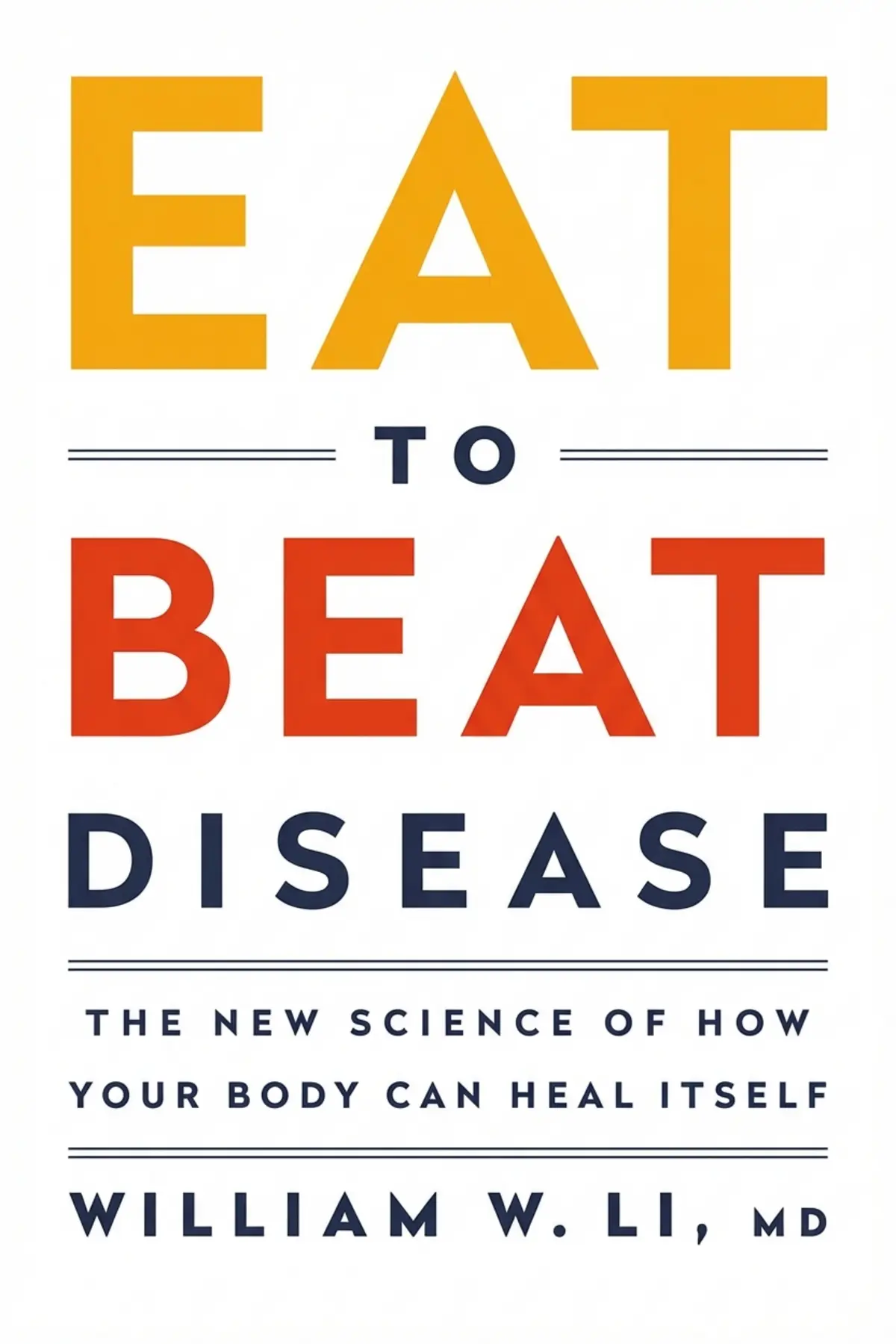
Eat to Beat Your Diet: Burn Fat, Heal Your Metabolism, and Live Longer
Shows how to lose the hidden fat that drives disease and repair a sluggish metabolism by adding fat-burning foods, eating the way long-lived communities do and following a flexible seven-week plan.
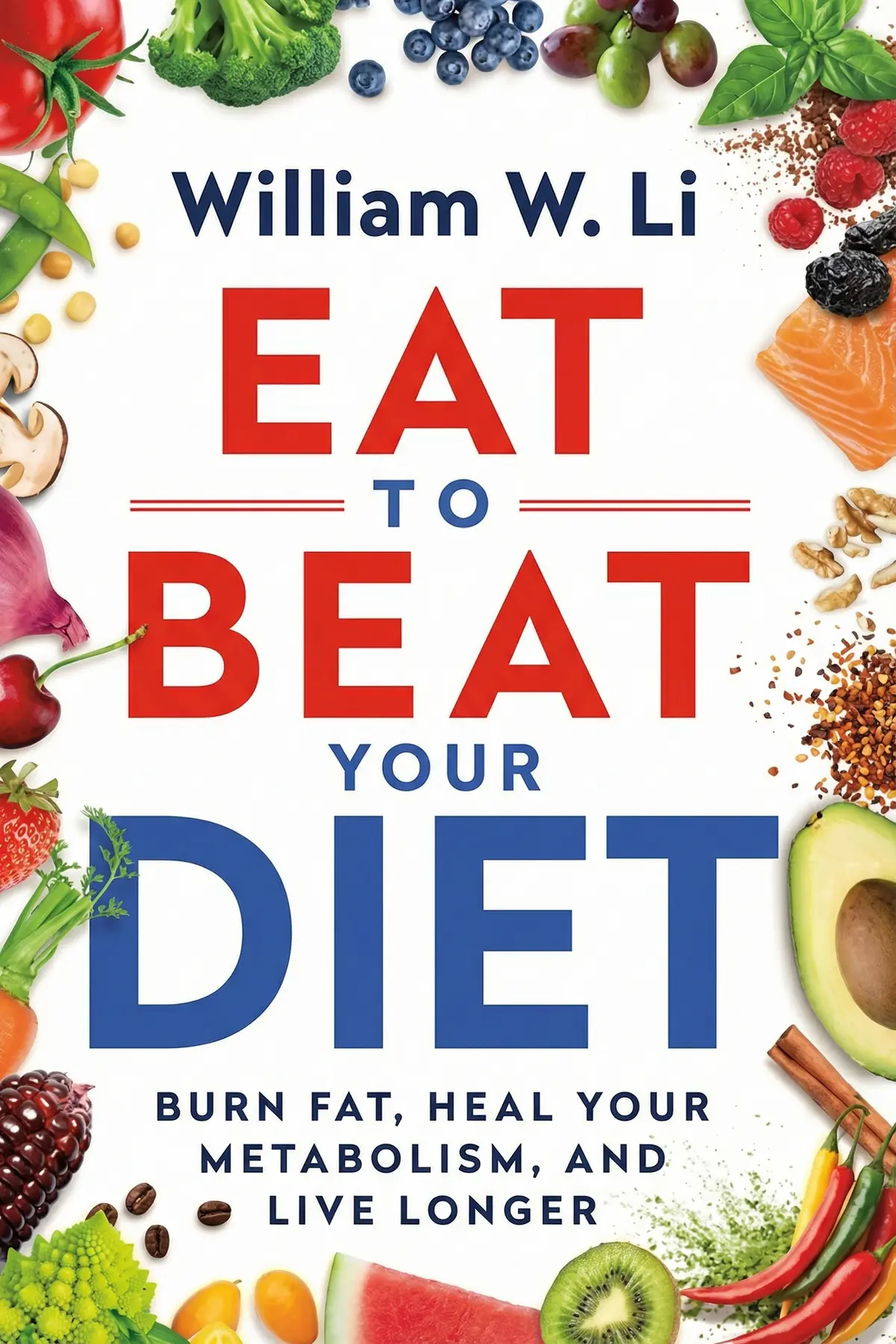
Table of Content
1. Introduction
57 sec
If you have tried diets that left you hungry, cost you your favorite foods and still kept the scale stuck, the problem may lie in what those diets were aiming at. In Eat to Beat Your Diet, physician and scientist William W. Li argues that most people need to lose only a modest amount of fat to cut their risk of disease sharply, and that the fat worth worrying about is often the kind no mirror shows.
Li built his case by reviewing hundreds of scientific studies, and he lands somewhere unexpected for a weight loss book: eat more of the right things. His case is that a healthy weight and a working metabolism come from adding foods and habits that help the body burn harmful fat. Along the way he names the hidden fat that matters, a small tissue that works like a furnace, the eating patterns of some of the longest-lived places on Earth, and a seven-week plan for making all of it your own routine.
2. Find the fat that actually threatens your health
1 min 47 sec
Someone with a slim frame can still carry a lot of hidden visceral fat, the most dangerous kind. Li explains where that fat hides, what it does, and why the amount you need to lose is smaller than you think.
3. Turn on the furnace hidden in your body
1 min 57 sec
A slow metabolism gets blamed for weight gain all the time. Li thinks the blame runs in the wrong direction, and he points to a tiny store of fat that behaves more like a heater than a burden.
4. Eat like the world's longest-lived places
1 min 54 sec
Ask this physician which diet he follows and his answer surprises people. His model comes from three corners of the world where people live unusually long, and from two habits those places share.
5. Shop the aisles you were told to skip
1 min 50 sec
Fruit is supposedly full of sugar and the middle of the supermarket is supposedly a trap. Li walks the store section by section and finds that much of the common advice about both is wrong.
6. A seven-week plan you shape to your own life
1 min 44 sec
Rigid meal plans tend to collapse by the second week. Li’s protocol moves in three stages, and the last one hands the controls back to you, with fasting introduced in a form most people already practice.
7. Sleep, movement and calm keep your metabolism working
1 min 51 sec
Good meals can be undone by short nights, long hours in a chair and constant pressure. Li adds three habits to the plan, and one of them starts with an alarm clock set for the evening.
8. Conclusion
1 min 14 sec
What Li offers is a change of target. The mirror rewards thinness. The microscope rewards something else: less hidden fat around the organs, an active store of brown fat, and a metabolism that no longer has to fight extra weight. Aim at the second and the first tends to follow, without giving up the foods you enjoy.
His model for how to eat comes from places like Sardinia, Ikaria and Okinawa, where plates are full of plants, legumes, whole grains and fish, meals are shared, and moderation is a habit instead of a rule. The book’s deeper claim is that the healthy path is supposed to be pleasant.
So begin with modest goals. Treat losing even 11 pounds as a serious win, since Li ties it to a 36 percent lower risk of death from any cause. Spend two weeks swapping one harmful food at a time for a better one, then give your eating a twelve-hour window and take a short walk after the last meal. Keep adding pepper, ginger, berries and beans.
Li ends where the Blue Zones begin: food, like life, is there to be savored at a table with the people you love.
About this book
What is this book about?
Many diets ask people to give up the foods they love, chase dramatic numbers on the scale and judge success in the mirror. Physician and scientist William W. Li thinks they aim at the wrong target. After reviewing hundreds of studies, he argues that the fat that threatens health is often hidden around the organs, that extra fat is what slows the metabolism, and that only a modest loss is needed to cut the risk of disease sharply. His answer is to add. Li explains brown fat, a small tissue that burns unhealthy fat, and the foods that switch it on. He draws a way of eating he calls the MediterAsian Way from Blue Zones such as Sardinia, Ikaria and Okinawa, and he walks readers through the supermarket aisle by aisle. The book closes with the Eat to Beat Protocol, a three-stage plan of food swaps, relaxed intermittent fasting and personal maintenance, plus simple advice on sleep, movement and stress. Readers get a plan for losing weight that keeps the pleasure of eating.
Book Information
Who it's for
Dieters tired of restriction
People tired of restrictive diets who want to lose weight without giving up foods they enjoy.
Adults with metabolic worries
Slim or larger adults worried about hidden fat, diabetes or heart disease.
Time-pressed professionals
Busy professionals who want a flexible seven-week eating plan that fits their week.
About the Author
William W. Li
William W. Li is a physician, scientist and author, best known for leading the Angiogenesis Foundation. He has published more than 100 scientific papers and has held faculty posts at Harvard and Tufts. His TED Talk on whether we can eat to starve cancer has drawn more than 11 million views, and he is also the author of Eat to Beat Disease.
Ratings & Reviews
Ratings at a glance

What people think
Listeners find this work thoroughly researched and simple to grasp, offering lucid explanations of complex scientific principles. They appreciate the holistic health strategy, specifically the focus on strengthening the immune system and gut health. The content delivers an effective nutritional plan that transforms perspectives on eating, and listeners enjoy the various recipes and food catalogs, with one listener mentioning it features thorough lists of foods to bypass. They value the insights into metabolism and weight management, viewing it as a roadmap for healthy living rather than a standard diet book.
Top reviews
Sakura
After hearing Dr. Li on a podcast, I knew I had to grab this. It isn't your standard "don't eat this" lecture. Instead, it focuses on adding "MediterAsian" foods that actually help shrink fat tissue. I loved the grocery store segment—it felt like having a world-class scientist walking down the aisles with me. While some of the science in Part 1 gets a bit dense, the way he explains brown fat and metabolism is revolutionary. It's refreshing to see a doctor talk about fat as an endocrine organ rather than just an enemy. This is definitely a lifestyle guide rather than a quick-fix diet book.
Show moreMingkwan
Wow, I am officially obsessed with the way this man looks at nutrition. As someone who has been a wellness nerd for years, I didn't expect to learn much new, but the focus on "healing" the metabolism rather than "speeding it up" is a game changer. The list of foods to avoid was surprisingly extensive and helped me spot some hidden culprits in my pantry. Frankly, it’s a relief to read a diet book that doesn't vilify fat but explains how it functions as a vital hormone-producing organ. It’s a comprehensive approach that feels sustainable for the long haul.
Show moreA
Reading this book changed my entire perspective on what it means to be "healthy" versus just being "thin." Dr. Li’s dedication to scientific research shines through on every page, yet his tone remains encouraging and gentle. I never realized how much my gut health was tied to my overall immune system until I read the sections on fermented foods and fiber. Not gonna lie, I was skeptical about the MediterAsian approach at first, but the recipes are actually delicious and don't feel like "diet" food at all. It’s a comprehensive, life-changing read that I’ll be recommending to all my friends and family.
Show moreSofia
Total must-read for anyone tired of the keto and paleo trends. This isn't about restriction; it's about optimization. I loved the extensive lists of foods that help burn fat—some were totally unexpected! The writing is clear, the science is fascinating, and the plan is actually doable in the real world. A few more pictures would have been nice, but the content is top-tier. Highly recommended for those who want to understand their body better.
Show moreLadawan
Ever wonder why your metabolism seems to stall as you age? Dr. Li challenges the myth that our metabolism naturally crashes in our 30s and 40s, which was a huge eye-opener for me. The breakdown of how different foods trigger our body’s natural defenses is incredibly well-researched but stays easy to understand. I’ve started incorporating more of the recommended foods, like green tea and specific mushrooms, and I genuinely feel less inflamed. My only gripe is that the recipe section felt a bit slim compared to the heavy science at the beginning. If you want a deep dive into biology with actionable steps, this is it.
Show moreKamol
Finally got around to finishing this, and I have to say, the 5-3-1 plan is much more manageable than I anticipated. Dr. Li doesn't just tell you what to eat; he explains the why behind every ingredient, from polyphenols to gut microbiome support. Personally, I found the "Foods for Metabolism" section to be the most valuable part of the entire book. It’s like a manual for your body’s internal engine. My only disappointment was the lack of variety in the breakfast suggestions, which felt a bit repetitive after a week. Regardless, it’s a high-quality guide for anyone wanting to use food as medicine.
Show morePrasarn
Dr. William Li has a knack for making complex biological processes feel like common sense, which is a rare gift in the medical world. By focusing on how food interacts with our stem cells and DNA, he moves the conversation away from mere calorie counting. The book is divided into three logical parts, making it easy to use as a reference guide later on. Look, the science is rock solid, but be prepared for a lot of terminology in the first hundred pages. If you can push through that, the practical advice and the grocery store tips are worth their weight in gold.
Show moreLayla
This book is a solid follow-up to "Eat to Beat Disease," though it covers some familiar ground if you've already read his previous work. Dr. Li is clearly brilliant, and I appreciate the peer-reviewed studies he cites to back up his claims. However, I found the "Plan for Life" section a bit hard to follow in the audiobook format. If you’re serious about the 5-3-1 plan, get the physical copy for the recipes and food lists. Truth is, while the MediterAsian concept is cool, some of the tropical fruit exclusions felt a little arbitrary to me. Still, it's a great resource for anyone looking to optimize their gut health.
Show moreKet
The chapter on brown fat was absolutely fascinating, but the rest of the book felt like a bit of a slog to get through. I picked this up because of the Bookstagram hype and expected something a bit more practical and less academic. While I appreciate the scientific rigor, I found myself skimming through the lengthy descriptions of studies just to get to the food lists. Also, the "MediterAsian" title is catchy, but the implementation feels quite restrictive if you don't live near a specialty grocer. It’s an okay resource, but I think I prefer Michael Greger’s style of writing for this kind of information.
Show moreSupatra
I honestly feel like I could have just watched his YouTube videos and gotten the same amount of information without spending the money. I ordered this expecting a revolutionary diet plan, but it’s mostly just a list of healthy foods we already know are good for us, like tomatoes and fatty fish. To be fair, the research is clearly there, but the delivery is dry and the formatting makes it hard to find specific recipes quickly. I also had a terrible time with the companion website mentioned in the text; it kept glitching on my browser. Save your money and just borrow it from the library instead.
Show moreQuestions about this book
What is the main idea of Eat to Beat Your Diet?
William W. Li argues that weight loss and metabolic health come from adding the right foods, not from restriction. The fat that matters most is visceral fat hidden around the organs, extra fat is what slows the metabolism, and most people need to lose only 1 to 20 pounds. He recommends a MediterAsian way of eating inspired by Blue Zones such as Sardinia, Ikaria and Okinawa.
What is brown fat and how do you activate it?
Brown fat makes up about 4 percent of the body’s fat, but Li describes it as a furnace that burns unhealthy fat and boosts the metabolism. Lean people have about 2.5 times more of it than obese people on average. Li reports that black pepper, chili peppers and ginger activate it, and that cold exposure does too.
What is the Eat to Beat Protocol?
It is Li’s three-stage plan. In weeks one and two, you swap harmful foods for MediterAsian ones, such as good coffee instead of an energy drink. In weeks three to six, you add intermittent fasting, starting with a twelve-hour eating window. From week seven, you maintain and personalize the routine, planning meals weekly and trying new foods.
Does Eat to Beat Your Diet allow fruit and chocolate?
Yes. Li rejects the idea that fruit is an enemy: it contains natural sugar but also fiber and bioactive compounds that, in moderate amounts, fight disease and obesity. Apples, pears, strawberries and watermelon are on his list. Dark chocolate with at least 80 percent cacao is included too, as a swap for an afternoon candy bar.
Readers also enjoyed



AUDIO SUMMARY AVAILABLE
Listen to Eat to Beat Your Diet in 15 minutes
Get the key ideas from Eat to Beat Your Diet by William W. Li, plus 5,000+ more nonfiction titles.
- 5,000+ titles
- Listen as much as you want
- 7-day free trial
- Cancel anytime









