

13 min 45 sec
Available in: English
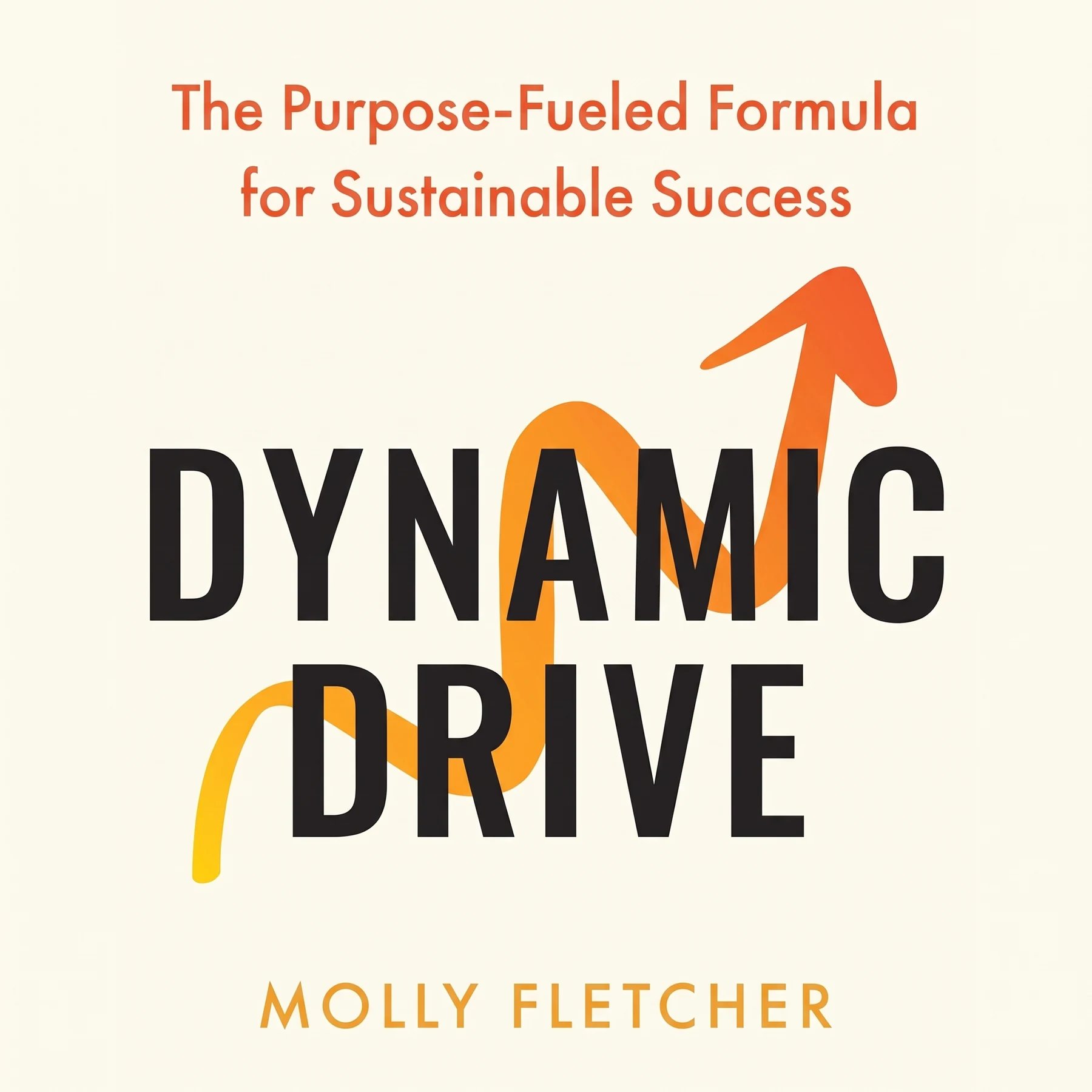
Dynamic Drive: The Purpose-Fueled Formula for Sustainable Success
Shows why motivation fades after you reach a goal and how to build drive that renews itself, by aligning effort with your values and training seven keys such as mindset, energy and resilience.
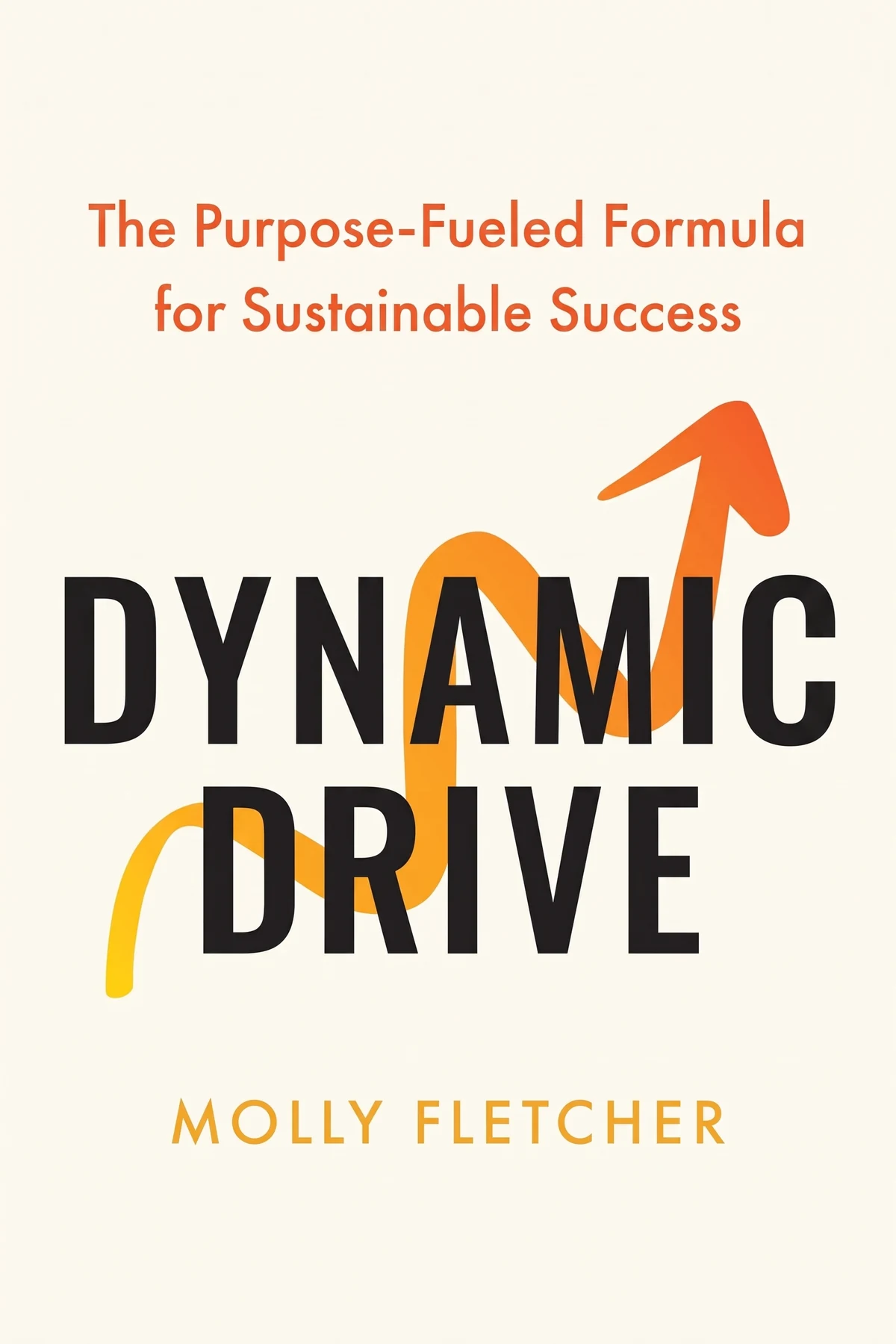
Table of Content
1. Introduction
1 min 01 sec
Hitting a goal and then feeling flat is not proof that you picked the wrong goal. In Dynamic Drive, former sports agent Molly Fletcher argues that it shows your drive was built to run out. Most people treat drive as a burst of effort aimed at one finish line, such as a race, a sales target or a promotion, and once they cross it, the fuel is gone.
Fletcher, who spent almost two decades working with athletes and coaches, proposes drive that renews itself because it is tied to your values instead of the next prize. Seven practical keys sustain it, namely a certain mindset, energy, discipline, curiosity, resilience, connection, and finally confidence. A young assistant who asked for more and a soccer player cut from a youth national team show what that looks like in a real career.
The payoff is a way to see where your effort actually goes, and to aim it so that each success leaves you with energy to spare.
2. Build drive that refuels after every finish line
1 min 43 sec
Some people finish a big goal and feel strangely empty instead of proud. Fletcher traces that hollow feeling to the kind of fuel most of us run on, and to one question almost nobody asks.
3. Turn harsh criticism into a stronger mindset
1 min 36 sec
A future World Cup winner was once told she simply did not work hard enough, and she nearly walked away. What she did with that verdict says more about thinking than about fitness.
4. Spend your best energy on what counts
1 min 31 sec
Most planning tools count hours, yet two people with identical calendars can end the week in very different states. Fletcher argues the real budget is something else, and offers a simple way to measure it.
5. Keep showing up after the excitement fades
1 min 37 sec
Every new plan starts with a burst of enthusiasm and then hits a dull stretch where most efforts die. Fletcher names two habits that carry people through it, and one of them sounds more like play than work.
6. Come back stronger from every setback
1 min 37 sec
A lost client or a rejected application can feel like a final verdict. Fletcher’s Fail, Recover, and Come Back Better model treats failure as something closer to a cycle of improvement, with each setback a chance to return stronger.
7. Grow confidence through people and small risks
1 min 51 sec
Collecting contacts and building real support are not the same thing, and confidence can tip into a trap. Fletcher explains what separates helpful relationships from transactions, and where healthy self-belief should stop.
8. A purpose that guides choices and grows with you
1 min 39 sec
Seven keys give you tools, but tools need a direction. Fletcher’s final stage asks for full commitment to a purpose, and then, surprisingly, tells you to expect that purpose to change.
9. Conclusion
1 min 10 sec
Fletcher’s book adds up to a different picture of ambition. The usual picture is a sprint toward a prize, followed by a slump. Hers is closer to a fire you keep feeding: each key adds fuel or stops a leak, and purpose decides where the heat goes. That is why a young assistant asking for more in the mid-1990s and a soccer player who nearly quit after being cut belong in the same argument. Each stopped waiting for the next goal to supply motivation and found it in what they cared about.
What the book supports doing is modest and concrete. Run an energy audit on last week and move one draining task out of your best hours. Pick a single daily action and keep it when motivation dips. When a setback comes, sort it into what you control and what you do not, and come back with one improvement. And every so often, return to the question Fletcher starts with: what am I chasing, and why?
If the honest answer still matches your values, keep going. If it does not, the drive was never the problem; the target was.
About this book
What is this book about?
Plenty of hard workers hit their targets and still feel stuck, or watch their motivation drain away the moment they succeed. Molly Fletcher, a former sports agent, traces the problem to how most of us think about drive: as a short burst of effort aimed at one finish line, which runs out once the line is crossed. Her alternative is Dynamic Drive, effort anchored in personal meaning so that it keeps giving energy back. She breaks it into seven keys, grouped into stages. Mindset and energy get you started. Discipline, curiosity and resilience keep you going when the excitement fades. Connection and confidence make progress grow. A final stage, going all in, puts purpose at the center of daily choices and lets that purpose change as you do. Readers get simple tools to put this to work: an energy audit that sorts tasks by what they give and take, a three-step way to recover from failure, a confidence loop built from small risks, and a recurring check on whether their effort still matches what they care about.
Book Information
Who it's for
Stuck despite hitting targets
Professionals who hit their targets and still feel flat or stuck afterward.
Wanting ambition that lasts
Early-career climbers who want ambition that lasts longer than the next promotion.
Close to burnout
Anyone close to burnout who wants to spend their energy on work that matches their values.
About the Author
Molly Fletcher
Molly Fletcher spent almost two decades as a sports agent, representing clients such as pitcher John Smoltz, golfer Matt Kuchar, broadcaster Erin Andrews and coaches Tom Izzo and Doc Rivers, and negotiating more than $500 million in contracts. She now speaks to audiences around the world, hosts a podcast and runs a company that trains people in energy and negotiation. Her other books include The Energy Clock and Fearless at Work. She studied communications at Michigan State University, where she played college tennis.
Ratings & Reviews
Ratings at a glance
What people think
Listeners find the book inspiring and life-changing, with one listener noting how it condenses wisdom into clear guidance. Furthermore, the material receives positive feedback, as one listener points out the research-backed formula and real-life examples. Additionally, listeners appreciate the stories shared throughout the work.
Top reviews
Lars
The chapter on energy management alone is worth the price of admission here, as it offers a much-needed alternative to the 'grind until you crash' mentality. In my experience, most business books focus on hitting the goal and then stopping, but Molly Fletcher explains how to build a sustainable, dynamic drive. By focusing on the 'confidence loop' and the power of curiosity, she provides a roadmap for staying relevant and engaged over the long haul. I loved the story about Carli Lloyd and how she used rejection to fuel a growth mindset because it made the theory feel very real. This isn't just about working harder; it’s about aligning your daily actions with a much deeper sense of purpose and legacy. If you are feeling burned out or just 'stuck' in your current routine, this research-backed formula will give you the tools to move forward with renewed intention.
Show moreEvelyn
Wow, Molly Fletcher really delivered a research-backed framework that manages to be both inspiring and practically applicable for everyday life! I’ve read a lot of leadership books, but the way she distills wisdom into clear guidance on energy management and resilience is truly impressive. The 'Fail, Recover, and Come Back Better' model is something I’ve already shared with my team because it changes how we view setbacks. The stories sprinkled throughout the book are engaging and do a great job of illustrating how these seven keys function in high-pressure environments. I especially appreciated the focus on connection and how value-driven relationships are the backbone of any long-term success. This isn't just another book about working more hours; it’s about working with more meaning and heart. It definitely helped me re-evaluate what I’m chasing and why I’m chasing it in the first place.
Show moreHugo
After hearing the author speak on a podcast, I knew I needed to grab this book to help realign my professional goals with my personal values. Fletcher has an incredible ability to take complex ideas like 'sustained high performance' and break them down into seven manageable keys. I’ve always been a driven person, but I was definitely falling into the trap of 'sprint and coast,' which left me feeling exhausted and unfulfilled. Learning to view drive as a continuous source of energy fueled by purpose has completely changed my outlook on my career path. The book is filled with real-life examples that make the advice feel attainable rather than just aspirational. It’s a refreshing take on success that prioritizes joy and gratitude alongside achievement. I would highly recommend this to any high-achiever who feels like they are currently running on empty.
Show moreKwame
As someone who struggles to balance a demanding career and a growing family, Fletcher’s distinction between 'balance' and 'alignment' really hit home for me. I’ve often felt like I’m coasting at work just to survive the week, but this book helped me identify that complacency is a silent killer of joy. The energy audit was a game-changer because it forced me to realize that time management isn’t my problem—it’s how I’m leaking energy on neutral tasks. I appreciated her vulnerability as a mother and her willingness to admit her own failures throughout her impressive career. The seven keys provide a solid framework, though I wish there were even more client vignettes to illustrate the concepts in action. Still, it’s a motivating read that encourages you to look deeper at your internal values rather than just chasing the next external milestone.
Show moreAhmed
Ever wonder why you hit your goals and then immediately feel like a deflated balloon? Fletcher addresses this perfectly by explaining that traditional drive is finite and often leads to a massive dip in motivation once the race is won. This book teaches you how to shift that energy into something sustainable by anchoring your efforts in personal values rather than just external rewards. I found the section on 'curiosity' particularly insightful because it’s often overlooked in high-performance literature as a key to staying competitive. While some of the mindset stuff felt a little 'duh' at times, the overall framework is cohesive and very well-structured for daily application. I’ve started implementing the energy audit and I’m already noticing a shift in how I approach my most draining tasks. It’s a very practical guide for anyone looking to build a career that actually lasts without sacrificing their mental health.
Show moreTaweesak
Finally got around to doing the 'energy audit' suggested in these chapters, and the results were eye-opening regarding my daily productivity and overall mood. I used to think I just needed more discipline, but Fletcher argues that without alignment and purpose, you’re just running a race to nowhere. The book does a great job of explaining how to avoid burnout by managing your energy levels rather than just cramming more tasks into a calendar. I did think some of the sections on confidence were a bit repetitive, but the overall message is strong and necessary for our current work culture. Her writing style is very accessible and it feels like you're getting advice from a high-level mentor who actually cares about your well-being. It’s a quick read, but the impact of the exercises will likely stay with me for a long time as I realign my priorities.
Show moreJune
This book offers a compelling roadmap for anyone feeling stuck in the cycle of 'work hard, crash, repeat' that defines modern success. Fletcher’s focus on curiosity and resilience as pillars of drive is a fresh perspective that moves beyond the typical 'just do it' mentality. I appreciated the specific focus on how our roles as parents or partners can compete for our attention, and how alignment is better than balance. The seven keys are well-defined, and while some sections are stronger than others, the overall package is very cohesive. My only minor gripe is that some of the graphs felt a bit like filler, but the quality of the storytelling more than made up for it. It’s an inspiring read that provides a research-backed formula for anyone looking to reach their full potential without losing themselves in the process.
Show moreKasemsan
To be fair, there is some solid advice tucked away in these pages, but the delivery is often bogged down by corporate jargon that makes it hard to stay engaged. I liked the concept of 'Dynamic Drive' as a legacy-building tool, but I felt like the seven keys were fairly standard self-help tropes we’ve seen before. Discipline, resilience, and connection are obviously important, but I wanted more specific, actionable steps that didn't feel so high-level and abstract. The author has an impressive resume and her voice is clear, but I found myself wanting more of those confidential client stories to ground the advice. It’s a decent book for someone just starting their professional development journey, but seasoned readers might find it a bit redundant. It’s not a bad read, but it didn't quite deliver the transformative experience promised by the cover blurb.
Show moreNew
Look, the writing style is professional and the author’s voice is clear, but I found myself skimming through the parts about mindset and discipline because they felt repetitive. While the central premise of Dynamic Drive is interesting, much of the book follows the standard template of anecdote-followed-by-lesson that dominates the genre. Personally, I found the recommendation to read other books on burnout more helpful, as this one occasionally feels like it’s encouraging you to stay in the grind. The emphasis on being 'extraordinary' might be a bit much for the average person who is just trying to get through their emails and vibe. That said, the energy audit is a practical tool that I can see being useful for managers. It’s a fine book, just don’t expect it to reinvent the wheel if you’re already well-versed in leadership and self-help literature.
Show moreJackson
Picked this up because I liked the author's previous work, but frankly, it felt like a recycled version of every other performance manual currently on the market. While the writing is polished and professional, the concepts are basically generic mindset shifts that lack the depth I was looking for. I found the inclusion of so many graphs more distracting than helpful, especially since they didn't seem to ground the abstract theories in any new reality. It leans heavily into a neoliberal sentiment that we all need to be 'optimized' monkeys, which feels exhausting rather than inspiring. If you’ve read any books on high performance in the last five years, you have already seen this material elsewhere. It takes a lot of energy to stay focused when the anecdotes feel thin and the 'secrets' to success are things like having more discipline and confidence.
Show moreQuestions about this book
What is the main idea of Dynamic Drive by Molly Fletcher?
Fletcher argues that ordinary drive is a short burst aimed at one goal, so it fades once the goal is reached. Dynamic Drive is effort tied to your values and purpose, which lets it renew itself instead of burning you out. She builds it from seven keys, starting with mindset and energy, then discipline, curiosity, resilience, connection, and confidence, and ending with a last stage of committing fully to your purpose.
What are the seven keys of Dynamic Drive?
The keys come in stages. Mindset and energy get you started. Discipline, curiosity and resilience keep you moving when the early excitement fades and setbacks arrive. Connection and confidence make progress grow, through genuine relationships and a confidence loop built from small risks. Fletcher then asks readers to put purpose at the center of daily decisions and to let that purpose evolve over time.
What is an energy audit in Dynamic Drive?
It is Fletcher’s tool for managing energy instead of only time. You look over a typical week and divide your tasks into three groups: the ones that give you energy, the ones that drain it from you, and the ones that leave you feeling neutral. Then you reorder your priorities so your best energy goes to the moments that matter most, which she sees as a guard against burnout.
How do you build resilience according to Molly Fletcher?
Fletcher says resilience grows through repeated action, not in one moment. Her Fail, Recover, and Come Back Better model treats each setback as a cycle of improvement: you fail, get back up and return with something new. She also advises separating what you can control from what you cannot, acting on the first and adapting to the second, so setbacks feel temporary and solvable.
Who should read Dynamic Drive?
It suits people who work hard but feel stuck, or who lose motivation right after a success. Ambitious professionals early in their careers, managers who want steadier energy, and anyone worried about burnout will find practical tools, from an energy audit to a confidence loop. The book draws on Fletcher’s years as a sports agent and on the story of soccer player Carli Lloyd.
Readers also enjoyed




A Guide to the Good Life: The Ancient Art of Stoic Joy
William B. Irvine


A High-Performing Mind: Strengthen Your Mind and Live Your Best Life
Andrew D. Thompson


Abundance: The Inner Path to Wealth
Deepak Chopra
AUDIO SUMMARY AVAILABLE
Listen to Dynamic Drive in 15 minutes
Get the key ideas from Dynamic Drive by Molly Fletcher, plus 5,000+ more nonfiction titles.
- 5,000+ titles
- Listen as much as you want
- 7-day free trial
- Cancel anytime









