
15 min 16 sec
Available in: English
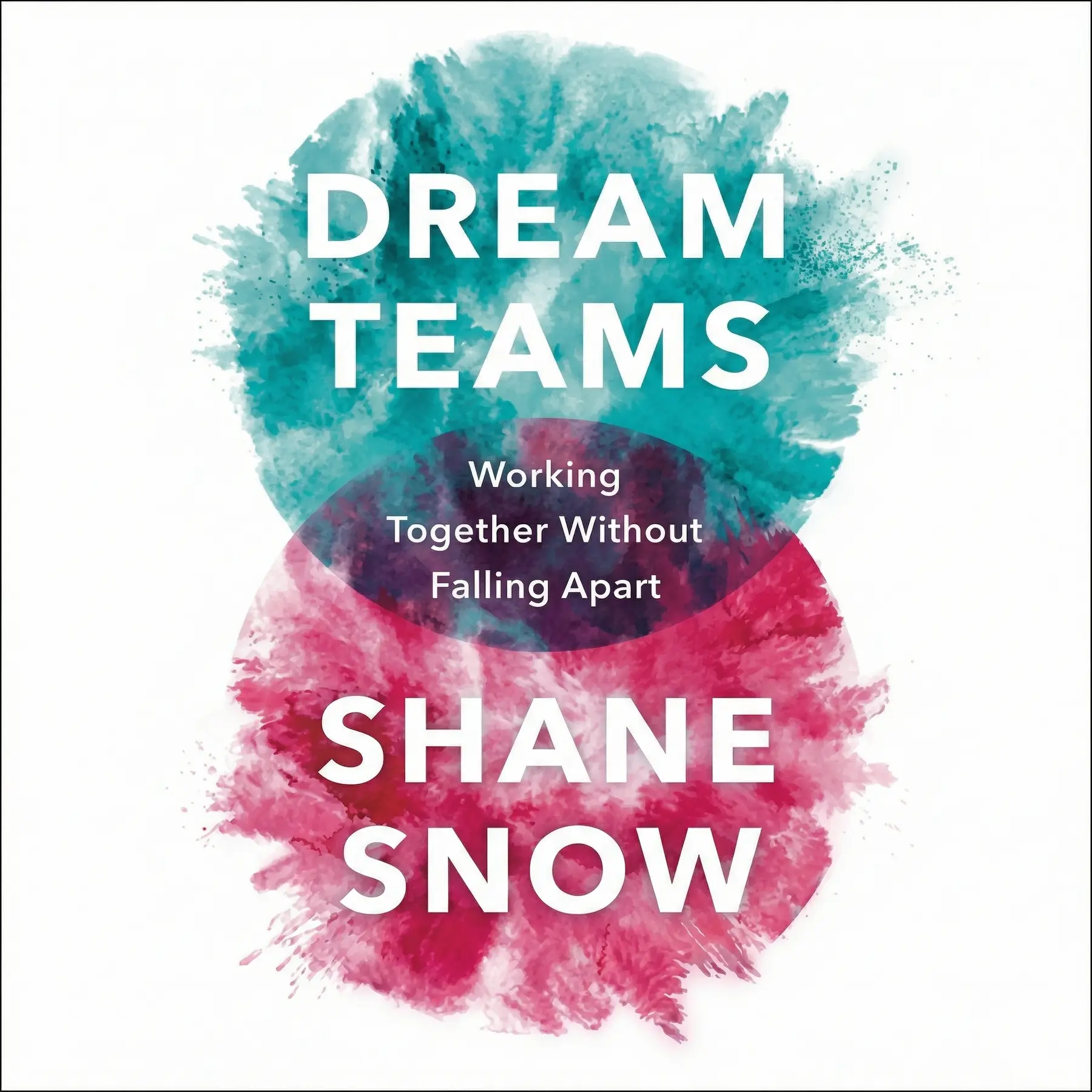
Dream Teams: Working Together Without Falling Apart
By Shane Snow
Shows why mixed teams that disagree honestly beat comfortable ones, and how humility, shared goals, play and personal stories keep that friction from splitting the group. The cases run from the FBI to the Wright brothers.
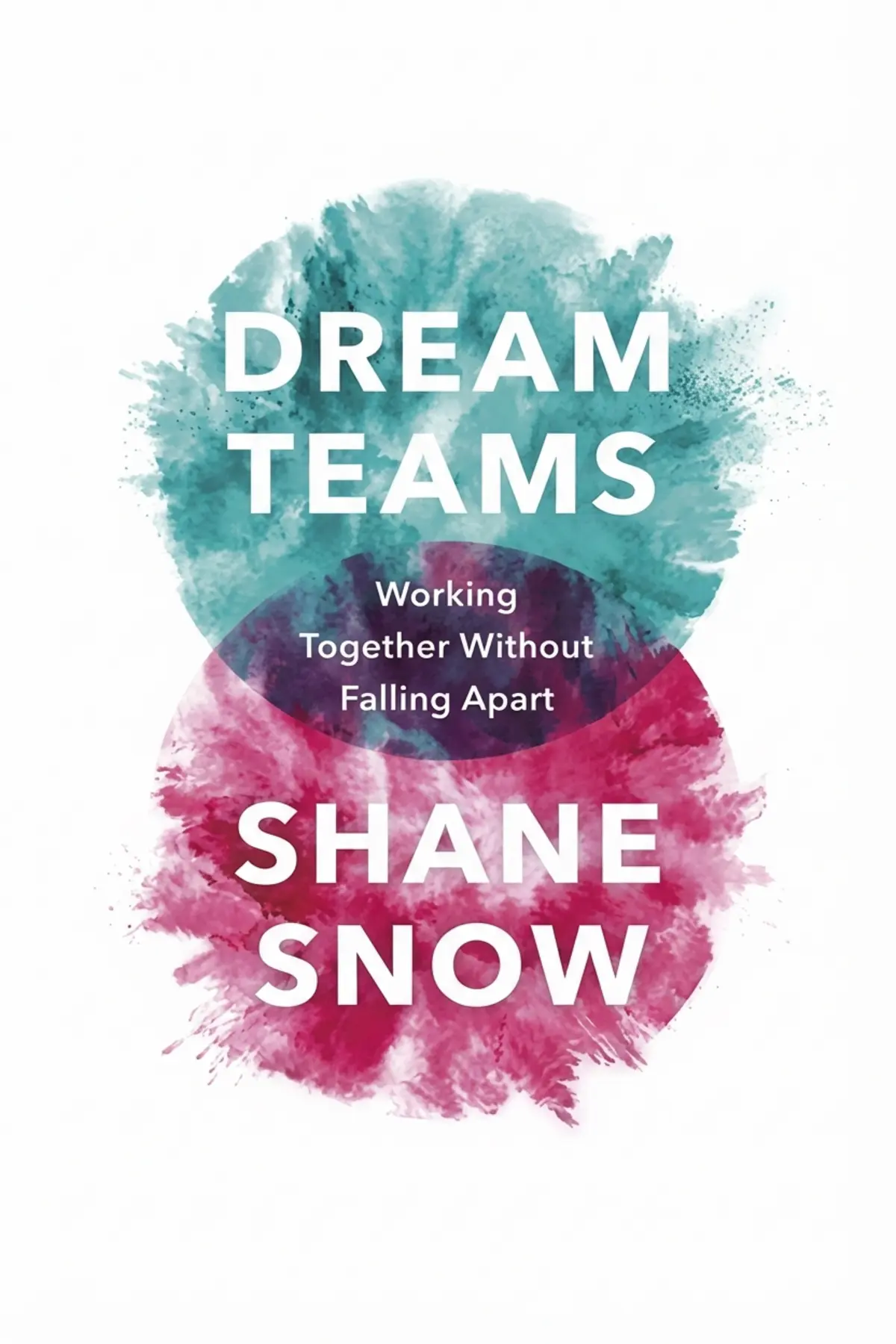
Table of Content
1. Introduction
56 sec
Most people have worked in a team that only copes. Meetings drag, rivals stop talking and good ideas get lost. In Dream Teams, journalist and entrepreneur Shane Snow argues that the groups that improve together are the ones that bring in different people and views, keep disagreement lively but civil, and give everyone reasons to trust each other.
His evidence comes from unlikely places: an FBI agent at a Mafia wedding, a hip hop group, two aviation pioneers, a boys’ summer camp and a town that wanted to live under a dome. One argument runs through all of them. Difference is the raw material of a great team, and humility, shared goals, play and stories keep it from tearing the group apart. Each idea ends with something to try at your next meeting, including the trick the Wright brothers used to end their fights.
2. Mixed teams spot the answers others miss
1 min 35 sec
A Mafia boss in New Jersey made himself impossible to reach, and a whole agency of tough men could not get near him. The person who finally did had an advantage nobody had thought to use.
3. Keep the arguments, end the silence
1 min 40 sec
A merger of two famous carmakers lost half its value in three years, while a group of feuding musicians changed their genre. The difference lies in what each did with its conflicts.
4. Shake up a winning team before it stalls
1 min 42 sec
A company that struck gold with one product saw its sales start to slide. What turned it around involved its executives, a permanent marker and some very sore feet.
5. Give odd ideas room before you judge them
1 min 48 sec
A painting that left its visitor cold helped launch a famous design movement. A town’s plan to live under a dome made the whole country laugh, and then it paid off.
6. Change your mind when it counts
1 min 36 sec
A famed and controversial voice of the civil rights era later changed his central belief. What moved him offers a lesson for any team stuck defending old positions.
7. Unite rivals with a goal bigger than both
1 min 57 sec
An American general led pirates and volunteers he despised to victory, and then watched the alliance fall apart. A summer camp decades later found what that general was missing.
8. Turn strangers into teammates through play
1 min 24 sec
A city divided by race, religion and class found a common language on its streets. The reason it worked lies in a small part of the brain that decides whom we trust.
9. A colleague's story beats any statistic
1 min 36 sec
Two charity ads covered the same problem, and only one of them changed what happened inside viewers’ bodies. The same effect, Snow argues, has shifted the attitudes of entire nations.
10. Conclusion
1 min 02 sec
Snow’s dream team is a group that can hold its differences without breaking. The agent at the wedding, the Wu-Tang Clan and even the Winooski dome show that variety and friction produce better answers. The silent offices of DaimlerChrysler and the short-lived alliance at New Orleans show the other side. When nothing holds the differences together, people drift apart or fall back into old hatred. In Snow’s account, the glue is respect, empathy and minds willing to change.
The easiest place to begin is the Wright brothers’ habit. When your team is stuck between two positions, ask each side to argue the other’s case. Bring in a challenger before a decision is made, not after. When two groups resent each other, give them more than one shared problem, because the Rattlers and the Eagles needed several before trust took hold.
A team can argue and still become great. What it cannot do is stop talking, because the arguments, once heard, are where its best ideas come from.
About this book
What is this book about?
Teamwork often feels like a choice between two bad options. One is a comfortable group that agrees on everything and misses better answers. The other is a lively group that argues itself apart. Shane Snow argues that great teams avoid both traps. They gather people with different backgrounds and opinions, they welcome some tension, and they build the trust that keeps that tension useful. Snow takes his lessons from history, science and culture, not from office politics. An FBI agent serves a Mafia boss at his daughter's wedding. The DaimlerChrysler merger loses half its value after two workforces stop talking to each other. A devil's advocate doubles a group's chances of solving a puzzle. A Vermont town's mocked plan for a dome ends in a hydroelectric plant, and a boys' summer camp turns two groups who hate each other into friends. Readers come out with habits that fit any team. Invite dissent, bring in outsiders and give strange ideas time. Practice intellectual humility, unite rivals around bigger goals, and use play and personal stories to widen trust. The simplest tool comes from the Wright brothers, who swapped sides whenever they argued.
Book Information
Who it's for
Team leads balancing conflict
Team leads whose groups either avoid conflict or fight until nothing gets done.
Leaders building diverse teams
Founders and managers building teams across departments, cultures or backgrounds who want them to trust each other.
Stuck in one-sided meetings
Professionals stuck in meetings where the same voices win and fresh ideas get dismissed.
About the Author
Shane Snow
Shane Snow is an award-winning journalist and entrepreneur who cofounded Contently, a content technology company. His articles have run in Wired, The New Yorker, GQ, Fast Company and The Washington Post. He also sits on the board of The Hatch Institute, a nonprofit for investigative journalism. His books include the bestseller Smartcuts and The Storytelling Edge. He is from Idaho, studied journalism at Columbia University and is based in New York City.
Ratings & Reviews
Ratings at a glance
What people think
Listeners find this book compelling and articulately crafted, utilizing accounts based on psychology and neuroscience to impart useful team-building techniques. They like how it explores the factors that allow top teams to excel, and one listener mentions that it serves as a functional handbook for constructing effective teams.
Top reviews
Jin
Ever wonder why some 'supergroups' fail while underdog teams thrive? Snow suggests that it’s all about cognitive friction, and he uses everyone from Malcolm X to Andrew Jackson to prove his point. The book is highly engaging and manages to reconcile why diversity is essential yet often causes teams to clam up if not managed correctly. I especially appreciated the 'cheat sheet' at the end, which summarizes the main lessons into bullet points for quick reference later. In my experience, most business books are about 100 pages too long, and while this one meanders, the stories are so vivid that you don't really mind the extra length. It’s an emotional and intellectual journey that challenges you to be more open to perspectives that clash with your own. Highly recommended for any leader who wants to move beyond surface-level harmony.
Show moreMalee
Wow, I didn’t think a book on business psychology could be this gripping. Snow’s writing style is punchy and fast-paced, weaving together multiple threads that show how tension can be a creative force. The chapter on the Soviet Olympic hockey team was a masterclass in illustrating how rigid systems can crumble when they lack individual openness. I gotta say, the way he explains how to keep a team 'in the zone' by establishing rules for disagreement was eye-opening. While some readers might find the jumping back and forth between eras confusing, I thought it kept the energy high throughout the entire book. It’s rare to find a book that is both a serious work of sociology and a genuine page-turner. This is a must-read for anyone who works with humans.
Show moreClara
In my experience, building a team is more art than science, yet this book provides a solid bridge between the two. Shane Snow explains how to unify teams through play and shared goals, which makes the inevitable friction of diverse perspectives productive rather than destructive. I found the section on how travel and education can make a person more open-minded to be particularly moving. I'll admit, I almost stopped reading because of the jumping around in the first few chapters, but I’m glad I stuck with it. The payoff in the final sections, where all the stories converge, is well worth the initial confusion of the non-linear narrative. If you can handle a few excessive footnotes, there is a wealth of knowledge here that is both inspiring and practical for any group setting.
Show morePornthip
This book manages to make team dynamics actually interesting through some pretty wild historical anecdotes. Shane Snow explores why 'cognitive diversity' is the secret sauce that pushes a group into 'The Zone,' using the clever analogy of a rubber band that needs just the right amount of tension. If it's too loose, there is no power; if it's too tight, it snaps. In my view, the deep dives into the Soviet Union’s hockey team and the Pinkertons were highlights, though I’ll admit the narrative jumps around a bit too much for my liking. You might find yourself halfway through a story about Andrew Jackson before realizing how it connects back to the main thesis. Despite the occasional meandering, the insights into intellectual humility and cognitive friction are incredibly valuable for anyone leading a group. It’s a refreshing departure from the dry, data-heavy MBA case studies I usually slog through.
Show morePongpan
Finally got around to reading Shane Snow’s take on collaboration, and the depth of the research here is staggering. By grounding his lessons in neuroscience and sociology, he explains why simply putting 'talented' people together usually leads to disaster rather than dreams. I found the section on the Pinkerton Detectives particularly fascinating because it highlighted how different perspectives uncover truths that a homogeneous group would miss. Truth is, the book feels more like a collection of interlaced short stories than a traditional business guide, which kept me turning pages late into the night. Some critics might say the footnotes are a distraction, but I found them to be quirky asides that added extra flavor to the main text. If you want a practical guide to team building that doesn't put you to sleep, this is definitely the one to grab.
Show moreNarongrit
After hearing a lot about this title, I finally picked it up and was pleasantly surprised by how Snow links disparate fields like sociology and history. The book covers the necessary framework for why teams work by looking at various groups in history and extrapolating the lessons learned. One key takeaway for me was that including someone from the front lines is critical, even if they aren't senior. This book is certainly not your dry MBA case study, though it does meander around quite a bit before finally coming to a point. Personally, I loved the focus on 'intellectual humility'—it’s something we desperately need more of in today's polarized corporate world. It’s a solid, four-star effort that offers a lot of food for thought, even if the footnotes get a little excessive by the final chapters.
Show moreAlice
To be fair, I usually hate business books that rely too heavily on storytelling, but Snow makes it work because the stories are actually good. He uses the analogy of a rubber band to describe the sustainable tension required for a team to perform at its peak. This really resonated with me because it explains why 'peace and harmony' are often the enemies of true innovation and progress. The book is full of well-explained big ideas that feel achievable, rather than just abstract theories that look good on a whiteboard. I did feel that the author's personal anecdotes toward the end were a bit self-indulgent, but they did help illustrate the human element of collaboration. Overall, it’s an excellent, readable guide that will change how you view your coworkers and your own biases.
Show moreTakeshi
As someone who deals with team management daily, I found some of these lessons useful but buried under a bit too much fluff. The idea of switching sides during a heated argument to ease tension is a brilliant, actionable takeaway that I plan to implement immediately. However, the book has a habit of starting a new anecdote before finishing the previous one, which can be quite jarring for the reader. Look, the core premise—that we need friction and dissent to grow—is solid and well-argued through the lens of history. I just wish there was a bit more hard data and a few less footnotes about the author's personal travel experiences. It’s a solid three-star read that offers some 'aha' moments if you have the patience to navigate the non-linear storytelling style.
Show moreAkosua
The chapter on how humans respond to narratives was a highlight, though it felt like the author fell into his own trap of over-storytelling. At times, the book feels a bit lightweight on the actual science of team collaboration, favoring dramatic historical vignettes over rigorous data. I wanted more about the 'why' behind the psychology and a bit less about the specific traits of individuals like Andrew Jackson. That being said, the 'cheat sheet' at the end is a lifesaver for busy professionals who need to skim for the main points. Got to say, the concept of 'cognitive diversity' is handled well here, even if it's not a brand-new idea in the world of social psychology. It's a decent read for those new to the genre, but seasoned leaders might find it a bit too anecdotal.
Show moreTod
Not what I expected given the hype from the business crowd and the Adam Grant afterword. Frankly, the whole thing felt like a series of disjointed vignettes that lacked a cohesive thread or any real scientific rigor. I kept waiting for a breakthrough insight, but instead, I got a millennial-style surface-level treatment of complex psychological concepts. The stories are entertaining enough, I suppose, but they meander so much that the actual 'lesson' gets diluted by the sheer volume of verbiage. To be fair, there are a few decent points about cognitive biases, but if you’ve already read 'Thinking, Fast and Slow,' you won’t find anything novel here. It’s a lot of style over substance, and the juvenile illustrations didn't help matters much. I wouldn't recommend this if you're looking for a serious, scholarly look at team dynamics.
Show moreQuestions about this book
What is the main idea of Dream Teams by Shane Snow?
Snow argues that the best teams are the ones that mix people with different backgrounds and opinions and keep disagreement alive, not the ones that agree. To stop that friction from splitting the group, he says, members need intellectual humility, shared goals, chances to play together and an understanding of each other’s personal stories. His examples run from an FBI agent at a Mafia wedding to the Wright brothers and a 1954 boys’ summer camp.
Is conflict good for a team according to Dream Teams?
Up to a point. Snow cites the Gottman Institute’s finding that couples who argue often are not doomed, while silence is far more dangerous. The DaimlerChrysler merger lost half its value after its two workforces stopped talking. Past a certain level, though, tension turns into hostility. The Wright brothers handled that by swapping sides and arguing each other’s case, so they attacked the point and not the person.
What is a superordinate goal in Dream Teams?
It is an aim large enough to unite people who otherwise disagree, like the Western democracies and the Soviet Union against Hitler. Andrew Jackson’s mix of soldiers, pirates and volunteers defended New Orleans in 1815 but split up soon after. Snow argues that unity lasts when groups cooperate again and again, as the Rattlers and the Eagles did at a 1954 summer camp, ending up friends after several shared challenges.
How can I apply Dream Teams at work?
When a debate deadlocks, have each side argue the other’s position, which eases tension and clarifies both ideas. Add a devil’s advocate before decisions: in a 2009 experiment, one doubled a group’s chances of solving a murder mystery. Don’t throw out strange ideas too fast. Give rival groups several real problems to solve together, and make time for play and for hearing colleagues’ life stories.
Who should read Dream Teams?
It suits team leads, managers and founders who run groups that either avoid conflict or argue until nothing moves. It also helps anyone working across departments, cultures or backgrounds who wants different views to turn into better decisions. Snow draws on history, art, music and psychology, not only corporate examples, so the lessons are fun and easy to remember.


Readers also enjoyed




A Year with Peter Drucker: 52 Weeks of Coaching for Leadership Effectiveness
Joseph A. Maciariello



Acting with Power: Why We Are More Powerful Than We Believe
Deborah Gruenfeld

All In: How Great Leaders Build Unstoppable Teams
Mike Michalowicz


AUDIO SUMMARY AVAILABLE
Listen to Dream Teams in 15 minutes
Get the key ideas from Dream Teams by Shane Snow, plus 5,000+ more nonfiction titles.
- 5,000+ titles
- Listen as much as you want
- 7-day free trial
- Cancel anytime









