

13 min 29 sec
Available in: English
 ไทย
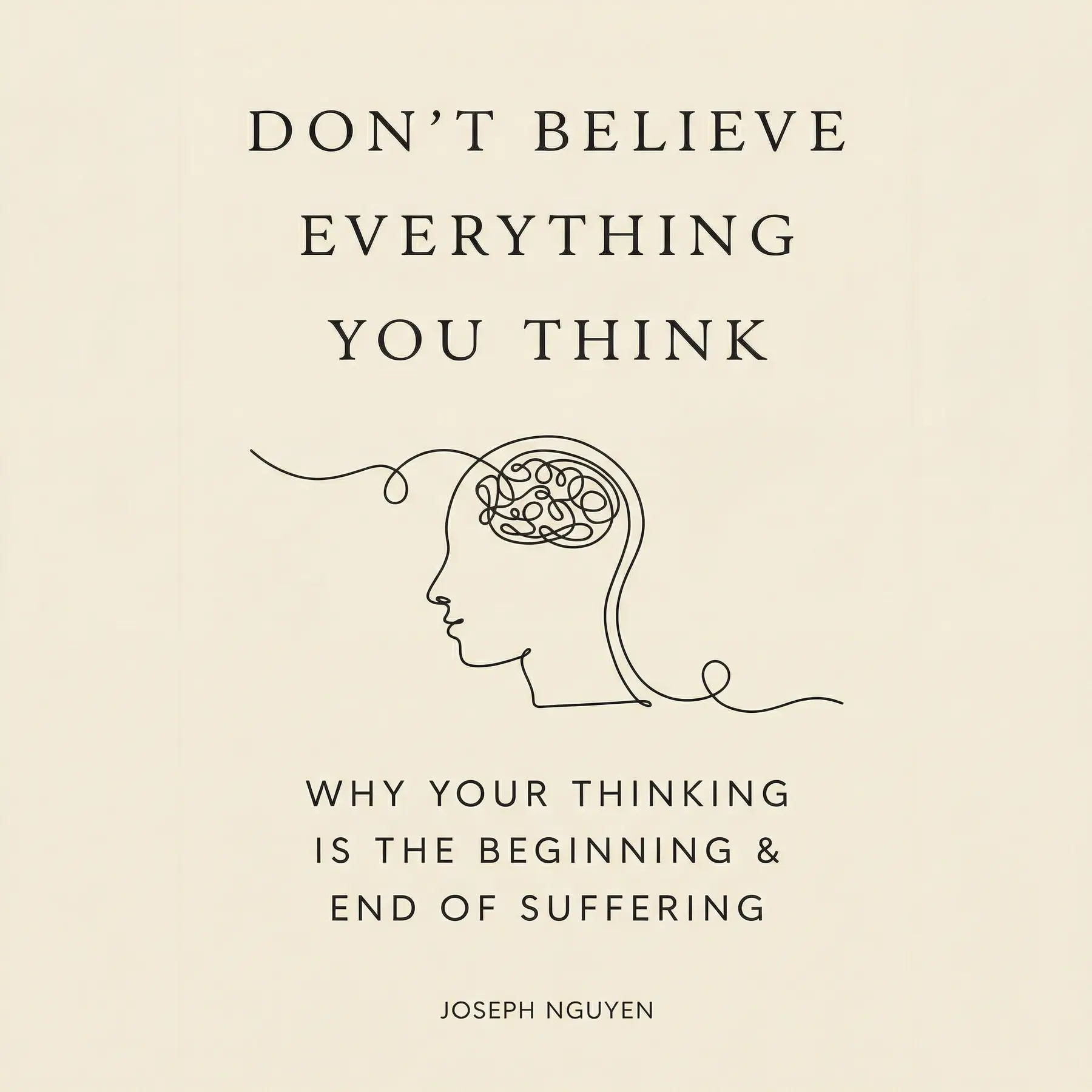
EnglishไทยDon’t Believe Everything You Think: Why Your Thinking is the Beginning & End of Suffering
Shows how needless suffering grows from thinking about your thoughts, not from events or the thoughts themselves, and how letting thoughts pass without judgment brings back calm, clarity and your best performance.
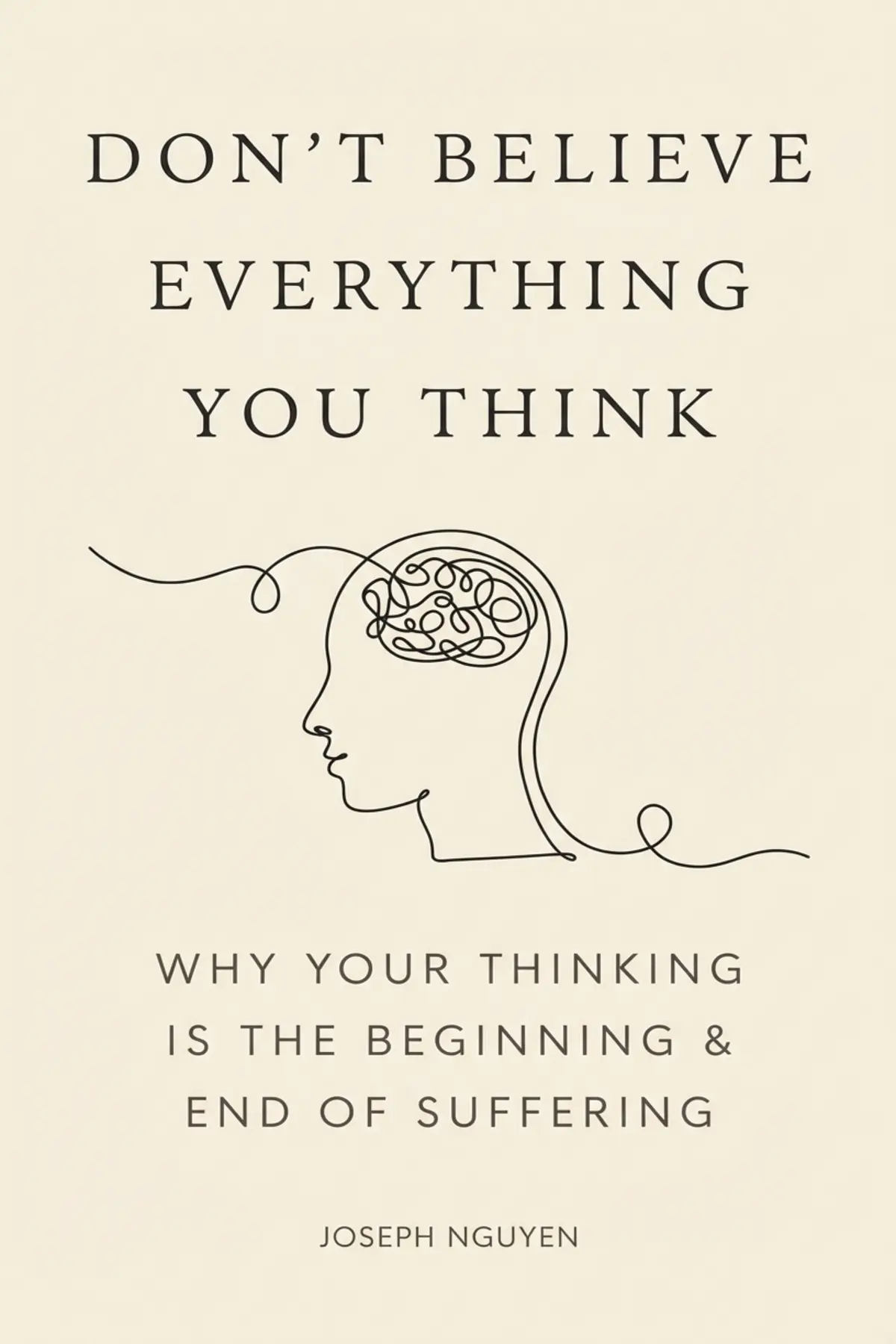
Table of Content
1. Introduction
1 min 05 sec
If your mind replays old conversations and rewrites the same email again and again, the problem may not be what happened to you. In Don’t Believe Everything You Think, author and teacher Joseph Nguyen draws on a Buddhist distinction: pain is what life delivers, while suffering is what our thinking adds on top of it. That second part, he argues, is optional.
His remedy is surprising, because it has nothing to do with positive thinking. Nguyen separates thoughts, which arrive by themselves, from thinking, the tiring work of judging and analyzing those thoughts, and he locates needless misery in the second. Stop doing that work, and the mind clears on its own, the way muddy water settles in a still bowl.
Along the way come a samurai with a raised sword, a quick experiment with your dream salary and a Japanese word for the calm mind of a fighter in combat. By the end you will have a simple way to notice when you have started thinking, and a reason to stop.
2. Separate life's pain from the suffering you add
1 min 49 sec
No one chooses misery, yet most of us cling to it. Two very different thinkers explained that puzzle, and one explanation gives you a way to split any bad day into the part you must accept and the part you can drop.
3. See how one angry thought builds a private hell
2 min 01 sec
A Zen master facing a drawn sword answered a samurai’s question in two short sentences. The warrior understood at once, and the story still shows where your worst moods are actually built.
4. Calm a brain that treats email like a predator
2 min 00 sec
Your mind is extremely good at a job it barely needs anymore. That mismatch explains the rewritten emails, the replayed conversations and the health scares, and seeing it clearly changes how seriously you take them.
5. Catch the moment a thought turns into thinking
1 min 56 sec
A quick experiment with your dream salary shows exactly where good feelings turn sour. Once you know the switch, your own emotions start telling you when you have flipped it.
6. Let a stirred-up mind settle on its own
1 min 46 sec
Most people attack a worry the way they would clean dirty water: heat it, filter it, work on it. A plain bowl from a puddle suggests a gentler fix that takes no effort at all.
7. Do your best work with the inner commentary off
1 min 46 sec
Martial artists have a word for the mind that acts before doubt can speak. It turns out to be the same state in which people do their most creative work, and it depends on what you leave out.
8. Conclusion
1 min 06 sec
Nguyen’s case comes down to an unusual kind of relief. The mind that keeps you up replaying the day is the same equipment that kept early humans alive, still doing an old job far too eagerly. Its thoughts arrive on their own and do little harm. The damage starts when you pick each one up, turn it over and pass judgment, and that is something you do, which means it is something you can stop doing.
That changes where effort belongs. Fighting a worry, reframing it or forcing it to be positive all count as more stirring of the water. What helps is noticing. When your feelings turn heavy, read them as the dashboard Nguyen describes, a report on how much you are thinking. When a problem keeps spinning, set the bowl down and give the mud time to sink. And when a hard moment arrives that you have prepared for, let your training act without commentary.
The samurai never needed a different world to leave hell. He lowered the sword the moment he saw what his own mind was doing.
About this book
What is this book about?
Most of us know that our worrying, replaying and second-guessing make us miserable, and we keep doing them anyway. Joseph Nguyen argues that the trouble does not lie in what happens to us. Painful events are part of life, but the suffering that drags on afterward is built by our own thinking. Drawing on Buddhist teaching and on the Scottish philosopher Sydney Banks, Nguyen explains why a brain shaped for a dangerous prehistoric world keeps scanning safe offices and quiet streets for threats. His central move is to separate thoughts, which arrive by themselves and point to what we want, from thinking, the effortful habit of judging and analyzing those thoughts. That second activity, he says, is where self-doubt, guilt and anxiety come from. The cure he offers is surprisingly passive, and positive thinking is not part of it. Readers learn to treat their feelings as a signal that they are stuck in their heads, to let a troubled mind settle the way muddy water clears in a still bowl, and to recognize the focused, ego-free state that Japanese culture calls mushin and the West calls flow.
Book Information
Who it's for
Replaying old conversations
Overthinkers who replay old conversations and rewrite emails long after they should have sent them.
Professionals doubting themselves
Professionals whose self-doubt and hesitation get in the way of their best work.
Drawn to Buddhist ideas
Readers drawn to Buddhist and Zen ideas who want a plain, practical way to suffer less.
About the Author
Joseph Nguyen
Joseph Nguyen is an author, teacher and public speaker who writes about self-healing and self-help from a spiritual angle. His aim is to help people see themselves as more than their thoughts and conditioning, the theme at the center of Don't Believe Everything You Think. He has also written Beyond Thoughts, a book of poems on where emotional suffering begins, and The Art of Creating, which explores creativity.
Ratings & Reviews
Ratings at a glance
What people think
Listeners find this book to be a brief, profound experience that shifts their mindset and alters their perspective on life. Its clear presentation makes intricate theories easy to grasp, and listeners appreciate the actionable advice and stimulating concepts provided. They value how it clarifies their mental habits and suggests methods to stop overthinking, all while delivering instant comfort from tension and worry.
Top reviews
Somchai
Wow, this tiny book absolutely shifted my entire perspective on how I handle stress. I’ve read a lot of books in this genre, but something about Nguyen’s simple explanation of ending suffering through the cessation of thinking just clicked for me. I also loved that he referred to God using She/Her pronouns—it was a small detail but very inclusive and refreshing to see! The book feels like a conversation with a wise friend who is helping you uncover the wisdom that already exists inside you. It provided me with immediate relief from a cycle of chronic overthinking that I've been stuck in for months. If you’re looking for a sign to stop worrying about the future and start living, this is it.
Show moreAhmed
Finally got around to reading this, and the chapter on unconditional love was exactly what I needed to hear. Nguyen has a way of stripping back all the complex jargon to remind us that our internal wisdom is already there, just waiting to be uncovered. It’s a very fast read, but the relief it provides from the constant 'thinking' loop is immediate. Personally, I think everyone who struggles with chronic anxiety should have a copy of this on their nightstand. It’s not a dense scientific study, but as a manual for mental peace, it’s undeniably effective. It really helped me understand my own thinking process and gave me the tools to finally find some quiet in my head.
Show moreMind
Don't let the short length fool you into thinking there's no depth here. This book is a powerful tool for anyone looking to defeat overthinking and find a more peaceful way of existing in the world. By distinguishing between having an unbidden thought and the active process of 'thinking,' Nguyen gives the reader a practical way to step out of emotional suffering. I found the guidance to be straightforward and easy to implement right away. It’s a great little guide for training your consciousness to stay in the present moment and raising your vibrations. Honestly, it's one of the most transformative things I've read all year. Essential reading for the modern, over-stimulated mind.
Show moreBella
Picked this up on a whim after seeing a clip of the author on social media. As someone who has lived in a mental rabbit hole for years, I found the practical guidance here to be a breath of fresh air. Nguyen doesn't waste time with unnecessary filler; instead, he goes step-by-step toward unraveling how we can train our brains to just let go. The book is written in a very accessible way that makes complex concepts about consciousness feel easy to understand. I especially liked how he structured the path to peace through becoming aware of our internal vibrations. It’s not the most academic book on the shelf, but for someone looking for immediate relief from stress and a way to defeat overthinking, it’s a solid choice.
Show moreRoo
After hearing so much about this book, I finally decided to see if it lived up to the hype. It’s a very quick read—I finished it in about ninety minutes—but the impact on my outlook was significant. The author draws on his own experiences to show how we can stop our minds from going crazy with constant calculation and analysis. While there are some distracting typos and the writing style is very basic, the core message about living a state of joyous being is powerful. It’s essentially a modernized, simplified version of Buddhist mindfulness practices. I found the frameworks for dealing with emotional dysregulation particularly helpful for my daily life. If you can look past the lack of professional editing, there is real wisdom to be found here.
Show moreVilaiporn
Nguyen attempts to provide a roadmap for those of us struggling with constant mental noise. The chapters are crisp and move at a fast pace, which I appreciated since I usually dread lengthy non-fiction. What really jumped out at me was the idea of focusing our goals around passion rather than necessity—that lesson hit me in the gut and made me reevaluate my current career path. Even though the book is short, it manages to deliver some truly thought-provoking ideas about how our emotions are provoked by our own ruminations. There is a bit of repetition, but sometimes you need to hear a message multiple times before it actually sinks in. It’s a great tool for anyone needing a quick reset on their thinking patterns.
Show moreSirichai
The chapters are incredibly brief, which makes the complex psychological concepts feel way more accessible than your typical self-help book. I loved how the author included a section on creation and unconditional love; it gave me a refreshing perspective that I hadn't encountered in other mindfulness literature. It’s clear that Nguyen’s heart is in the right place, and his desire to help people find peace is evident on every page. My only real gripe is that I wish he’d delved more into the 'how' rather than just the 'what.' Still, for a self-published work, it’s an insightful guide that offers some genuine 'aha' moments. It definitely helped me become more aware of my own self-sabotaging behaviors and how to structure a path toward true happiness.
Show moreSatit
To be fair, the message is important, but the execution felt incredibly repetitive. The author spends nearly 100 pages explaining a single thesis: that thinking is the root of our suffering. While I agree that overthinking is a major issue, the book never really develops a cogent argument or provides concrete scientific evidence to back up its claims. It feels very padded, as if a five-page blog post was stretched out to book length just to have something to sell. I did appreciate the short chapters, which made it easy to breeze through in one sitting, but I left feeling like I’d only scratched the surface. It’s an okay introduction for beginners, but those looking for a deep dive into psychology or philosophy will likely be disappointed by the simplistic approach.
Show moreThanakorn
Look, I wanted to love this because the reviews are so high, but it’s a bit of a mixed bag. On one hand, the distinction between 'thought' and 'thinking' is a great takeaway that really helped me visualize my anxiety differently. On the other hand, the author leans a bit too hard into 'woo' territory for my taste. Claiming that our spontaneous thoughts are actually 'divine downloads from the Universe' felt a bit too New-Agey and distracted from the practical advice. It’s a well-meaning guide that occasionally offers bomb information on self-sabotage, yet it struggles to find its footing between being a secular self-help book and a spiritual manifesto. It’s worth a quick skim for the insights on emotional regulation, but don't expect a rigorous scientific framework.
Show morePick
This was quite frankly one of the most poorly edited books I’ve ever purchased. It reads as though it were dictated directly into a speech-to-text app without a single pass from a professional editor, leading to jarring jumps in logic and a tone that feels frustratingly immature for such a heavy topic. While the author obviously has his heart in the right place, the writing completely lacks the voice and direction needed to sustain a full-length book. You might find a few decent quotes if you're willing to dig through the repetitive fluff, but otherwise, I’d suggest looking elsewhere. There are better alternatives like Eckhart Tolle or Michael Singer that cover these exact same themes with much more depth and clarity. If you value your time, don't even think twice about skipping this one.
Show moreQuestions about this book
What is the main idea of Don't Believe Everything You Think?
Joseph Nguyen argues that pain comes from life but needless suffering comes from thinking, which he defines as the effortful habit of judging and analyzing our thoughts. A brain built for prehistoric dangers keeps doing this in a much safer world. The cure is not positive thinking. It is letting thoughts pass without interference, so the mind settles and clarity returns.
What is the difference between thoughts and thinking according to Joseph Nguyen?
Nguyen calls thoughts nouns: they arrive by themselves, cost no effort and often point to what you really want. Thinking is a verb: the act of working on those thoughts by judging and analyzing them, which drains effort and willpower. His dream salary experiment shows the switch. The first number feels good, while multiplying it by five usually triggers doubt about whether you could earn it or deserve it.
How does the book suggest you stop overthinking?
Nguyen compares a busy mind to a bowl of muddy water. You could boil or filter it, but the simplest fix is to leave it alone so the dirt sinks. Trying to analyze or solve a worry keeps the mind stirred. He suggests noticing heavy emotions as a sign you are thinking, then stepping back and letting thoughts settle on their own.
What is mushin in Don't Believe Everything You Think?
Mushin is a Japanese term for a mind free of anger, fear, stray thoughts and ego, usually used for a martial artist in combat. In that state she reacts to what is in front of her without hesitation, relying on training and instinct. Nguyen links it to the Western idea of a flow state, when people are fully absorbed and often at their most creative.
Who should read Don't Believe Everything You Think?
It suits people who ruminate over past conversations, rewrite messages, second-guess colleagues or turn small worries into large fears. It also fits readers interested in Buddhist and Zen ideas who want to see them applied to everyday overthinking. Anyone whose hesitation and self-doubt hold back their work may find its idea of non-thinking, and the flow state it leads to, especially useful.
Featured in
Readers also enjoyed

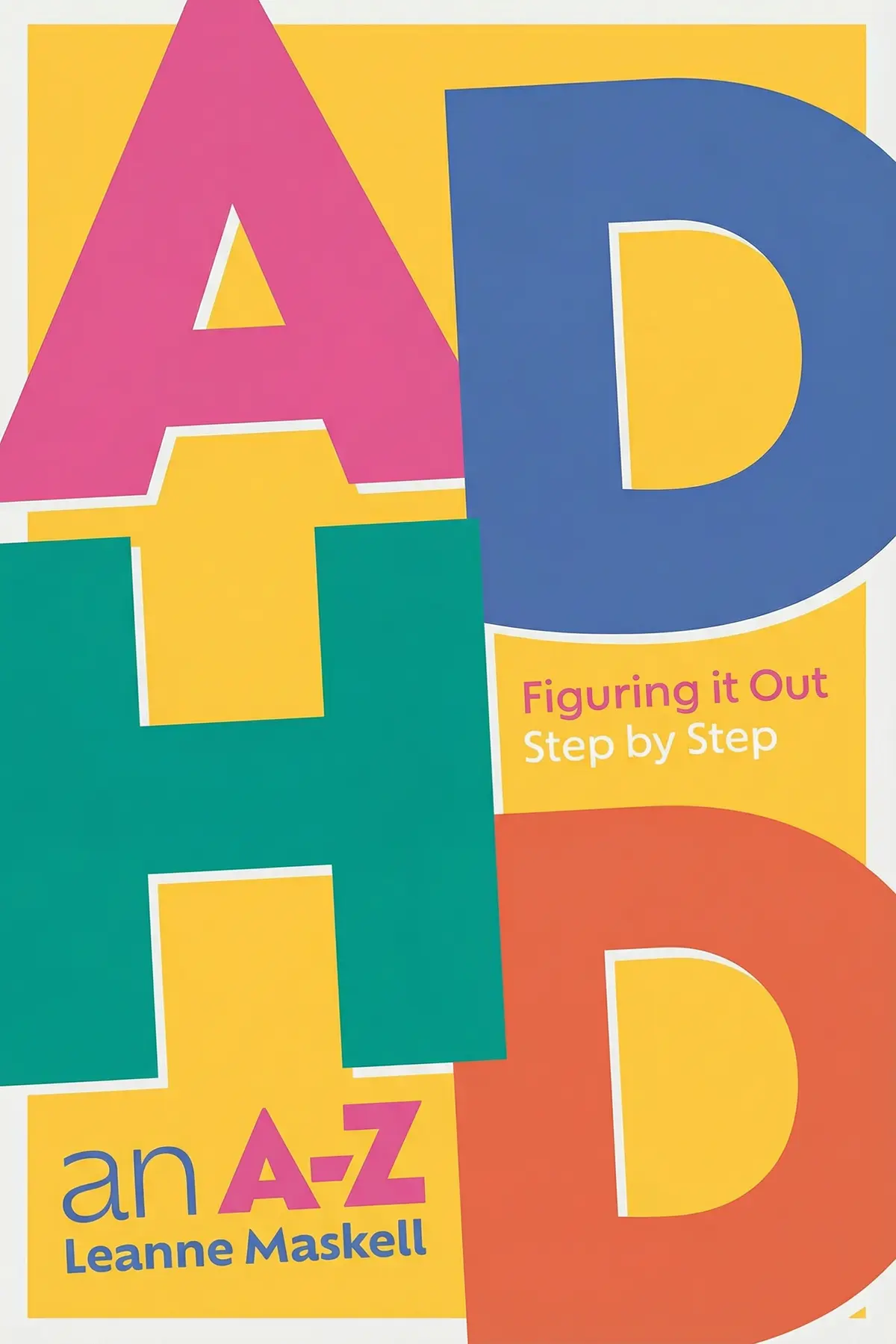
ADHD an A-Z: Figuring It Out Step by Step
Leanne Maskell







A Guide to the Good Life: The Ancient Art of Stoic Joy
William B. Irvine
AUDIO SUMMARY AVAILABLE
Listen to Don’t Believe Everything You Think in 15 minutes
Get the key ideas from Don’t Believe Everything You Think by Joseph Nguyen, plus 5,000+ more nonfiction titles.
- 5,000+ titles
- Listen as much as you want
- 7-day free trial
- Cancel anytime









