
14 min 41 sec
Available in: English
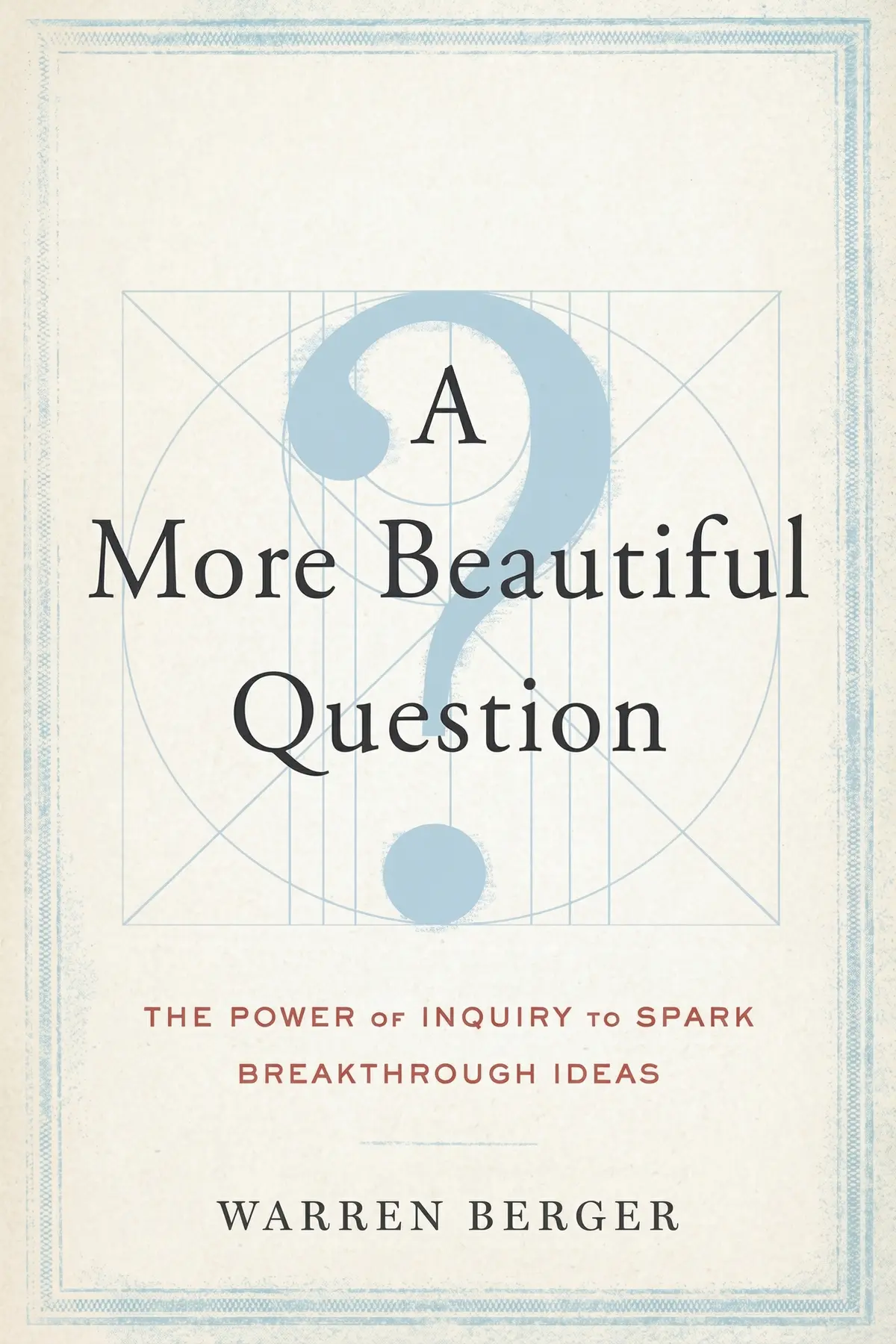
Do Design: Why Beauty is Key to Everything
By Alan Moore
Shows how to make work, products and businesses beautiful in a practical sense: things that do their job well, last and bring people joy. It also covers the habits of craft, vision and openness that produce them.
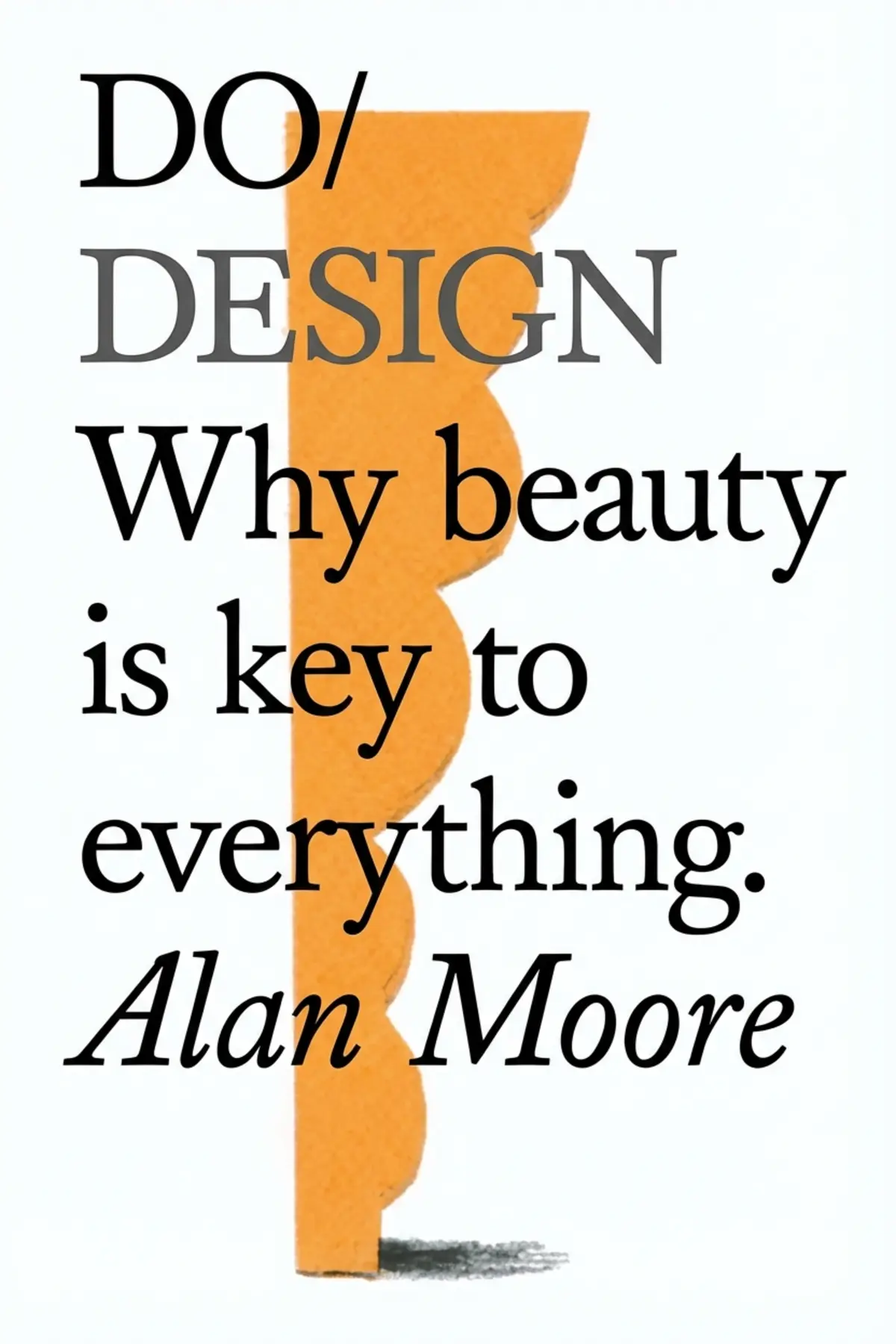
Table of Content
1. Introduction
1 min 02 sec
Most people treat beauty as a finishing touch, decoration added once the real work is done, so they assume it belongs to artists. In Do Design, Alan Moore, who has advised Hewlett Packard, Microsoft and Coca Cola, argues that a thing is beautiful when it works well and gives the person using it joy. On that definition, any maker, manager or founder can build beauty on purpose.
Moore’s case rests on two plain claims: design is everywhere, and anything people have designed can be designed better. Doing it better, he argues, means treating work as a craft, designing for how things feel in use, starting from a vision, staying open to inspiration and to other people, and keeping the whole picture in view. The Shakers, Pixar, a Swedish axe maker and astronauts looking back at Earth all show how, and each offers a habit you can try on your next project.
2. Judge any design by two simple tests
1 min 31 sec
A cheap pair of socks and a well-made pair can do very different things for your feet. Moore uses that small difference to redefine a word most people think they already understand.
3. Turn your everyday work into a craft
1 min 35 sec
A religious sect that forbade marriage and eventually disappeared still shapes the chairs and buildings around us. The reason has less to do with taste than with how its members felt about their daily work.
4. Win loyal customers with how things feel
1 min 34 sec
Computer makers love to advertise speed and storage, yet buyers often decide on something far smaller. Moore explains why the details nobody puts in a brochure decide whether people stay with a product for years.
5. Start from the finished result and work backward
1 min 44 sec
A comedian, a computer pioneer and a science fiction novelist all built things that did not exist yet. Each began from the same unusual starting point, and each needed something besides engineering to get others on board.
6. Catch inspiration when it arrives at bad moments
1 min 33 sec
A novelist who published her first book at 70 and a photographer who jumped out of bed at dawn both made something lasting. What they shared was a readiness most of us train out of ourselves.
7. Learn from companies you admire by asking
1 min 26 sec
One phone call got Moore a full day learning inside an organic farming business, and contacting a designer he admired got him a mentor. Most people never try either, assuming the door is closed before they knock.
8. Open collaboration turns ordinary work into outstanding results
1 min 37 sec
After its first hit, an animation studio worried about repeating the success and built a meeting where nobody held back. Some software companies go further still and hand their work to strangers.
9. Seeing the bigger picture keeps your business healthy
1 min 39 sec
Astronauts often return from space changed, and a Swedish axe maker found a business lesson in what they describe. It turned a company that was losing money by chasing cheapness.
10. Conclusion
1 min 00 sec
Moore’s book ends up treating beauty as a form of respect: for the work, for the person who will use it and for the planet that has to absorb it. A Shaker chair, a beloved old bicycle and an axe built to last are beautiful for the same reason. Someone cared enough to make them work and to make them a pleasure, and that care came back as loyalty, meaning and less waste.
Keep a small notebook in your pocket so the idea that arrives at an awkward hour survives. Before starting something new, describe the finished result and the person enjoying it, then work backward. When a company or a craftsman impresses you, ask to see how they do it. And judge whatever you make next by Moore’s two tests: does it do its job well, and will someone still be glad to have it years from now?
Anything people have designed can be designed better, and that includes your own work and the shape of your life.
About this book
What is this book about?
Most people think of beauty as decoration, something added at the end to make a product prettier, and so they leave it to artists. Alan Moore disagrees. In his view, design shapes everything from cities and institutions to socks, laptops and the way we arrange our own lives, and anything people have designed can be designed better. Beauty, he argues, comes down to two things: working well and bringing joy. Moore then follows beauty from the maker to the user to the whole business. He draws on the Shakers, whose devotion to craft shaped modern furniture, on Doug Engelbart's vision of a world where knowledge flows freely, on Pixar's candid Braintrust meetings and on a Swedish axe maker that recovered by putting quality first. Readers get a usable definition of beauty and a set of habits to go with it: treat work as a craft, judge products by how they feel in use, picture the result before building it, stay ready for inspiration, ask to learn from companies you admire, and keep the whole system in view.
Book Information
Who it's for
Product builders and founders
Founders and product people who want customers to keep and love what they make.
Workers wanting craft back
Professionals who feel their work has become routine and want to treat it as a craft again.
Managers seeking candid collaboration
Team leads looking for ways to make collaboration more candid and creative.
About the Author
Alan Moore
Alan Moore mentors companies and organizations, leads leadership programs and advises on building regenerative businesses. He has held advisory roles at Hewlett Packard, Microsoft and Coca Cola, and has taught at MIT, the Sloan School of Management and INSEAD. He is also the author of No Straight Lines and Do Build, has spoken at The Do Lectures, South by Southwest and the Hay Literary Festival, and still works as an artist.
Ratings & Reviews
Ratings at a glance
What people think
Listeners describe this work as a hopeful and positive manual that motivates makers to center their efforts on beauty and intention. Though some listeners think the content doesn't offer much technical detail, many others value the brief chapters for providing immediate hits of creative energy. Furthermore, they point to the emphasis on Shaker values—simplicity, utility, and honesty—as a revitalizing approach to the creative cycle. Also, they observe that the design itself is very attractive, with one listener commenting that it acts as a "powerful antidote" to the turbulence of today's world for creative professionals.
Top reviews
Manop
Rarely do I find a book that feels like a literal breath of fresh air for the creative soul. Moore’s exploration of Shaker principles—simplicity, utility, and honesty—reminds us that design is more than just aesthetics; it is a way to serve the human spirit. I found the short, punchy chapters incredibly refreshing because they offer direct bursts of inspiration without the usual fluff. It’s an optimistic guide that encourages us to look at the world through a lens of purpose. Some might find it too simple, but isn't that the point of great design? This book is a powerful antidote to the chaos of modern life.
Show moreTuck
Every page breathes a sense of curiosity and wonder that is often lost in professional design circles. It is a short read, yet it manages to touch on profound themes like truth, materials, and the importance of stillness. Moore’s focus on Shaker furniture as a pinnacle of utility and beauty is spot on. It’s an incredibly inspiring little volume that doesn't waste words on unnecessary adornment. I’d recommend this to any entrepreneur or artist who feels stuck in a rut. It helps you redefine your destination so you can actually figure out how to get there.
Show moreYam
Alan Moore captures the essence of what it means to create with intention. This isn't a manual; it’s a manifesto for a more beautiful world. I loved the emphasis on how our mindset limits our potential. If we believe something is impossible, we won't try as hard. That’s a simple truth, but seeing it framed within the context of design and Shaker honesty was powerful. It’s a slim volume that fits in your hand, yet it carries the weight of a much larger philosophy. It’s definitely a book I’ll return to whenever I feel my creative energy starting to flag.
Show moreTern
In a world that feels increasingly fragmented, this book offers a hopeful vision for how creators can make a difference. Moore suggests that by designing with optimism, we can actually uplift humanity. I really enjoyed the sections on 'Beauty for Humans' and how technology can be a provider of beauty if used correctly. Look, it’s definitely not a textbook on engineering or graphic design, and some concepts are a bit oversimplified. But for someone just starting their creative journey, these pages provide a necessary foundation of purpose. It’s about more than just making things; it’s about why we make them in the first place.
Show moreChan
Picking this up felt like a reset button for my brain. I especially liked the idea of working backwards from the desired end result—focusing on what the design should accomplish for the user before getting bogged down in specs. The author notes that good design is often unnoticeable because it functions so seamlessly, which is a great takeaway for anyone in UX. My only gripe is that the appendix contains more detailed stories that I wish were integrated into the main chapters. Still, the message about commitment giving you freedom is something I’ll be thinking about for a long time.
Show moreBenjamin
Design isn't just about fancy numbers or bragging about specifications; it's about how a product works overall to bring joy. That seems to be the core thesis here, and it’s a perspective I really appreciate. The book is short enough to read in one sitting, but I found it better to take it chapter by chapter as daily meditations. Frankly, the staccato style grew on me—it mirrors the simplicity the author advocates for. While I would have liked more concrete examples of his work with Microsoft or HP, the focus on 'choosing to see' is a valuable mental exercise for any creator.
Show moreNina
The physical object itself is stunning, which is fitting for a book titled 'Do Design.' However, I found myself wishing for more 'showing' and less 'telling' throughout the text. Moore mentions photographers like Sebastião Salgado, yet we don't get to see the images or a detailed analysis of why they are beautiful. Instead, the author places the burden on the reader to 'learn to see.' While I appreciate the invitation to think for myself, I bought the book to learn from his expert perspective. The staccato writing works in short bursts, but it lacks the technical depth needed to really change a seasoned designer’s process.
Show moreSing
Not gonna lie, the section headings in this book are massive compared to the actual text they precede. You’ll turn a page to a title like 'The Roots of Design' and find only two small paragraphs. It’s a bit jarring. I think Moore has some truly interesting thoughts on 'pattern languages' and how companies work, but he doesn’t show his work enough. It feels like he is satisfied with the cleverness of the phrasing without doing the heavy lifting of explanation. If you want a quick jolt of optimism, it’s fine, but don't expect a deep dive into history or theory.
Show morePrinya
I expected a lot more from a consultant who has worked with global giants like Coca-Cola and HP. Truth is, this book is disappointingly light on actual substance. While the staccato writing style might be a result of the author’s dyslexia, it makes the reading experience feel fragmented and unpolished. It reads more like a series of disconnected diary entries or a Twitter thread than a cohesive design philosophy. There is a lot of talk about how beauty is the key to everything, but Moore never really defines what beauty actually is. I wanted deeper dives into the 'roots of design' and more than just a couple of paragraphs per section. It’s a beautiful book to hold, but the content doesn’t live up to the premise.
Show morePairot
Function must always come first in design, and on this point, I think Alan Moore is fundamentally wrong. I don't need my kitchen utensils to be beautiful; I need them to work efficiently. The idea that beauty is the 'key' feels like a shallow, utopian distraction from the hard work of technical mastery. This book provides a lot of soundbite philosophy that you’d find scrolling through social media, but very little in the way of practical application. If you’re looking for a book on the design process, this isn’t it. It’s more of a decorative object for a coffee table than a useful tool for a working professional.
Show moreQuestions about this book
What is the main idea of Do Design by Alan Moore?
Moore argues that beauty is not decoration added at the end. A designed thing is beautiful when it does its job well and brings joy to the person using it. Since design is everywhere, from cities to socks to how we arrange our lives, and anything designed can be designed better, anyone can choose to make beautiful things on purpose.
Who should read Do Design?
It suits founders and product teams who want loyal customers, professionals who want more meaning from their daily work, and leaders interested in collaboration. Its examples range from Shaker furniture and Pixar’s Braintrust meetings to a Swedish axe maker that recovered by putting quality first, so it speaks to makers and managers as much as to trained designers.
What does Do Design say about user experience?
Moore argues that the better a product works, the less we notice it, while a noisy or clumsy one keeps interrupting us. He criticizes companies that sell with specifications like hard drive size, because the feel of use matters more, down to how the keys feel. Products that last also win affection, the way a worn backpack or trusted bicycle does.
How can I apply the ideas in Do Design?
Carry a small notebook so ideas that arrive at awkward times are not lost. Before a project, picture the finished result and work backward from it. Study companies you admire by using their services and even asking to visit, as Moore did with Yeo Valley Farms. And judge your work by whether it functions well and gives someone joy.
What is The Total in Do Design?
The Total is the philosophy of Gabriel Branby, who bought the Swedish axe maker Gränsfors Bruk when it was in debt from cutting corners. He believes that profit, employee contentment, the quality of the product, how customers experience it, ethics and the environment are all connected. Focusing on quality made employees prouder, axes longer lasting, customers more loyal and waste smaller.
Readers also enjoyed






AUDIO SUMMARY AVAILABLE
Listen to Do Design in 15 minutes
Get the key ideas from Do Design by Alan Moore, plus 5,000+ more nonfiction titles.
- 5,000+ titles
- Listen as much as you want
- 7-day free trial
- Cancel anytime









