

A History of Iran: Empire of the Mind
Michael Axworthy
 English
 ไทย
A retelling of world history from inside the Islamic world: how a faith born in a trading town built empires that led in science and art, why they fell, and where today's resentments began.
53 sec
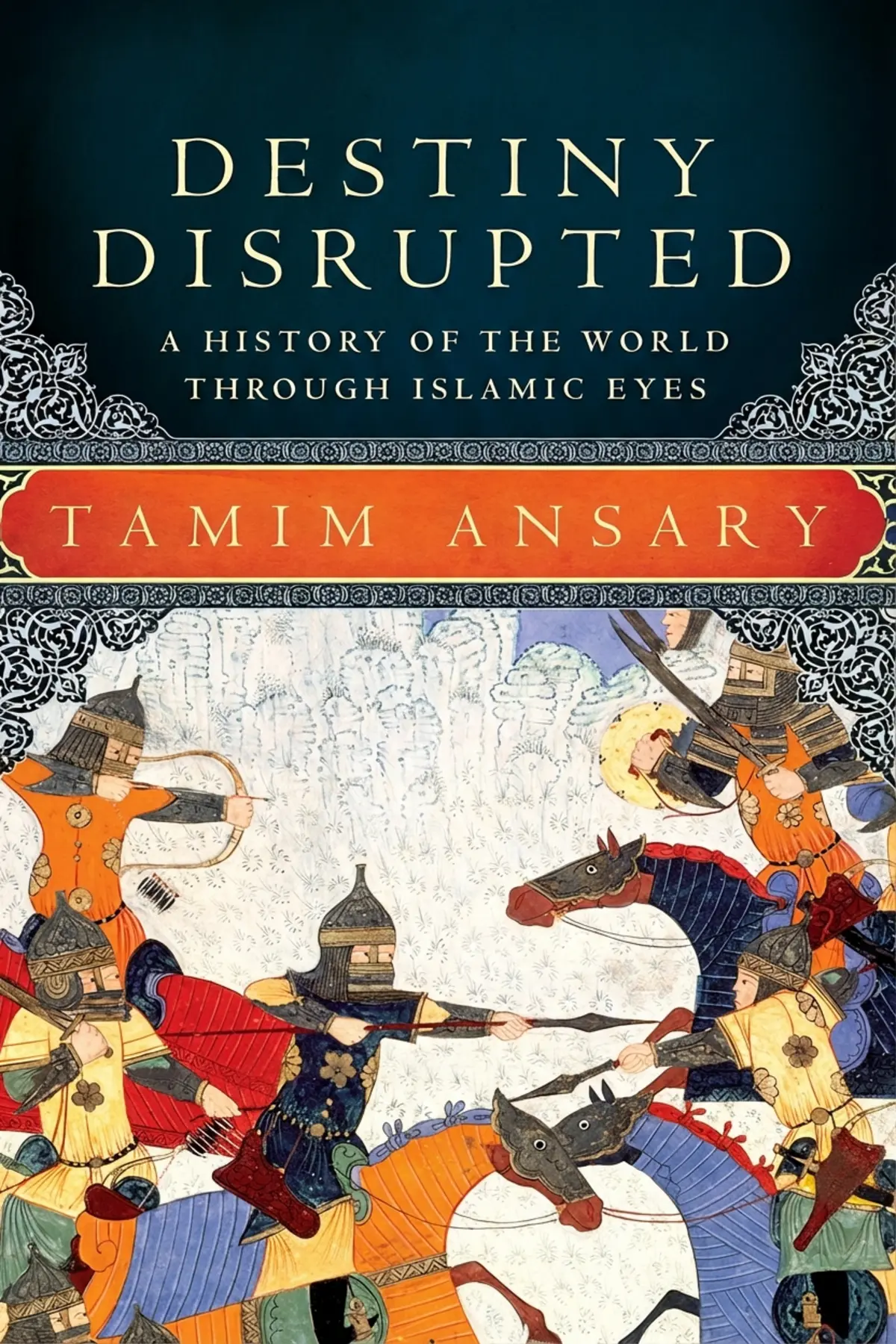
If your picture of world history runs from Greece to Rome to modern Europe, you are missing the region that, for long stretches, stood at its center. In Destiny Disrupted, Afghan-born writer Tamim Ansary retells the past from the Middle World, the land between the Indus River and Istanbul, where letters and numbers were invented and where Muslim empires later led in trade, art and science.
His argument is that this world had its own story, and Europe’s rise did not join that story so much as interrupt it. Follow the thread from a merchant town in Arabia to a coup in Iran, and today’s conflicts stop looking random. You will be able to explain where Shi’ism came from, why three great Muslim empires unraveled and why resentment of Israel and America runs so deep.
1 min 40 sec
The usual map treats the land between Europe and China as a corridor. Seen from inside, it was where writing began and empires rose and fell long before a merchant town produced a new faith.
1 min 34 sec
A plot to kill Muhammad forced him out of his hometown. That flight became year zero for a civilization, yet the community it created outgrew Rome before it settled who should lead it.
1 min 42 sec
A grandson of the Prophet raised a small army and lost his head for it. His defeat gave birth to a movement whose ideas about inherited holiness still shape the politics of the region.
1 min 39 sec
While scholars fixed the words of the faith, philosophers borrowed Greek logic and mystics chased a direct taste of revelation. Their combined work explains a missing step in the story of modern science.
1 min 35 sec
The flourishing Muslim world long regarded Europeans as backward people living in a primeval forest. Then it split into rival pieces, and two very different invaders discovered what a divided center costs.
1 min 47 sec
Three dazzling Muslim empires rose from the Mongol ashes, from Constantinople to the Taj Mahal. At the same moment, a craving for spices and a cache of old manuscripts were waking up their future rival.
2 min 03 sec
European gold wrecked craft guilds, foreign advisers stoked old feuds, and factories demanded changes no one wanted to make. The answers Muslims tried, from strict revival to secular nationhood, still compete today.
1 min 50 sec
One group saw refugees, another saw colonizers. One country saw a communist threat, another saw its elected leader overthrown. Two stories from the mid twentieth century still frame how many Muslims see the West.
1 min 08 sec
The middle in Middle East turns out to be a point of view. From Europe, the region is a place in between. From inside, Ansary shows, it was for centuries the center: home of the first letters and numbers, of a faith that began by confronting rich merchants, of Baghdad and Córdoba, and of the Arabic copies of Plato and Aristotle that helped stir Europe awake. That world split from within long before European gold, factories and ideas broke its rhythm, and the anger of the twentieth century grew out of the break.
The book changes how headlines sound. When one mentions an imam or Hussein, place it in the old dispute over who inherits the Prophet’s authority. When someone calls the region backward, remember who led in mathematics, chemistry and medicine while Europeans were dismissed as forest dwellers. And when an Iranian or Arab voice distrusts America or Israel, recall Mosaddeq’s oil and the refugee boats as Arabs saw them.
Every history has a narrator. Hearing the second one is where understanding begins.
Most people learn world history as a story that runs from Greece and Rome to modern Europe, with the Middle East appearing only when it collides with the West. Tamim Ansary turns that map around. He tells the past from the Middle World, the land between the Indus River and Istanbul, where letters and numbers were invented and where Islam later built some of the largest and most advanced societies on Earth. Ansary follows that world from Muhammad's preaching in Mecca through the khalifas, the split that produced Shi'ism, the Golden Age of Baghdad, the Crusades and the Mongol invasion. He then traces the rebirth under the Ottomans, Safavids and Moghuls, the European trade and colonial pressure that undid them, and the arrival of factories, constitutions and nationalism. Readers get a clear, connected history of the Islamic world told on its own terms, and a way to understand why the founding of Israel and a 1953 coup in Iran still shape how many Muslims see the West.
Professionals who follow Middle East news and want the history behind the headlines.
Students who learned world history from a European point of view and want the other half.
Readers curious how Islam grew, splintered and met the modern West.
Tamim Ansary was born in Kabul, Afghanistan, in 1948 and moved to the United States in high school. He has written a history of Afghanistan, a historical novel, around 30 nonfiction books for children and the memoir West of Kabul, East of New York. He directed the San Francisco Writers Workshop for 22 years, and Destiny Disrupted won the 2009 Northern California Book Award for nonfiction.
Listeners consider this work a superb investigation of global history, with one listener emphasizing its thorough exploration of over 1,000 years of Islamic history. Additionally, the prose is captivating and accessible, while the narrative remains seamless and organized effectively. The book also provides distinctive perspectives on the Islamic world, shifting perceptions and offering an alternative lens on past occurrences. Listeners value the high caliber of the content, with one listener mentioning how it facilitates the use of parallels and comparisons that help deepen their comprehension.
Finally got around to reading this, and I’m genuinely stunned by how much I didn’t know about the 'Middle World.' Tamim Ansary manages to turn 1,400 years of complex history into a narrative that flows like a propulsive novel. He frames the Crusades not as the world-shaking event we learn about in the West, but as a minor nuisance compared to the devastating Mongol invasions. The chatty, almost slangy prose makes even the dense theological splits between Sunnis and Shias feel accessible and urgent. To be fair, some sections move at a breakneck speed, but the sheer clarity of the 'mismatched histories' concept is a total game-changer.
Show moreWow. This is exactly how history should be written if we actually want people to remember it. Ansary acts like a friendly professor who grabbed a beer with you to explain why the world looks the way it does today. The way he describes the 'intertwining' of Western and Muslim narratives during the Cold War was particularly eye-opening. Not gonna lie, I was confused by the different dynasties at first, but his 'speeded-up film' approach helps you see the big picture without getting bogged down in dates. It’s an essential primer for anyone trying to understand the roots of current global friction.
Show moreTamim Ansary writes history like a storyteller spinning an epic yarn around a campfire, and I was hooked from the first page. He brilliantly illustrates how the Muslim world was the center of global civilization while Europe was still 'crawling in the mud.' The revelation that the steam engine was invented in the Islamic world centuries before the Industrial Revolution—but didn't take off—was fascinating. Look, the book covers a staggering amount of ground, from the Prophet’s life to the tragedy of 9/11, yet it never feels disjointed. It provides a much-needed lens that challenges the typical Eurocentric version of world events.
Show morePicked this up on a whim after a friend recommended it, and it completely shifted my perspective on Islamic culture. The book does an incredible job of explaining the concept of the 'Ummah' and why community matters so much more than individual salvation in this context. I loved the chapters on the Golden Age of Baghdad and how the Mongol sack of the city became the ultimate trauma for the region. The truth is, most Westerners have a huge blind spot when it comes to this part of the world. Ansary fills that void with humor, insight, and a prose style that is incredibly hard to put down.
Show moreEver wonder why 'jihad' is such a misunderstood term or why the 1967 war was such a turning point for Islamic fundamentalism? This book answers those questions without falling into the trap of being an apologist or an antagonist. Ansary’s analysis of 'discipline versus decadence' as a core conflict between the East and West is one of the most brilliant insights I’ve read in years. The prose is punchy and conversational, making it feel like a long, fascinating chat rather than a lecture. It’s a dense 1,300 years of history, but the structure is so logical that you never feel lost in the timeline.
Show moreThis book should be required reading for anyone who thinks they understand the current 'clash of civilizations.' Ansary dismantles the idea that we are destined to fight and instead shows how our histories have simply been moving on separate tracks. I was particularly gripped by the sections on the Safavids and the Ottomans, which are usually ignored in Western schools. The narrative is fast-paced and witty, proving that history doesn't have to be dry to be educational. It’s a masterful piece of work that manages to be both informative and deeply entertaining from start to finish.
Show moreAs a history buff who usually finds textbooks dry, I found Ansary’s storytelling style to be a breath of fresh air. He avoids the typical 'clash of civilizations' trope and instead highlights how two distinct worldviews simply stopped talking to each other. I specifically appreciated the deep dive into the 1953 CIA coup in Iran; it provided context for modern tensions that I had never fully grasped. Frankly, the later chapters on the 20th century felt a bit rushed compared to the sweeping epic of the early Caliphates. Still, the information quality is top-notch and it bridges a massive gap in Western education.
Show moreAfter hearing so many people rave about this, I finally dove in and found the 'Middle World' framework to be incredibly helpful. The author’s ability to draw parallels between the Protestant Reformation and the lack of a similar movement in Islam was a highlight for me. However, I did find some of the slangy language, like describing the Crusades as 'mosquitos,' a bit distracting at times. Personally, I would have preferred a slightly more formal tone for such weighty historical events. Despite that, the information quality is fantastic, and it definitely provides a perspective that is missing from most history curriculums.
Show moreWhile the narrative is undeniably fluid and easy to digest, I have some reservations about the depth of the analysis. As someone with a background in Middle Eastern studies, I felt the 20th-century political summaries were a bit too slanted toward a pro-West interpretation. The author is an excellent communicator, but he occasionally oversimplifies the nuances of secular modernist leaders and their eventual downfalls. To be fair, it’s a brilliant introductory text for a general audience, but it skips over some of the heavier theological debates. It’s a great 'story,' just keep in mind that it is exactly that—one man's storytelling of history.
Show moreI really wanted to love this given the premise, but I struggled with the author’s perspective throughout the book. While it claims to be history through 'Islamic eyes,' it felt more like a Western liberal analysis wrapped in an Eastern-centric package. In my experience, if you are looking for a truly decolonial account, this book might leave you feeling a bit disappointed. The tone is often too casual—almost flippant—when discussing deeply significant religious transformations. It’s certainly a fast read, but it lacks the academic rigor I was expecting for such a massive subject.
Show moreTamim Ansary retells world history from the Middle World, the land between the Indus River and Istanbul. He follows Islam from Muhammad’s preaching in Mecca through the khalifas, the Abbasid Golden Age, the Crusades and Mongols, and the Ottoman, Safavid and Moghul empires. His argument is that this civilization had its own story, which Europe’s rise disrupted, and that the disruption explains many modern conflicts.
Ansary links it to a fight over who should lead after Muhammad. When the Umayyad khalifa Yazid crushed a small uprising led by Hussein, Ali’s son and the Prophet’s grandson, and beheaded him, a movement arose holding that God’s light passed through Muhammad’s descendants. Its spiritual leader, the imam, keeps that light, and only one imam exists at a time.
In Ansary’s account, each split along its own weakness while Europeans took advantage. European gold from the Americas outbid Ottoman guilds, causing falling production, inflation and corruption. Safavid Persia was torn between Shi’i rulers and Sunni provinces, with European advisers stoking the tension. Moghul rulers lost control of Hindu kings while European outposts waited. Industry, constitutions and nationalism then reshaped what remained.
Ansary traces anger at Israel to the postwar arrival of Jewish refugees in Palestine, which Europeans saw as rescuing victims and Arabs saw as colonization of their land. Anger at America he traces to 1953, when the United States backed a coup against Iran’s elected prime minister, Mohammad Mosaddeq, after he planned to nationalize the oil industry.
It suits readers who know world history mostly from a Western angle and want to see how the same centuries looked from Baghdad, Cairo or Istanbul. It is also useful for anyone who follows news about Iran, Turkey, Saudi Arabia or Israel and wants to know where today’s divisions and grievances began.
Michael Axworthy

Tom Standage

Ishmael Beah




William J. Bernstein

Ben Macintyre


AUDIO SUMMARY AVAILABLE
Get the key ideas from Destiny Disrupted by Tamim Ansary, plus 5,000+ more nonfiction titles.









