
15 min 02 sec
Available in: English
 ไทย
EnglishไทยDecisive: How to Make Better Choices in Life and Work
By Chip Heath, Dan Heath
Shows why smart people still choose badly, through narrow framing, bias, passing emotion and overconfidence, and gives a four-step process with small, concrete tools for better choices at work and at home.
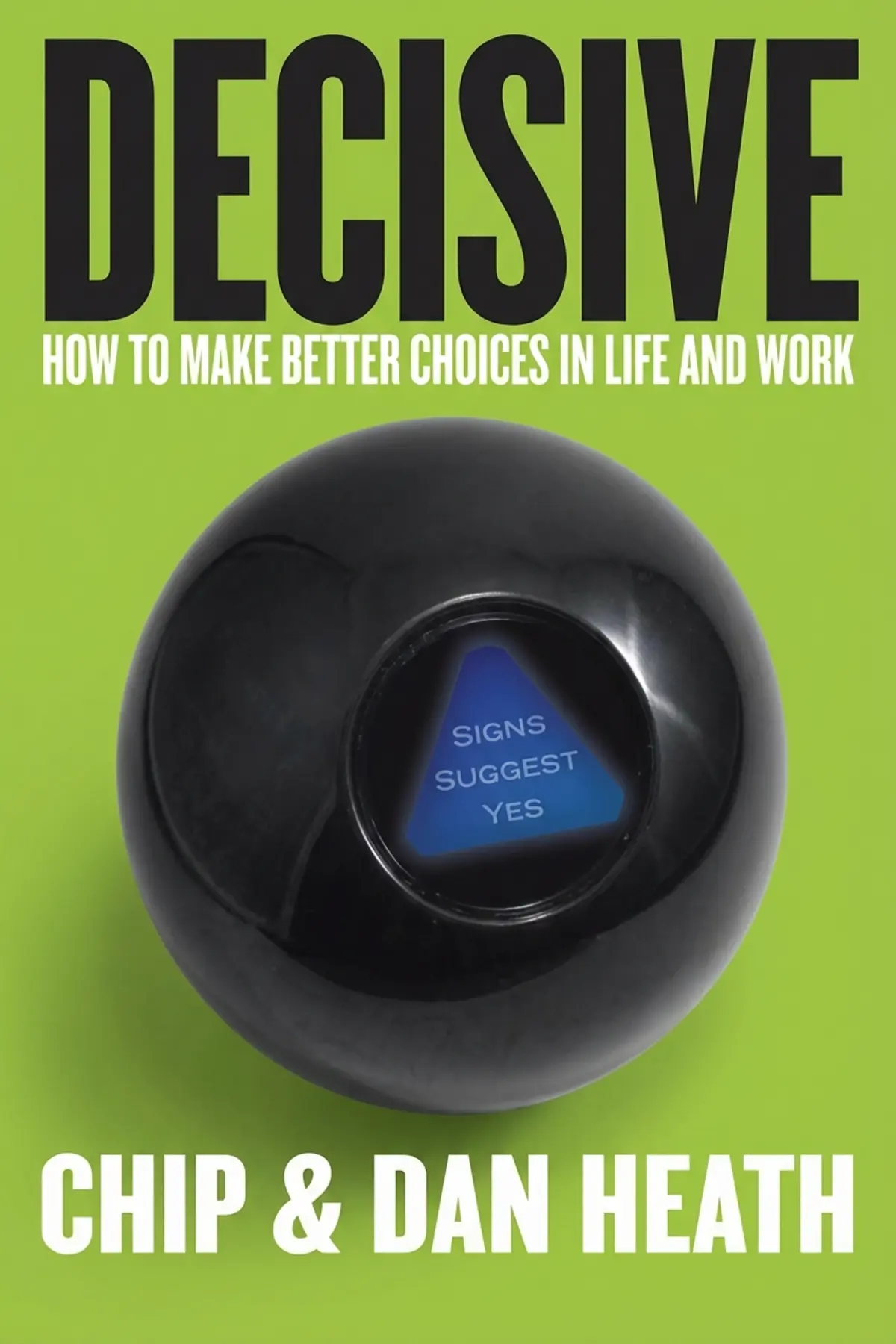
Table of Content
1. Introduction
1 min 11 sec
Most bad decisions are not made by careless people. They come from the same four traps, and each one can be countered with a simple habit. That is the case Chip and Dan Heath make in Decisive, the Stanford professor and his brother, a Duke fellow, showing how we frame choices too narrowly, favor what we already like, let passing emotions decide and trust our forecasts too much.
Kodak shows the price. The company saw as early as 1981 that digital photography would likely replace film, yet it hesitated. By 2002, when digital cameras were outselling film ones, it had been left behind.
The Heaths’ answer is a process they call WRAP: widen your options, then reality-test your assumptions, attain some distance before you decide, and prepare to be wrong. Their claim is that a simple process can counter the narrow thinking, bias, passing emotion and overconfidence that skew our choices. Each step comes with a tool small enough to try on your next job offer, project deadline or Friday night plan.
2. Break out of yes-or-no decisions
1 min 31 sec
A teenager deciding about a party and a shopper eyeing a $14.99 video fall into the same trap. One small change of wording almost doubled the number of people who made a different choice.
3. Develop three ideas instead of betting on one
1 min 33 sec
Two groups of designers each made a banner ad for an online magazine, but they handled feedback rounds differently. One team beat the other with magazine editors, independent ad executives and in real-world tests, and the difference came down to how many designs they kept alive.
4. Borrow solutions others have already found
1 min 38 sec
The founder of Walmart once spent 12 hours on a bus to look at a checkout line. A swimsuit designer studied sharks and torpedoes. Both found answers that were hiding in plain sight.
5. Make it easy to argue against your favorite
1 min 26 sec
Ask lawyers at a top firm whether they are happy and you will hear yes. The Heaths suggest a different set of questions, ones that reveal what polite answers are designed to hide.
6. Check the odds, then try it small
1 min 44 sec
A talented cook has found the perfect street for his restaurant, and everything about it feels right. A single number about restaurants like his tells a different story, and a cheaper test exists than betting everything.
7. See your choice the way a friend would
1 min 45 sec
Most people would hesitate to make a nervous phone call, yet they would tell a friend to go ahead. That gap points to a simple way to stop the feelings of the moment from deciding for you.
8. Plan for a range of futures
1 min 25 sec
Elevator engineers do something with their cables that sounds wasteful until you think about what they cannot predict. The same habit can protect a deadline, a launch or a personal plan from your own confidence.
9. Set tripwires that wake you from autopilot
1 min 40 sec
One American shoe seller offers unhappy employees $4,000 to leave, and pilots learn an unusual word in training. Both are ways of noticing a problem before routine lets it grow too big.
10. Conclusion
1 min 09 sec
Decisive argues that judgment can be trained. The traps the Heaths describe, a narrow frame, a pull toward what we already like, the heat of the moment and too much faith in our forecasts, are not flaws of character. They are defaults, and each one has a matching step: look wider, test against reality, step back, and expect to be wrong sometimes.
Kodak had its warning two decades early. What it lacked was a way to turn knowing into choosing.
You can practice with small stakes. The next time a plan shrinks to yes or no, like a party on Friday, name at least two other options, perhaps skipping it to watch a movie, or an early night followed by a morning run. When something matters to you, such as exercise, block a fixed slot for it in your calendar, so the dishes or the inbox cannot quietly take its place. And before any big commitment, ask what you would advise your best friend to do.
Good choices rarely arrive as a flash of certainty. They come from giving your thinking a better road to travel.
About this book
What is this book about?
Every day brings choices, from which coffee to order to which job to accept, and many of them go wrong in the same ways. We frame decisions too narrowly, we favor the option we already like, we let the feelings of the moment take over, and we trust our forecasts too much. Kodak saw in 1981 that digital photography would likely replace film, yet it hesitated until digital cameras were outselling film cameras. Chip and Dan Heath argue that better choices come from a better process, which they call WRAP, made up of four steps: broaden your options, test your assumptions against reality, gain distance before you decide, and get ready for being wrong. Each step is built from stories and studies, from Sam Walton's 12-hour bus ride to copy a checkout line to elevator cables built eleven times stronger than needed. Readers get tools they can use right away: naming opportunity costs, testing several ideas in parallel, asking questions designed to uncover bad news, running small experiments, the 10/10/10 test, imagining a failure before it happens and setting tripwires that force a decision when habit would let it drift.
Book Information
Who it's for
Professionals weighing big choices
Professionals weighing a job offer, a hire or a launch who want a method rather than a gut call.
Leaders settling too fast
Founders and team leads who keep defaulting to the first idea in the room.
Replaying past decisions
Anyone who replays past decisions and wonders why they felt so sure at the time.
About the Author
Chip Heath
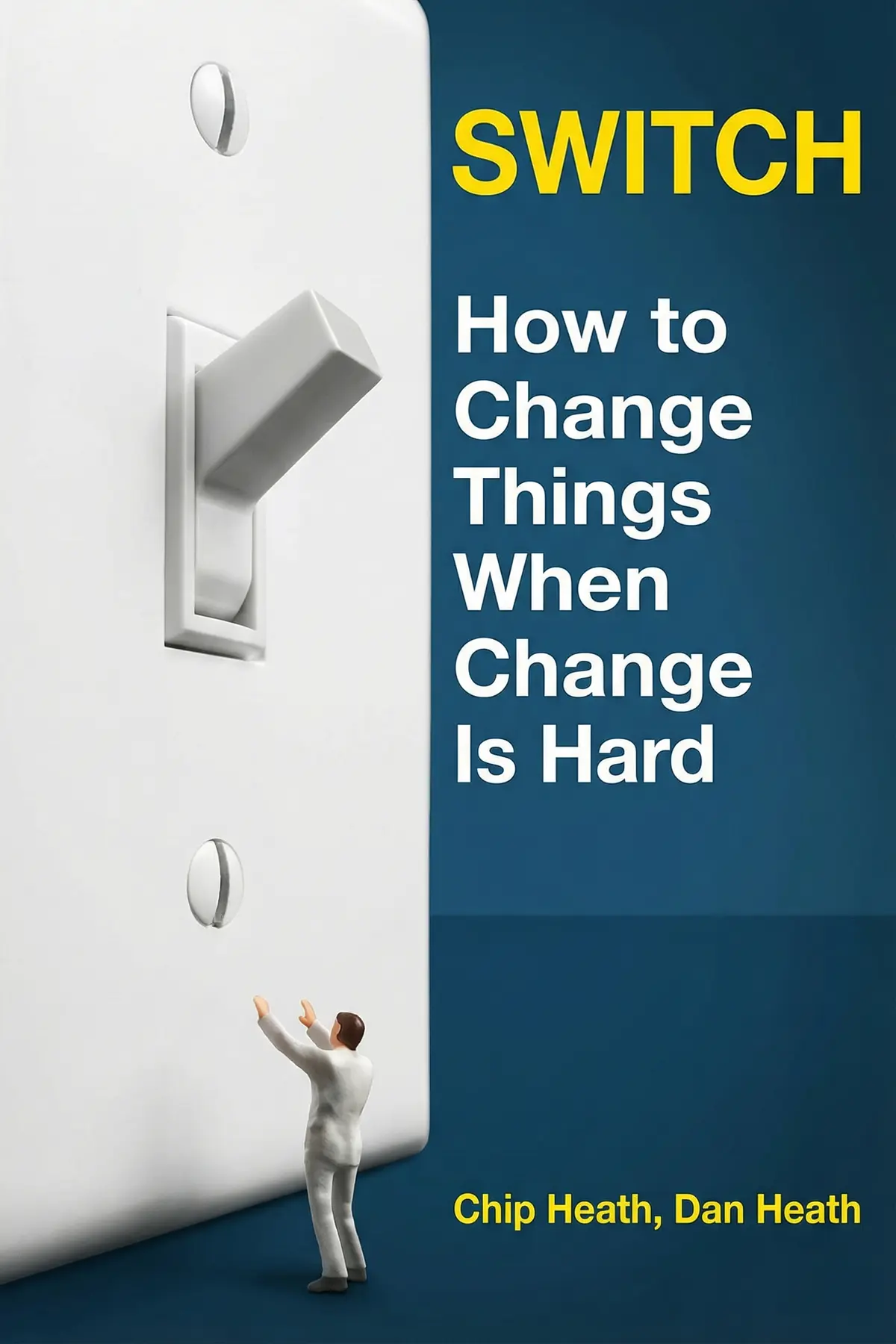
Chip Heath holds a professorship in organizational behavior at Stanford Graduate School of Business and earned a Ph.D. in psychology from Stanford. He has consulted for Google, Gap and the American Heart Association. His brother Dan Heath is a fellow at Duke University's CASE center and holds a Harvard MBA. Together they wrote Made to Stick, named Best Business Book of the Year, and Switch, a number one bestseller. Decisive debuted at number one on the Wall Street Journal list.
Ratings & Reviews
Ratings at a glance

What people think
Listeners find this a vital resource for the decision-making process, highlighting its functional blend of data and beneficial real-world scenarios. This guide delivers a systematic method for navigating and reviewing choices, allowing for quick comprehension and instant life application. Listeners also enjoy the immersive storytelling format, which utilizes compelling tales to clarify major ideas.
Top reviews
Narumon
The 10/10/10 rule alone is worth the price of admission. It’s a simple shift in perspective that forces you to look past immediate emotional turbulence. Most of us get stuck in "narrow framing," obsessing over a binary choice like whether to quit or stay. Wow. Chip and Dan Heath provide a blueprint to break that cycle. The concept of "ooching" or running small experiments was eye-opening for me. Instead of making a massive life change on a whim, you test the waters. The stories, like the one about Kaiser Permanente or the Intel memory business, make the abstract concepts concrete. It's not just for CEOs; it's for anyone who struggles with everyday dilemmas. It replaces the flawed pro/con list with a much more robust framework. You make thousands of choices a year, so why not have a process that actually works?
Show moreYuki
Picked this up because I was stuck on a business pivot, and it provided immediate clarity. The "successor" question—asking what a new CEO would do if I were fired—is a brutal but necessary reality check. It removes the ego and history that cloud our judgment. I also appreciated the "best friend" question for personal matters. It’s funny how we give great advice to others but struggle to see the obvious for ourselves. This book is less about theory and more about action. It’s a manual for getting unstuck. The writing is clear and the "laddering up" concept for finding solutions is a great way to look outside your immediate circle. If you are a business owner, stop what you are doing and read the chapter on core priorities right now.
Show moreYongyut
In my experience, most business books are 20 pages of ideas stretched into 300 pages of filler. Decisive is a rare exception. It provides a comprehensive toolkit for fighting short-term emotion and overconfidence. I was particularly struck by the "vaccination effect" mentioned in the section on realistic job previews. Giving people the "unvarnished truth" about a role actually increases satisfaction because they aren't shocked by difficulties. That’s counterintuitive but makes total sense. I’ve already started using the "10/10/10" method for small daily stresses, and it works. The book is engaging, the examples are varied, and the "WRAP" framework provides a great structure for group decisions. Highly recommended for anyone who feels overwhelmed by choices. This should be required reading in high school.
Show morePick
If you’ve ever felt paralyzed by a major life decision, this book is a godsend. I loved the idea of "ooching." The authors suggest that instead of enrolling in a multi-year graduate program, you should shadow a professional for a week. They use the example of a pharmacy student, and it’s so logical it hurts. Why do we bet thousands of dollars on jobs we’ve never even tried? The Heaths argue that our decision-making process matters more than the analysis itself. They cite a study showing process is six times more important than analysis for success. That’s a staggering figure. It changed how I view my career choices. It’s practical, slightly conversational, and deeply impactful. I wish I had read this before choosing my major ten years ago.
Show moreEllie
Look, the "vanishing options" test alone makes this book a necessary read for anyone in management. We often get stuck in binary thinking: "Should I hire this person or not?" Instead, the Heaths challenge us to ask, "What else could we do with this budget?" This prevents narrow framing, which is the first villain of decision-making. The book is filled with these "aha!" moments. I also liked the section on "multitracking," where designers who worked on multiple ads at once actually produced better results. It keeps your ego from getting too attached to a single idea. It’s a very tactical book. It doesn't just tell you that you're biased; it tells you exactly how to fight those biases with a repeatable process. Highly relevant for modern teams.
Show moreOat
Ever wonder why some projects just seem to fizzle out despite a great start? The chapter on "tripwires" explains it perfectly. We need deadlines to focus our mental spotlight, or we just dither and delay. The Heaths use the example of New Year’s resolutions to show how easily we break our own rules without a trigger for action. I also found the "devil's advocate" section fascinating, particularly the history of the Catholic Church's "promoter of the faith." It’s a great reminder that seeking disconfirming information is a strength, not a weakness. While the book is very practical, I wish it dived a bit deeper into the psychology behind confirmation bias. Still, it’s a very solid 4-star resource for anyone looking to improve their daily logic.
Show moreHang
After reading about the concept of "procedural justice," I realized why so many of our team decisions were failing. It’s not just about the outcome; it's about the process. People need to feel that their perspective was truly heard, even if their plan wasn't chosen. The tip about "stating the other side's position better than they could" is a game-changer for conflict resolution. It builds trust instantly. The Heaths have a way of taking complex psychological research—like the stuff from Kahneman or Ariely—and making it usable for the average person. It’s a fast-paced read with lots of practical takeaways. I’ll be keeping this on my desk for reference. If you want to be a more confident leader, you need this framework in your arsenal.
Show moreKevin
To be fair, the WRAP mnemonic felt a little forced and corporate-speak for my taste. Widen, Reality-test, Attain distance, Prepare—it’s a lot to keep track of when you’re just trying to decide on a new car. However, once you look past the branding, the actual advice is solid. I particularly liked the "vanishing options" test. It forces you to stop asking "Should I do this or that?" and instead ask what you'd do if neither choice existed. That’s a powerful mental exercise. The writing is approachable, though some of the case studies felt a bit long-winded. It's a book that offers high utility if you actually apply the steps. The logic is sound, even if the acronym is a bit cheesy. Not a classic, but helpful.
Show moreWanphen
Frankly, I found the book a bit hit-or-miss. The statistics about lawyers and teachers quitting were sobering, but the narrative often drags. The Heaths spend a significant amount of time detailing real-world examples that could have been summarized in half the space. I found myself skimming the stories to get to the "premortem" and "tripwire" concepts. A "premortem" is brilliant—assuming a project has already failed and working backward to find the cause. That’s a great tool for any team. But the "WRAP" framing felt unnecessary to me. It’s a 3-star read because the signal-to-noise ratio is a bit off, even if the signal itself is quite strong. Good ideas, but the delivery could have been much tighter.
Show moreEnd
This book isn't exactly a literary masterpiece, and the writing is a bit so-so in places. The "WRAP" acronym is one of those things that sounds good in a boardroom but feels a bit contrived on the page. To be honest, I felt the Heaths over-relied on anecdotes to prove points that were already clear from the data. However, the advice on "base rates" is invaluable. We often think we’re the exception to the rule, whether it’s starting a restaurant or a second marriage. Using objective data instead of "blind optimism" is a hard lesson to learn, but a necessary one. It’s a decent book for those who need a structured process, but it could have been tighter. I'd recommend it as a reference guide rather than a cover-to-cover read.
Show moreQuestions about this book
What is the main idea of Decisive by Chip and Dan Heath?
The Heaths argue that poor decisions come from four common traps: framing choices too narrowly, favoring options we already like, letting short-term emotion take over and being overconfident about the future. They answer each trap with one step of a process called WRAP: broaden your options, test your assumptions against reality, gain distance before you decide, and get ready for being wrong. A good process, they say, beats relying on instinct.
What does WRAP stand for in Decisive?
WRAP names four steps. Widen your options, for example by naming opportunity costs or borrowing solutions from others. Reality-test your assumptions with base rates, disconfirming questions and small experiments. Attain distance with tools like 10/10/10 and asking what you would tell a friend. Prepare to be wrong by imagining both the worst and best outcomes, adding safety margins and setting tripwires.
What is ooching in Decisive?
Ooching is the Heaths’ word for testing an idea on a small scale before committing fully. An internship, for example, tells a student more about a career than assumptions about salary or hours. Employers can ooch by giving candidates a trial period instead of trusting interviews alone. The authors note it does not fit every case, such as leaving a team temporarily just to see how it feels.
What is the 10/10/10 rule?
Under the 10/10/10 rule, you ask yourself how a choice will feel after 10 minutes, then after 10 months, then after 10 years. The Heaths explain that present emotions feel sharp while future ones stay vague, which salespeople exploit. Thinking across all three horizons gives your future feelings equal weight and helps keep a passing mood from making a long-term decision for you.
How can I apply Decisive in daily life?
Start small. When a choice comes down to yes or no, such as going to a party, name at least two other options. Put priorities like exercise in a fixed calendar slot so urgent chores cannot push them out. Before a big commitment, ask what you would advise your best friend. For projects, add a margin to your time estimate and set a deadline or checkpoint that forces a fresh decision.

Readers also enjoyed



A Liberated Mind: How to Pivot Toward What Matters
Steven C. Hayes



Acting with Power: Why We Are More Powerful Than We Believe
Deborah Gruenfeld




Age of Propaganda: The Everyday Use and Abuse of Persuasion
Anthony Pratkanis
AUDIO SUMMARY AVAILABLE
Listen to Decisive in 15 minutes
Get the key ideas from Decisive by Chip Heath, plus 5,000+ more nonfiction titles.
- 5,000+ titles
- Listen as much as you want
- 7-day free trial
- Cancel anytime









