
14 min 34 sec
Available in: English
 ไทย
EnglishไทยCork Dork: A Wine-Fueled Adventure Among the Obsessive Sommeliers, Big Bottle Hunters, and Rogue Scientists Who Taught Me to Live for Taste
A journalist with no wine knowledge becomes a certified sommelier in eighteen months. Her story shows how anyone can train their nose, taste a glass with method, judge quality and order wine with confidence.
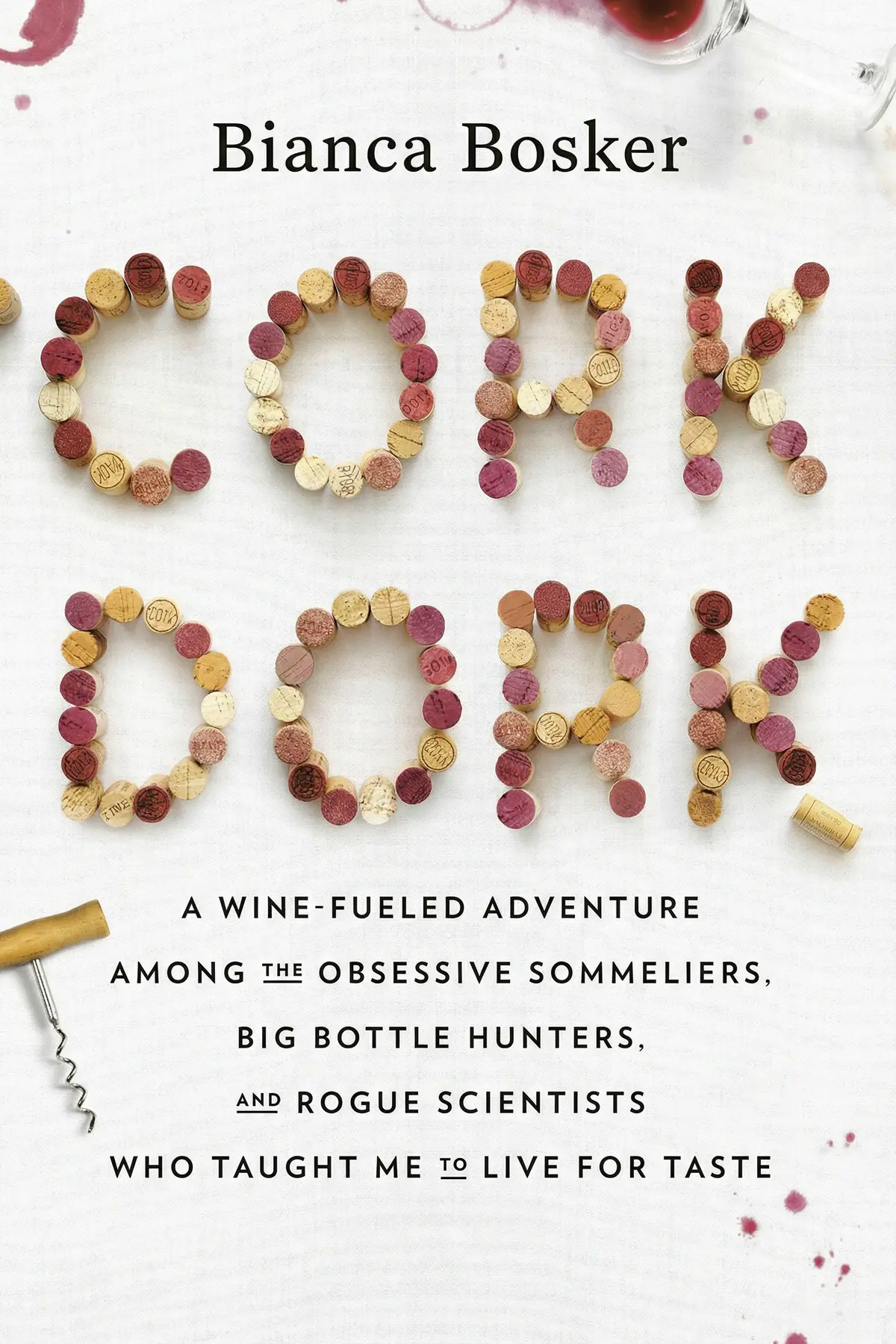
Table of Content
1. Introduction
1 min 00 sec
Many people order wine by picking the second cheapest bottle on the list and hoping no one asks why. In Cork Dork, journalist Bianca Bosker shows that most of the distance between that diner and an expert comes down to training. Much of what we call taste is really smell, and smell improves with practice. She proved it on herself: she left her journalism job knowing almost nothing about wine and passed the Certified Sommelier Exam eighteen months later.
Her story makes one case. Tasting well is a skill you can learn. You build it by training the nose, using plain words for what it finds and trusting a simple test of quality. Along the way you meet rock-licking sommeliers, a mistranslated German dissertation and a grape concentrate called Mega Purple. What you gain is a four-step way to taste any glass, a clear view of what a high price buys, and the confidence to let a sommelier choose for you.
2. Discover how far trained senses can reach
1 min 46 sec
A woman with a glass of unlabeled white wine had three minutes to say exactly where it came from. What she did next made a skeptical journalist give up her career to find out how.
3. Build a personal library of flavors and smells
1 min 40 sec
We spend money on better coffee and better chocolate, then do nothing to sharpen the senses that enjoy them. Sommeliers do the opposite, with habits involving oranges, rocks and toothpaste that sound strange until you see why.
4. Learn how smell shapes what you taste
1 min 42 sec
A map of the tongue that generations believed in turned out to be a translation error. The truth about where flavor comes from is stranger, and it contains good news for anyone who wants to taste more.
5. Taste any glass in four deliberate steps
1 min 44 sec
Most people swallow wine in seconds and miss most of what is in it. A short routine of looking, sniffing, sipping and feeling changes that, and one step involves cream, milk and skim milk.
6. Stop paying extra for rarity you cannot taste
1 min 45 sec
A bottle costing ten times more should taste better, and up to a point it does. Beyond that point the money buys something else, while cheap bottles hide a laboratory behind their pretty labels.
7. Describe wine in words anyone can use
1 min 59 sec
Critics write of minerality, slate and battles between soil and fruit. When ordinary drinkers were asked to use such notes, the outcome was embarrassing, and a California chemist had already built something better.
8. Let a good sommelier choose for you
1 min 49 sec
A scorched kitchen cabinet, a banker who wants the biggest wine in the house and a cork that refused to behave. Serving wine well takes more than knowledge, and that is good news for diners.
9. Conclusion
1 min 09 sec
Cork Dork opens with a woman amazed that anyone could name a wine in three minutes. It closes with that same woman pouring for strangers in a Manhattan wine bar. Repetition is what carried her across. She sniffed key wine aromas twice a day, was advised to taste oranges at every stage of ripeness and kept 1,000 flash cards on her phone. She ran blind tastings alone each morning before breakfast and spilled a lot of prosecco. Bosker’s case is that taste is a skill, that most of it lives in the nose, and that the nose can be taught.
The book also takes the fear out of wine. Past a certain price you are mostly paying for rarity. Critics’ poetry often tells you nothing, and the best judge of quality is whether you want a second sip.
So begin with your next glass. Look at its tears, tilt it for a long sniff, sip with a little air and feel its weight. Name what you smell in words a supermarket could supply. And at your next dinner out, hand the choice to the sommelier, who probably knows which unfamiliar bottles on the list give the most for the money. The second cheapest bottle can stay where it is.
About this book
What is this book about?
Most people drink wine without really knowing what they are tasting. Many also feel intimidated by wine lists, price tags and tasting notes full of strange words. Journalist Bianca Bosker was one of them. Then a chance meeting with a competition sommelier sent her on an eighteen-month quest to pass the Certified Sommelier Exam. Her account mixes reporting and science. She trains with obsessive professionals who taste every kind of citrus and travel with their own granola. She learns that the famous tongue map came from a mistranslation, and that smell drives most of what we call flavor. Research on smell training also shows that a nose can be trained. Along the way she asks what quality really means, from an economist's view of expensive bottles to the additives in cheap ones, and why critics' tasting notes so often fail ordinary drinkers. Readers get a four-step method for tasting any glass and a plain vocabulary for describing it. They also get a sober view of what high prices buy, and a simple test for good wine: it makes you want another sip.
Book Information
Who it's for
Stumped by wine lists
Diners who freeze at wine lists and default to the second cheapest bottle.
Hoping to taste more
Food and drink lovers who want to taste more in what they already enjoy.
Curious about expert crafts
Curious readers who like a hands-on story about how an outsider masters an expert craft.
About the Author
Bianca Bosker
Bianca Bosker is an American journalist and author and a contributing writer for The Atlantic. Her work has also appeared in The New York Times, The New Yorker online, The Wall Street Journal, Food & Wine and The Guardian. She was executive tech editor of the Huffington Post and co-founded its Technology section. She studied at Princeton, lives in New York City, and her nonfiction books Cork Dork and Get the Picture were both New York Times bestsellers.
Ratings & Reviews
Ratings at a glance

What people think
Listeners find this book about wine both fun and instructive, with one listener likening the author's style to that of Bill Bryson. The text is thoroughly researched and brimming with wine-related details, offering a profound look at the life of a sommelier. Listeners value the straightforward method of exploring wine and tasting, as one listener points out the role of memory and emotion in shaping taste. They take pleasure in the amusing tales of the author's experiences and view it as a fantastic manual for wine appreciation.
Top reviews
Narongrit
Ever wonder what it’s like to abandon your social life and spend eighteen months obsessing over fermented grape juice? Bosker’s journey is absolutely wild, taking us from basement tastings to high-end NYC restaurants where the pressure is suffocating. I loved her self-deprecating humor and the way she breaks down the 'nun’s fart' level of detail required for opening champagne. It’s a brilliant mix of memoir and science that actually changed how I think about my own senses. She doesn't just talk about wine; she talks about the human experience of noticing the world around us. Truth is, I’ll never look at a cheap bottle of grocery store red the same way again. It’s an entertaining, funny, and surprisingly moving read for anyone who enjoys good food writing.
Show moreDimitri
Rarely does a nonfiction book about a hobby make me rethink how I experience the world, but Bosker managed it. Her transition from a tech journalist who knew nothing about wine to a certified sommelier is nothing short of heroic. The way she describes the sensory 'time travel' that occurs when catching a specific scent was beautiful and hit home for me. It’s a gleeful, ebullient read that manages to be educational without ever feeling like a textbook. I especially loved the sections on how price doesn't always equal quality, which was very vindicating for my budget-conscious palate. This book is a love letter to the senses and a reminder to pay attention to the small joys in life. A total five-star experience!
Show moreMattanee
Picked this up on a whim during a Kindle sale and ended up tearing through it in two sittings! Bosker’s writing style is very much in the vein of Bill Bryson—informative, slightly snarky, and incredibly engaging. I loved learning about the different 'tribes' of wine drinkers, from the high-end collectors to the 'dirt-under-the-nails' winemakers. The book manages to demystify a lot of the jargon while still respecting the immense skill it takes to pass those exams. It’s a wild ride that made me want to go out and buy a bottle of something I’ve never heard of just to see if I could smell the 'pencil shavings.' If you enjoy immersive nonfiction that doesn't take itself too seriously, you absolutely need to read this.
Show moreTern
After hearing the buzz about Bosker’s dive into the wine world, I decided to see if the hype was justified. I found myself deeply impressed by her commitment to the bit, as she essentially abandons her life to shadow elite sommeliers in NYC. The book is packed with fascinating trivia about the physiology of taste and how our brains process scents, which I found much more engaging than the actual wine-tasting notes. While her writing style is punchy and reminiscent of a high-energy journalist, there are moments where the narrative feels slightly performative. Some of the technical sections regarding the Court of Master Sommeliers might be a slog for casual readers, but the quirky personalities she encounters kept me turning pages. It’s an eye-opening look at an industry built on equal parts passion and pretension.
Show moreThanakorn
The chapter on olfactory science was easily the highlight of this entire journey for me. Bosker does an excellent job explaining how we can actually train our brains to be more perceptive, even citing fMRI results to prove it. Personally, I enjoyed the deep dives into the 'basement' wine culture and the high-stakes competitions more than the chapters on restaurant service. To be fair, she does name-drop a lot, and the atmosphere she describes can feel incredibly elitist and unwelcoming at times. However, her ability to translate complex flavor profiles into relatable language makes the subject matter accessible. It’s a solid 4-star read that balances heavy research with a fast-paced narrative. I recommend it to anyone who likes their nonfiction with a side of obsession.
Show moreHiroshi
As someone who usually just picks the second-cheapest bottle on the menu, this was a massive eye-opener. Bosker dives headfirst into the world of 'cork dorks' with a level of curiosity that is infectious, even if you don't care about tannins. The descriptions of the blind tasting groups were particularly intense and gave me a new respect for what these professionals do. I appreciated the honest look at the industry's 'mean girl' attitude, though the author occasionally seems to fall into those same traps herself. The writing is sharp and often very funny, keeping the pace moving even when the topic gets a bit technical. It’s not a perfect guide to wine, but it’s a fantastic guide to the people who live for it.
Show moreAdam
To be fair, you have to be okay with a certain level of pretension to get through a book about the Master Sommelier exam. Bosker leans into the elitism of the NYC wine scene, but she does so with a wink and a nod that makes it tolerable. I found the segments on mass-produced wine versus 'honest' wine to be the most enlightening parts of the whole narrative. The book is heavily researched and you can tell she put in the work, even if her presence in some of these exclusive circles feels a bit forced. It’s an entertaining journey that balances the snobbery with genuine scientific curiosity. I definitely learned more than I expected to, even if I still can't tell a Merlot from a Malbec in a blind test.
Show moreTitiluck
This book starts out strong with a lot of promise, but by the halfway mark, I found myself getting tired of the author's voice. While she is clearly a talented writer, the 'me-centric' focus makes it feel more like a personal blog than a comprehensive look at the wine industry. I was hoping for more practical tips on navigating a wine list, but instead, I got pages of descriptions of eccentric New York sommeliers. Some parts were genuinely funny, but others felt a bit repetitive and dragged on. It's a decent read if you're interested in the lifestyle, but it lacks the grit and authenticity of something like Kitchen Confidential. Not a bad way to spend a weekend, but I won't be revisiting it.
Show moreNathan
Personally, I find the comparisons to Anthony Bourdain a bit of a stretch, though I see what the marketing team was going for here. Bosker is a journalist dipping her toes into a world, whereas Bourdain was the world he wrote about. That said, the book is a decent look at the service industry's inner workings and the sheer madness of the TopSomm competitions. My main issue was the pacing; some chapters felt like they were filled with fluff just to meet a word count. The science parts were interesting but felt a bit disjointed from the 'adventure' aspect of the memoir. It’s an okay read for a plane ride, but it didn't quite hit the high notes I was expecting based on the rave reviews.
Show moreDavid
Look, I really wanted to like this, but I couldn't get past the feeling that it was all just a setup for a book deal. The comparison to Anthony Bourdain in the marketing is a total insult to his legacy; he lived that life for decades, while Bosker is just a visitor with a notepad. I found her constant focus on herself and her personal quest quite grating after a while, especially when she dismisses the 'average' wine drinker. The character of Morgan was exhausting to read about, and his manic ranting felt more like a caricature than a real person. If you want to actually learn about wine, find a different source. This is just immersive journalism that feels more about the journalist than the subject itself. Frankly, I felt like a 'cork dork' for finishing it.
Show moreQuestions about this book
What is Cork Dork by Bianca Bosker about?
It follows journalist Bianca Bosker, who knew little about wine, as she quits her job and trains for eighteen months to pass the Certified Sommelier Exam. Along the way she explains how taste and smell work, how sommeliers train their senses, what wine prices really buy and why tasting notes confuse people. Her main argument is that tasting well is a skill anyone can build.
Can you really train your sense of smell?
According to the research Bosker describes, yes. Thomas Hummel, a professor in Dresden, asked people who had lost their smell to illness to sniff scents such as eucalyptus, rose and lemon, twice daily over three months. Their smell improved, while a control group’s did not. Bosker followed a similar routine with the key aromas of wine, twice a day, and found her own nose getting sharper.
How should you taste wine according to Cork Dork?
Bosker describes four steps. Look at how the wine runs down the glass, since thick, slow tears suggest more alcohol. Smell it with the glass tilted nearly flat, taking long sniffs from different angles. Sip while drawing in a little air, and notice any drying tannins. Finally, feel the body, which you can learn by comparing cream, whole milk and skim milk in your mouth.
Is expensive wine worth the money?
Only up to a point, in the view of NYU economist Karl Storchmann. A $60 bottle tastes much better than a $6 one, but a $600 bottle is not much better than a $60 one. The extra mostly pays for scarcity, as with Domaine de la Romanée-Conti, which ships just 8,000 cases a year. Bosker’s own test of quality is simple: good wine makes you want another sip.
Readers also enjoyed






AUDIO SUMMARY AVAILABLE
Listen to Cork Dork in 15 minutes
Get the key ideas from Cork Dork by Bianca Bosker, plus 5,000+ more nonfiction titles.
- 5,000+ titles
- Listen as much as you want
- 7-day free trial
- Cancel anytime









