

A Splendid Exchange: How Trade Shaped the World
William J. Bernstein
 English
 ไทย
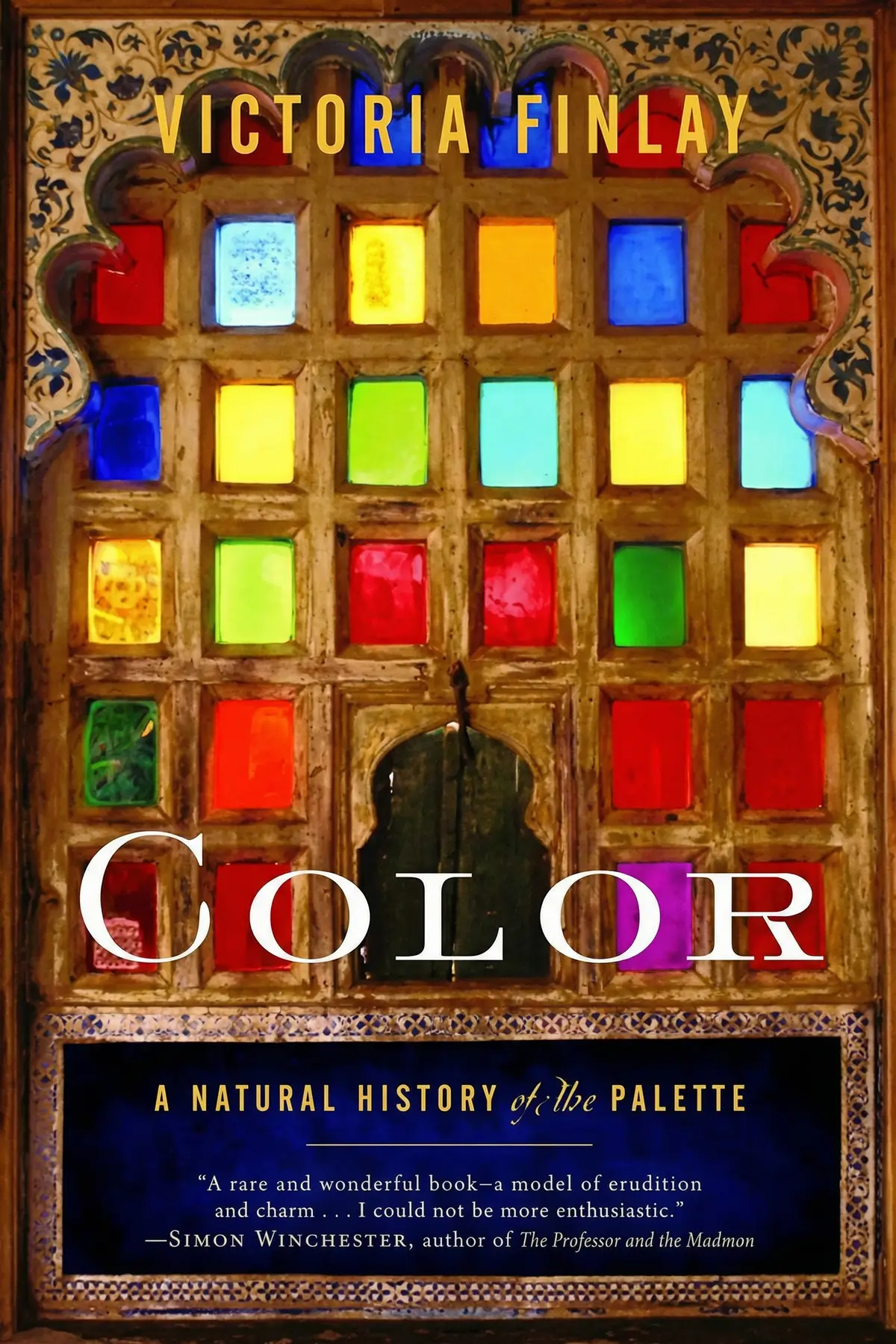
Victoria Finlay follows eight colors back to their sources, from cave ochre to insect red and arsenic green. She shows how money, power, poison and war shaped the shades people still paint with and wear.
56 sec
Lipstick, a cherry sweet and a Renaissance masterpiece can share an unsettling origin: their reds and whites may come from crushed insects and poisonous lead. In Color: A Natural History of the Palette, Victoria Finlay traces the paints and dyes people love back to what they are made of. Her finding is that every shade has a physical source, and that source drags money, power, danger and even war into the picture.
A modest yellow in a paint box once carried traces of bullets. The most precious blue left an empty corner in a Michelangelo. Follow eight colors out of the earth, the sea, the trees and the laboratory, and a museum visit, a cosmetics label or a tale from ancient Rome starts to read differently. By the end, almost any color you see becomes a story you can tell: where it came from, who paid for it and what it cost them.
1 min 35 sec
The famous cave paintings of Europe use only a handful of colors, and that limit is a clue. The same pigment still carries a living language of symbols in the Australian desert today.
1 min 28 sec
Ancient Britons went through a long, laborious process of crushing and fermenting leaves just to turn their skin blue before a fight. The reason may have been more practical than it first appears.
1 min 40 sec
A Michelangelo in London has an odd blank patch where a figure should be. The explanation leads to a mountain mine, a three-day recipe and two giant statues on an ancient trade route.
1 min 38 sec
One lavish party in Egypt helped make a single color the property of Roman emperors. Wearing it could later cost you your life, until one ruler found it more useful to let everyone buy it.
1 min 39 sec
Vermeer and Rembrandt depended on a white so pure that nothing else could replace it. Making it involved vinegar, cow manure and a poison that slipped into the body in ways nobody suspected for centuries.
1 min 34 sec
A few strands of hair kept by a doctor raised a question about how the exiled emperor really died. The trail ran to an accidental discovery in a Swedish laboratory and the walls of his room.
1 min 36 sec
A gloomy sunset by a great English painter was never meant to look gloomy. His supplier warned him, he ignored the advice, and the same fragile red may be in your lipstick today.
1 min 34 sec
An ancient yellow traded along the Silk Road suddenly arrived in the wrong shade. When a paint maker tested the packets, it found something that told the story of a war.
59 sec
Finlay’s history turns the palette into a map. Each color points to a particular place and a particular effort: a cliff of ochre, a field of woad, a lapis mine in Afghanistan, a desert full of cochineal bugs, a tree that bleeds resin for a year. Follow those threads and they lead to emperors and exiles, to famous painters and to the unnamed workers who breathed lead dust for them. Beauty, on this evidence, has seldom been innocent or cheap.
That knowledge travels well. In a gallery, look for the colors that cost the most or faded the most, and ask what the artist chose and what time has changed. On a lipstick or a sweet, check the label for carmine. When a color is kept for the powerful, remember Nero’s purple and Diocletian’s tax.
Michelangelo’s kneeling Mary was never painted, and that empty corner still tells the story of color better than any blue could.
Most people never ask what gives a lipstick its red or an old painting its glowing white. Victoria Finlay did, and the answers are rarely pretty. Carmine red is pressed from the blood of thousands of desert insects. Lead white poisoned the people who made it. A green wallpaper may have harmed Napoleon in exile. Finlay treats each color as a material with a home and a history. Ochre comes out of the ground and still carries meaning in Aboriginal art. Ultramarine was ground from lapis lazuli mined in Afghanistan, at a price that may have stopped Michelangelo from finishing a painting. Tyrian Purple, made from rare sea creatures, became a symbol of rank in Rome, protected by law and later taxed by an emperor. A yellow tree resin even changed shade because of war. Readers come away with a new way of looking. Galleries, cosmetics labels and stories from ancient history all start to reveal the people, places and costs hidden inside a single shade.
Museum lovers who want to understand what they are really looking at on the wall.
Artists, designers and makers curious about the materials behind their paints and dyes.
History readers who enjoy seeing emperors, wars and trade routes through one unexpected object.
Victoria Finlay studied social anthropology at St Andrews University in Scotland and at William & Mary College in Virginia. She spent 12 years in Hong Kong as a news reporter and then as arts editor of The South China Morning Post. She left to investigate where colors come from, a curiosity that began at age eight, when she learned that the blue glass of Chartres Cathedral could no longer be made the old way. She has since written books on jewels, color in art and fabric.
Listeners consider this work a fascinating study that examines the history of pigments and dyes, providing thorough details on their origins and applications. Additionally, the prose is highly engaging, and listeners value the travelogue components found throughout the narrative. Listeners also highlight the excellent storytelling; one review remarks on how it weaves anecdotes with historically based tales, while another emphasizes how well it illustrates the history of paint.
Ever wonder why your paint tubes are named the way they are? Finlay takes readers on a whirlwind global tour, from the dusty mines of Afghanistan searching for ultramarine to the quiet villages of India where "cows' urine" created a legendary yellow. I found the travelogue elements much more compelling than a dry textbook ever could be. The way she weaves personal peril with the chemical history of dyes makes for an incredibly engaging read. While some critics dislike her flights of fancy, I think her "imagining" adds a human touch to pigments that are centuries old. It's a gorgeous, sprawling narrative that makes you look at every shade in your home differently. The storytelling quality here is simply top-notch.
Show moreVictoria Finlay has a real gift for taking seemingly mundane objects and uncovering the epic sagas hidden within them. This isn't just a book about paint; it’s an exploration of human obsession and the lengths we go to for beauty. I loved the anecdotes about the Bamiyan Buddhas and the dangerous trek for lapis lazuli. The writing is incredibly descriptive, making you feel the heat of the Australian outback or the dampness of an Italian workshop. It’s rare to find non-fiction that feels this cinematic and personal. For anyone who loves art or history, this is an essential addition to your shelf that celebrates the spectrum of our world. It perfectly illustrates how deep our connection to color really goes.
Show moreLook, if you’re looking for a book that will give you enough trivia to win every dinner party conversation for a year, this is it. Did you know that some historical paints were made from crushed mummies? Or that sea snails were once the only source of the most expensive purple dye? Finlay’s writing style is chatty and engaging, making complex chemical processes easy to understand. She manages to balance the "lite" science with genuine adventure. It’s a wonderful, vibrant journey through the rainbow that makes you appreciate the incredible effort humans have exerted just to make things look pretty. Absolutely fascinating from start to finish, and the storytelling is just beautiful.
Show moreAfter hearing so many good things about "Color," I was happy to find it lived up to the hype for the most part. It’s a charming blend of anecdote and history, though the author's voice is definitely the driving force here. If you don't like personal narratives in your non-fiction, you might find her flights of fancy annoying. However, I found her curiosity to be the best part of the experience. The history of saffron and the wars fought over yellow pigments was particularly eye-opening for me. It’s a long, colorful trip around the world that reminds us that every hue has a deep, often bloody, history behind it. A true treasure trove for anyone who appreciates the natural history of our palette.
Show morePicked this up during a trip to an art museum and found myself completely sucked into the secret lives of reds and violets. The storytelling is vivid, particularly the section on cochineal bugs and the lengths empires went to protect their trade secrets. Personally, I enjoyed the mix of journalism and art history, as it provided context that a simple chemistry book would lack. It's a bit long, and the author does wander off on tangents about her own travels, but the sheer volume of "did you know" facts kept me turning the pages. Not gonna lie, I'll never look at a sea snail the same way again after reading about the "tears" of violet! It's a fascinating look at the materials artists have used for centuries.
Show moreAs a hobbyist painter, I've always been intrigued by names like Prussian Blue and Burnt Sienna, so this book was right up my alley. Finlay does a fantastic job of tracing these colors back to their organic roots, showing just how much labor went into every brushstroke in history. The structure of the book—organizing chapters by specific colors like Ochre and Indigo—makes it easy to digest in chunks. I did find the "self-involved" tone mentioned by other reviewers to be present, but it didn't ruin the experience for me. Frankly, her enthusiasm for the subject is infectious, and the bibliography alone is a goldmine for further research into the alchemy of art. A very solid four-star read for any creative soul.
Show moreFinally finished this massive tome and I’m mostly impressed by the sheer amount of research involved. The standout for me was definitely the section on Indian Yellow and the controversial history of how it was produced. Finlay is a brave traveler, and her descriptions of sneaking into protected sites add a layer of tension you don't usually find in art books. My only real gripe is the lack of photographs; for a book so focused on the visual, I spent way too much time on Google Images trying to see what she was describing. Still, it's an enlightening read that bridges the gap between science and culture quite effectively. It makes the history of paint feel alive and relevant today.
Show moreTo be fair, this is a very dense book that requires a significant time commitment to get through. It sits somewhere in the middle of being a travel guide, a memoir, and a history of pigments. While the information regarding lead white and the dangers of early makeup was fascinating, the pace slows down significantly in the middle chapters. I appreciated the author's curiosity, though the frequent use of phrases like "it could be that" or "possibly" made me question the historical accuracy of some sections. It’s a decent read for those who like micro-histories, but be prepared for a narrative that feels a little too long for its own good. I'd give it a 3.5 if I could.
Show moreThe chapter on the "imaginary Corinthian artist" was exactly where this book lost me. I came here for a natural history of the palette, but what I got was a collection of "I imagine" and "perhaps" sequences that felt more like historical fiction than scholarly non-fiction. Truth is, Finlay spends far too much time talking about her own feelings and not enough on the actual science of color. It's frustrating to read a supposedly factual book only to have the author speculate about what some woman thousands of years ago felt while applying mascara. If you want a rigorous historical text, keep looking, because this is mostly a self-indulgent travel memoir with some paint facts sprinkled in for flavor. It had so much promise but fell flat.
Show moreWhat a disappointment this turned out to be after such a promising start. I wanted a scholarly look at the evolution of color science, but Finlay constantly interrupts the history to tell us what she "likes to think" happened. It is an irresponsibly speculative way to write non-fiction, especially when she starts inventing dialogue for historical figures. The travelogue portions feel like they belong in a different book entirely, often overshadowing the actual history of the pigments. I found the author's voice to be somewhat grating and her habit of claiming things as "hers" to be quite odd. I couldn't even finish the final chapter on violet; I was just too frustrated by the lack of authority. Waste of time.
Show moreFinlay traces the paints and dyes people have used back to their physical sources and the history around them. She covers ochre from the earth, woad from a weed, ultramarine from lapis lazuli, Tyrian Purple from sea creatures, lead white, arsenic green, carmine from insects and gamboge from tree resin. Her argument is that every color carries a story of money, power, danger or conflict.
Finlay presents it as possible but unproven. Hair taken after Napoleon’s death in 1821 showed traces of arsenic when tested after a 1960 auction. In 1980 chemistry professor David Jones found arsenic in green wallpaper from Napoleon’s room on Saint Helena and suggested damp and mold could have released it. Nobody can be certain it killed him, only that it did not help his health.
True ultramarine came from lapis lazuli, a rare stone found mainly in Afghanistan, and turning it into paint was slow work. Makers removed impurities, ground the stone, mixed it with gum, resin, wax and oil, rested the putty for three days, then pressed out and dried a blue liquid. Experts think the cost explains a blank space in Michelangelo’s The Entombment, where a blue-robed Mary was probably planned.
Yes, according to Finlay. Carmine comes from the blood of thousands of cochineal bugs, which live in deserts, feed on cactus and breed quickly enough to be harvested regularly. It is still used in red lipsticks and eyeshadow and in Cherry Coke and sweets in the United States and Europe. In paintings it fades, which is why a Turner sunset from 1835 now looks gray.
It suits gallery visitors who want to read paintings with fresh eyes, artists and designers curious about their materials, and history readers who like big events told through small objects. The book connects Cleopatra’s purple party, Dutch lead white, Napoleon’s exile and the Vietnam War to the colors they shaped, so each shade becomes a story you can retell.
William J. Bernstein

Ben Macintyre



Charles C. Mann

James Shapiro
Andrew Ross Sorkin

Pankaj Mishra

Fay Bound Alberti

Ben Macintyre
AUDIO SUMMARY AVAILABLE
Get the key ideas from Color by Victoria Finlay, plus 5,000+ more nonfiction titles.









