Salt: A World History
Mark Kurlansky
 English
 ไทย
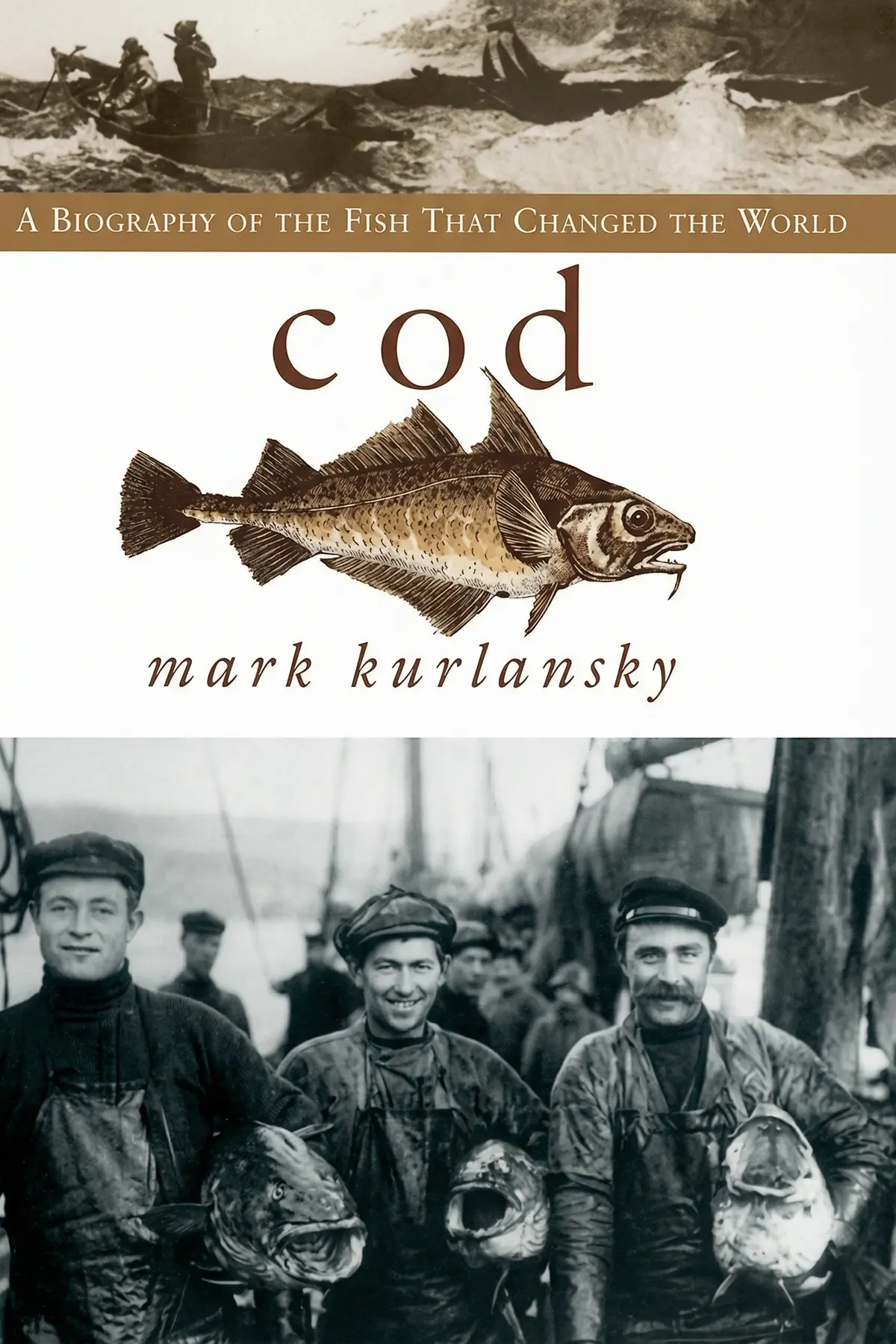
A history of the Atlantic cod that shows how one fish built fortunes, started wars and drove inventions, and how the belief that it was endless brought it close to extinction.
1 min 01 sec
If a resource has always been plentiful, it is easy to assume it always will be, and the Atlantic cod shows how costly that assumption can be. In Cod, journalist Mark Kurlansky traces a fish that could grow two meters long, swam close to shore in vast numbers, and has now been pushed to the edge of extinction. His story begins with a simple trick, preserving fish in salt, which turned cod into food for long voyages and a fortune for whoever knew where to find it.
From there the fish drew nations into alliances and attacks, helped a colony grow rich enough to break away, and drove inventions that caught more than the sea could replace. The thread through all of it is plain: abundance made cod a source of wealth, conflict and invention, and the confidence that it would never run out nearly finished it. Follow the fish and you learn to read the warning signs that plenty hides, and what acting on them early looks like.
2 min 04 sec
Europeans could find cod only in the far north, yet one small people kept selling more of it than anyone could explain. Their advantage came from a kitchen ingredient and a rule of the Church.
2 min 08 sec
Four European powers raced across the Atlantic for the same fish, and the partnerships they formed collapsed within years. The fight even reached Boston, where cod money had consequences London never expected.
2 min 08 sec
Every year the boats came home fuller, and a famous scientist assured everyone the worriers were wrong. The figures looked like proof of health, which is exactly what made them so misleading.
1 min 59 sec
A ship that drags its net and a fur trapper freezing cabbage in a washbasin seem to have nothing in common. Together they took away the last natural protections the cod had left.
2 min 11 sec
An island nation that relied on fishing stood up to Britain over a line drawn in the sea. They kept moving that line outward, and the outcome still decides who catches cod there today.
2 min 06 sec
Officials watched the cod disappear and told themselves it had happened before and would pass. By the time they acted, the only option left was the most painful one.
1 min 09 sec
Kurlansky’s fish ends up telling a story about confidence. For five centuries, cod seemed too plentiful to run out, and each turn of its history made that belief easier to hold. Salt let it travel, the Church guaranteed buyers, nations fought for the right to catch it, and longlines, trawlers and freezers kept the totals climbing. The very things that made cod valuable also hid how fast it was disappearing, until a ban put 30,000 Canadians out of work.
The contrast with Iceland is the image worth keeping. A small, newly independent country looked at falling catches, drew a line in the water, and kept moving it outward until a far larger power gave way. Its cod are still there.
The habits this story supports are modest. When something you rely on shows rising output, check whether the source is growing or only your reach. Take early warnings seriously, even when respected voices wave them away, and act while the cost is still small. Plenty is no proof of permanence, and the cod is the fish that showed it.
For centuries the Atlantic cod was cheap, enormous and easy to catch, often swimming in shallow water near the coast. Today it is close to extinct. Journalist Mark Kurlansky tells how that happened, and why the story reaches far beyond fishing. He follows the fish from the Basques, who salted it and sold it to Catholics on fasting days, to the rival fleets that fought over Newfoundland, the New England traders whose wealth fed the American Revolution, and the inventions that let fishers catch more than ever: longlines, steam-powered trawlers and Clarence Birdseye's freezing method. Each advance made cod more valuable, and each one made its decline harder to see. The book ends on two very different responses to falling catches. Iceland fought three cod wars with Britain to push its fishing limit out to 200 miles. Canada waited until 1992, then closed its fisheries and put 30,000 people out of work. Readers come away with a clear sense of how a commodity can shape history, and of the warning signs that abundance tends to hide.
History readers who want to see how one everyday food shaped trade, religion, war and revolution.
Managers and founders who rely on a resource or a metric and want to recognize when good numbers hide a decline.
Anyone curious about overfishing and what protecting a shared resource actually takes.
Mark Kurlansky, born in Hartford, Connecticut, in 1948, is a journalist who writes both fiction and nonfiction. Cod, published in 1997, became an international bestseller translated into many languages, and his other books include Salt and World Without Fish. He is a James Beard Award winner and a New York Times bestselling author, and his book Nonviolence won the nonfiction prize at the 2007 Dayton Literary Peace Prize.
Mark Kurlansky

Listeners find this account captivating and expertly crafted, showcasing intriguing global history centered on cod and high-quality research. Furthermore, the narrative is powerful, and listeners value its informative nature, calling it both amusing and stimulating. The text also includes numerous wonderful recipes, and one listener notes that it offers an intimate glimpse into the daily experience of a commercial fisherman.
Ever wonder how a single fish could change the course of human history? Kurlansky’s work is a masterclass in the microhistory genre, showing how the humble cod fueled Viking explorations and built the wealth of New England. It’s a wild ride through the centuries, moving from the silent Basque fishermen who kept their secrets to the industrial trawlers that gutted the ocean. To be fair, I never thought I’d be so invested in the shelf-life of salt-cured fillets, yet here I am. The author’s research is expansive, covering everything from the Hanseatic League to the development of frozen peas. While the tone is mostly journalistic and objective, the underlying message about our impact on nature is powerful. This isn’t just a book about fishing; it’s about how greed and innovation can collide to destroy a seemingly infinite resource.
Show moreAs someone who grew up in a coastal fishing town, reading about the collapse of the Grand Banks hit home. Kurlansky provides a heartbreaking look at how multi-generational fishing families were decimated by industrial greed and poor government oversight. The book flows beautifully, jumping from medieval trade routes to the modern crisis in Newfoundland with ease and wit. I was particularly captivated by the story of the Basques, who were catching cod long before Columbus ever set sail. It’s a sobering reminder that nature is not an inexhaustible pantry for human consumption. The writing is sharp, informative, and leaves you with plenty of 'did you know' facts for your next dinner party. It’s easily one of the best microhistories I’ve ever encountered. Highly recommended for anyone interested in environmental issues.
Show moreThe sheer scale of how humanity managed to nearly wipe out a 'limitless' species is staggering. Kurlansky’s book is an essential read for anyone who wants to understand the impact of global trade on our natural world. From the Vikings' wind-dried fish to the modern-day frozen blocks, the evolution of the industry is laid out with impressive clarity. I particularly enjoyed the sections on how Iceland stood up to the British Navy to protect their waters. It’s a story of survival, innovation, and ultimately, a warning about the future of our oceans. The writing is punchy and the short chapters make it a very easy book to pick up and put down. If you think a book about fish sounds boring, this will definitely change your mind. It’s absolutely fascinating from start to finish.
Show morePicked this up on a whim after a trip to Cape Cod and was pleasantly surprised by the depth of Kurlansky's research. It is fascinating to see how the search for cod essentially dictated the map of the modern world and influenced the American Revolution. The section on the 'Cod Wars' between Iceland and the UK was particularly gripping, showing how far nations will go for white gold. I loved the quirky details about Gloucester and how big brands like Gorton’s don’t even buy local fish anymore. My only real gripe is that the book occasionally gets bogged down in minutiae that might bore a casual reader. However, if you enjoy learning about the intersection of ecology and global politics, this is a must-read. It’s educational without feeling like a dusty textbook.
Show moreThis book is a masterclass in how to turn a seemingly mundane subject into a compelling global narrative. I was shocked to learn how central cod was to the slave trade and the triangular trade routes of the Atlantic. Kurlansky has a way of making economic history feel personal and urgent. The chapters on the development of refrigeration were a highlight for me, especially the history of the Birdseye brand. To be fair, the book does get a little technical when discussing fishing quotas and nautical boundaries toward the end. Still, the prose is generally light and engaging enough to keep you turning the pages. It’s a thought-provoking look at how humanity’s appetite can reshape the entire planet. I’ll never look at a fish stick the same way again.
Show moreKurlansky manages to weave together the struggle of the individual fisherman with the cold greed of international corporations. This book gives a firsthand look into a commercial fisherman's life and the devastation caused by factory ships that can process thousands of fish at once. It’s a tragic story of how we managed to fish a species into near-extinction despite its incredible ability to spawn millions of eggs. I found the politics of the 200-mile limit and the clashes between countries to be surprisingly exciting. The author’s style is accessible and full of personality, even when he’s diving into dry statistics about tonnage and yields. Not gonna lie, I skipped most of the recipes, but they added a nice bit of historical context to the chapters. Overall, it's a very eye-opening read.
Show moreAfter hearing about 'microhistories' for years, I finally dove into this classic about the Atlantic cod. It is incredible how a fish that looks so unremarkable could be the catalyst for so many wars and social shifts. I specifically liked the parts about Saint Pierre and Miquelon, those tiny French islands that are still remnants of an old empire. The book is well-researched and provides a wealth of information that is easy to digest. While some of the claims about Quebec French felt a little off to me, the overall historical arc is solid. Kurlansky has a knack for finding the human story behind the commodity. It’s a quick read that packs a punch, even if it gets a little repetitive regarding the biology of the fish. Great for history buffs.
Show moreThe research here is undeniably deep, but the execution felt a bit dry for my taste. Frankly, some of the claims made about the Basques living in North America in 1000 A.D. seem like huge stretches without proper citations to back them up. I also found the author’s insistence that a shark isn't a fish to be a bizarre factual error that made me question other details. On the plus side, I did enjoy learning about the origins of Birdseye and how Clarence Birdseye’s time in Newfoundland revolutionized the food industry. The inclusion of historical recipes was a unique touch, though reading forty pages of them at the end became a chore. It’s an okay read if you need a specific history for a report, but it didn’t quite reel me in like I hoped it would.
Show moreTruth is, the historical anecdotes are fascinating, but the forty pages of recipes at the end felt like total filler. I enjoyed the first half of the book, which focused on the discovery of the New World and the importance of salt. Kurlansky is a talented writer, but he sometimes lets his enthusiasm for the subject lead him into some questionable territory. The ending of the book, where he suggests that watching whales is less natural than hunting them, was a really sour note to end on. It felt like an unnecessary philosophical detour that didn't fit the rest of the journalistic tone. It’s worth a read for the history, but you might want to skim the last section. A solid three-star effort that could have been tighter.
Show moreNot what I expected from a book that was supposedly 'entertaining.' I got stuck reading this for a history assignment and it was honestly a struggle to get through the middle chapters. The author seems to think cod is responsible for every major event in human history, which feels like a massive reach after a while. One of my teachers loved it, but to me, it felt like a repetitive list of fishing statistics and old recipes I'll never cook. Look, the stuff about the Vikings was cool, but the rest was just so tedious. It’s short, which is a blessing, but I wouldn't recommend it unless you are already obsessed with marine biology. It’s definitely not a 'wild ride' by any stretch of the imagination.
Show moreKurlansky argues that the Atlantic cod shaped world history because it was so abundant and so easy to preserve and sell. It fed long voyages, made the Basques rich, set nations fighting and fueled new fishing inventions. That same abundance convinced people it would last forever, and better technology hid the decline until the fish was nearly extinct. Iceland’s firm limits and Canada’s late ban show two opposite responses.
The Basques found that salting cod made it last longer and taste better than the dry-cured fish of the Vikings, so it could feed sailors on long voyages and be sold far from the sea. Demand came from the Catholic Church, which banned meat on fasting days, so people ate fish instead. Salt mattered so much that Britain, short of it, allied with salt-rich Portugal.
After British fishing fleets moved to Icelandic waters, Iceland repeatedly extended the zone where only its boats could fish. Pushing the limit to 12 miles in 1958 set off the first cod war. The second began in 1972 with a 50-mile limit, when Icelanders cut British nets. After Iceland claimed 200 miles, Britain finally backed down, and that limit still protects Iceland’s cod.
Canada’s industry grew rapidly, with more boats, more plants and bigger catches each year. When cod started disappearing, officials assumed it was temporary, as earlier dips had been. The real cause was overfishing. In 1992 the fisheries minister announced a moratorium that closed nearly all cod fisheries and cost 30,000 fishermen their work. The ban remains in place, and recovery is still uncertain.
The book suggests that rising output can hide a shrinking source, as longline catches did while the fishing grounds emptied. Early warnings deserve attention even when respected experts dismiss them, as Huxley did. And acting early, as Iceland did when catches fell, costs far less than waiting until a drastic ban is the only choice left, as Canada learned.

William J. Bernstein

Ben Macintyre


Charles C. Mann

James Shapiro

Andrew Ross Sorkin
Pankaj Mishra

Fay Bound Alberti
Ben Macintyre
AUDIO SUMMARY AVAILABLE
Get the key ideas from Cod by Mark Kurlansky, plus 5,000+ more nonfiction titles.