
16 min
Available in: English
 ไทย
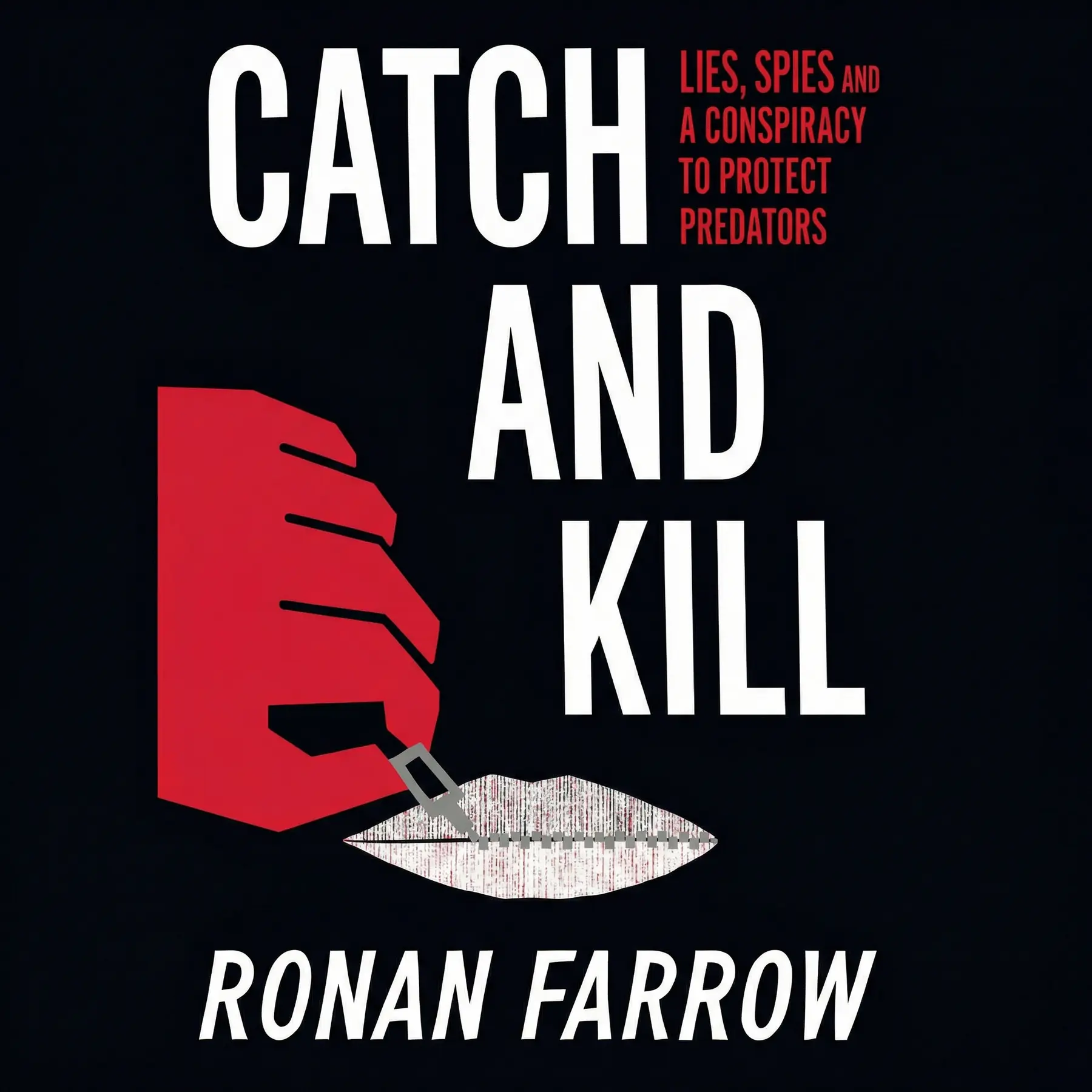
EnglishไทยCatch and Kill: Lies, Spies, and a Conspiracy to Protect Predators
By Ronan Farrow
Ronan Farrow's account of how Harvey Weinstein kept abuse allegations hidden for decades, how NBC shelved the investigation that exposed him, and what that reveals about institutions that protect powerful men.
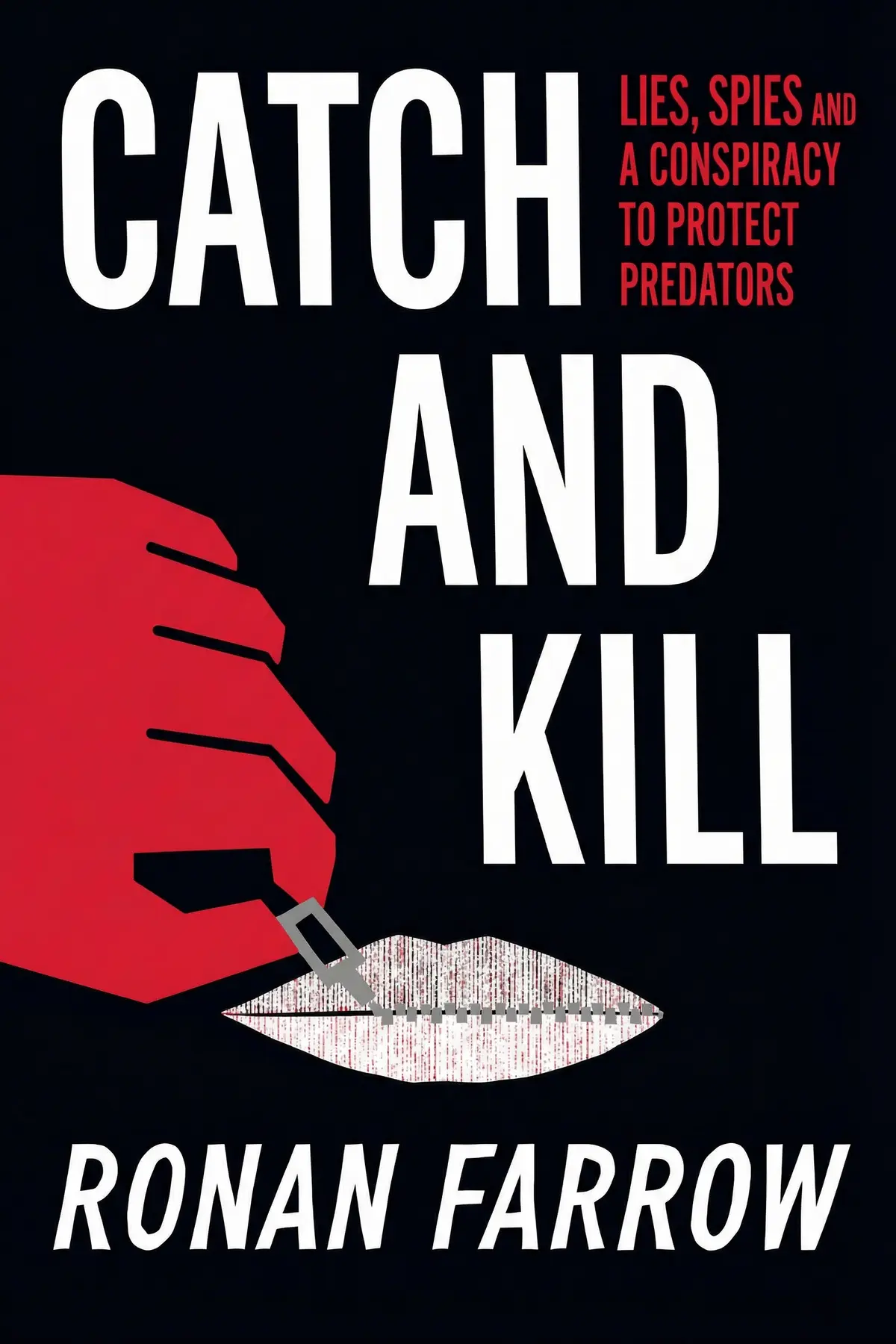
Table of Content
1. Introduction
1 min 00 sec
When a scandal finally breaks, the bitter discovery is usually that plenty of people knew. In Catch and Kill, journalist Ronan Farrow shows why they stayed quiet about Harvey Weinstein: silence had been bought, enforced and protected. For over two decades, rumors trailed the Hollywood producer, yet every reporter who chased them came away without a published story.
Farrow’s 2017 investigation nearly met the same end. Weinstein’s lawyers and fixers pressured it, and then his own employer, NBC, shelved it. His account proves one uncomfortable point. Abuse survives through a machine of contracts, payoffs, smears and favors, and it breaks only when victims’ trust and stacked evidence meet an institution with nothing to hide.
Follow the story and you will learn to see that machine at work in a newsroom, a company or a team. You will also see the patient methods that finally stopped it.
2. Spot the moment a newsroom flinches
1 min 54 sec
A leaked tape about a presidential candidate exposed something awkward about the network that owned it. The way NBC handled that moment hinted at every obstacle Farrow would meet, long before he heard Weinstein’s name.
3. Earn the trust that silenced witnesses need
2 min 02 sec
An actress who had been punished once for speaking up had no reason to trust another reporter. One article Farrow had written about his own family changed her mind, though only partly.
4. See how money and tabloids bury evidence
1 min 51 sec
Police had a recording of Weinstein admitting to groping a model, and still the case collapsed within weeks. The people who visited his office that spring explain how, and one forgotten laptop changes the ending.
5. Turn scattered accounts into an undeniable pattern
1 min 49 sec
A rival magazine had already given up on the story under threats. The reporter it silenced handed Farrow a new name, and her emails held a revealing nickname for anyone who objected.
6. Recognize the stall that kills a story
2 min 03 sec
Farrow’s bosses never told him no. They approved, questioned, paused and redirected, while the man under investigation kept calling. The cost of each delay showed up first with the witness who mattered most.
7. A second outlet can rescue a buried truth
2 min 00 sec
Turned away by his network, Farrow had a tape, a handful of witnesses and a rival paper about to publish first. A forgotten magazine profile and one last source decided where the story landed.
8. Compromised institutions often shield predators to protect themselves
2 min 04 sec
Weeks after the story broke, NBC fired one of its biggest stars and claimed total surprise. Its own employees did not believe it, and an investigator’s tip suggested why Weinstein had found the network so cooperative.
9. Conclusion
1 min 17 sec
Catch and Kill is about a predator, yet its deeper subject is the help a predator needs. Weinstein was protected by people doing ordinary jobs. Lawyers drafted contracts and a tabloid ran smears. Prosecutors dropped a recorded admission. A television network paused, postponed and passed, while its own settlements stayed hidden. Each step could be explained on its own. Combined, they kept two decades of allegations out of the news.
What beat the system was slow and unglamorous. Farrow earned trust from women with every reason to doubt reporters. He protected the evidence they risked so much to share, and he set account beside account until the pattern was undeniable. Then he found an editor and a lawyer unmoved by a threatening letter.
The book leaves you with things to watch for at work. A pause that keeps getting longer is a decision. A carefully worded denial about paperwork may be dodging what people knew. And when someone trusts you with something hard, keep what they give you safe, because the next person may need it.
Ambra Gutierrez saved one copy of a two-minute recording. A great deal followed from that small act of keeping.
About this book
What is this book about?
For more than twenty years, rumors followed Harvey Weinstein, one of the most powerful producers in film. Reporters chased them and never managed to publish. In 2017, Ronan Farrow, then an investigative reporter at NBC, set out to learn why. He found a system built to keep victims silent: nondisclosure agreements, large payoffs, legal threats, tabloid smears and well-placed calls to executives. Farrow tells how he won the trust of women such as Rose McGowan, Ambra Gutierrez, Emily Nestor and Ally Canosa. He describes how a police recording of Weinstein survived a contract that ordered every copy destroyed. He also shows how his own network paused and then dropped the story after repeated contact with Weinstein. He finally published at the New Yorker in October 2017. The book ends with a darker turn. Weeks later NBC fired anchor Matt Lauer, and Farrow learned the network had settlements of its own to protect. Readers learn how institutions shield predators and what it took to break that shield.
Book Information
Who it's for
Curious how misconduct hides
Professionals who want to understand how workplaces hide misconduct and how to spot it early.
Fielding workplace complaints
Team leads and HR staff who receive complaints and must decide what to do with them.
Curious about Weinstein reporting
Readers of investigative journalism curious how the Weinstein story was finally told.
About the Author
Ronan Farrow
Ronan Farrow is an American journalist and lawyer and a contributing writer at the New Yorker. His 2017 reporting on Harvey Weinstein helped the New Yorker win a share of the 2018 Pulitzer Prize for Public Service, awarded jointly with the New York Times. Earlier he was an anchor and reporter at MSNBC and NBC News, and before that he served with the US State Department in Afghanistan and Pakistan. A Yale Law School graduate and a Rhodes Scholar at Oxford, he also wrote War on Peace, a book about American diplomacy.
Ratings & Reviews
Ratings at a glance
What people think
Listeners find the work deeply captivating, noting the superb prose and in-depth observations that offer more information than any other available source. The story is masterfully told, and listeners characterize it as an extraordinary and chilling real-life thriller featuring Ronan’s candid reporting. Opinions on the speed of the narrative are varied, with some finding it moves smoothly while others characterize the flow as remarkably fragmented.
Top reviews
Connor
This is far more than just a piece of journalism; it’s a pulse-pounding account of how the powerful maintain their grip on the narrative. I was struck by the sheer level of detail regarding the surveillance Farrow faced while trying to break the Weinstein story. The inclusion of the Black Cube spies makes the whole thing feel like a high-stakes espionage thriller, yet the terrifying reality is that this actually happened. Farrow’s writing is sharp and his dedication to his sources is evident on every page. It’s an unputdownable book that exposes the rot within major media institutions like NBC. I felt physically tense reading about the 'catch and kill' tactics used to silence survivors. This is essential, frightening, and expertly told.
Show moreBoss
Picked this up on a whim after the headlines died down, but I wasn't prepared for the emotional weight of the survivors' testimonies. Farrow doesn't just report the facts; he honors the bravery of the women who risked everything to speak out against a monster. The way he describes the 'blackmail' culture at AMI and the National Enquirer is absolutely outrageous and eye-opening. You can't make this stuff up—the double agents and secret payoffs feel like a work of fiction, but the trauma is very real. His journalistic integrity shines through, especially when he discusses his sister Dylan. It’s a compelling, fast-paced read that manages to be both a traditional detective story and a heartbreaking social commentary. Truly a crowd favorite for a reason.
Show moreRatthapong
Wow, the sheer level of corruption uncovered in these pages is enough to make your skin crawl. Farrow masterfully illustrates how Weinstein wasn't just one bad actor, but the center of a vast network designed to bind women into submission through NDAs and intimidation. The sections detailing the sting operation with Ambra Battilana Gutierrez were particularly gripping and infuriating. It’s a spine-chilling illustration of what men in power can do when they feel they are owed silence. I finished this in two sittings because the pacing is just electric. This isn't just a book about a scandal; it’s a testament to the courage required to tell the truth when the world's most powerful people want you to stay quiet.
Show moreAkosua
The chapter on the Israeli private intelligence firm felt like it was ripped straight out of a Cold War novel, yet it’s all documented fact. I was blown away by Farrow’s ability to maintain a sense of urgency while juggling so many complex moving parts. He captures the isolation of the victims perfectly, showing how they were bullied and coerced by a system that was never intended to protect them. It’s a blood-curdling look at the unglamorous underbelly of Hollywood. I particularly liked how Farrow was clear about his sources, avoiding the vague claims you see in other tell-all books. This is a rare non-fiction book that manages to be both a meticulous record of events and a genuine page-turner. It’s magnetic, harrowing, and absolutely essential reading.
Show moreWin
As someone who rarely reads non-fiction, I was shocked by how quickly I flew through this 400-page book. It plays out like a cat-and-mouse detective game where the pursuer eventually becomes the one being followed. The revelations about Matt Lauer and the internal culture at NBC were jaw-dropping and honestly quite sickening to process. Farrow manages to give us enough personal insight to care about his journey without ever letting it overshadow the survivors' stories. The pacing is excellent, and the way he connects the dots between different industries shows that this wasn't an isolated incident. It is a phenomenal achievement in reporting. We really did get the bastard in the end, but the cost was staggering.
Show moreAria
Ever wonder how deep the rabbit hole really goes in corporate media? This book provides a chilling answer that will leave you questioning everything you see on the evening news. While the content is undeniably phenomenal, I did find the pacing to be slightly disjointed in the middle sections when the focus shifts heavily to the internal politics at NBC. To be fair, those details are necessary to understand the scope of the cover-up, but they occasionally slowed down the momentum of the investigative trail. Farrow’s honest reporting and his ability to weave his own family history into the narrative added a layer of vulnerability I didn't expect. It is a detailed insight into a broken system that desperately needed this level of exposure.
Show morePaisley
After hearing Ronan Farrow on several podcasts, I thought I knew the whole story, but the book offers so much more than the headlines. The depth of the 'catch and kill' system is way more extensive than I realized, involving everyone from tabloid editors to former Mossad agents. Truth is, the most shocking part isn't even Weinstein himself, but the way NBC executives seemingly tried to swat the story away to protect their own interests. My only minor gripe is that some of the personal anecdotes felt a bit detached from the main investigation, though they do help humanize the author. Overall, it’s a phenomenal piece of investigative journalism that reads like a dark, unnerving spy novel. Highly recommended for anyone interested in the intersection of power and media.
Show moreKiattisak
Frankly, it’s a miracle this story ever saw the light of day considering the massive forces working to bury it. Farrow’s journey from a network correspondent to a whistleblower in his own right is fascinating. The book does a great job of highlighting the psychological toll this took on everyone involved, especially the women who had been holding their breath for decades. I did find some of the descriptions of the corporate legal battles a bit dry compared to the 'spies and surveillance' chapters, but they are crucial for context. The writing is crisp and the author’s voice is earnest throughout. It’s a frighteningly detailed account of manipulation and blackmail that everyone should read to understand why the MeToo movement was so necessary.
Show moreWissanu
Finally got around to reading this and I’m still processing the gut-punch of those final chapters. The level of trauma these women had to face while being smeared by high-priced lawyers like Lisa Bloom is just infuriating. Farrow’s approach shows a lot of journalistic integrity, particularly in how he handles the sensitive information regarding his own family. Gotta say, the book is quite disjointed in parts because there are just so many names and sub-plots to keep track of, but the core message is never lost. It’s a razor-sharp look at a closed-house culture that was finally forced to open its doors. A bit frightening to realize how easily the truth can be suppressed with enough money and the right connections.
Show moreNew
Look, the reporting here is undeniably important and the work Farrow did took immense guts, but the narrative structure felt a bit messy to me. At times, the constant jumping between different legal threats, spy subplots, and various media executives became difficult to track without taking notes. It’s a frighteningly wide cover-up, yet the prose occasionally gets bogged down in the minutiae of every single phone call and meeting. I appreciate the transparency and the detailed insights into how these stories are suppressed, but the book could have used a tighter edit to maintain the 'thriller' energy it promises. It is an honest look at a disgusting industry, though I found the experience more exhausting than engaging by the final third.
Show moreQuestions about this book
What is Catch and Kill by Ronan Farrow about?
It tells how Farrow investigated sexual abuse allegations against Harvey Weinstein in 2017 while working at NBC. He gathered testimony from Rose McGowan, Emily Nestor and Ally Canosa, and a police recording made with Ambra Gutierrez. NBC paused and then dropped the story, so he published it at the New Yorker in October 2017. The book also explores why NBC backed away, pointing to its own handling of complaints about anchor Matt Lauer.
Why did NBC refuse to air Farrow's Weinstein story?
Officially, executive Noah Oppenheim questioned whether the story was news. He then cited a possible conflict of interest and worries about how Farrow would be seen, even though NBC’s own lawyer had approved the script. Farrow documents no fewer than 15 conversations involving Weinstein and top NBC staffers. He also learned that NBC had arranged at least seven nondisclosure agreements after 2011, some involving Lauer, which Weinstein reportedly claimed he could expose. NBC denies receiving any threat.
How did Harvey Weinstein keep his victims silent?
Farrow describes several tools: nondisclosure agreements, large payoffs, formal legal threats and informal threats to careers. When the model Ambra Gutierrez went to police, the National Enquirer’s leaders worked with Weinstein’s team. Coverage turned against her, and prosecutors dropped the case. She then signed an agreement for $1,000,000 that required her to destroy the recording, though she secretly kept a copy.
What lessons does Catch and Kill offer readers outside journalism?
The book shows how misconduct survives when every complaint is handled alone, and how written records and separate witnesses turn single accounts into a pattern. It also warns that delays, referrals upstairs and shifting reasons can end an investigation as surely as a refusal. And it suggests asking what an organization itself stands to lose before trusting it to handle abuse honestly.
Readers also enjoyed

All About Love: New Visions
bell hooks


A Promised Land
Barack Obama

A River in Darkness: One Man’s Escape from North Korea
Masaji Ishikawa

A Theory of Justice
John Rawls



A Warning
Miles Taylor

AUDIO SUMMARY AVAILABLE
Listen to Catch and Kill in 15 minutes
Get the key ideas from Catch and Kill by Ronan Farrow, plus 5,000+ more nonfiction titles.
- 5,000+ titles
- Listen as much as you want
- 7-day free trial
- Cancel anytime









