

59 Seconds: Change Your Life in Under a Minute
Richard Wiseman
 English
Shows how to turn big plans for learning, work, money and legacy into real progress: study the way you learn, choose work that fits you, invest steadily and build daily systems that keep you consistent.
57 sec
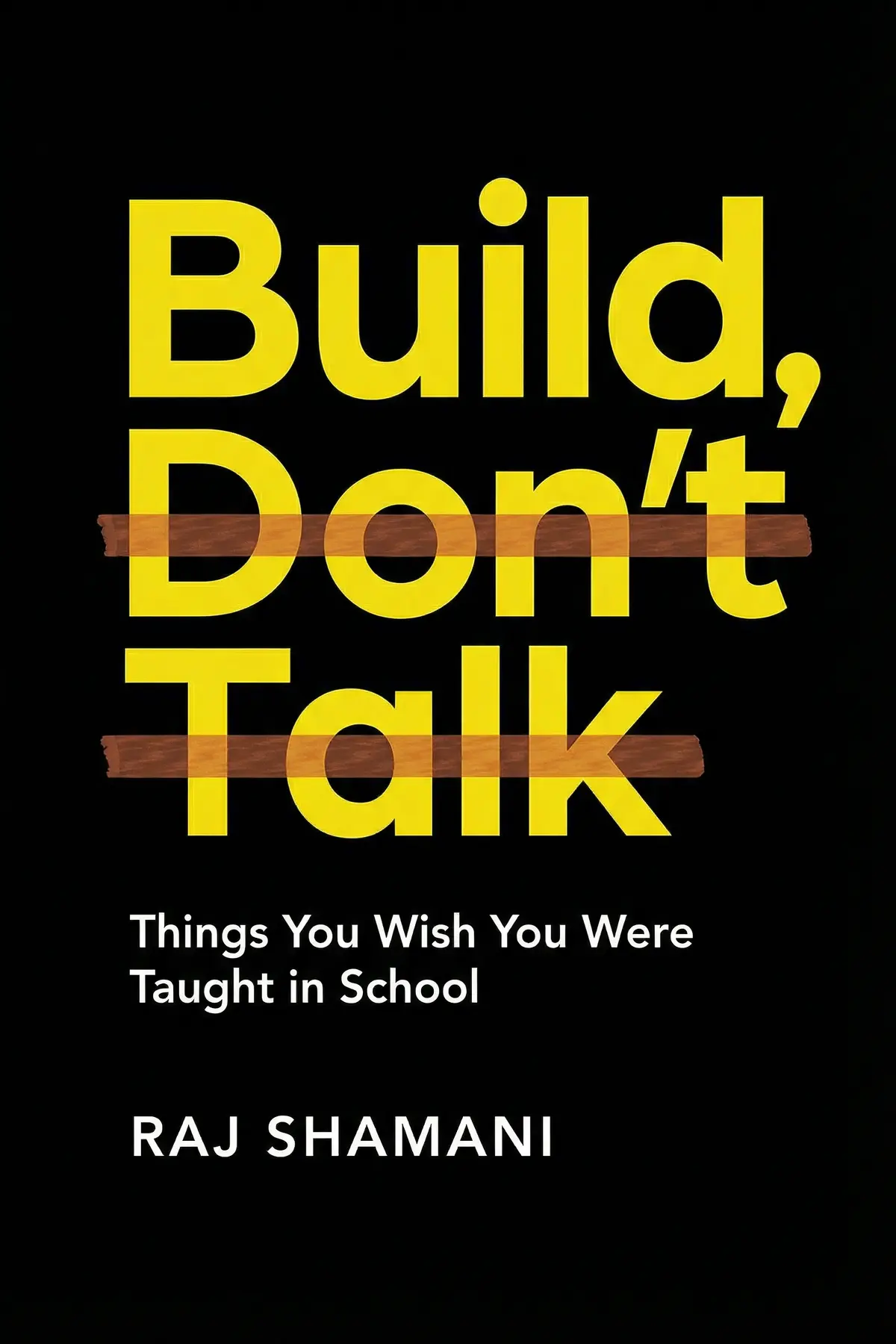
Most people can describe the life they want far more easily than the first step toward it. In Build, Don’t Talk, Indian entrepreneur and podcast host Raj Shamani argues that the gap between dreaming and doing closes through small, repeated actions rather than grand announcements. His first point is about learning, and it comes as a relief: if a skill refuses to stick, the method may be the problem, and a method can be changed.
Shamani covers four areas that school rarely teaches: how to learn, how to build work that fits you, how to grow money, and how to leave something lasting. One idea runs through all of them. Big goals are reached by honest, steady steps that match who you actually are.
What follows is a set of tests you can try this week, on the way you study, the work you choose, the money you set aside and the habits you keep.
1 min 53 sec
Hours of study that leave you lost may say nothing about your ability. Shamani points to a mismatch most schools never mention, and to an honest habit that saves time on skills you will never need.
1 min 43 sec
Career advice often hides a rule that there is one right way to succeed. Shamani throws it out, then offers a simple sequence for finding a business idea that starts somewhere most people skip.
1 min 40 sec
Posting constantly at whatever length the algorithm seems to like feels like the safe bet. Shamani suggests a different rule for content, and a reason why depth in a single area can pay several times over.
1 min 46 sec
Plenty of people work long hours and still live from paycheck to paycheck. Shamani traces the problem to a role most of us play without noticing, and to a ceiling that hard work alone cannot break.
1 min 47 sec
Announcing a goal feels like progress, which is exactly what makes it dangerous. Shamani explains what actually carries people forward when events push them off course, and why your personal brand is already finished.
1 min 02 sec
The title of Shamani’s book carries its whole argument in three words. Learning, work, money and legacy look like four separate subjects, but in his telling they stall for the same reason. People talk about the destination and skip the daily route, or they copy a route designed for someone else.
His alternative starts with self-knowledge. It asks you to see how your own mind learns, to admit where you are weak, and to choose work and investments that suit your temperament instead of someone else’s ambitions. Then it asks for something less glamorous: systems that make showing up automatic, so progress keeps going on the days when motivation does not.
If you take one thing into the week, make it this. Find the goal you keep announcing and shrink it to an action small enough to do tomorrow, then do it again the day after. Let a fixed share of your income start growing quietly in the background while you do.
Shamani is betting that ordinary people who keep building will, in time, pass gifted people who keep talking.
Most people can describe the life they want far more easily than they can name the first step toward it. They want to learn faster, build work that feels like their own, stop living from one paycheck to the next and leave something behind that matters. Raj Shamani, an Indian entrepreneur and podcast host, argues that school rarely teaches any of this, and that the missing piece is almost never a bigger goal. His answer is a practical one. Progress comes from small, repeated actions shaped around your own nature. That means learning in the way your mind actually absorbs ideas and being honest about your weak spots. It means choosing between running a business and holding a steady job by what suits you, then studying your audience before selling to them. In money, it means moving from consumer to producer and letting savings compound in investments that match your comfort with risk. Readers get a set of plain tests and habits covering four areas of life, plus a closing argument that will reassure anyone who doubts their talent. Consistency, Shamani holds, lets ordinary people overtake gifted ones.
Students and young professionals who feel school skipped the lessons on learning, money and careers.
People weighing a business of their own against a steady job and unsure which fits them.
Anyone who sets big goals each year and wants daily systems that actually move them forward.
Raj Shamani is an Indian entrepreneur, born in 1997, who hosts the business podcast Figuring Out with Raj Shamani. Forbes included him among India's Top 100 Digital Stars, and Asian Age placed him on its Top 10 list of young Indian entrepreneurs. He has spoken at the United Nations and is counted among the youngest Indians to have done so.

Listeners observe that while views differ on whether the content is too basic for veteran entrepreneurs, many value the direct and approachable nature of the writing. They appreciate the focus on practical life skills like financial literacy and social media growth, which are often absent from standard schooling. Additionally, they highlight the motivational effect of the book, with one listener remarking that the stress on establishing consistent habits is particularly useful for people who have trouble moving past the brainstorming stage. Many also view the text as a superb primer for novices, with another listener noting the benefit of the summarized key takeaways provided at the conclusion of every chapter.
The chapter on '30 seconds of courage' alone made the purchase worth it for me. I’ve always struggled with social anxiety when it comes to networking, but Raj breaks down communication into such simple, actionable steps that it feels doable. Truth is, our education system fails to teach us about money or how to actually talk to people, and this book fills that gap perfectly. It’s written in very simple English, so even if you aren't a big reader, you won't feel intimidated. I loved the emphasis on consistency over raw talent. Most people stop when things get uncomfortable, but this book pushes you to keep going. It’s a must-read for anyone in their early 20s trying to figure out their path in this chaotic digital economy.
Show moreAs a college student, this book feels like the curriculum I actually needed instead of the outdated theories we get in class. Raj speaks the language of our generation. He doesn't sugarcoat the fact that life is brutal and that nobody owes you anything. I’ve started implementing his habit of focusing on daily processes rather than just distant goals, and I can already see a shift in my productivity. The advice on being a producer instead of a consumer is a game-changer for how I view social media now. It’s not just about scrolling; it’s about leveraging the platform to create value. I’ve recommended this to all my friends who are feeling lost about their careers. Truly a transformative read for the youth.
Show moreWow, it's rare to find a non-fiction book that cuts through the fluff as quickly as this one does. The 'Build, Don't Talk' philosophy is exactly what I needed to hear to stop overthinking my side project. Raj reminds us that embarrassment is often the only thing holding us back from success. The book is packed with practical wisdom that you can apply the second you put it down. Whether it’s how to handle a negative situation with a positive statement or how to monetize a niche skill, the advice is gold. It’s refreshing to see an Indian creator producing such high-quality, actionable content in book form. Don't listen to the haters; if you actually apply what’s in here, you’ll see results.
Show morePicked this up because I’ve been following Raj’s podcast for a while and wanted to see if his writing carried the same energy. To be fair, the advice isn't ground-breaking for anyone who has already read a dozen self-help books, but the way it's delivered is incredibly punchy. He focuses heavily on the 'hustle' aspect, which might turn some people off, but I found his honesty about making money quite refreshing. The short chapters make it a breeze to get through in a single weekend. I especially liked the sections on building a personal brand and why being a producer matters more than being a consumer. It’s a solid 4 stars for me because while it lacks deep academic rigor, it makes up for it in sheer practicality and relatability for the younger Indian demographic.
Show moreFinally got around to reading this after seeing it all over my Instagram feed. What I liked most was Raj’s take on the 'power shift' during negotiations. It’s a subtle tactic but one that works wonders in real-life scenarios. The book unapologetically promotes a hard-working culture, which I know isn't trendy right now with all the talk about work-life balance, but it’s practical. My only minor complaint is that some sections on content creation felt a bit dragged out compared to the financial advice. Still, the breakdown of his seven sources of income was genuinely inspiring. It’s rare to see an Indian author speak so openly about their earnings and the grit required to get there. Definitely worth a read for the motivation boost.
Show moreLook, if you're looking for a deep dive into corporate finance or a 500-page academic thesis, move on. This book is a quick, dirty guide to surviving the modern world. I personally enjoyed the bluntness of the prose. Raj doesn't waste time with flowery language; he gets straight to the point. The section on why you should run away from negative people resonated with me deeply. Sometimes you just need someone to tell you that it's okay to fail as long as you're learning. I did find a few chapters to be a bit repetitive, especially when he keeps coming back to the 'start before you're ready' theme, but the core message is solid. It’s a great gift for a younger sibling who needs a bit of direction.
Show moreAfter hearing Raj talk about his FMCG journey on various platforms, I wanted to see if the book offered more specific details. It does provide some neat insights into consumer behavior in India, particularly why we are so price-sensitive. The 'Rule of 4Ws' for communication is something I've started using in my office meetings, and it actually helps in making people feel more comfortable. My experience with the book was mostly positive, though I felt the investment tips were a bit too basic for anyone who already has a Demat account. Regardless, the mindset shift it encourages is valuable. It’s about building systems that force you to be consistent. If you struggle with discipline, this book provides a good kickstart.
Show moreTo be fair, the advice here isn't revolutionary, but it is incredibly accessible for someone just starting their self-improvement journey. I appreciated the summaries at the end of each chapter because they allow you to revisit the core message without re-reading the whole thing. However, I found the tone a bit too 'influencer-heavy' at times. It felt like I was reading a very long Twitter thread rather than a cohesive book. Not gonna lie, I expected a bit more depth regarding his actual business failures. It’s a decent entry-level guide for beginners, but if you’ve already read the likes of Atomic Habits or Rich Dad Poor Dad, you might find this a bit repetitive. It sits right in the middle for me—good, but not great.
Show moreIs this really a 'Book of Wisdom' or just a collection of viral reels transcribed onto paper? Frankly, the writing feels a bit juvenile and I suspect it was heavily ghostwritten to match a specific social media persona. My biggest gripe is that the business advice feels very surface-level. If you want to be a YouTuber, sure, there are some decent tips here. But if you’re trying to build a scalable, traditional business, Shamani’s examples about the FMCG industry lack the depth of actual experience. It feels like he is talking at you rather than teaching you. Some points are just flat-out clichés we’ve heard a thousand times before. I gave it two stars only because the layout is clean and the summary points at the end are somewhat useful for a quick glance.
Show moreNot what I expected from someone who talks to the biggest names in business every week on his show. I honestly don't understand who this book is intended for. The examples provided often feel unrelated to the core message and show a lack of real-world corporate or startup experience. It seems Shamani believes that being a successful influencer is the same as being a business mogul, but they are two very different worlds. The book is filled with 'hustle' tropes that can be quite enraging if you're looking for actual strategy. It’s basically a compilation of motivational quotes stitched together with thin anecdotes. If you want to learn about building a YouTube channel, maybe it's for you. For entrepreneurs? Look elsewhere. Total waste of time and money.
Show moreShamani argues that big goals in learning, career, money and legacy are reached through small, consistent actions that fit your own nature, not by announcing plans. He covers how to learn in the way your mind works, how to choose between running a business and holding a job, how to grow wealth by producing and investing, and how daily systems build a lasting reputation.
It suits students and young professionals who feel school left out practical lessons, people deciding whether to start their own business, and anyone stuck in a cycle of setting goals without following through. Its advice is broad and simple, covering learning methods, finding a business idea, investing in line with your risk comfort and building consistent habits.
He recommends moving from consumer to producer, creating something of value that others might pay for. Because income tied to hours has a ceiling, he advises investing part of every earning in options such as mutual funds, equities or personal ventures so it can compound. He warns against following trends, urges learning how markets work first, and suggests matching investments to your temperament.
Start by noticing whether you learn best by discussing, reading or doing, and plan study around that. If you are considering a business, spend time watching the people you would serve and note their worries. Set a fixed share of income to invest. Finally, take one goal you keep talking about and attach it to a small daily system with a set time and place.
Less than consistency, in his view. He argues that someone who does not feel naturally gifted can overtake more talented people by showing up regularly and improving a little at a time, because steady effort compounds skill, reputation and impact. He also holds that everyone already has a unique mix of values and experiences, so a personal brand is about revealing yourself, not reinventing yourself.
Richard Wiseman





William B. Irvine


Andrew D. Thompson


Deepak Chopra
AUDIO SUMMARY AVAILABLE
Get the key ideas from Build, Don’t Talk by Raj Shamani, plus 5,000+ more nonfiction titles.









