



14 min 44 sec
Available in: English
Bringing Up the Boss: Practical Lessons for New Managers
Rachel Pacheco gives first-time managers concrete habits for the hard parts of the job: setting expectations, giving feedback, coaching, motivating different people, making work meaningful, hiring and letting go, and handling their own new authority.
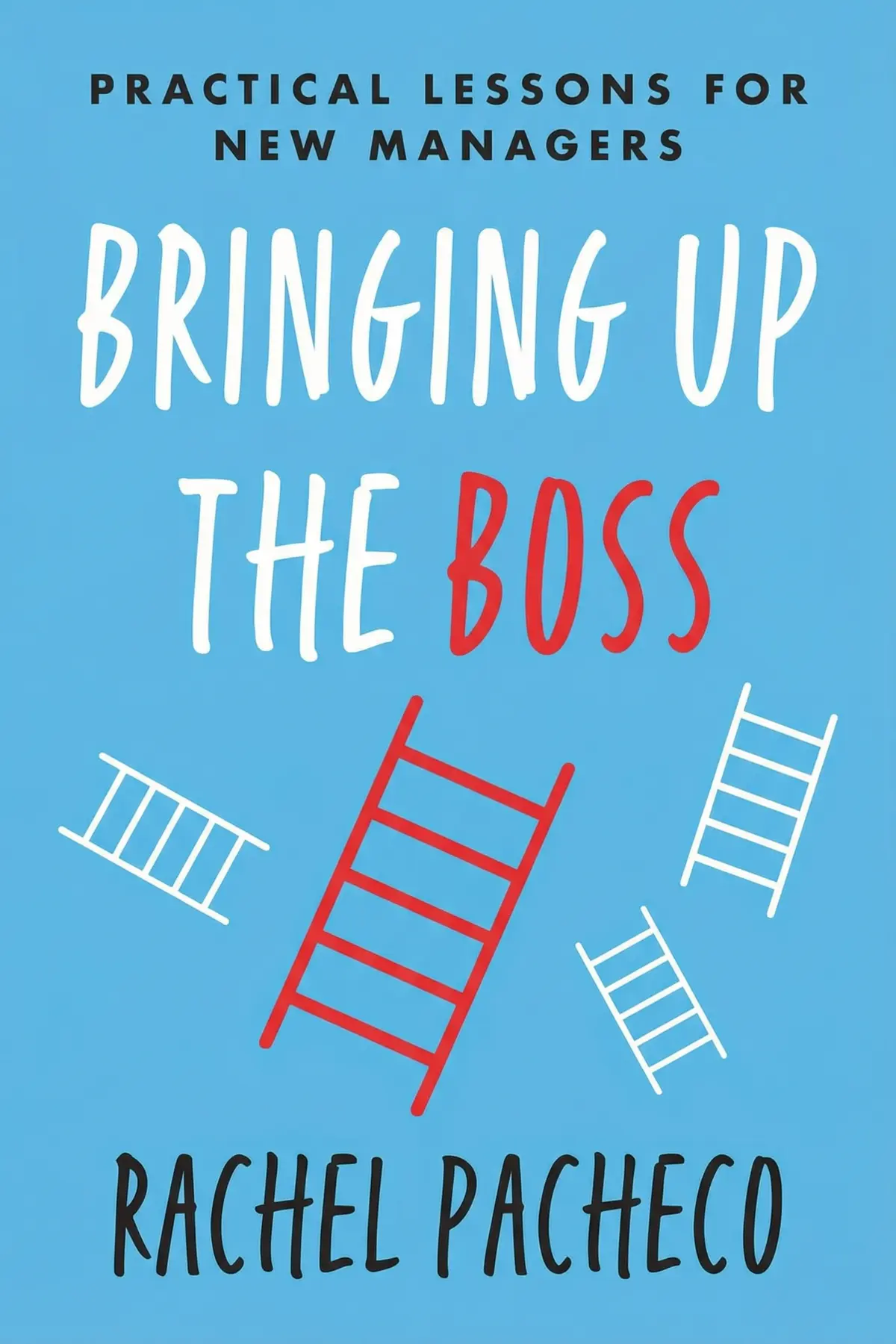
Table of Content
1. Introduction
1 min 06 sec
Most new managers got the job because they were good at something else, and then discover that doing the work and getting it done through people are separate skills. In Bringing Up the Boss, Georgetown management professor and former Chief People Officer Rachel Pacheco treats that second skill as something you can learn, one conversation at a time. Her first lesson is plain: trouble with a struggling employee usually starts before the trouble, at the moment nobody said clearly what good work looks like.
That lesson sets the pattern for the rest. Pacheco argues that good management rests on a handful of deliberate habits, applied at three levels: the person in front of you, the team around you, and you in the middle. Clear expectations, two-way feedback, coaching questions, tailored motivation and meaningful work handle the first two. Honesty about your own new power handles the third. Expect a working toolkit for your first hard conversation, your first hire and the first time someone calls you their boss.
2. Tell people exactly what good work looks like
1 min 33 sec
A new manager sits down with a struggling employee, and the talk goes badly. The deeper mistake was never making clear what Michael was expected to do, or offering him constructive feedback along the way.
3. Make feedback a habit that runs both ways
1 min 48 sec
Most managers save their comments for review season or avoid them because they feel awkward. Pacheco’s alternative asks something uncomfortable of the boss too, and it changes how the whole team talks.
4. Coach with questions and let the silence work
1 min 30 sec
When a team member brings you a problem you already know how to solve, the generous move seems obvious. Pacheco argues it often holds people back, and offers a harder habit in its place.
5. Match each person to what drives them
2 min 07 sec
One pep talk rarely lands with a whole team, and a bonus can backfire in ways managers do not expect. Pacheco explains what really keeps different people working hard, including the surprising role of fairness.
6. Give every role its own tire to drag
1 min 56 sec
A depressed dog in South Africa recovered after being handed something oddly simple. Pacheco uses that story to show what people actually need from their jobs, and how managers can build it in.
7. Build a team from first interview to last day
1 min 49 sec
Every hire, welcome and departure leaves a mark on the people who stay. Pacheco’s advice begins with a small private notebook and ends with how you say goodbye.
8. Lead yourself, your friends and your own boss
1 min 43 sec
The first time a colleague introduces you as their boss, something shifts. Pacheco explains what changes in that moment, and how to handle friends, superiors and your own ambitions afterward.
9. Conclusion
1 min 12 sec
The title carries the book’s real idea. Managers are brought up, much as children are, through practice, error and repair. Nobody starts out knowing how to hold the hard talk with Michael. Pacheco’s case is that the talk can be learned, and that the same few habits serve the employee, the team and the manager.
What ties those habits together is attention to the specific person. A clear standard, a prompt comment, a question left hanging in silence, a driver matched, a role reshaped: each works because it starts from what this one person needs. Managing yourself follows the same rule, since you are one of the people whose needs count.
If you carry one practice into next week, make it the clear expectation: goal, quality and deadline, stated before the work begins. Swap one answer in your next one-to-one for a question. And keep the never-again journal, because the mistakes will come anyway, and writing them down is how they turn into skill.
The dog in South Africa did not need a lecture. It needed a tire worth dragging, and so does everyone on your team.
About this book
What is this book about?
Many people become managers because they were excellent at their old job, then discover that leading people is a different skill altogether. The first hard conversation goes badly, the expectations were never spoken, and nobody explained how to manage a friend who used to sit at the next desk. Rachel Pacheco, who teaches management at Georgetown and once worked as a Chief People Officer, treats that skill as something you can practice and improve. She organizes it at three levels. With the individual, the work is clear expectations, prompt two-way feedback, coaching through questions and structured improvement plans. With the team, it is motivation matched to each person's drivers, roles designed for daily meaning, careful hiring, warm onboarding, respectful exits and healthy conflict. With yourself, it is balancing confidence and vulnerability, handling new power over friends, managing your own boss and keeping your career in view. Readers get a practical toolkit for the moments that trip up new bosses, along with a calmer view of the mistakes that come with learning the role.
Book Information
Who it's for
First-time managers
Top performers recently promoted who now manage people for the first time.
Managing friends and peers
Managers leading friends or former peers who feel unsure how to give feedback or set expectations.
Guiding new bosses
Team leads and trainers looking for practical habits to pass on to new bosses.
About the Author
Rachel Pacheco
Rachel Pacheco teaches management at Georgetown University's McDonough School of Business and previously held a management faculty post at the Wharton School. She is a former Chief People Officer and has sat on boards and advisory boards for start-ups and fast-growing organizations. She was a founding faculty member of an entrepreneurship education initiative at the University of Pennsylvania. Her degrees include a BS in Mathematics from Georgetown and an MBA, MPhil and PhD from Wharton. She also wrote Manage What Matters.
Ratings & Reviews
Ratings at a glance
What people think
Listeners find this management book extremely engaging and accessible, with one review mentioning its straightforward explanations of research-derived guidance. Furthermore, the text is relatable and grounded in research while remaining quite insightful. They value its utility; one listener points to the practical techniques it offers, while another says it changes the atmosphere at work. Also, the author’s witty style makes for an enjoyable experience.
Top reviews
William
Wow. This is exactly what I needed after being thrown into a lead role without any formal guidance or mentorship from my company. Pacheco manages to take these incredibly dense, academic management theories and translate them into something that actually makes sense on a Tuesday morning at the office. The illustrations and cartoons aren't just for show; they actually help anchor the concepts so you remember them when a crisis hits. I particularly loved the section on "managing up" because it’s a skill we all need but rarely talk about openly. While some might find the tone a bit too casual, for me, it felt like getting advice from a brilliant friend who actually understands the modern workplace. It’s practical, grounded in real data, and surprisingly fun to get through during a busy week.
Show moreZoey
Ever wonder why some teams just click while others are a total disaster? This book pulls back the curtain on the psychology of management without making you feel like you're sitting through a dry university lecture. I’ve been following Rachel’s content for a while, and seeing her insights compiled into such a cohesive guide is fantastic for any professional. The advice on handling difficult conversations with former peers—now direct reports—is worth the price of the book alone. It’s hard to find business books that are both data-driven and genuinely humorous, but this one strikes that balance perfectly. My only tiny gripe is that I wish there were even more templates for the performance reviews mentioned. Still, it’s an essential resource for anyone who cares about being a decent human being while also hitting their quarterly targets.
Show morePui
As a middle manager who has been in the game for over a decade, I didn’t think I’d learn much from another primer, but I was wrong. Frankly, I had developed some pretty stale habits over the years that needed to be dismantled and replaced with more modern approaches to soft skills. Pacheco's breezy writing style makes it an easy read, though at times I felt the humor slightly overshadowed the depth of the research she was citing. The focus on empathy and clear communication is a breath of fresh air compared to the old-school "command and control" style of leadership. It’s organized beautifully into bite-sized morsels that make it easy to refer back to when you’re preparing for a tough one-on-one meeting. If you feel like your management style has become a bit robotic lately, this will definitely help you reconnect with your team.
Show moreIsaiah
Finally got around to reading this after seeing it all over my LinkedIn feed, and it mostly lived up to the hype surrounding it. The layout is incredibly user-friendly, using tables and graphs to break up the text, which is great for those of us who don't have hours to spend reading. I appreciate how the author focuses on the "human" element of the job, especially when it comes to motivating people who might be struggling. While some of the strategies felt a little basic for seasoned execs, the section on unlearning bad behaviors was a much-needed reality check for me. It’s the kind of book you keep on your desk to flip through before you have a difficult talk with your own boss. Not every joke landed for me, but the tactical advice is solid enough to ignore the occasional cheesy pun.
Show moreFinn
The chapter on managing friends was the highlight for me because that transition is always awkward and poorly handled in most corporate environments. Rachel Pacheco has a way of cutting through the nonsense and giving you scripts and frameworks that you can actually use in real life. It’s refreshing to see a management book that acknowledges how messy and emotional the workplace can actually be. To be fair, some of the charts felt a bit repetitive after a while, but the overall message of "bringing up the boss" is clear and effective. It’s more of a guidebook than a manifesto, which I think is exactly what new managers need when they’re feeling overwhelmed. I've already recommended it to a few of my colleagues who are struggling with their team dynamics.
Show moreGin
After hearing so much buzz about Pacheco's blog, I had to see if her book lived up to the reputation. This is a remarkably effective primer that transforms complex workplace environments into navigable maps. The writing is snappy and the research-based advice is presented with such simplicity that you can apply it almost immediately. I found the section on handling uncomfortable situations especially insightful, as it provides a clear path forward when you're feeling stuck. My only criticism is that the focus is very heavy on the early-stage management experience, leaving a bit to be desired for those at the director level. However, the humorous approach makes even the most dry topics digestible. It’s a great addition to any office library, specifically for those looking to polish their interpersonal leadership skills.
Show moreUdom
Truth is, I had high expectations given the author’s background, but this felt like a bit of a mixed bag for my specific needs. If you are a brand new manager with zero training, this will be an absolute lifesaver that covers all the necessary bases from A to Z. However, for those who have already read the "classics" of the management genre, a lot of this might feel like a repackaged version of things you already know. The writing is definitely entertaining and the research is sound, but I was hoping for more advanced strategies on scaling larger organizations. It’s a great primer, but maybe not the deep dive I was looking for at this stage of my career. That being said, the sections on emotional intelligence are quite insightful and worth a quick skim.
Show moreNattapong
Picked this up during a promotion transition, and while it’s a decent resource, it didn't quite blow me away like I hoped it would. The breezy and informal tone is a double-edged sword; it makes it very readable, but sometimes it feels like it lacks the gravitas of a serious management text. I did find the charts and cartoons helpful for visualizing some of the trickier concepts regarding team motivation. Not gonna lie, I found myself skipping over some of the longer anecdotes to get to the actual actionable tips hidden in the text. It’s a solid 3-star read that serves its purpose as a basic introduction to management for people in startups. It’s good for a quick reference, but I probably won’t be re-reading the whole thing anytime soon.
Show moreChloe
Look, finding a management book that isn't soul-crushingly boring is a win in itself, and Pacheco definitely succeeds there. The book is grounded in research, which I appreciate, but at times the "hip" writing style felt like it was trying a little too hard to be relatable. It’s definitely a useful tool for anyone who feels lost in their new leadership role, especially with the practical advice on "managing up." I would have liked more focus on technical management rather than just the soft skills, as that’s where my team usually struggles with performance. It’s a quick read, and you can finish it in a few sittings, which is a plus for any busy professional. It's a fine addition to the shelf, just not the revolutionary text I was led to believe it was.
Show moreJiraporn
Personally, I think the buzz around this one might be a bit overstated for anyone who isn't a total novice in the corporate world. While the research-based advice is presented in a way that is easy to understand, the actionable strategies felt a bit too elementary for my needs. I found the "managing up" section to be the only truly relevant part, as that's a hurdle regardless of tenure. My main critique is that the book spends a lot of time on the absolute basics of communication that really should be common sense at this stage. It’s an entertaining read that doesn’t take itself too seriously, but I was expecting much more depth given the price point and the glowing recommendations. It might transform a workplace for a brand new intern, but for a seasoned pro, it's largely things you've heard a dozen times before.
Show moreQuestions about this book
What is Bringing Up the Boss about?
Rachel Pacheco’s book is a practical guide for new managers. She argues that managing people is a separate skill from doing the work, and that it can be learned. She organizes it at three levels: managing an individual through expectations, feedback and coaching; managing a team through motivation, meaningful work, hiring, exits and conflict; and managing yourself, including your new power, your boss and your career.
Who should read Bringing Up the Boss?
It suits people who have just stepped into management, especially strong individual performers who were promoted and found the job harder than expected. It also helps anyone managing friends or former peers, and team leads who coach new managers. The advice is concrete, from how to set expectations before a task to how to handle an employee’s departure with respect.
How does Rachel Pacheco suggest coaching employees?
Pacheco describes coaching as moving from telling to asking. Instead of handing over solutions, the manager asks open-ended questions, listens closely, lets silences last so the person can think, and resists offering an answer. The aim is for team members to reach their own conclusions, which builds their problem-solving ability, their sense of ownership and trust between them and the manager.
What does the book say about motivating a team?
Pacheco argues that people are driven differently. Achievers respond to clear milestones and feedback, power-driven people to ownership of projects, and affiliation-driven people to inclusion and strong relationships. Goals should be demanding but reachable, specific and dated. On pay, she says fairness matters more than the amount, and losing expected pay hurts more than a bonus pleases. Promotions should bring real new responsibility.
How can I apply Bringing Up the Boss right away?
Start by stating the goal, the expected quality and the deadline before handing over any task. Give specific feedback soon after events, and ask your team for feedback on your own management. Check each role for skill variety, a complete piece of work, significance, autonomy and feedback. And keep a never-again journal recording what your mistakes taught you.
Readers also enjoyed


A Year with Peter Drucker: 52 Weeks of Coaching for Leadership Effectiveness
Joseph A. Maciariello



Acting with Power: Why We Are More Powerful Than We Believe
Deborah Gruenfeld

All In: How Great Leaders Build Unstoppable Teams
Mike Michalowicz



7 Powers: The Foundations of Business Strategy
Hamilton Helmer
AUDIO SUMMARY AVAILABLE
Listen to Bringing Up the Boss in 15 minutes
Get the key ideas from Bringing Up the Boss by Rachel Pacheco, plus 5,000+ more nonfiction titles.
- 5,000+ titles
- Listen as much as you want
- 7-day free trial
- Cancel anytime









