


14 min 09 sec
Available in: English
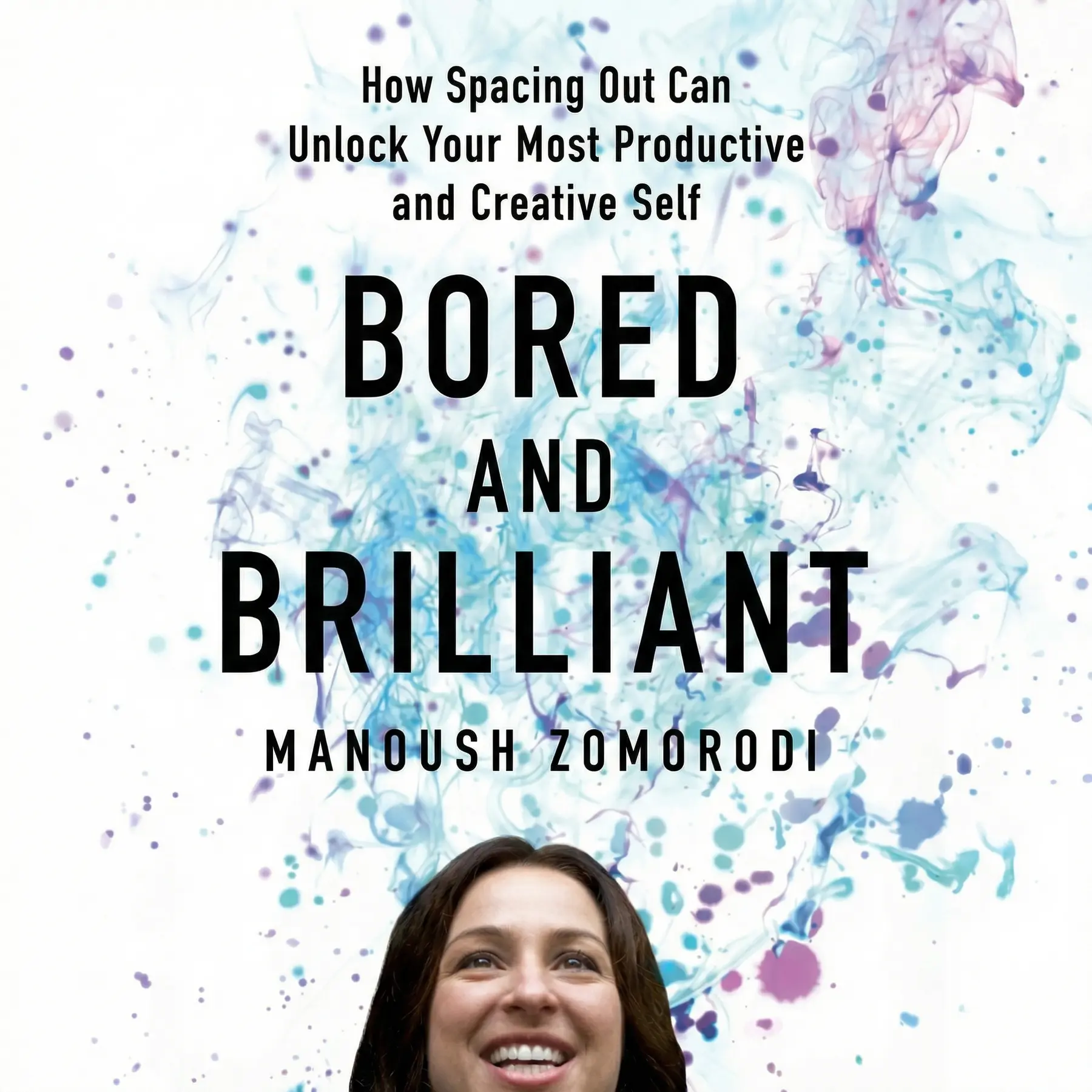
Bored and Brilliant: How Spacing Out Can Unlock Your Most Productive and Creative Self
Shows why boredom is the state where creative ideas form, how phones and apps are designed to erase it, and how a seven-day challenge can rebuild healthier habits for you and your kids.
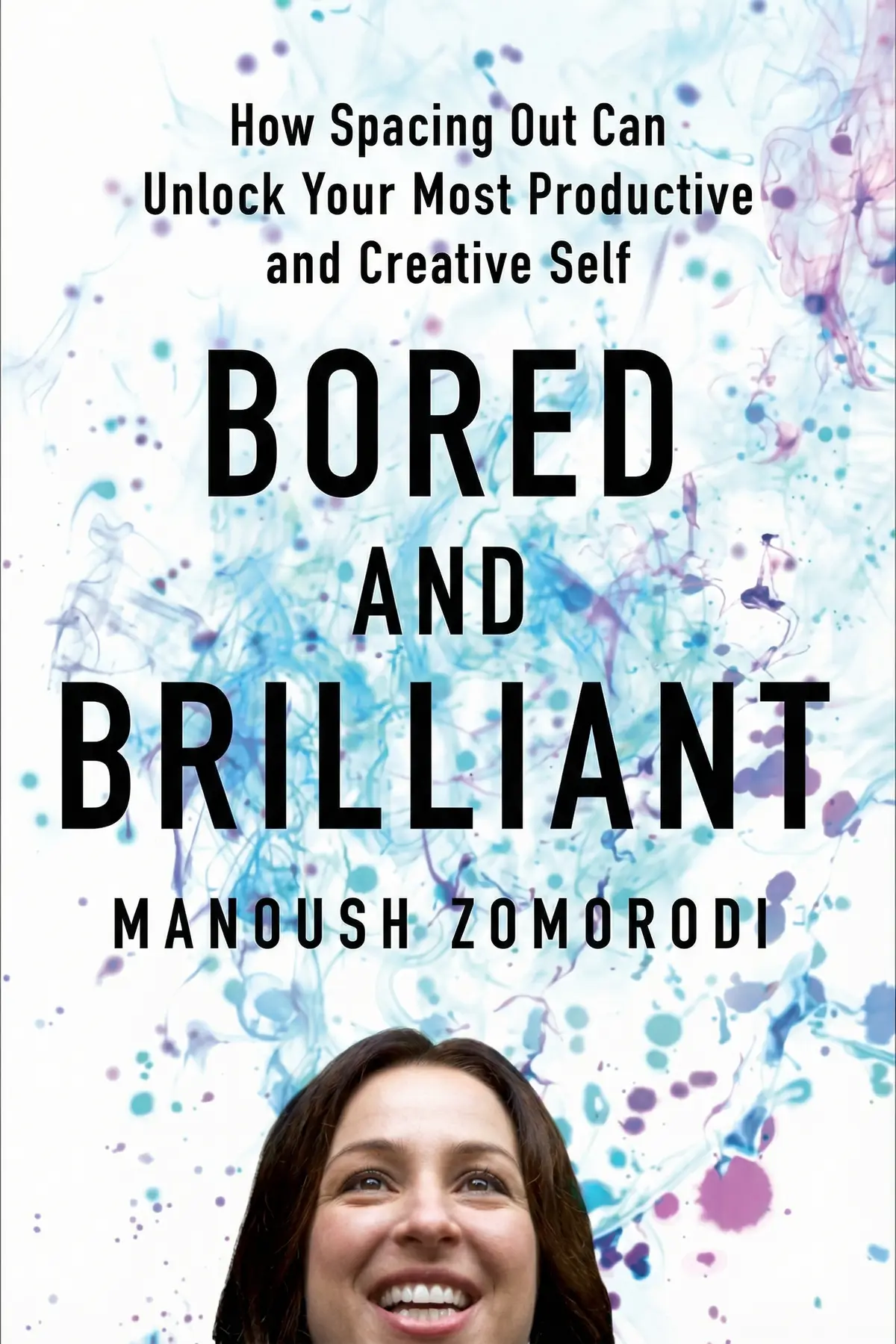
Table of Content
1. Introduction
1 min 03 sec
If your phone fills every spare minute, you may be giving away the very state your best ideas come from. In Bored and Brilliant, journalist and podcast host Manoush Zomorodi argues that a bored brain stays busy: it wanders through memories and plans and links things that were never linked before. Boredom has become rare, and the devices that remove it were built to do exactly that.
Her case runs in a clear line. Spacing out is how creative thinking happens, screens and the companies behind them squeeze it out of our days, and the answer is to make deliberate room for emptiness, for ourselves and for our children. On the way come a study where some people chose electric shocks over sitting alone with their thoughts, a museum tour that showed what cameras do to memory, a summer camp that let its campers keep their technology, and a seven-day challenge that ends with a page of ones and zeros and, with luck, a fresh answer.
2. Let boredom do your creative thinking
1 min 39 sec
People in one experiment preferred an electric shock to fifteen minutes alone with their thoughts. That aversion hides a cost, because the empty moments we run from may be the ones where our sharpest ideas form.
3. Protect your reading and memory from screens
1 min 40 sec
Reading on a screen can feel just as moving as reading on paper, yet something important slips away. A museum experiment found a similar loss in a habit almost everyone has with their phone camera.
4. Spot the tricks built to keep you hooked
1 min 41 sec
A progress bar, a limited number of game lives and a tiny moving car on a map all have something in common. Each is designed to bring you back, and noticing them changes their grip.
5. Pocket your phone to help people and teams
1 min 50 sec
A phone resting on the table can make old friends feel less connected than strangers. Similar effects show up in a university classroom and at a consulting firm where bright new hires kept burning out.
6. Play mobile games in a way that helps
1 min 37 sec
Mobile games have a reputation as pure time-wasters, yet one became a teaching tool in thousands of classrooms. The line between harm and help, according to one game designer, depends on how you play.
7. Teach children to set their own screen limits
1 min 39 sec
Some of the people who built modern technology keep it away from their own children. A summer camp in Pennsylvania tried the opposite approach and watched teenagers do something adults rarely expect of them.
8. A seven-day plan to get bored on purpose
1 min 54 sec
Seven small daily tasks, from deleting one app to taking a fake vacation, end with an oddly dull exercise involving a sheet of paper. Its purpose is to point boredom at a problem you care about.
9. Conclusion
1 min 06 sec
Bored and Brilliant asks you to see the empty minute in a new light. The wait for an elevator, the bus ride, the long shower have all become gaps for a phone to fill, and a great deal of design effort makes sure they get filled. Zomorodi’s point is that the gap was never really empty. It was where the mind wandered, recombined old memories and produced the comeback, the plan or the idea that would not come at a desk. Guarding it also guards empathy in conversation, memory of the places you visit and the energy that keeps a team from burning out.
The changes the book supports are modest. Learn how often you really wake your phone before you judge yourself. Leave it in your pocket on your next walk, and look at the thing in front of you instead of photographing it. Delete the one app that eats your idle moments. And when a problem refuses to move, give it half an hour of real boredom first, even if that means filling a page with ones and zeros.
Your next good idea may already be waiting in a minute you have been handing to a screen.
About this book
What is this book about?
Most of us reach for a phone the moment nothing is happening: in a queue, on a commute, even between sentences of a conversation. Manoush Zomorodi argues that this reflex costs more than time. Boredom, she shows, is when the brain stops guarding its attention and starts wandering through memories and possibilities, making the unexpected connections that creative ideas come from. Drawing on studies of reading, memory and empathy, on the habit-forming design of apps such as LinkedIn and mobile games, and on stories from a consulting firm, a university classroom and a summer camp, she explains what constant connection takes from adults and children alike. Her answer is deliberate pockets of emptiness, with technology kept in its proper place. The book ends with the Bored and Brilliant challenge, a week of small daily experiments: tracking your phone use, walking without it, skipping photos, deleting one app, taking a fakeation and finally using boredom on purpose to work on a problem. Readers get a clear reason to protect their idle minutes and a concrete way to start this week.
Book Information
Who it's for
Knowledge workers checking phones
Knowledge workers who check their phone in every idle moment and miss the ideas that used to come on walks.
Managers of always-on teams
Managers whose always-on teams are starting to burn out.
Deciding children's screen time
Parents and teachers deciding how much screen time children should have.
About the Author
Manoush Zomorodi
Manoush Zomorodi is a journalist, podcast host and author who lives in New York City. She hosted Note to Self, a podcast about how people live with technology, which the Academy of Podcasters named the top tech podcast of 2017, and she has hosted NPR's TED Radio Hour since March 2020. She co-founded Stable Genius Productions, has won two Gracie Awards for Best Radio Host and gave a TED talk on the attention economy. Bored and Brilliant is her first book.
Ratings & Reviews
Ratings at a glance
What people think
Listeners find the work thoroughly researched and engaging, offering actionable advice for navigating digital habits. They value the exploration of how mindfulness relates to mind-wandering and appreciate the useful insights into fostering creativity. The book is praised for its message and difficulty level, with one listener highlighting its significant utility within high school classrooms.
Top reviews
Viroj
As someone who works in a high school setting, I think every teenager needs to grapple with these concepts before their attention spans are gone for good. Zomorodi connects the dots between mindfulness and the actual biological need for mind-wandering in a way that feels urgent, especially considering how we are raising a generation that doesn't know how to be alone. The book provides such a refreshing perspective on how "doing nothing" is actually the engine of creativity. Truth is, I even found myself putting the book down just to stare out the window for a while, which I guess means it worked! The tone is conversational and engaging, making complex psychological ideas accessible without being condescending. It’s a vital toolkit for the modern age.
Show moreSurasit
Wow, I didn't realize how much my phone was actually stunting my creative output until I sat down with this. Manoush Zomorodi has such a relatable voice, especially when she talks about her own struggles with gaming and distractions. It’s refreshing to read a book on productivity that isn't written by a Silicon Valley tech bro. Instead, it feels like advice from a smart friend who truly understands the struggle. The connection between mind-wandering and "brilliance" is backed up by some really interesting interviews. I actually listened to the audiobook, which she narrates herself, and her passion is contagious. It made me rethink my entire relationship with my commute. I’m now choosing to just sit and think instead of immediately reaching for a podcast.
Show morePannipa
Finally got around to reading this after hearing Manoush on her podcast, and it didn't disappoint. As a writer, I constantly struggle with the urge to check my feed every time a sentence gets difficult. This book isn't some preachy anti-tech manifesto; instead, it's a practical guide to reclaiming our cognitive space. I loved the "Two Dots" anecdote because it made the author feel human rather than some productivity guru. To be fair, some of the science felt a bit light, but the actionable challenges more than made up for it. I’ve already started leaving my phone in the other room during dinner. It's a small change, but the mental clarity is noticeable. Definitely a solid read for anyone feeling burnt out by digital noise.
Show moreBella
Ever wonder why your best ideas come to you in the shower or while folding laundry? This book explains the "default mode" of our brains and why we need to protect it from constant pings. I found the section on how we lose our capacity for deep reading particularly convicting. It's not just about being "bored"; it's about making space for the brain to synthesize information. The author’s background as a podcaster shines through in the pacing—it feels like a series of well-produced segments. In my experience, the challenges were the highlight, especially the one about deleting that one "addictive" app. I deleted my favorite puzzle game and actually started sketching again. It’s a very practical, non-judgmental look at our tech habits.
Show moreDarawan
Picked this up because I’ve been feeling like my brain is permanently fried from too much scrolling. The "Bored and Brilliant" project is an interesting concept, and I liked the step-by-step challenges. Some of them, like "Photo-Free Day," were surprisingly difficult but eye-opening. To be honest, though, the book feels a bit fluffy in the middle. I didn't need three chapters to convince me that smartphones can be addictive. It’s a quick read, and the tone is very friendly, which I appreciated. But I think it could have been half the length and still had the same impact. It’s a solid 4-star read that offers some good food for thought without being too taxing.
Show morePaisley
The chapter on how digital communication is changing the way students interact with professors was a total eye-opener for me. It highlights the loss of "patience" in our modern discourse—the patience to let a messy thought evolve into something great. Zomorodi does a fantastic job of presenting both sides of the coin. She isn't telling us to throw our phones in the river, but rather to use them with intention. The interviews with researchers, ranging from neuroscientists to psychologists, provide a solid, multifaceted foundation for her arguments about why the wandering mind is actually essential for high-level problem solving. It’s an entertaining read that provides a much-needed perspective on our digital habits.
Show moreApichat
This book felt like a long-form blog post that got stretched way past its natural breaking point. The central message is incredibly simple: put down your phone and look around. While I agree with the premise, I found myself skimming through chapters that essentially repeated the same point. Personally, if you’ve ever thought about digital detoxing, you already know everything this book has to offer. It lacks a formal reference section, which makes the 'scientific' claims feel a bit anecdotal and shaky. I was hoping for deep insights into the mechanics of creativity, but what I got was a collection of mini-challenges I could have found on a Pinterest board. Not exactly the 'brilliant' deep dive I was expecting based on the title, though it is well-written.
Show moreNiphon
While I appreciated the interactive nature of the challenges, I couldn't help but feel that I wasn't the intended audience for this. I already practice a lot of digital hygiene, so many of the "revelations" about social media addiction felt like old news. Manoush is a great narrator and the book is clearly well-researched, but it occasionally dips into repetitive territory. Look, the interviews with scientists are fascinating, but they often lead back to the same basic conclusion about unplugging. It’s a well-written project summary, but maybe not a groundbreaking piece of literature. If you are already conscious of your screen time, you might find this a bit elementary. However, for a digital novice, it’s probably a life-changer.
Show moreIvan
Honestly, I had mixed feelings about this one by the time I finished the last page. On one hand, the message is incredibly important and the "challenges" are genuinely helpful for resetting your habits. On the other hand, the writing can be quite repetitive, almost as if she’s trying to hit a word count. Not gonna lie, I loved the author's voice and her honesty about her own "Two Dots" addiction. It made the advice feel much more attainable than a typical self-help book. However, if you are looking for a rigorous scientific study, this isn't it. It’s more of a sociological experiment and a call to action. It’s worth a read if you feel like your phone is winning the battle.
Show moreSienna
Not what I expected at all, and frankly, I'm disappointed by the lack of original substance here. The title is a massive misnomer because it’s more of a "How to Use Your Phone Less" manual than a deep dive into brilliance. If you've read Cal Newport or any basic mindfulness blog, you have already encountered these ideas in a more succinct format. I found the author’s musings to be quite watered down and the lack of a formal reference section is a red flag for any book claiming scientific backing. It felt like she was just reporting on her own podcast project rather than conducting a real experiment. For a book about boredom, it was ironically quite dull to get through. Save your money and just turn your phone off for an hour instead.
Show moreQuestions about this book
What is the main idea of Bored and Brilliant?
Manoush Zomorodi argues that boredom is when the brain does its most creative work. When we stop focusing, the mind wanders through memories and possible futures and connects ideas in unexpected ways. Phones, apps and games are designed to fill every idle moment, so that state has become rare. Her answer is to make deliberate room for boredom, and to teach children healthy technology habits instead of simply banning devices.
Why is boredom good for creativity according to Manoush Zomorodi?
When we are engaged, the executive attention network keeps us alert but holds our attention tightly, which makes new ideas harder to reach. In boredom that network switches off, while the brain still uses about 95 percent of the energy it needs when engaged. The mind drifts across old memories, the present and the future, and those drifting connections are where creative ideas come from.
What is the Bored and Brilliant challenge?
It is a one-week program with a task for each day. You track your phone use, keep the phone away while moving, take no photos, delete one overused app, take a fakeation offline, spend time watching a public place without devices, and finally spend 30 minutes alone filling a page with ones and zeros before writing solutions to a problem that worries you.
What does Bored and Brilliant say about children and screens?
Zomorodi cites research linking frequent social media use in children to lower empathy and weaker creative problem solving, and a UCLA study where young people always preferred photos with more likes. Some schools ban technology entirely, but she highlights a camp in Pennsylvania that allowed it after the first week. After an initial surge, the campers set and enforced their own limits.
How can I apply Bored and Brilliant at work?
Start by leaving gaps in your day unfilled, such as a walk or a commute without your phone, and let your mind wander. Keep phones out of sight in meetings and conversations, since a Virginia Tech study linked their absence to higher empathy. If you lead a team, consider the BCG experiment: one midweek day with no work and no team messages improved both recovery and teamwork.
Readers also enjoyed








AUDIO SUMMARY AVAILABLE
Listen to Bored and Brilliant in 15 minutes
Get the key ideas from Bored and Brilliant by Manoush Zomorodi, plus 5,000+ more nonfiction titles.
- 5,000+ titles
- Listen as much as you want
- 7-day free trial
- Cancel anytime









