

15 min 47 sec
Available in: English
 ไทย
EnglishไทยBlack Flags: The Rise of ISIS
By Joby Warrick
Black Flags explains how ISIS grew from one Jordanian prisoner's following into a self-declared state. It shows how a royal pardon, missed chances, the Iraq war and Syria's collapse kept the group alive.
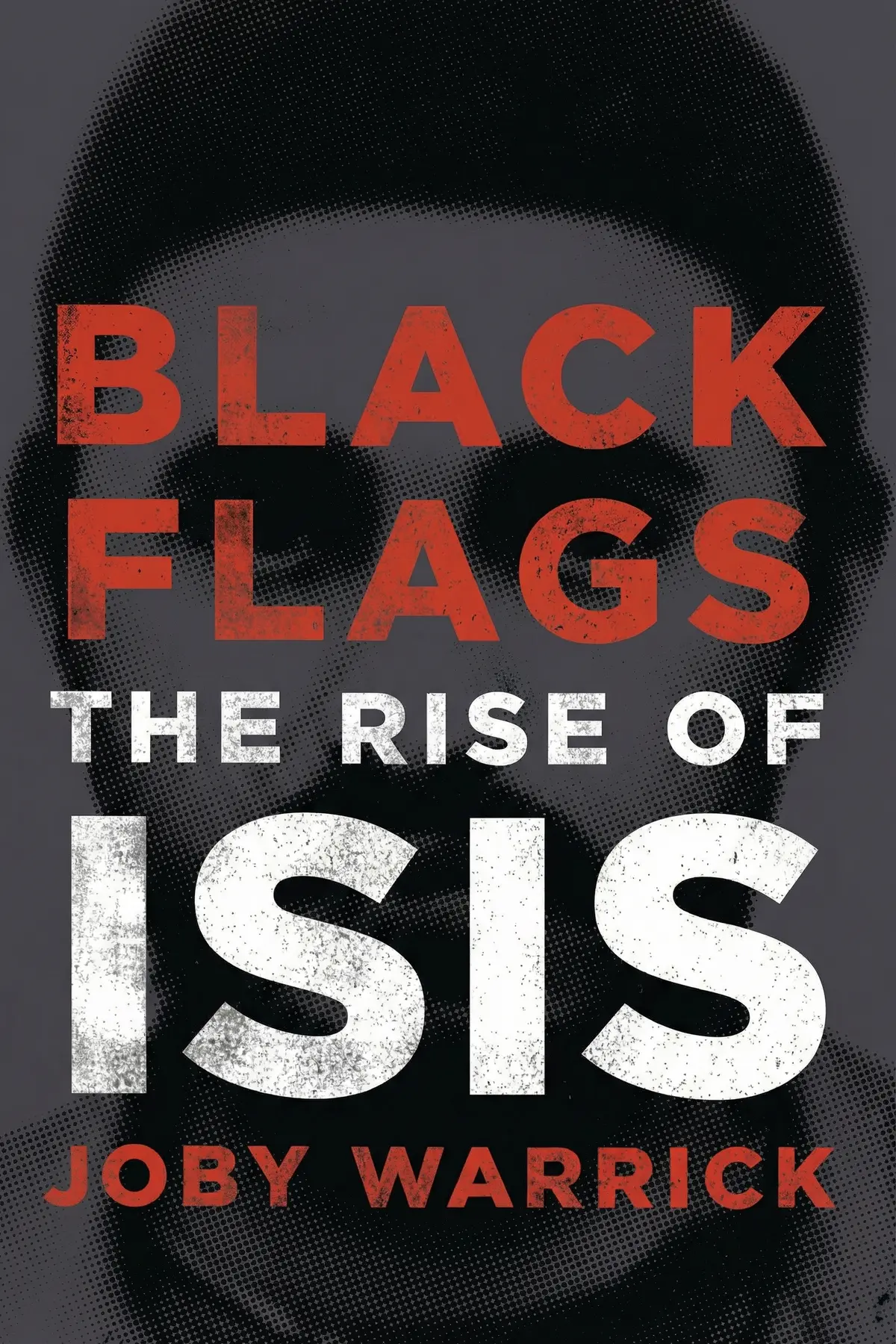
Table of Content
1. Introduction
1 min 07 sec
If the rise of ISIS still feels like something that came from nowhere, Joby Warrick’s Black Flags shows it had a clear starting point: a Jordanian king’s decision in 1999 to free a prisoner named Abu Musab al-Zarqawi. In this Pulitzer Prize-winning account, the Washington Post reporter follows the network that man built, from a prison cell to a self-declared caliphate.
The group was never inevitable. It grew from one man’s loyal following, and it survived because every time it weakened, a new opening appeared: an amnesty, a strike never ordered, the disorder after the 2003 invasion of Iraq, and finally the collapse of Syria. Its ideology, Salafi jihadism, goes back to Egypt’s Muslim Brotherhood in the 1950s, when many members still hoped for change through elections. Decades of repression and prison produced heirs who trusted only force.
By the end, you can tell the whole story of ISIS in a few minutes, and point to the moments when it could have been stopped.
2. Learn how a prison release seeded a movement
1 min 58 sec
A new king wanted goodwill, so he opened the cell doors for a group of Islamist prisoners. He had no idea what one of them had built while locked inside with a dozen devoted companions.
3. See the early warnings officials let pass
1 min 52 sec
Jordanian officers heard an obvious lie and had to wave the man through. Years later, American spies knew exactly where his camp stood, and the order to strike it never came.
4. Learn how chaos after invasion feeds terror
1 min 53 sec
The war was sold as a way to remove a terrorist danger. Within months, bombs were tearing through Baghdad, and the government that launched the war admitted something it had not expected to say.
5. Understand why bin Laden backed a man he disliked
2 min 00 sec
The al-Qaeda founder thought Zarqawi’s killings went too far, and said no. Then a gruesome video spread across the world, the calendar moved on, and bin Laden’s calculation changed.
6. Understand the cruelty that turned a region against Zarqawi
2 min 08 sec
Terror kept voters away from the polls and filled the headlines. Yet his brutality kept adding to his enemies, and the final clue to Zarqawi’s whereabouts came from a high-ranking insider in Jordanian custody.
7. Watch a collapsing state revive a dying group
1 min 49 sec
Five years after its founder died, his movement was broke, hunted and close to irrelevant. Then a neighboring dictator chose bullets over reform, and a very different kind of leader stepped forward.
8. Trace the steps from militia to self-declared state
1 min 52 sec
Volunteers and donations poured into Syria to fight a tyrant. Some of that support flowed somewhere else, and within two years a fighting group had a capital, ministries and a claim to rule the world.
9. Conclusion
1 min 08 sec
Black Flags, in the end, describes a chain that could have been broken many times. A king freed a prisoner to win goodwill. A government held back a strike to protect its war timetable. An invasion toppled a state and left a vacuum. A dictator chose bullets over reform. Each decision made sense to those who made it, and each gave Zarqawi’s network another life. Even his death in 2006 only paused the group, because the conditions that fed it were still there.
That gives you a way to read the news. When a militant group is declared beaten, ask whether the disorder that grew it has gone too, and whether a new leader with a stronger claim to authority is waiting. When a government collapses, watch who moves in to fill the space, and how quickly. And notice the moment a fighting force starts opening departments and naming a capital.
Warrick’s story begins with a man at an airport claiming he was off to raise bees in Pakistan. It ends with a would-be caliphate across two countries, reached one overlooked opening at a time.
About this book
What is this book about?
The rise of ISIS can look like something that came out of nowhere, a group so brutal that even al-Qaeda judged it too extreme. Joby Warrick, a Pulitzer Prize-winning reporter for The Washington Post, shows that it had a clear beginning: a Jordanian militant named Abu Musab al-Zarqawi, freed from prison in 1999 together with a band of men ready to follow him anywhere. Warrick follows that network from a desert prison to training camps in Afghanistan and Iraq, through the bombings after the 2003 invasion, an uneasy alliance with Osama bin Laden and Zarqawi's death in an air strike in 2006. He then shows how the weakened group found new life in Syria's civil war under a very different leader, the scholar Abu Bakr al-Baghdadi, and declared a caliphate in 2014. Readers come away able to tell the story of ISIS clearly. They also see the decisions along the way that could have stopped it, and the warning signs that still matter whenever a state collapses and a militant group starts acting like a government.
Book Information
Who it's for
Wanting ISIS's full story
Readers who followed the rise of ISIS in the headlines and want the full story behind it.
Needing terror groups explained
Students and professionals in security, policy or journalism who need a clear account of how terror groups grow.
Curious how ISIS endured
Anyone curious how one man's network survived war, his death and defeat.
About the Author
Joby Warrick
Joby Warrick is a reporter at The Washington Post, where he has covered the Middle East, diplomacy, national security, the intelligence community and the spread of weapons of mass destruction. Earlier he co-wrote a series on factory farming that won the 1996 Pulitzer Prize for public service. Black Flags won the 2016 Pulitzer Prize for general nonfiction. He is also the author of Red Line and The Triple Agent, a New York Times best seller about a CIA operation in Afghanistan.
Ratings & Reviews
Ratings at a glance
What people think
Listeners find this book to be an absorbing experience that flows like a quick-moving novel, supported by meticulously researched and thorough information. The text offers an excellent historical look at the emergence of ISIS, and one listener points out that it provides significant detail regarding the group’s early development. Listeners value the narrative style, with one describing it as a fast and furious history lesson, and find it beneficial for understanding how ISIS originated.
Top reviews
Aubrey
Ever wonder how a small-time thug in a Jordanian prison becomes the catalyst for a global terror movement? Warrick’s Pulitzer-winning account reads less like a dry history text and more like a high-stakes political thriller that you simply can't put down. The way he traces Zarqawi's evolution from a street criminal to the mastermind of AQI is both terrifying and masterfully detailed. I found the sections on the Jordanian intelligence services particularly illuminating, offering a perspective we rarely see in Western media. While the subject matter is undeniably grim, the prose is so fluid that I finished all three hundred pages in just two sittings without losing interest. It's a necessary look at the series of miscalculations that allowed ISIS to flourish in the power vacuum of post-invasion Iraq. Truly, this is a masterpiece of modern narrative non-fiction.
Show moreLars
As someone who usually finds history books a bit of a slog, I was pleasantly surprised by how gripping this narrative actually was. Warrick has this incredible ability to weave complex political shifts into a character-driven story that feels immediate and personal. From the botched invasion of Iraq to the eventual rise of Baghdadi, the timeline is laid out with surgical precision. The contrast between the secular Iraqi government’s view of extremists and the Bush administration’s insistence on a specific political narrative was particularly striking to me throughout the middle chapters. You see exactly how the 'spark' was ignited and why the fire grew so large. It’s a depressing read in many ways, especially when you realize how many of these tragedies were preventable. If you want to understand the roots of the caliphate, start right here.
Show moreSophia
After hearing so many people rave about this, I finally got around to reading it and the Pulitzer was definitely well-deserved. Joby Warrick manages to humanize the intelligence officers on the front lines while never shying away from the brutality of the men they were hunting. The transition from Zarqawi’s savage theatricality to Baghdadi’s scholarly approach to establishing a caliphate is handled with incredible skill and provides deep insight into their shifting strategies. You really get a sense of the momentum that built up after the US withdrawal, showing how easily a vacuum can be filled by the worst elements. Some chapters feel a bit rushed, especially toward the end when the Syrian civil war breaks out, but the core of the book is solid gold. It’s a frightening reminder of global crisis.
Show morePaisley
Finally, a book that explains the Middle East without putting me to sleep in the first ten minutes! Black Flags is a tour de force that connects the dots between the 1990s and the modern day with incredible clarity. I was particularly fascinated by the story of Sajida al-Rishawi and how her failed mission bookended the rise of the movement. The research is clearly extensive, drawing on interviews and documents that bring a level of detail you just don't get from daily newspaper reporting. It’s a grim subject, to be sure, but Warrick’s prose makes the history feel alive. Even the parts about the different sects and their historical animosities were easy for a layperson to follow. This is probably your best bet for understanding the crisis.
Show moreJavier
To be fair, Warrick provides a staggeringly detailed roadmap of the chaos that birthed ISIS, focusing heavily on the pivotal figure of Abu Musab al-Zarqawi. Some of the descriptions of the violence and the execution of the Jordanian pilot are genuinely hard to stomach, but they are vital to understanding the group's psychological warfare. The book excels when it dives into the 'jihadi universities' of Arab prisons. Here, radicalization was allowed to fester unchecked for years. However, I felt the narrative leaned a bit too heavily on CIA perspectives at times, perhaps glossing over some of the deeper regional complexities that contributed to the rise of Baghdadi. Despite that minor gripe, the research is top-notch and the storytelling is incredibly cinematic. It’s a fast and furious history lesson.
Show moreOrawan
Wow, this was an intense ride that kept me hooked from start to finish. I picked this up knowing very little about the specific origins of ISIS beyond the basic news snippets, and I came away feeling much more informed. The author focuses on key personalities rather than just dry policy, which makes the rise of these organizations feel like a tragic, avoidable drama unfolding in real time. One thing that stood out was the description of the Mukhabarat and their role in tracking these cells. This adds a layer of regional context often missing from US-centric accounts. I do wish there was more depth on the recruitment methods used to lure Westerners, but the focus on the ground-level leaders is still fascinating. It’s a compelling read.
Show moreMaya
This book is a bit of a mixed bag for me, though the writing is sharp. While the narrative is undeniably excellent and the pace is fast, I found the heavy focus on Zarqawi to be a bit lopsided compared to the later rise of Baghdadi. Truth is, I was looking for more information on the financing of the caliphate and the role of social media in their expansion. Warrick gives us a lot of 'spies and thugs' drama, which is entertaining, but sometimes it feels like a Hollywood script rather than a deep analysis. Also, the portrayal of King Abdullah as an almost flawless visionary felt a bit one-dimensional. Still, the accounts of the prison systems serving as breeding grounds for terror are chilling. It’s a good book.
Show moreWei
Given the complexity of the subject, Warrick does a fantastic job of keeping the reader engaged through a character-driven approach. I found the history of Abu Musab al-Zarqawi to be particularly insightful, as it details his transformation from a common criminal into a terrorist leader through the lens of those who tracked him. The focus on the 'spark' in Iraq and how it eventually ignited the Syrian border is handled with great care throughout. However, the book is very much a 'view from the outside' regarding the terrorists themselves. We see their actions and their impact, but we don't get a deep understanding of their internal motivations. It’s an excellent piece of narrative non-fiction that keeps you turning pages. Still, it remains a vital part of the conversation.
Show moreGioia
The information shared here is certainly useful, but I can't help feeling that Warrick relies too much on official government sources. If you’ve followed the news closely over the last decade, much of this might feel like a rehash of familiar headlines rather than a groundbreaking discovery. The book spends an enormous amount of time on Zarqawi’s early life, which is interesting, but it ignores significant factors like the broader geopolitical role of Saudi Arabia. Frankly, it feels a bit like a defense of the intelligence community's efforts while blaming political leaders for every failure. I appreciated the clear writing style and the helpful 'who’s who' list at the beginning. However, for a truly radical analysis of Middle Eastern politics, you might need to look elsewhere. It’s a solid introductory text.
Show moreWaree
Look, I wanted to love this, but the journalistic instincts on display here feel a bit too aligned with the Washington establishment. The book gives enormous credit to the CIA while largely ignoring the more uncomfortable aspects of Western intervention that fueled this fire in the first place. It reads like a polished narrative designed to tell a specific, safe story about 'bad guys' and 'good guys.' There is some useful information tucked away in the chapters about Jordan. I couldn't shake the feeling that I was being sold an agenda. The lack of attention paid to Pakistani or Saudi influences makes the whole analysis feel incomplete. It’s a readable book, certainly. Take some of these 'revelations' with a grain of salt.
Show moreQuestions about this book
What is Black Flags by Joby Warrick about?
Black Flags traces the origins of ISIS to Abu Musab al-Zarqawi, a Jordanian militant freed from prison in 1999. Warrick follows Zarqawi’s network through camps in Afghanistan and Iraq, the bombings after the 2003 invasion, the alliance with al-Qaeda and his death in 2006. He then shows how the weakened group revived in Syria’s civil war under Abu Bakr al-Baghdadi and declared a caliphate in 2014.
Who was Abu Musab al-Zarqawi?
Zarqawi was born in Zarqa, Jordan, in 1966 and fought in Afghanistan before being jailed in Jordan in 1994 over a planned attack. In prison he became a father figure to fellow Islamists. After his release he ran an al-Qaeda training camp, built a network in Iraq, led al-Qaeda in Iraq and carried out notorious killings until an American air strike killed him in 2006.
How did the Iraq war help create ISIS, according to Black Flags?
Warrick shows that the invasion left Iraq lawless, which gave Zarqawi space to work and recruits to draw on. Thousands of embittered Iraqis and former officers from Saddam Hussein’s army joined him. Within a year his network could mount large attacks, such as the 2003 bombing of the UN building in Baghdad, and the Bush administration admitted Iraq now held more al-Qaeda-style groups than before.
Why did ISIS rise in Syria?
After Zarqawi’s death the group, renamed the Islamic State of Iraq, was short of money, fighters and safe ground. Syria’s civil war, which began in 2011 when Bashar al-Assad met protests with violence, solved all three problems. Weapons, donations and foreign fighters poured in, and the scholar Abu Bakr al-Baghdadi gave the group a leader with the religious standing to claim the title of caliph.
Who should read Black Flags?
It suits readers who want to understand where ISIS came from, from students of security and the Middle East to anyone who followed the headlines. The book is told as a story of people and decisions, so it also shows how choices such as a royal pardon or a delayed strike can shape events for years.
Readers also enjoyed


A Promised Land
Barack Obama


A River in Darkness: One Man’s Escape from North Korea
Masaji Ishikawa

A Splendid Exchange: How Trade Shaped the World
William J. Bernstein

A Theory of Justice
John Rawls

A Spy Among Friends: Philby and the Great Betrayal
Ben Macintyre


AUDIO SUMMARY AVAILABLE
Listen to Black Flags in 15 minutes
Get the key ideas from Black Flags by Joby Warrick, plus 5,000+ more nonfiction titles.
- 5,000+ titles
- Listen as much as you want
- 7-day free trial
- Cancel anytime









