
12 min 02 sec
Available in: English
 ไทย
EnglishไทยBig Magic: Creative Living Beyond Fear
Shows how to make room for creative work in an ordinary life by living with fear, trusting ideas, shrugging off rejection, keeping your day job and taking your art seriously without taking yourself seriously.
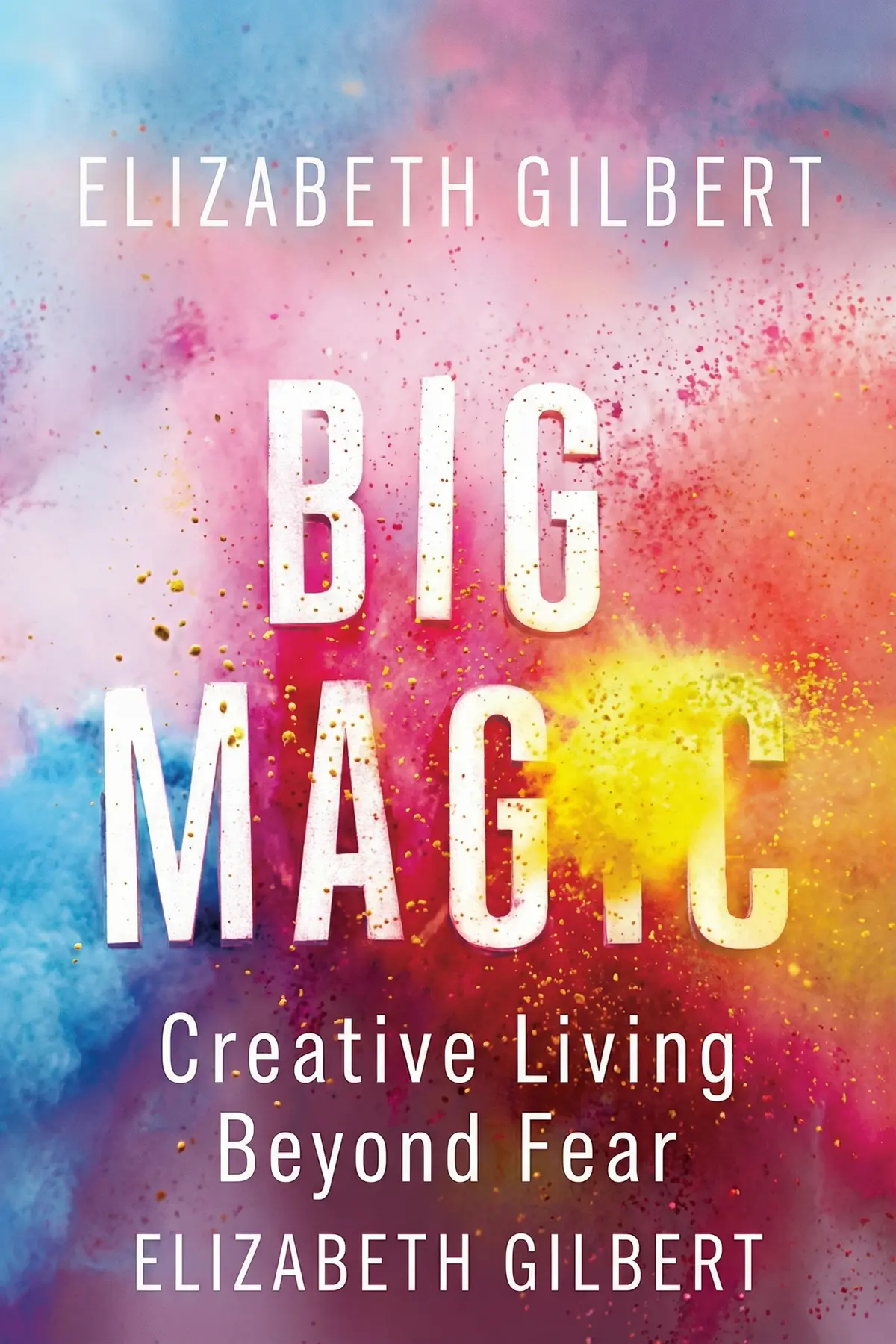
Table of Content
1. Introduction
1 min 05 sec
If there is something you have always wanted to make, Elizabeth Gilbert has a blunt message. The fear you feel about it will not leave first, so stop waiting for it to. In Big Magic, the author of Eat, Pray, Love argues that a creative life needs no fame, degree or total sacrifice. It simply means letting curiosity lead instead of fear. Your outlet could be painting, poetry, cooking or rock climbing, as long as it gives you butterflies.
Her case rests on one idea: creativity grows when you lower the stakes. Let fear come along without steering. Take ideas seriously and yourself lightly. Protect your art from the job of paying your bills. Along the way you’ll hear about a novel idea that seemed to change authors, and a rejected story that got a second hearing. A friend also escaped her own perfectionism by telling her stories out loud. Each one ends in something small you can try this week, no permission needed.
2. Let fear come along, but never drive
1 min 31 sec
Most advice tells you to defeat fear before you begin, and most people are still waiting. Gilbert offers a different seating plan, one that keeps fear close without letting it decide where you go.
3. Catch a good idea before it leaves
1 min 34 sec
Two novelists discovered they had each planned almost the same book about the Amazon. What happened between them suggests that an idea you keep postponing may not wait for you forever.
4. Give yourself permission and shrug off rejection
1 min 54 sec
A magazine editor rejected Gilbert’s story, then praised the identical pages years later. The episode shows how little a single no can tell you, and what to say to yourself instead.
5. Let real life be your training ground
1 min 31 sec
Many artists collect degrees mainly so others will take them seriously. Gilbert traces her best-known book to a source no classroom offers, and argues that seriousness itself can get in the way.
6. Keep your day job so your art stays free
1 min 35 sec
The starving bohemian looks like the committed artist, yet Gilbert thinks that picture strangles creativity. Toni Morrison and J. K. Rowling point to a less romantic arrangement that frees the work.
7. Swap the martyr's suffering for the trickster's ease
1 min 38 sec
Oscar Wilde saw the artist’s life as slow self-destruction. A cartoon rabbit and a friend’s unusual writing method suggest a far lighter way through the hard parts of making anything.
8. Conclusion
1 min 14 sec
Big Magic is finally an argument about stakes. Fear, rejection, credentials and money all raise the price of making something, and Gilbert’s answer each time is to bring it down. Let fear ride along. Treat an editor’s no as one person’s opinion. Let life be the school, keep the paycheck, and borrow a cartoon rabbit’s calm. What remains is curiosity, which she treats as reason enough to create, at any age.
She also offers an oddly physical fix for a stuck afternoon. When the blank page is winning, leave the desk and go to your wardrobe. Take a hot shower, brush your teeth, do your hair, put on a good outfit and a little perfume or cologne. It may sound silly. Her point is that refreshing the body can refresh the mind and tempt creativity back to work.
Beyond that, the steps are small. Say out loud what kind of maker you are. Then give the idea that keeps returning an hour, before it drifts off to someone else, the way Gilbert’s Amazon novel found its way to Ann Patchett. Fear will be in the car either way. It just doesn’t get the keys.
About this book
What is this book about?
Plenty of people carry a creative wish they never act on. They might want to paint, write poetry or cook something ambitious. They hold back because they feel untrained, too late, too busy or sure nobody will care. Many were raised to see a serious job as the only safe path, and early setbacks confirmed it. In Big Magic, Elizabeth Gilbert argues that creative living is open to anyone. It does not demand fame, a degree or total sacrifice. It asks only that curiosity lead instead of fear. Drawing on her own career and on stories about Ann Patchett, Brené Brown, Toni Morrison and J. K. Rowling, she shows how to let fear come along without letting it decide. She also covers how to treat ideas as visitors that may not wait and how to see rejection as one person's opinion. Readers get a gentler, more playful way to create: keep the day job so art never has to pay the rent, and swap the suffering artist's pose for the trickster's ease.
Book Information
Who it's for
Creative dreams on hold
People with a creative hobby or dream they keep postponing because they feel too late, too untrained or too busy.
Creatives stung by rejection
Writers and artists stung by rejection who want a calmer, lighter way to keep making work.
Professionals weighing full-time art
Professionals wondering whether to quit their job to pursue art full time.
About the Author
Elizabeth Gilbert
Elizabeth Gilbert, born in 1969 in Waterbury, Connecticut, writes both fiction and nonfiction. Her story collection Pilgrims was a PEN/Hemingway award finalist, and The Last American Man was a finalist for both the National Book Award and the National Book Critics Circle Award. Her 2006 memoir Eat, Pray, Love appeared in more than thirty languages and became a 2010 film starring Julia Roberts. Time magazine named her among the world's 100 most influential people, and she gave the TED talk Your Elusive Creative Genius.
Ratings & Reviews
Ratings at a glance

What people think
Listeners find this to be an essential read for creative individuals, praising Elizabeth Gilbert’s friendly writing for making the material quite easy to digest. Providing both wisdom and practical guidance, listeners are drawn to the work's boldly positive perspective and its many funny segments. Listeners share that the book changed their lives and changed their creative lives, finding it to be a fun and revitalizing experience.
Top reviews
Brooklyn
Wow. I didn't think a book about creativity could feel this refreshing, but Elizabeth Gilbert manages to strip away all the tortured artist nonsense. Her conversational tone makes it feel like you're sitting across from a wise friend who just wants you to succeed. I particularly loved the concept of fear being allowed a seat in the car but never a hand on the steering wheel. It's an unapologetically joyful manifesto that basically gives you a giant permission slip to just go make things. Even if they are 'frivolous,' the act of creation is where the magic happens. It’s changed how I view my morning writing sessions entirely. I'm no longer waiting for the perfect moment; I'm just showing up.
Show moreKenji
As someone who typically avoids self-help, I was shocked by how much I loved this. I used to be a die-hard cynic about 'energy' and 'the universe,' but Gilbert’s 'Pablo Lampshade' anecdote about bizarre coincidences totally won me over. She writes with such humor and lightheartedness that you can’t help but feel more creative just by turning the pages. The best part? Her insistence that your work doesn't have to save the world to be valuable. It can just be for you. That realization felt like a weight being lifted off my shoulders. I’ve started sketching again for the first time in years, and I’m not even worried if the drawings are bad. I’m just playing.
Show moreRania
Finally got around to reading this, and it felt like a warm embrace from someone who truly understands the struggle. Gilbert’s perspective on fear—that it’s just a boring, predictable passenger—is something I’ve already started applying to my own life. She doesn’t tell you to be fearless; she tells you to be brave enough to coexist with fear. The 'permission slip' she offers to people who don't feel 'creatively legitimate' brought me to tears. It’s an incredibly life-changing perspective for those of us who grew up thinking art was only for the 'talented' elite. This book is a manifesto for the rest of us. It’s vibrant, funny, and deeply human.
Show moreAroha
Ever wonder why you're paralyzed by the need for perfection? Gilbert has the answer, and it’s basically: stop taking yourself so seriously. This book is an absolute must-read for anyone who has ever felt like an impostor. I loved the 'done is better than perfect' mantra because it finally gave me the courage to finish my manuscript. Her writing style is so accessible and filled with humorous notes that I blew through it in two days. It’s unapologetically joyful and manages to be spiritual without being preachy. If you need a reminder that you are allowed to create simply because you want to, buy this book immediately.
Show morePakpoom
Picked this up during a creative rut and it was exactly the kick in the pants I needed. Gilbert argues that we should follow curiosity rather than the intimidating weight of 'passion,' and that distinction made everything feel accessible again. The story about the Ann Patchett connection and the shared idea was absolutely haunting in the best way. While I found the personification of 'ideas' as sentient beings a little woo-woo for my taste, the psychological effect of that belief is undeniable. It takes the pressure off. I’m giving it four stars because some sections felt repetitive, but the core message is vital. It’s a book that encourages you to stop worrying about the end result and just enjoy the process.
Show moreMuk
The chapter on 'Career vs. Vocation' gave me a lot to think about regarding my own relationship with my art. Gilbert argues that you shouldn't burden your creativity with the responsibility of paying your rent, which is a hard pill to swallow but ultimately very freeing. Her directness is refreshing, even when she’s being a bit 'bossy' about her philosophy. While I didn't agree with her dismissal of MFA programs—education can be transformative, not just a debt trap—I loved her focus on curiosity. The book is light, engaging, and contains several gems of wisdom that I’ve highlighted for future reference. It’s a solid read that I’ll likely revisit when I feel my inspiration waning.
Show moreWittaya
To be fair, there is some solid wisdom buried in here, but you have to dig through a lot of privilege to find it. Gilbert's stance on higher education being a waste of money for artists feels a bit classist, especially when she dismisses the networking and structure it provides. Not everyone has the luxury of a 'day job' that allows for creative whimsy on the side. However, I can't deny that her chapter on 'done is better than perfect' hit home. The writing style is breezy and easy to digest, which is a nice change from dense craft books. It's a mixed bag—inspiring one moment and frustratingly out of touch the next. It’s worth a read for the motivation, but take the financial advice with a grain of salt.
Show moreEleanor
The concept of ideas being separate entities floating around the universe is certainly 'out there,' but I found it weirdly comforting in a way. It reframes rejection and 'losing' an idea as a natural part of a larger ecosystem rather than a personal failure. Gilbert’s conversational prose is incredibly engaging, making this a very quick read for a weekend afternoon. I did roll my eyes at the suggestion to 'go on a date' with your creativity by wearing lipstick and dressing up, but the underlying point about showing respect to your craft is valid. It's not a perfect book, and it’s definitely 'commercial peppy' in its delivery, but the enthusiasm is infectious. I’d recommend it to anyone who feels stuck, though skeptics might struggle with the woo-woo bits.
Show moreYanin
Look, I appreciate the sentiment, but the execution felt a bit repetitive toward the end. The first half of the book is stellar, laying out a new way to interact with your internal genius. But by the time we got to the fourth or fifth anecdote about an idea 'finding a new host,' I felt like I’d gotten the point. Gilbert is a talented storyteller, no doubt, but some of the advice is a bit too 'magic' and not enough 'work.' To be fair, her advice to keep your day job is some of the most practical career coaching I’ve ever seen in a book like this. It’s an okay read, just don’t expect a technical manual on how to write.
Show moreDuangjai
The level of elitism in these pages really threw me off. Gilbert tells us that writing and art are essentially the most useless jobs in the world, which felt like a slap in the face to anyone working hard to build a career in the humanities. It’s remarkably easy to say 'don't care about what anyone thinks' when you've already had a massive bestseller like Eat Pray Love. For the rest of us, professional feedback and education actually provide necessary structure. The 'Big Magic' jargon felt like a gimmicky way to dress up basic self-help advice with a spiritual veneer. I finished it, but mostly out of a sense of duty rather than inspiration. I wanted a craft book, not a collection of ethereal anecdotes that ignore the material reality of being a creator today. Not for me.
Show moreQuestions about this book
What is the main idea of Big Magic by Elizabeth Gilbert?
Gilbert argues that creative living is open to everyone and does not require fame, a degree or suffering. It means letting curiosity guide you instead of fear. Her advice is to lower the stakes around your work. Live alongside your fears, act on ideas that keep returning and give yourself permission to create. Keep your day job so art never has to pay the bills, and approach the work playfully.
What does Big Magic say about fear and creativity?
Gilbert does not think you can simply let go of fear. She suggests getting comfortable with it instead, since fear is natural and shows you what you care about. She compares it to a passenger in the back seat of a car. It may come along and give its opinions, but it must never choose the route or take the wheel.
Should artists keep their day job, according to Big Magic?
Yes. Gilbert argues that forcing your art to pay the rent can strangle your creativity, because it loads the work with expectations of money or fame. A day job gives you safety to create freely. She compares the setup to an affair with your art, pointing to Toni Morrison and J. K. Rowling. Both stole a few hours a day to write before their literary careers took off.
What is the difference between the martyr and the trickster in Big Magic?
The martyr believes real art demands suffering and holds to rigid principles whatever the cost, an attitude Gilbert links to Oscar Wilde. The trickster takes things lightly, adapts and escapes tight spots, like Bugs Bunny dodging Elmer Fudd’s bullet. Gilbert’s friend Brené Brown took the trickster’s path. She told her stories aloud to two note-taking colleagues, and as a result she wrote faster and enjoyed it more.
How can I apply Big Magic when I feel creatively stuck?
Gilbert suggests a few simple moves. Declare out loud what you are, such as I’m a writer, so your inner critic loses some power. Treat rejection as one person’s view, as her own story about a magazine editor shows. When the blank page wins, get up, shower, dress well and put on perfume or cologne to refresh your mind and tempt creativity back.
Readers also enjoyed




AUDIO SUMMARY AVAILABLE
Listen to Big Magic in 15 minutes
Get the key ideas from Big Magic by Elizabeth Gilbert, plus 5,000+ more nonfiction titles.
- 5,000+ titles
- Listen as much as you want
- 7-day free trial
- Cancel anytime









