

59 Seconds: Change Your Life in Under a Minute
Richard Wiseman
 English
Shows how to stop clutter from coming back by settling decisions in advance: what each room is for, where every item lives, how much each shelf holds and when a task is truly finished.
58 sec
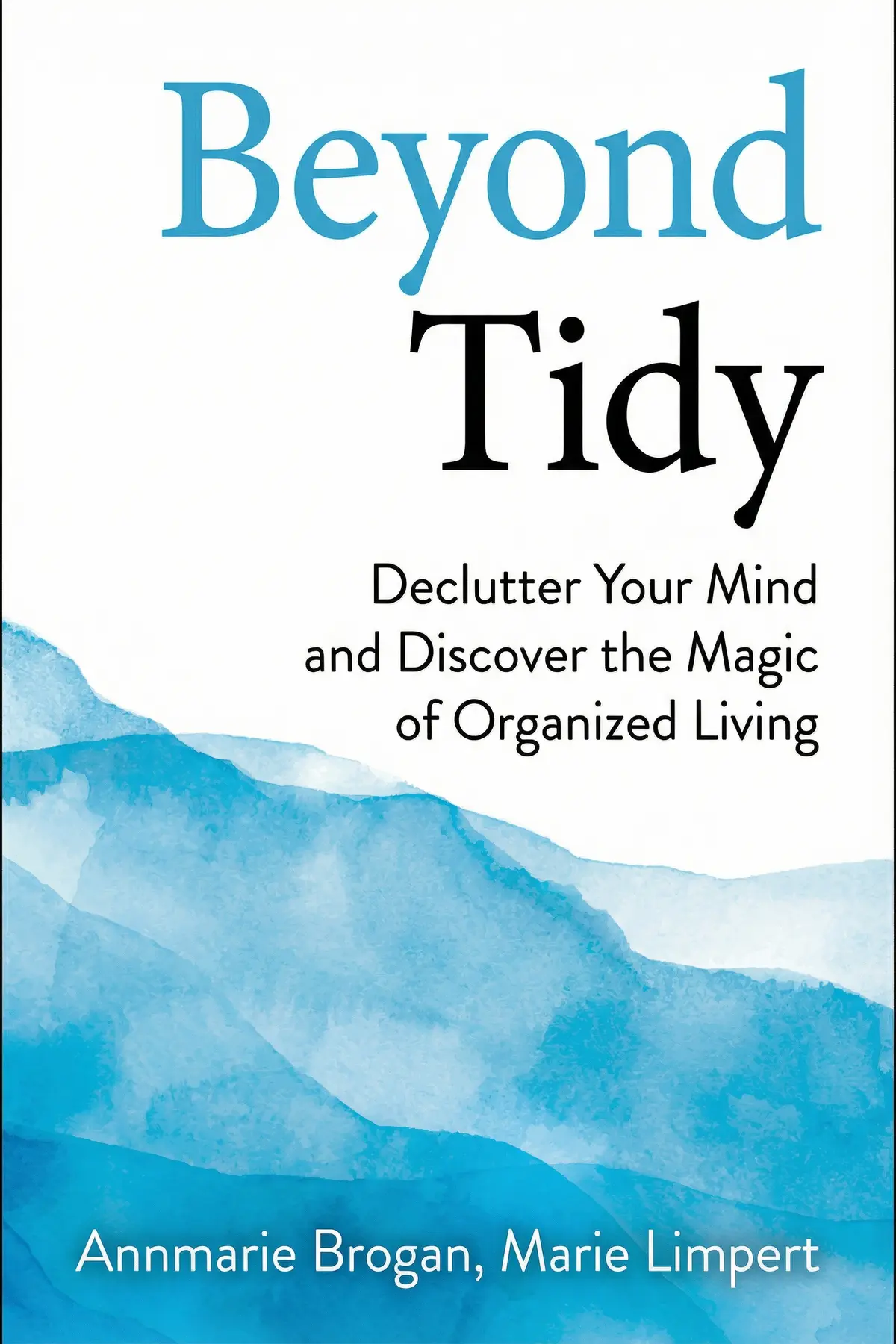
Clearing the same table or closet again and again, only to watch the mess return within weeks, may say less about effort than about method. One professional organizer quoted in Beyond Tidy describes clutter as a heap of decisions we never got around to making, each one stacked on the last. Professional organizers Annmarie Brogan and Marie Limpert build their book on that view.
Their argument is that a home stays clear when a handful of decisions are made once, in advance: what each space is for, where each thing lives, how much room a category gets and when a job counts as done. They group these decisions into eight principles. Each principle pays off in the same four ways, saving time, money, energy and space.
The tools are small enough to try this week. You can start with the keys you keep losing and the pasta you keep overbuying.
1 min 47 sec
Many people tidy hard every weekend and still lose ground by Wednesday. The authors locate the failure somewhere other than the closet, and the fix starts before a single drawer is opened.
2 min 16 sec
A basement can be a gym, an office and a laundry room at once, which is why it needs clear zones with space allocated to each. The fix begins with a written goal and a picture of the finished space.
2 min 08 sec
Dumping every drawer onto the floor feels decisive and often ends in paralysis. A smaller move shows how many mugs, batteries and long-sleeved tops you really own, and what you can live without.
1 min 43 sec
Losing keys or sunglasses feels like a memory problem. The authors treat it as a missing address, and their cooking example shows why a spice kept upstairs would stop most people from making dinner at all.
1 min 25 sec
A half-price sale looks like money saved. For anyone whose cupboards are already full, the authors see it as the start of the next mess, and they offer a simple test for the checkout.
1 min 45 sec
An unpaid bill on the counter seems harmless until it hides among other papers. A psychologist’s finding from the 1920s explains why unfinished jobs follow us around long after we walk away from them.
1 min 10 sec
Beyond Tidy reframes order as a set of decisions made ahead of time. By the time you face the busiest day, its hundred small choices are already answered. Where something goes is settled by its home. Whether to buy more depends on whether that home has room. A task ends only when it is filed or put away.
The authors measure every principle by its savings in time, money, energy and space, and they add one more payoff that is easy to miss: how you present yourself to others. In their view, people who get organized tend to become more confident, reliable and trustworthy.
Begin where the friction is worst. Choose one object you lose often and give it a fixed home for two weeks. Write down one SMART goal with an end date, along with what could knock you off course. At the next sale, picture the shelf before you reach for the extra pack. And when a job feels finished, take the last step that makes it so.
The pile on the table is made of decisions waiting their turn. Each one you settle now is one you never have to make again.
Most people who fight clutter are not short of effort. They clear the same surfaces over and over, and the mess returns. Professional organizers Annmarie Brogan and Marie Limpert treat clutter as a buildup of decisions that were never made. They argue that a home stays clear when those decisions are made once and built into simple systems. The authors first ask readers to reset how they talk to themselves about being organized. Then they lay out eight principles: setting SMART goals, giving each room a purpose, grouping like with like, choosing what stays and what goes, giving every item a home, linking each category to one place, managing limited space and finishing every task. They measure each principle by what it saves in time, money, energy and space. The examples are everyday ones: lost keys, an overfull pasta shelf, a basement doing four jobs, a bill left unpaid on the counter. Readers get a practical order of work. They also get an explanation, drawn from a 1927 psychology finding, of why unfinished jobs weigh on the mind.
People who tidy the same rooms every weekend and watch the mess return by midweek.
Busy professionals and parents buried in paperwork, overbuying and lost keys.
Couples and families sharing a home who want a system everyone in it can follow.
Annmarie Brogan and Marie Limpert co-own Organize Me! of NY, LLC, a professional organizing business. Brogan is a credentialed life coach and mind/body skills facilitator. She is certified in applied positive psychology and resilience training and earned a Master of Arts in Happiness Studies under Dr. Tal Ben-Shahar. Limpert has co-owned the firm since 2007 and works as a professional organizer and public speaker. She holds a marketing degree and an MBA in Management from St. John's University, and she spent her earlier career in sales, marketing, management and event planning.
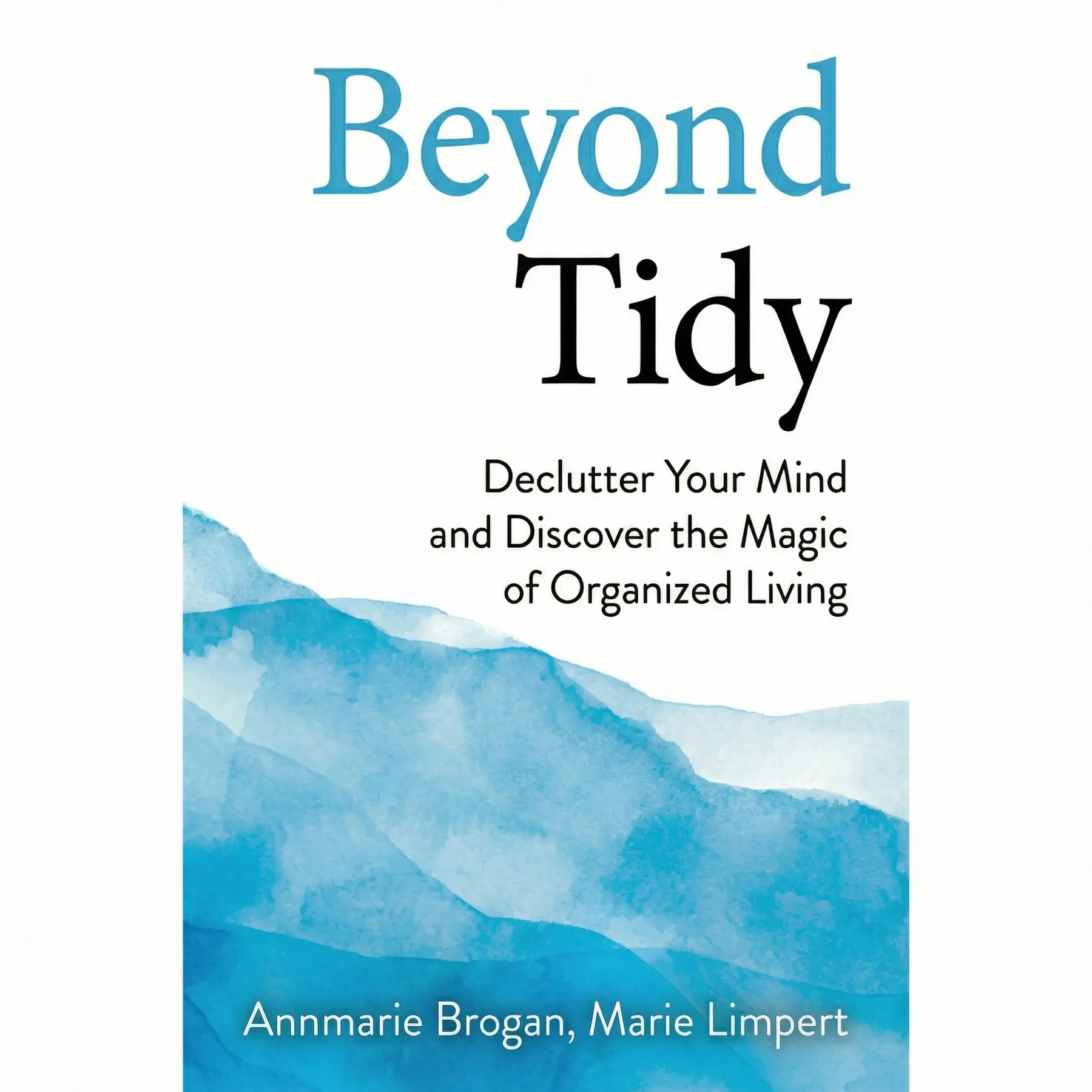
Listeners find the writing clear and accessible, offering actionable tips that empower them to achieve their most organized selves. Additionally, the book incorporates positive psychology and real-world anecdotes, ensuring an enjoyable experience. They value its straightforwardness, with one listener mentioning how the content establishes mental connections that aid in organization.
Wow, the compassionate tone of this book really caught me off guard in the best way possible. Unlike other organization gurus who make you feel like a failure for having junk drawers, these authors create a completely judgment-free zone. I found myself actually crying during the introduction because they spoke so directly to the shame many of us feel about our homes. The book isn't just about labels and bins; it's a deep dive into self-discovery and the 'why' behind our habits. I kept a journal nearby like they suggested, and answering their thought-provoking questions helped me realize I was hoarding out of fear. Truth is, the 'shift' in my thinking happened almost immediately after reading the first few chapters. The inclusion of simpler phases for beginners was exactly what I needed to not feel overwhelmed. I’ve already recommended this to three friends who struggle with maintaining order in their busy lives.
Show moreNot what I expected, but exactly what I needed! I thought this would be another book about where to put my shoes, but it turned out to be a deep dive into my own psychology. The authors delve into the uncomfortable feelings that come up during decluttering and guide you through them with so much grace. I love that they include simpler phases for beginners because it allowed me to start small without feeling defeated. Their explanation of how physical space impacts mental clarity is backed by positive psychology, which made the advice feel much more legitimate. In my experience, most organizing books ignore the emotional baggage we carry, but Beyond Tidy tackles it head-on. The journal prompts were insightful and actually led to some major breakthroughs regarding my spending habits. This is a transformative tool for anyone ready to do the inner work along with the outer cleaning.
Show moreSince I started listening to this at 1.5 speed, I’ve managed to clear out my entire garage and two hallway closets. The authors are extremely motivating and their enthusiasm is contagious, which is exactly what you need when facing years of accumulated junk. I really appreciated the 'Judgement-Free Zone' they established right from the start, as it made the process feel much less daunting. They provide a wonderful overview of both beginner and advanced options, so you can grow with the book as your skills improve. Not gonna lie, I was skeptical about the positive psychology angle, but it really does help create lasting mental associations. The real-life examples were relatable and helped me visualize how these strategies would look in my own cramped apartment. If you want a guide that is kind, practical, and truly passionate about helping people, this is the one.
Show morePicked this up during a particularly chaotic weekend where my kitchen counters seemed to be closing in on me. While I've read the big names like Marie Kondo and Peter Walsh, Brogan and Limpert bring a much more approachable, non-dictatorial vibe to the table that felt like a breath of fresh air. They don't just tell you to toss things; they explain the psychological hurdles that make us hold on to clutter in the first place. I appreciated the real-life stories because they made the concepts feel achievable rather than like some unattainable minimalist dream. To be fair, if you're looking for revolutionary, never-before-seen systems, you might find some of the advice a bit standard. However, the focus on mental associations and positive psychology really helped me reframe how I view my physical space. It's less of a 'how-to' manual and more of a supportive journey toward self-management. Definitely a solid choice for someone who needs encouragement rather than a lecture.
Show moreThe chapter on open vs. closed storage was a complete game-changer for how I set up my home office. I always thought I preferred open shelves, but the authors explained why my habits actually demanded closed storage to reduce visual noise. It’s these kinds of practical insights, paired with a heavy dose of encouragement, that make the book worth your time. Personally, I liked that they didn't set strict rules about how many books or items you’re allowed to own. Instead, they focus on taking the space you actually have and maximizing it for your specific lifestyle needs. My only gripe is that some of the labeling suggestions felt a bit dated and relied too heavily on color-coding everything. Still, the mental associations they help you build are incredibly effective for long-term maintenance. It’s a well-written guide that bridges the gap between psychology and chores.
Show moreAs someone who has struggled with chronic disorganization for years, finding a guide that doesn't feel clinical or condescending is rare. Annmarie and Marie have a beautiful way of connecting with the reader, making you feel like you have two friends helping you sort through your messes. The real-life stories sprinkled throughout the chapters helped me see that my struggles are actually quite common. Frankly, I appreciated the focus on the 'why' behind the clutter because it allowed me to address the root cause of my hoarding tendencies. The book is very easy to understand and provides clear examples of how to stay organized once you finally get there. While it covers the basics, the supportive tone makes it stand out from more rigid methods. It’s a great read if you need a boost of 'gusto' to finally tackle that spare bedroom.
Show moreEver wonder why you can't seem to keep your desk clear no matter how many times you tidy it? Beyond Tidy explores that question through the lens of positive psychology, focusing on how our mindset dictates our environment. While I enjoyed the breakdown of open versus closed storage, much of the content felt like a review of things I’ve heard on various podcasts. The authors are clearly passionate and their kindness shines through every page, which makes for a pleasant reading experience. However, I found the frequent quotes from Marie Kondo a bit distracting since I wanted their original perspective. Look, it’s a useful book for getting your paperwork organized and understanding self-management basics. It just didn't quite provide that 'aha!' moment I was chasing. It’s a gentle, straightforward guide that works well as a refresher but might not revolutionize your life if you’re already an organizing enthusiast.
Show moreAfter hearing so much praise for the 'Organize Me NY' team, I decided to give their book a shot. It is a straightforward and practical guide that outlines the basics of home and office organization quite well. I think the authors are very in-tune with the common struggles of their clients, and that empathy is evident on every page. However, I have to agree with other reviewers who mentioned the lack of inclusivity for those with different needs. As someone who is DeafBlind, the heavy focus on color-coded bins and visual labeling was a bit of a letdown. I would have loved to see more discussion on tactile or auditory systems for staying organized. It’s a good review of basic principles, but it feels a little narrow in its application of storage solutions. Still, it’s a solid read for the average person looking to declutter.
Show moreThis book felt like a collection of blog posts that didn't quite offer anything new to the conversation. If you’ve spent any time reading pop psychology or the big organization bestsellers, you’ll likely find this repetitive and a bit disappointing. I was hoping for more concrete, innovative organizing strategies, but instead, I got a lot of basic principles and cutesy exclamation points. Not gonna lie, the constant enthusiasm felt a little forced after a while and made it hard to take the advice seriously. There’s a heavy reliance on visual strategies like color coding, which is fine, but it lacks the inclusivity for people who might need different sensory approaches. It’s not a horrible read, but it lacks the 'meat' I was looking for in a professional organizing guide. It’s essentially KonMari-lite without the groundbreaking philosophy. Better for a total novice who has never picked up a book on decluttering before.
Show moreFinally got around to reading this after seeing it all over my social media feed, but I found it quite underwhelming. The book is filled with common sense advice that you can find for free on almost any home-and-garden website. I was frustrated by the lack of original ideas, as many of the concepts felt borrowed from Carol Dweck or Peter Walsh without adding much new flavor. Also, the writing style was a bit too 'cutesy' for my taste, with far too many exclamation points peppered throughout the text. It felt like reading a series of upbeat blog posts rather than a cohesive, professional guide on organization. To be fair, it’s not a bad book for someone who is just starting their journey and needs a lot of hand-holding. For anyone else, it’s mostly a repeat of things you already know. I was hoping for more advanced techniques instead of just basic labeling.
Show moreAnnmarie Brogan and Marie Limpert treat clutter as a buildup of decisions that were never made. Their answer is to make those decisions once and build them into simple systems. You set a goal, give each room a purpose, group things by category, give every item a home, let space limit what you buy and finish each task. Every principle saves time, money, energy and space.
The authors list eight. Set SMART goals. Create a vision for each room or space. Sort like with like. Decide what stays and what goes. Give everything a home. Link each category of items to one specific place. Manage your limited space before buying more. Finish every task completely. Before the principles, they ask readers to replace negative self-talk, such as calling themselves disorganized, with affirmations that support their goals.
In 1927, psychologist Dr. Bluma Zeigarnik found that people remember unfinished tasks better than finished ones. Brogan and Limpert argue this turns open jobs into mental clutter that pulls attention away from current work. Their example is a bill. It counts as done only once it is paid, marked and filed. Left lying around, it can get lost among other papers and lead to a missed payment and a penalty.
Start small. Pick an item you often lose, such as your keys, choose one fixed place for it, and return it there every time for two weeks. Group items like batteries into a single spot so you stop overbuying. When a sale tempts you, check whether that item’s home has room. And finish small routines fully, from unpacking the shopping to washing the dishes.
Richard Wiseman





William B. Irvine


Andrew D. Thompson


Deepak Chopra
AUDIO SUMMARY AVAILABLE
Get the key ideas from Beyond Tidy by Annmarie Brogan, plus 5,000+ more nonfiction titles.









